Hognose Snake Temperatures Basking, Ambient & Nighttime Ranges Explained
Don’t guess at temperatures. This guide covers everything hognose snake owners need: exact ranges, heat sources, thermostats, and red flags.
- Why Temperature Matters So Much for Hognose Snakes
- Ideal Hognose Snake Temperature Ranges
- How to Set Up the Temperature Gradient
- Thermostats: Non-Negotiable for Safety
- How to Measure Temperatures Accurately
- Seasonal Considerations and Brumation
- Signs That Your Hognose Snake’s Temperature Is Off
- Quick Reference: Hognose Snake Temperature Chart
- Frequently Asked Questions
- Final Thoughts on Hognose Snake Temperatures
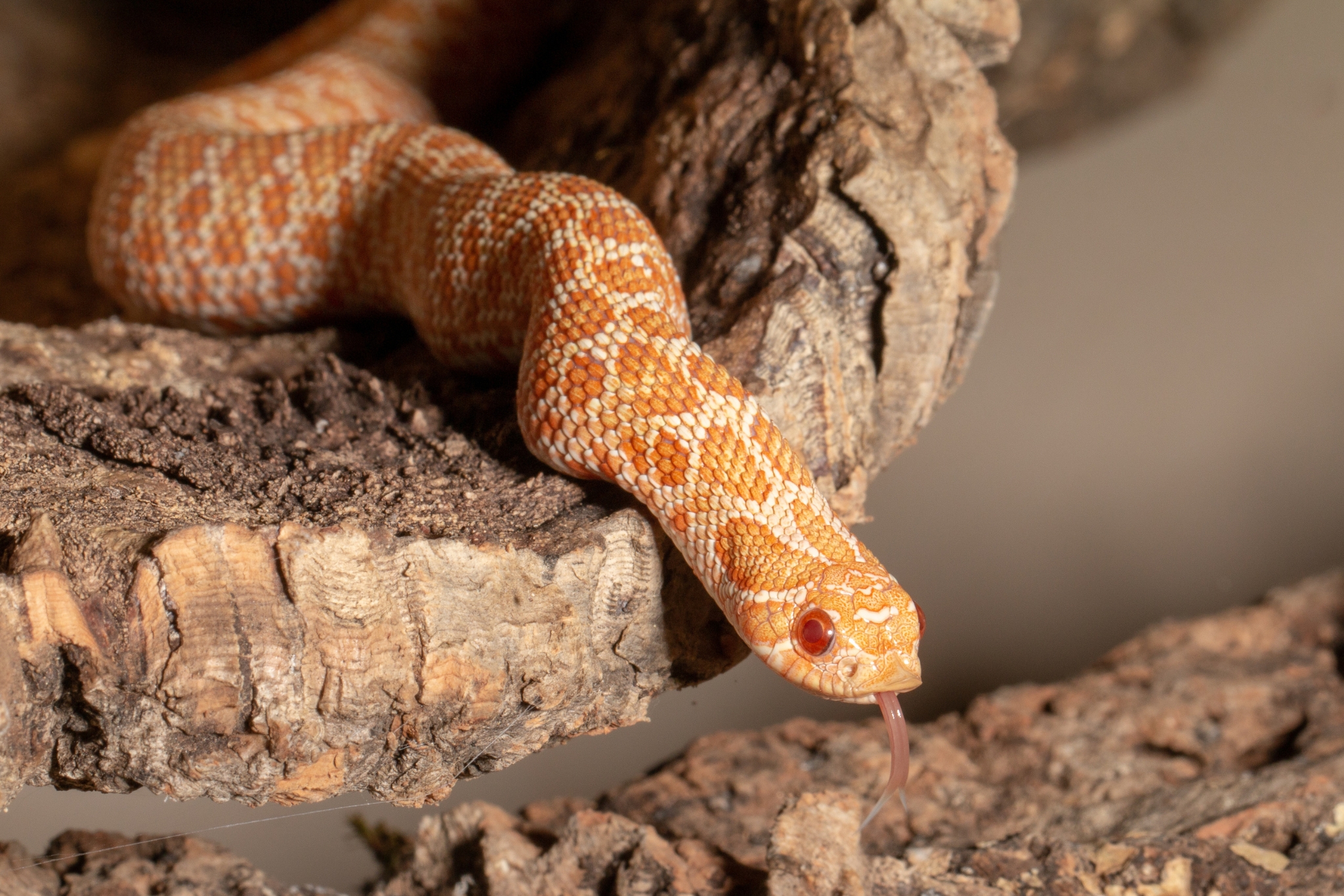
If you’re keeping a pet hognose snake—or thinking about bringing one home—getting the temperature right is one of the most important parts of their care. These expressive, “dramatic” little snakes are fairly forgiving in some areas of husbandry, but thermal management is not one of them.
In this guide, we’ll cover everything you need to know about hognose snake temperature requirements, including basking spot setup, cool side gradients, nighttime drops, and the best ways to monitor and maintain a stable, healthy environment.
Why Temperature Matters So Much for Hognose Snakes
Hognose snakes—whether Western hognoses (Heterodon nasicus) or Eastern hognoses (Heterodon platirhinos)—are ectotherms, which means they depend entirely on their environment to regulate body temperature.
Unlike mammals, they don’t produce internal body heat, so they rely on external warmth to stay functional. This process, known as thermoregulation, underpins nearly every aspect of their biology, from digestion and metabolism to immune function, activity levels, and overall behavior.
When temperatures are off, issues tend to show up quickly: poor appetite, incomplete sheds, lethargy, respiratory problems, and a weakened immune response that makes illness more likely.
But when conditions are dialed in correctly, hognose snakes are typically robust, active feeders that can thrive in captivity for 15 to 20 years or more.
Ideal Hognose Snake Temperature Ranges
Hognose snakes require a thermal gradient inside their enclosure—meaning they need a clearly defined warm side and a cool side—so they can move between temperatures and regulate their body heat as needed.
There is no single “correct” temperature for the entire enclosure — the key is offering your snake choice and stability.
Warm Side (Ambient)
- Ideal range: 80°F to 85°F (27°C to 29°C)
- This is the general air temperature on the warmer half of the enclosure. It provides a consistent background warmth that supports digestion and daily activity.
Basking Spot
- Ideal range: 88°F to 95°F (31°C to 35°C)
- The basking area is a focused heat zone created with an overhead heat lamp or radiant heat source. This is where your hognose will actively warm up, especially after feeding or during periods of increased activity.
Do not exceed 95°F (35°C) at the surface of the basking spot, since temperatures above this risk thermal burns and heat stress.
Cool Side (Ambient)
- Ideal range: 72°F to 78°F (22°C to 26°C)
- The cool side gives your snake an essential retreat area to lower its body temperature. This gradient is just as important as the warm side—without it, your snake has no safe way to thermoregulate.
Nighttime Temperature
- Ideal range: 68°F to 75°F (20°C to 24°C)
- A gentle nighttime drop is completely normal and mimics natural conditions. As long as temperatures stay above 65°F (18°C), most healthy adult hognose snakes handle this shift well.
- Juveniles and hatchlings are a bit more sensitive and should generally be kept toward the warmer end of the nighttime range.
How to Set Up the Temperature Gradient
Creating the right temperatures for a hognose snake starts with proper enclosure design. Without enough space and a clear layout, even the best heat equipment won’t produce a stable or usable thermal gradient.
The goal is to give your snake distinct zones so it can move freely between warm and cool areas throughout the day.
A functional gradient depends heavily on the length of your enclosure. For an adult Western hognose, a 36″ to 48″ (3 to 4 foot) enclosure is ideal. Smaller setups make it difficult—if not impossible—to maintain a proper basking zone and a true cool retreat at opposite ends.
- Heat should always be placed at one end only, allowing the opposite side to naturally form the cooler zone.
- Avoid placing heat sources in the center of the enclosure, as this disrupts the gradient and removes the snake’s ability to thermoregulate effectively.
Recommended heat sources include:
Overhead Heat Lamps (Incandescent or Halogen Bulbs)
- This is the most natural and widely recommended option for hognose snakes. Overhead heat mimics sunlight, warming both the air and surface layers of the enclosure. A dome reflector fitted with an appropriately rated bulb works best.
- At night, ceramic heat emitters (CHEs) can be used to maintain warmth without disrupting the light cycle.
Radiant Heat Panels (RHPs)
- Radiant heat panels are an excellent alternative, especially in larger or thermostat controlled setups. They provide steady, even overhead heat and help maintain consistent gradients without local hotspots.
Under-Tank Heaters (UTHs)
- Under-tank heaters are generally not recommended as a primary heat source for hognose snakes. Since snakes naturally respond to heat from above, belly heat alone can lead to poor thermoregulation.
- If they’re used, UTHs should only serve as a secondary heat source and must always be regulated with a thermostat.
Heat Tape
- Common in breeding rack systems, heat tape functions similarly to UTHs. It should always be paired with a thermostat and used with the same caution regarding primary heating limitations.
Thermostats Non-Negotiable for Safety
No matter what heating method you choose, one rule stays absolutely non-negotiable: never run a heat source without a thermostat.
This is one of the most important safety foundations in reptile keeping. Without temperature control, even a correctly chosen heat lamp or under-tank heater can quickly overheat an enclosure—especially in warmer rooms or with higher wattage bulbs
Types of Thermostats
- On/Off Thermostats: A simple, budget friendly option that cycles the heat source on and off to maintain a set temperature. These work well with heat lamps and ceramic heat emitters (CHEs), though temperatures may fluctuate slightly.
- Dimming/Proportional Thermostats: A more advanced and precise option. Instead of switching power fully on or off, these thermostats continuously adjust output to maintain stable temperatures. They’re ideal for overhead heat sources like halogen bulbs where consistency matters.
- Pulse Proportional Thermostats: Designed specifically for under-tank heaters (UTHs) and heat tape. These deliver controlled pulses of energy to maintain steady heat. They are not suitable for use with light emitting bulbs.
Probe Placement
For accurate readings, place the thermostat probe near the basking zone—close enough to measure the warmest area, but not directly touching the surface where it could give misleading readings. Proper placement ensures your gradient stays safe, stable, and consistent for your hognose.
How to Measure Temperatures Accurately
Relying on guesswork when it comes to your snake’s enclosure temperature is one of the most common—and avoidable—mistakes in reptile keeping. Accurate, consistent measurement is essential for maintaining a safe and functional thermal gradient for your hognose snake
Digital Infrared (IR) Thermometer / Temperature Gun
An infrared thermometer (often called a temp gun) is one of the most useful tools you can own. It allows you to quickly and accurately measure surface temperatures throughout the enclosure.
Use it to check:
- Basking surface temperatures
- Substrate temperatures on both warm and cool sides
- Any additional heat sources or hot spots
They’re widely available and typically inexpensive (often under $20) making them a staple in proper reptile setups.
Digital Thermometers with Probes
Probe thermometers provide continuous readings of ambient air temperature inside the enclosure. For a proper setup, you should use at least two probes—one placed on the warm side and one on the cool side.
This helps you monitor the gradient in real time rather than relying on spot checks alone.
Avoid Stick-On Analog Thermometers
The small dial-style thermometers that stick to glass tanks are not reliable for reptile husbandry. They measure the temperature of the glass itself rather than the actual air or surface conditions inside the enclosure, which can give a misleading picture of your setup.
For accurate husbandry, digital tools are always the safer choice.
Seasonal Considerations and Brumation
In the wild, North American hognose snakes experience a seasonal period of dormancy known as brumation—a reptile equivalent of hibernation. Many experienced keepers replicate this cycle in captivity, particularly when working with breeding programs.
For controlled brumation, temperatures are gradually reduced over several weeks to around 50°F to 60°F (10°C to 15°C), maintained for approximately 8 to 12 weeks, and then slowly raised again to normal levels.
This process should only ever be attempted with healthy, well-established adult snakes, and it requires close, consistent monitoring throughout.
That said, brumation is not essential for every hognose kept as a pet and non-breeding snakes can thrive without it.
Signs That Your Hognose Snake’s Temperature Is Off
Temperature plays a direct role in how your hognose behaves, feeds, and digests, so even small deviations from the correct range can show up in clear, observable ways.
Learning to recognize the early warning signs of incorrect temperatures helps prevent stress and more serious health issues.
Temperature too Low:
- Lethargy, slow movement
- Refusal to eat or regurgitation after eating (digestion requires adequate heat)
- Prolonged shedding cycles or incomplete sheds
- Signs of respiratory issues such as wheezing or open-mouth breathing
Temperature too High:
- Restless, frantic movement or repeated attempts to escape the enclosure
- Constantly staying on the cool side or spending excessive time in the water dish
- Gaping mouth (a serious sign of heat stress requiring immediate correction)
- Burns or irritation on the belly scales
If any of these signs appear, temperature should be checked immediately using a reliable digital thermometer or infrared temperature gun, and adjustments made right away to restore safe conditions.
Hognose Snake Temperature Chart Quick Reference
| Zone | Temperature |
|---|---|
| Basking Spot | 88°F to 95°F (31°C to 35°C) |
| Warm Side Ambient | 80°F to 85°F (27°C to 29°C) |
| Cool Side Ambient | 72°F to 78°F (22°C to 26°C) |
| Nighttime (all zones) | 68°F to 75°F (20°C to 24°C) |
| Brumation (optional) | 50°F to 60°F (10°C to 15°C) |
Frequently Asked Questions
Can hognose snakes tolerate room temperature?
It depends on your setup. If your home consistently sits around 72–78°F (22–26°C), that may be suitable for the cool side of the enclosure, but it is not enough on its own. You still need a properly heated warm side and a dedicated basking area using supplemental heat. In most cases, standard room temperatures alone are not sufficient for long-term hognose care.
Do hognose snakes need UVB lighting?
This is still an evolving topic in reptile husbandry. Traditionally, hognose snakes have been kept successfully without UVB, but more recent evidence suggests that low-level UVB exposure (such as a T5 HO 5.0 system) may support better long-term health, immune function, and natural vitamin D3 production. If UVB is used, it should be carefully set up so it does not overheat the enclosure or disrupt the thermal gradient.
What wattage bulb do I need?
There is no one-size-fits-all answer. Wattage depends on enclosure size, room temperature, and basking distance. A practical starting point is usually a 50–75W heat bulb, then using a thermometer to measure basking surface temperatures. Adjust wattage or fixture height until you achieve a stable 88–95°F basking zone.
My hognose is always on the cool side—is something wrong?
Not necessarily. It’s normal for snakes to move to cooler areas after eating while they digest. However, if your snake consistently avoids the warm side, it’s worth checking your basking temperatures—they may be too high. Also consider other factors like insufficient hides, recent handling, or environmental stress from a new enclosure.
Final Thoughts on Hognose Snake Temperatures
Getting your hognose snake’s temperatures correct isn’t complicated, but it does depend on using the right equipment and taking the time to set things up properly.
A reliable thermostat paired with accurate thermometers makes all the difference. Once your enclosure is properly set up, maintaining a stable thermal gradient becomes second nature—and your snake will reward you with consistent feeding, strong overall health, and all the quirky, dramatic hognose behavior that makes this species so popular.