Buying a Show Jumping Foal What to Look For Before You Buy
Buying a show jumping foal? Discover the 8 key things to assess before you commit—from pedigree and conformation to jumping talent and temperament.
- Why Buy a Foal for Show Jumping?
- Start With the Bloodlines
- Assess Conformation Like a Pro
- Watch the Movement — Even in a Field
- Evaluate the Jump — If Possible
- Temperament: Don’t Underestimate It
- Get a Pre-Purchase Veterinary Examination
- Consider the Breeder and the Environment
- Think About Your Goals and Timeline
- Quick Checklist: Show Jumping Foal Evaluation
- Final Thoughts on Buying a Jumping Prospect
So you’re thinking about buying a foal with big show jumping dreams? Love that for you—getting in early can be such a rewarding experience, both emotionally and financially.
That said, buying young horses comes with a level of uncertainty, so it’s important to stay practical, observant, and well-prepared.
Whether you’re a breeder, an amateur rider, or producing horses professionally, this guide will walk you through how to evaluate a young show jumping prospect with clarity and confidence.
Why Buy a Foal for Show Jumping?
Buying a foal gives you the rare opportunity to shape a horse from day one—developing trust, establishing good habits, and a relationship that money often can’t buy once a horse is older. t also allows you to have a greater say in how the horse is managed, trained, and cared for as it grows.
At the same time, it’s important to recognize the uncertainty that comes with buying young. A great deal can change between six months and six years, which makes knowing what to look for early on not just helpful, but absolutely essential.
1. Start With the Bloodlines
Before you ever set eyes on a foal, take the time to study its pedigree. In show jumping, bloodlines carry real weight. Look for sires and dams with proven performance in sport—or a consistent record of producing offspring that are successful competitors—rather than relying solely on names in a breed registry.
Sire Performance
- Has the stallion produced horses competing at 1.40m and above?
- Are his offspring known for being careful and scopey over fences, or do they tend to be hot and difficult to manage?
Dam Line
- The mare plays a major role in shaping temperament, bone, structure, and athletic ability
- Look at her competition record, as well as the performance of her previous foals
Crossing Tendencies
- Some bloodline combinations are known to consistently produce top athletes. Take the time to research how the sire and dam lines have worked together historically.
Well-known warmblood lines such as Chacco Blue, Balou du Rouet, Cornet Obolenski, and Heartbreaker have proven themselves at the highest levels of show jumping. Still, it’s worth keeping an open mind—don’t discount lesser known stallions with exceptional individual merit.
2. Assess Conformation Like a Pro
Conformation is your foundation. A foal with poor conformation is fighting an uphill battle before training even begins. While foals are notoriously gangly and can look awkward as they grow, certain fundamentals should already be correct and in place:
Head and Neck
- Look for a well-set, balanced neck with a clean throatlatch
- A heavy, short neck restricts flexibility, roundness, and collection later on
- The head should be refined and expressive with bright, kind eyes and alert ears
Shoulder
- The shoulder conformation is especially important for a jumping prospect!
- A long, sloping shoulder allows for a powerful, ground covering stride and enables the horse to use its front end effectively over fences
- A steep, upright shoulder is a serious red flag
Back and Topline
- A short, strong back with good muscling through the loin is ideal
- Long-backed horses can be more prone to back issues and struggle to engage their hindquarters
- Look for a well-defined, smooth topline (even in a young foal)
Hindquarters
- Think of this as the horse’s engine
- Look for a broad, well-shaped, powerful hindquarter with good muscle mass
- The hind leg should show a natural angle through the hock to allow for strength and impulsion, without appearing too straight or overly bent (avoid extremes in either direction)
Legs and Feet
- Correct limbs are essential for show jumping
- Look for straight limb alignment from both the front and side
- Clean, solid, dense bone
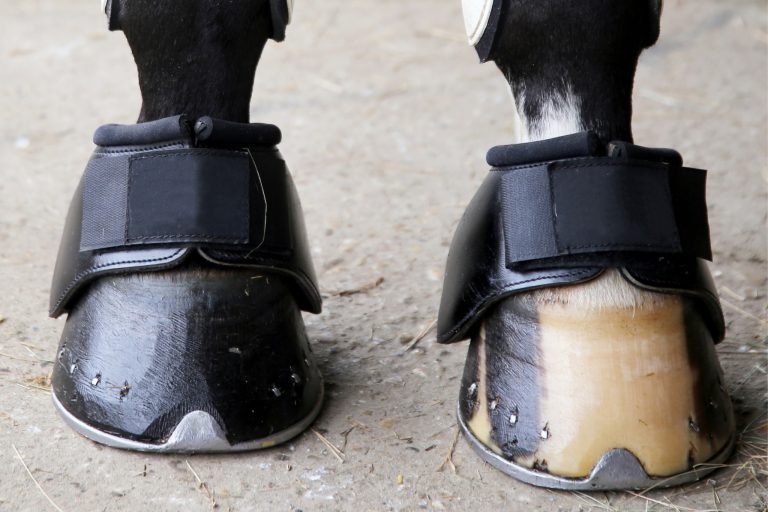
- Good sized, well-shaped hooves with adequate heel depth
- Avoid obvious structural faults such as bench knees, calf knees, or notable offset cannons
While minor imperfections can improve as a foal develops, anything questionable is worth discussing with a qualified veterinarian before making a decision.
3. Watch the Movement Even in a Field
A foal’s natural movement offers a valuable glimpse into its future under saddle. The best way to assess this is to observe it moving freely in the paddock or pasture—without any handling or interference. Look for:
- Rhythm and regularity in all three gaits:
The foal’s steps should be even and consistent, without rushing or irregularity
- Impulsion from behind:
The hind leg should step well under the body, showing natural engagement and push
- Elasticity:
A loose, swinging back and supple stride that covers the ground with ease is a strong indicator of athletic potential
- Natural balance and self carriage:
Even in a foal, you may notice moments of coordination and poise that suggest good inherent balance
Critique the Canter
The canter is especially revealing when it comes to future show jumping ability. Look for a foal that naturally offers a balanced, active three beat canter with a clear upward tendency. Early signs of uphill balance and hindquarter engagement are also important.
A good prospect will show a canter that feels bouncy, round, and rhythmic, rather than flat or stretched out. A good quality canter is a strong early indicator of natural jumping talent—and is far easier to build on as the horse develops.
4. Evaluate the Jump If Possible
Foals—and even young horses—shouldn’t be deliberately made to jump. However, if a foal has been observed naturally navigating or popping over small obstacles in the field, that information can be especially valuable. Even a voluntary jump over a log can reveal quite a bit about instinct, coordination, and natural ability.
- Scope:
Does the foal show a naturally open, generous shape over the fence, clearing it with ease and room to spare?
- Technique:
Does it fold its knees tightly and use its back?
- Carefulness:
Does the foal show awareness of the fence and make an effort not to touch it? This natural respect is often linked to careful, competitive jumpers later on.
- Hind leg use:
The hind end should push off with power and come through cleanly, rather than trailing or lagging behind the body.
- Attitude:
Just as important as the physical traits is the mindset. A foal that approaches new jumps, experiences, and unfamiliar objects with curiosity, confidence, and genuine enjoyment is already showing a key ingredient for long term success in the sport.
5. Temperament Don’t Underestimate It
In show jumping, the mind of the horse is just as important as the body. The sport demands horses that can travel, compete in busy arenas, handle pressure, and stay focused under stress.
When you visit a foal, observe:
- Curiosity vs. anxiety:
A curious, bold foal that confidently investigates new things is very desirable. A foal that is consistently spooky, flighty, or unpredictably reactive may present more challenges later on.
- People orientation:
How does the foal respond to handling? Will it accept touch, lead calmly, and tolerate basic management? Early behaviour around people is often very telling.
- Social behaviour
Watch how it interacts with other horses. A well-adjusted, confident foal in a herd setting often translates into a more composed competitor in the ring.
- Sensitivity: Ideally, you want a foal that is responsive and aware— but not overly hot, sharp, or difficult to manage. Finding that sweet spot of rideable sensitivity is key for both amateur and professionals alike.
It’s also worth having an open conversation with the breeder about the foal’s day to day temperament. Ask how it behaves at home—whether it has been straightforward to handle, and if any quirks or anxieties have been noticed.
6. Get a Pre-Purchase Veterinary Examination
Never skip the vet check—especially when it comes to a foal. A thorough pre-purchase exam (PPE) carried out by an equine veterinarian experienced in sport horse evaluation is essential, not optional.
What a good PPE includes:
- A full clinical examination of all limbs, the back, and joints to assess overall soundness and structure
- X-rays of the feet and key joints, with the exact views tailored to the foal’s age and development—this should always be discussed with your vet
- Flexion tests where appropriate, taking age and maturity into account
- A careful review of any conformational concerns and how they may affect future performance
- A discussion around growth plates and normal developmental changes, which are especially important in young horses
It’s important to remember that the vet’s role is to provide you with clear, objective information—not to make the buying decision for you. Some findings may be minor and manageable, while others could be more significant. Understanding the difference is key, and when in doubt, a second opinion is always a smart step.
7. Consider the Breeder and the Environment
A foal’s first months of life have a major influence on both its physical and psychological development. A reputable, experienced breeder who raises foals thoughtfully can give you a real head start.
When researching breeders, look for:
- Foals are raised with plenty of space to move, play, and develop naturally
- Correct, balanced nutrition that supports steady growth without pushing development too quickly
- Early, consistent handling and gentle desensitization to humans and everyday routines
- A clean, well-managed environment that reflects careful, conscientious breeding practices
8. Think About Your Goals and Timeline
Be honest with yourself about why you’re buying this foal—and what your realistic timeline looks like.
- Are you producing to sell? Then marketability matters. Bloodlines, type, and movement all need to meet commercial expectations.
- Are you producing for yourself? Then temperament and rideability may matter more than extreme flash or expressiveness.
- Do you have the right setup to raise a foal properly? They require appropriate land, companionship, regular farriery and dental care, and knowledgeable management long before they ever reach a saddle.
Buying a foal is a long term commitment—it’s often 5 to 7 years before you’re competing at a meaningful level. Go in with clear expectations, and make sure you have a solid support system in place for the journey ahead.
Show Jumping Foal Evaluation Quick Checklist
Final Thoughts on Buying a Jumping Prospect
Evaluating a show jumping foal prospect is part science, part art, and—let’s be honest—a little bit of gut instinct as well.
No foal is perfect—and those that come close to ticking every box rarely come at a bargain price. The key is knowing which qualities are truly non-negotiable for your goals, and which imperfections you can live with.
When you find a foal that makes you want to come back for a second look, trust that feeling—then do your due diligence to back it up. The best partnerships often begin with that balance of heart and homework.
Looking for more guidance on buying young horses, developing sport horse prospects, or navigating the warmblood market? Browse our related articles for everything you need to make confident, informed decisions.