How to Socialize Your Pet Zebra Bonding Tips That Actually Work
Your pet zebra guide is here! Learn proven socialization techniques to help your exotic companion feel safe, calm, and connected.
- Can You Really Socialize a Pet Zebra?
- Start Early — The Foal Phase Is Everything
- Build Trust Through Routine
- Use Positive Reinforcement (Treats Are Your Best Tool)
- Introduce Touch Gradually
- Socialize With Other Animals Thoughtfully
- Work With a Professional
- Realistic Expectations — What “Socialized” Actually Looks Like
- Key Takeaways for Socializing a Pet Zebra
Life with a pet zebra is anything but ordinary, and building a relationship with your striped companion requires a slightly different playbook.
Socializing a pet zebra is a far cry from introducing a golden retriever to the neighborhood dog park. Zebras are intelligent, independent, and undeniably wild at heart. But with patience, consistency, and a generous supply of their favorite treats, you can foster trust and build a meaningful bond with your striking striped companion.
Can You Really Socialize a Pet Zebra?
The answer is yes—but it requires a lot of patience, consistency, and a long term commitment.
Unlike domesticated horses, zebras have never been selectively bred to live alongside humans, which means their natural instincts remain firmly intact.
These stripped beauties are highly alert, quick to react, and naturally cautious of unfamiliar situations. That said, positive socialization from an early age can go a long way.
With time and trust, many zebras become comfortable around their caretakers and some will even seek out interaction.
|
Start Early The Foal Phase Is Everything
If you have the opportunity to socialize your zebra as a foal, consider yourself incredibly lucky—and take full advantage of it.
When socialization begins during the foal stage, the process is usually far smoother and more rewarding. Young zebras are naturally curious and generally more receptive to new experiences than their adult counterparts, which makes early interactions especially valuable.
During the first few weeks after bringing your zebra home, prioritize calm consistent time together. Rather than encouraging immediate interaction, allow your zebra to become comfortable with your presence and approach on their own terms.
Quietly spending time nearby helps build familiarity, trust, and confidence without creating unnecessary pressure.
This approach, often referred to as passive socialization, is one of the most effective ways to establish a positive foundation. By becoming a predictable and reassuring presence, you give your young zebra the opportunity to develop trust at a natural pace.
At this stage, consistency is more important than intensity. Minimize sudden movements, loud noises, and other potential stressors that could trigger a fear response.
|
Build Trust Through Routine
Zebras thrive on consistency, making routine one of the most valuable tools in the socialization process.
- Feeding schedules, daily interactions, and handling practices should remain as predictable as possible.
- Approaching your zebra in a calm manner and maintaining familiar cues during each interaction helps reinforce a sense of security and trust over time.
- Consistency should extend beyond a single caretaker—everyone who interacts with your zebra should follow the same approach and expectations to create a stable, predictable environment. When everyone follows the same approach, your zebra benefits from the consistency and predictability that are essential for successful socialization.
Use Positive Reinforcement (Treats Are Your Best Tool)
High value treats such as apple slices, carrots, sugar cubes, or commercial equine treats can be highly effective in creating positive associations during socialization.
When your zebra allows you to approach, stays relaxed during interaction, or accepts gentle contact, an immediate reward helps reinforce that behavior. Over time, this builds a clear association between your presence and positive experiences.
Start slowly with food-based training. Offer treats on an open, flat palm to minimize the risk of accidental nipping. In the early stages, tossing treats nearby can be a useful stepping stone before transitioning to hand-feeding, giving your zebra the chance to build confidence at a comfortable pace.
|
Pro Tip
Never Withhold Food as Punishment
Doing so can create stress, anxiety, and defensive behavior in your zebra.
|
Introduce Touch Gradually
Once your zebra is comfortable with your presence and begins approaching voluntarily, you can gradually introduce physical contact.
Start by allowing your zebra to sniff your hand, giving them time to assess and become familiar with you. From there, progress slowly to light, calm touches on areas such as the shoulder or neck, which are generally less sensitive and less intimidating than the face.
It is essential to let the zebra set the pace of each interaction. If they choose to move away, respect that space and allow them to disengage.
Attempting to chase or corner a zebra will quickly damage trust and escalate stress. Patience is not just helpful in this stage—it is the foundation of the entire process.
Socialize With Other Animals Thoughtfully
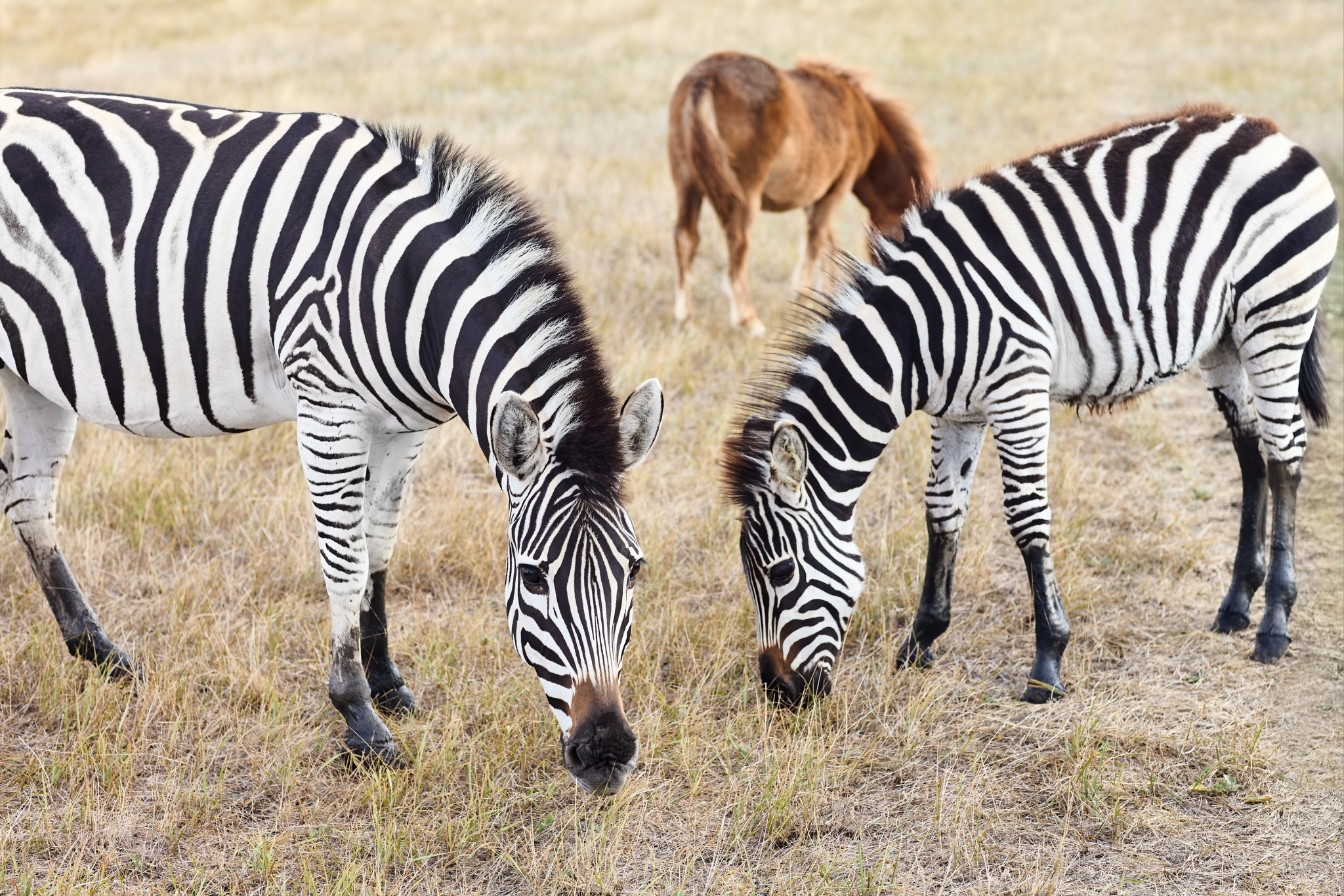
Zebras are herd animals and they thrive in the presence of companionship. When kept alone, introducing a compatible equine companion—such as a donkey or horse—can provide added support and a greater sense of stability and security. A calm herd mate can also help create a more settled environment, which may in turn encourage more relaxed interactions with humans.
Remember that when you’re introducing new animals, the process should always be gradual. Begin with a secure barrier between them to allow for safe observation and adjustment, followed by closely supervised introductions in a neutral space once both animals appear comfortable.
Work With a Professional
Socializing an exotic animal is not something you need to navigate alone, nor should you. Working with an exotic animal behaviorist or an equine specialist experienced with zebras can provide invaluable guidance. These professionals can assess your individual animal, help address challenges as they arise, and support safe, effective progress throughout the process.
It is also important to consult a veterinarian who has experience with exotic or zoo animals. Proper health care plays a significant role in socialization outcomes, since an animal that is stressed, unwell, or uncomfortable will have limited capacity for positive engagement.
Realistic Expectations What “Socialized” Actually Looks Like
It’s important to understand that a socialized zebra is still a wild animal at heart. Even the most well-adjusted zebra will retain its wild instincts.
While your zebra may become comfortable approaching humans, accepting grooming, or wearing a halter, it will not behave with the same predictability as a domesticated horse.
Key Takeaways for Socializing a Pet Zebra
1. Beginning early with passive socialization provides the strongest foundation for trust.
2. Establishing a consistent routine helps your zebra anticipate interactions with confidence, while positive reinforcement through treats ensures those moments are associated with calm, rewarding experiences.
3. Respecting boundaries is essential for both safety and relationship building.
4. Providing appropriate equine companionship can further support your zebra’s overall wellbeing.
5. Working alongside experienced exotic animal professionals adds an important layer of guidance and protection throughout the process.
Ultimately, socializing a zebra is a long term commitment grounded in patience, consistency, and respect for the animal’s instincts. In return, it offers the rare chance to earn the trust of an extraordinary wild animal—one thoughtful step at a time.