The Ultimate Fringed Leaf Tree Frog Diet Guide
From perfect cricket portions to supplement schedules, discover everything you need to know about feeding your fringed leaf tree frog a nutritionally complete diet that keeps them healthy and happy.
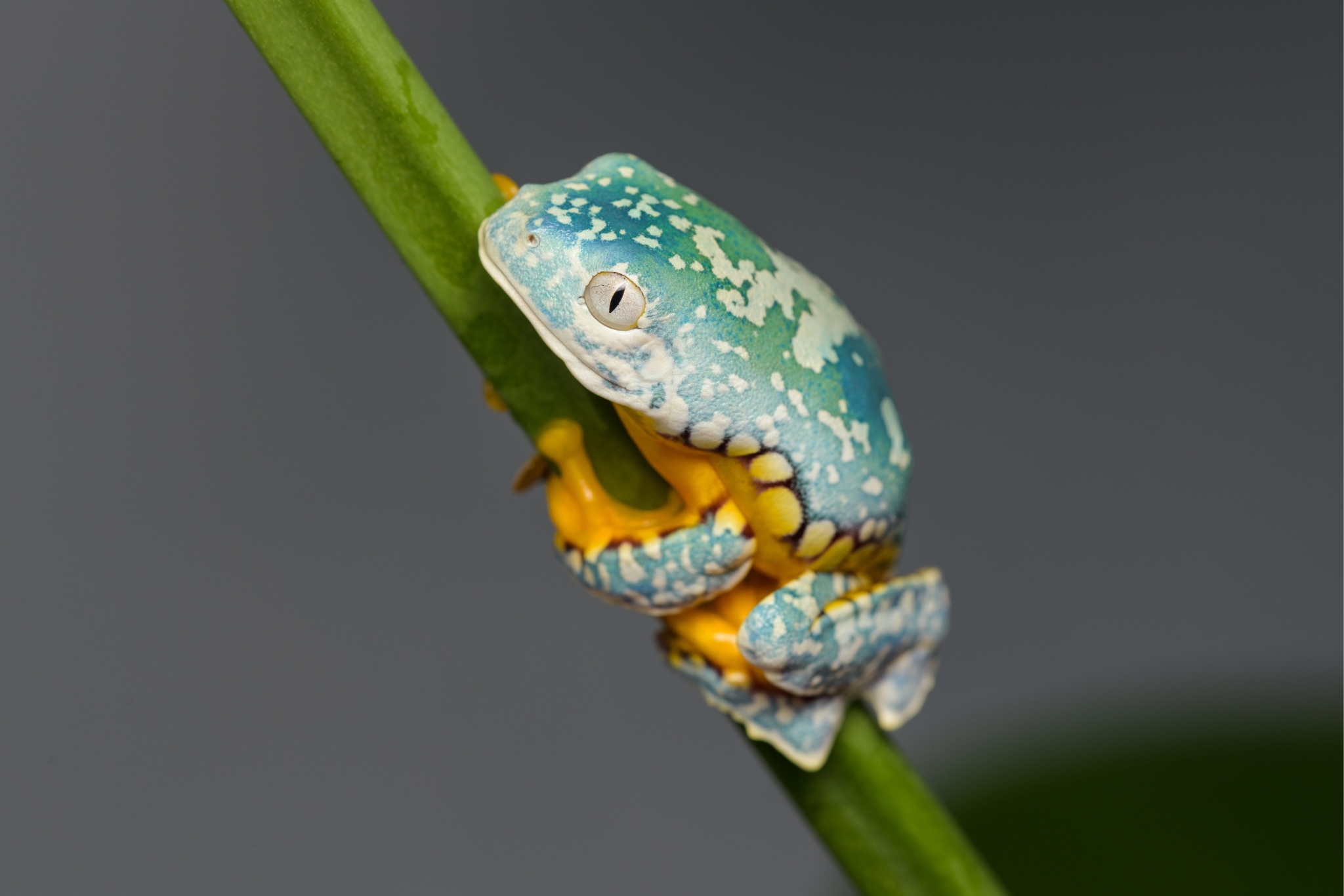
So you’ve fallen head over heels for the absolutely adorable fringed leaf tree frog (Cruziohyla craspedopus), and honestly? We totally get it!
With their vibrant green bodies, enormous eyes, and those charming fringed feet, these Central American beauties are the stars of any vivarium. But here’s the thing—keeping your leafy friend looking this gorgeous takes more than just good genes. It takes a seriously solid nutrition plan!
Your fringed leaf tree frog isn’t just sitting around looking cute (though they’re definitely doing that too). They’re active nocturnal hunters with specific dietary needs that mirror their rainforest lifestyle.
In the wild, these amazing amphibians spend their nights snagging moths, beetles, and all sorts of creepy crawlies from the canopy. As a responsible frog parent, your mission is to recreate that nutritional diversity right in your own home.
The good news is that feeding your fringed leaf tree frog is actually pretty straightforward once you understand the basics. This comprehensive guide will walk you through everything from choosing the right feeders to creating a supplement schedule that would make any herpetologist proud.
Ready to become your frog’s personal nutrition coach? Let’s hop to it!
Understanding Your Frog’s Wild Diet Nature knows best
Before we dive into the specifics of captive feeding, let’s take a quick field trip to the rainforests of Central America! Understanding what fringed leaf tree frogs eat in their natural habitat gives us the blueprint for creating a healthy diet at home.
In the wild, these arboreal acrobats are opportunistic insectivores. They hang out in the canopy layer of lowland rainforests, where they hunt primarily at night.
Their natural menu includes flying insects like moths and beetles, various species of flies, spiders, and occasionally other small invertebrates that cross their path. The key word here is variety! Wild frogs don’t eat the same thing every night, and your pet shouldn’t either.
Wild Diet Insight
Fringed leaf tree frogs are sit-and-wait predators with excellent vision. They rely on movement to identify prey, which is why live feeders are essential for captive specimens.
The nutritional content of wild insects varies based on what those insects have been eating, creating a naturally balanced diet over time. This is exactly why gut-loading (feeding your feeder insects nutritious foods before offering them to your frog) is so important in captivity. You’re essentially creating that same nutritional chain!
Another fascinating aspect of their wild diet is seasonality. During the rainy season when insects are abundant, frogs may eat more frequently. During drier periods, food becomes scarcer.
While we don’t need to recreate dramatic seasonal changes for our pets, this does tell us that these frogs can handle some variation in feeding frequency without any problems.
The Perfect Staple Feeders
Alright, let’s talk about the MVPs of your frog’s diet—the staple feeders! These are the insects you’ll offer most frequently because they’re nutritious, readily available, and perfectly sized for your amphibian friend.
🦗 Crickets
Crickets are the gold standard for a reason! They’re packed with protein, widely available at pet stores, and your frog will absolutely go bonkers for them.
For adult fringed leaf tree frogs, aim for ½ inch to ¾ inch crickets. A good rule of thumb is that the cricket should be no larger than the space between your frog’s eyes.
Pro Tip
Always remove any uneaten crickets after feeding time. Hungry crickets have been known to nibble on sleeping frogs, which is definitely not on the menu.
🪲 Dubia Roaches
If you can get over the “roach” factor, these little bugs are absolutely fantastic feeders. They’re meatier than crickets, don’t smell, can’t climb smooth surfaces, and are quieter than a cricket colony at 2 AM.
They’re also incredibly nutritious with a better calcium to phosphorus ratio than crickets.
🐛 Black Soldier Fly Larvae
These wiggly wonders are naturally high in calcium and make an excellent occasional staple.
They’re lower in fat than some other feeders, which is perfect for maintaining your frog at a healthy weight, and the movement of these larvae is irresistible to most tree frogs!
⚠️ Size Matters
Never offer feeders larger than the width between your frog’s eyes. Oversized prey can cause choking or impaction — two emergencies you definitely want to avoid.
Variety Feeders for Peak Nutrition
Here’s where things get really fun! While staple feeders form the foundation of your frog’s diet, variety feeders are like the exciting seasonal menu items that keep things interesting and provide unique nutritional benefits. Think of them as the superfood smoothies of the amphibian world!
🦟 Fruit Flies (Drosophila hydei & D. melanogaster)
These tiny fliers are absolutely perfect for younger frogs and make a great enrichment food for adults too. Watching your frog hunt fruit flies is pure entertainment—they’ll leap and snatch them right out of the air! While they’re small, they’re mighty in nutrition when properly gut-loaded.
🪰 Blue Bottle Flies
Talk about five star dining! Blue bottle flies are like the filet mignon of the insect world. They’re packed with protein and their erratic flight patterns trigger your frog’s hunting instincts like nothing else. Order pupae online and watch them hatch in a few days—instant entertainment and nutrition!
Enrichment Bonus
Flying insects aren’t just nutritious — they provide mental stimulation and exercise. Your frog gets to actually hunt, which keeps them physically and mentally sharp.
🐛 Silkworms
These smooth operators are low in fat and high in protein, plus they’re one of the few feeder insects naturally high in calcium. They’re a bit pricier and require special care, but for special occasions or as a treat for a recovering frog, they’re absolutely worth it.
🦋 Waxworms (Occasional Treats Only!)
Think of waxworms as the candy of the insect world—they’re delicious but not for everyday consumption! These fatty little morsels are perfect for underweight frogs who need to bulk up or as a once in a while treat. Feed too many, though, and you’ll end up with a chunky frog!
⚠️ Treat Alert
Limit waxworms and hornworms to once or twice a month maximum. They’re high in fat and can lead to obesity and fatty liver disease if overfed.
Feeding Schedule by Life Stage
Just like humans have different nutritional needs as babies, teenagers, and adults, your fringed leaf tree frog’s appetite changes as they grow. Let’s break down the perfect feeding schedule for each life stage!
🐸 Froglets (Newly Morphed)
These tiny transformers have just traded in their tails for legs, and boy are they hungry! Newly morphed froglets need to eat daily or even twice daily. Offer tiny prey like fruit flies, pinhead crickets, or springtails. Their stomachs are small, so 3 to 5 appropriately sized insects per feeding is perfect.
Growth Stage Note
Baby frogs are growing machines. They need lots of calories and calcium to build strong bones and muscles. Never skip supplements during this crucial period.
🐸 Juveniles (3 to 12 months)
Your juvenile frog is like a teenager—always hungry and growing like a weed! Feed every other day, offering 4 to 6 appropriately sized insects per feeding.
This is when you can start introducing variety with different feeder types. Watch them grow and adjust portions as needed—if they’re leaving food, you’re offering too much.
🐸 Adults (12+ months)
Once your frog reaches adulthood, they settle into a more relaxed feeding schedule. Adult fringed leaf tree frogs do beautifully on 3 to 4 feedings per week, with 5 to 7 appropriately sized insects per feeding.
Some keepers feed larger meals twice weekly, which works great too! The key is finding what works for your individual frog.
Body Condition Check
Too Thin
Ribs visible
Ideal
Rounded, no ribs
Bloated
Visible rolls
A healthy adult frog should have a rounded but not bloated appearance. You shouldn’t see ribs, but you also shouldn’t have rolls. Adjust feeding frequency based on body condition.
Remember, these are guidelines, not hard rules! Every frog is an individual. Some are bottomless pits while others are dainty eaters.
Pay attention to your frog’s body condition and adjust accordingly. When in doubt, it’s better to underfeed slightly than to overfeed—obesity is a real concern in captive amphibians!
Essential Supplements & Dusting The secret to vibrant health
This is where we separate the good frog parents from the great ones! Supplementation might seem like extra work, but it’s absolutely crucial for preventing metabolic bone disease and ensuring your frog lives their best, longest life. Think of it as giving your frog their daily vitamins—because that’s exactly what it is!
🥛 Calcium + D3 Powder
This is your absolute must-have supplement. Calcium is essential for bone health, muscle function, and proper nervous system activity. Since captive frogs don’t get natural UVB exposure like they might in the wild, we need to provide vitamin D3 to help them absorb that calcium.
Dust feeders with calcium + D3 powder at every feeding for juveniles, and 2 to 3 times per week for adults.
how to
Dust insects
#1
Place feeders in a small container or bag
#2
Add a pinch of supplement powder
#3
Gently shake to coat
The insects should look lightly dusted, not caked. Too much can cause them to refuse food.
🌈 Multivitamin Powder
Your comprehensive multivitamin supplement fills in all the nutritional gaps. Look for a quality reptile/amphibian multivitamin that includes vitamins A, E, and B complex.
Use this once or twice a week, alternating with your calcium + D3 dustings. More is definitely not better here—over supplementation can be just as harmful as under supplementation!
Storage
Matters
Keep your supplements in a cool, dark place with the lid tightly sealed. Exposure to heat, light, and moisture degrades vitamins quickly. Replace supplements every 6 to 12 months even if the container isn’t empty.
📅 Sample Supplement Schedule
For an adult frog being fed 3 times per week, try this rotation:
- Monday (Calcium + D3)
- Wednesday (Multivitamin)
- Friday (Calcium + D3)
Simple, effective, and covers all the bases! For juveniles eating daily, dust with calcium + D3 five times per week and multivitamin twice per week.
Pro tip
Keep a small calendar or notes app on your phone to track supplementation. It’s so easy to forget whether you dusted yesterday’s feeders, especially when you’re tired after work. A quick note takes five seconds and ensures consistency.
Proper Feeding Techniques
You’ve got the perfect feeders, you’re supplementing like a pro, but are you actually feeding your frog in a way that promotes natural behavior and good health? Let’s talk technique!
🎯 Free Feeding vs. Tong Feeding
Most fringed leaf tree frog keepers prefer free feeding—releasing the appropriate number of insects into the enclosure and letting your frog hunt naturally.
This method provides enrichment and exercise! Release feeders one at a time or in small groups, and watch the hunting action unfold.
Technique
Tong Feeding Benefits
✓
Monitor exact food intake
✓
Ensure every insect is properly supplemented
✓
Hand feed shy frogs
✓
Great for administering medication if needed
While less natural, tong feeding offers real practical advantages.
⏰ Timing is Everything
Remember, fringed leaf tree frogs are nocturnal hunters! Feeding during their active hours (evening or nighttime) is much more effective than trying to feed them during the day when they’re snoozing.
Many keepers feed an hour or two after lights-out when their frogs are perked up and ready to hunt.
🧹 The Cleanup Crew
Always—and we mean always—remove any uneaten feeders after a few hours. Hungry crickets have been known to bite sleeping frogs, and nobody wants that! This is especially important if you’re feeding crickets.
If your frog consistently leaves food, you’re probably offering too much or feeding too frequently.
⚠️ Never Feed Wild Caught Insects
Wild insects can carry parasites, pesticides, and diseases. Always use commercially bred feeders from reputable sources to keep your frog safe and healthy.
One super helpful trick is to keep a small flashlight handy for nighttime feeding checks. Red light is less disruptive to your frog’s circadian rhythm than white light, making it perfect for those late night “did they eat?” investigations.
Common Diet Mistakes to Avoid
Even the most well-intentioned frog parents can slip up! Let’s talk about the most common feeding mistakes so you can avoid them from the get-go:
🚨 Mistake #1: The Cricket Only Diet
We get it—crickets are easy and your frog loves them. But feeding only one type of insect is like eating nothing but cheese pizza for every meal. Technically you’re getting calories, but you’re missing out on so much nutritional diversity.
Aim to rotate at least 2 to 3 different feeder types regularly. Your frog’s health will thank you!
🚨 Mistake #2: Skipping Gut-Loading
Here’s the truth bomb: a freshly shiped cricket that hasn’t eaten in days is basically a crunchy shell of sadness with minimal nutritional value.
Always gut-load your feeders for 24 to 48 hours before offering them to your frog. Feed your feeders high quality foods like leafy greens, sweet potato, and commercial gut-load formulas. You’re not just feeding your frog—you’re feeding what feeds your frog!
Did You Know?
The nutritional value of feeder insects is directly related to what they’ve eaten in the last 24 to 48 hours. A well-fed cricket is exponentially more nutritious than a starving one.
🚨 Mistake #3: Overfeeding Fatty Treats
Waxworms and hornworms are delicious, no doubt about it. But offering them too frequently is like feeding your frog fast food every day.
These high fat treats should make up less than 10% of your frog’s diet. Save them for special occasions or for helping underweight frogs bulk up!
🚨 Mistake #4: Inconsistent Supplementation
We’ve said it before but it bears repeating: metabolic bone disease is 100% preventable with proper supplementation.
Don’t skip dustings because you’re tired or forgot to order more calcium powder. Set phone reminders, keep backup supplements, and make it part of your routine. Your frog is counting on you!
⚠️ Warning
If your frog suddenly loses interest in food for more than a week, or if you notice weight loss, lethargy, or difficulty moving, contact a reptile veterinarian immediately. These can be signs of serious health issues.
🚨 Mistake #5: Feeding Inappropriate Prey Items
Lightning bugs (they’re toxic), wildcaught insects (possible pesticides), prey that’s too large (choking hazard), and insects that are too hard shelled for young frogs—these are all no-nos.
When in doubt, stick to commercially bred, appropriately sized feeders from the approved list. Boring? Maybe. Safe? Absolutely!
Signs of a Well-Fed Frog
How do you know if you’re nailing this whole feeding thing? Your frog will show you! Here are all the wonderful signs that your nutritional game is on point and your fringed leaf tree frog is thriving:
✨ Vibrant Coloration
A well-nourished frog has bright, vivid green coloring (or whatever their natural color morph should be). Dull, pale, or muddy colors can indicate nutritional deficiencies, stress, or health issues. When your frog is getting proper nutrition, they’ll look like they just stepped out of a rainforest photoshoot!
💪 Good Body Condition
Your frog should look plump and rounded without being obese. When viewed from above, they should have a nice oval shape—not skeletal and not a round ball. You definitely shouldn’t see hip bones or spine, but you also shouldn’t see fat deposits forming rolls. Think athletic swimmer, not sumo wrestler.
🎯 Strong Hunting Response
A healthy, well-fed frog is alert and responsive to prey. They should track moving insects with their eyes and actively hunt. If your frog loses interest in food or becomes lethargic, it could signal overfeeding, underfeeding, or health issues.
💩 Regular Healthy Droppings
Healthy frog droppings are brown to dark brown, well-formed, and passed regularly. Frequency varies by feeding schedule, but you should see droppings within 24 to 48 hours of feeding. Runny, bloody, or absent droppings warrant a vet visit.
Monthly Health Check
Once a month, take a moment to really observe your frog. Check body condition, skin quality, eye brightness, and activity levels. Document with photos to track changes over time.
🦴 Strong Bones and Normal Movement
Frogs getting adequate calcium and vitamin D3 move confidently and gracefully. They climb, jump, and perch without difficulty. Watch out for tremors, difficulty jumping, curved limbs, or a reluctance to move—these can be early signs of metabolic bone disease and require immediate veterinary attention!
The bottom line is that a well-fed fringed leaf tree frog is a gorgeous, active, bright-eyed hunter that makes you smile every time you see them. If your frog checks all these boxes, congratulations! You’re officially crushing the frog parent game!
The Golden Rule
“A varied diet with proper supplementation isn’t just good practice — it’s the foundation of exceptional frog keeping.”
Your Feeding Success Checklist
Congratulations, you amazing frog parent! You’ve now got all the knowledge you need to provide your fringed leaf tree frog with absolutely stellar nutrition.
From understanding their wild diet to mastering the art of supplement rotation, you’re equipped to give your hoppy friend the healthy, vibrant life they deserve.
Remember, the key to success is variety, consistency, and attention to detail. Rotate those feeder insects, keep that supplementation schedule on track, and always observe your frog’s body condition and behavior. Every frog is unique, and you’ll get better at reading your specific friend’s needs with time and experience.
Most importantly, enjoy the journey. Watching your fringed leaf tree frog hunt, grow, and thrive on a diet you’ve carefully curated is one of the most rewarding parts of reptile and amphibian keeping.
Ready to Level Up?
Start implementing these feeding strategies today and watch your fringed leaf tree frog flourish like never before. Your journey to becoming an exceptional frog keeper starts with that very next feeding.
You’ve Got This