Corn Snake Care 101 What to Expect Before You Buy
Corn snakes are docile, low maintenance, and beautiful. Here’s everything you need to know before buying one — care, costs, what to expect, and more.
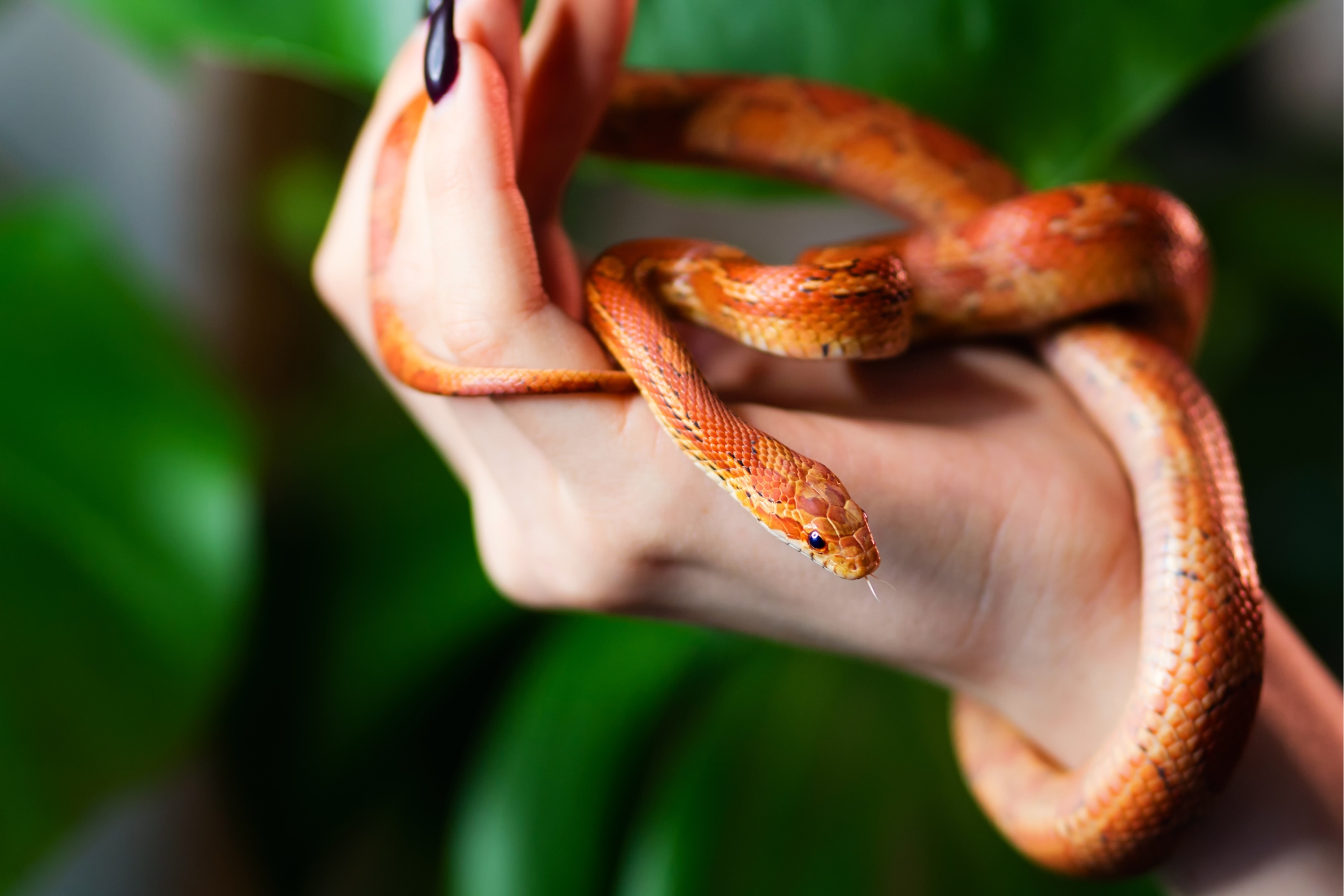
If you’ve been considering a pet reptile, corn snakes are definitely worth a closer look. They’re known for their calm temperament, manageable size, and all those gorgeous color morphs—but there’s more to them than just being “easy” or beginner-friendly.
Whether you’re new to reptiles or simply curious, it’s helpful to understand what life with a corn snake actually looks like day to day.
What Is a Corn Snake?
The corn snake (Pantherophis guttatus) is a North American colubrid native to the southeastern United States. In the wild, they’re found in pine forests, overgrown fields, and farmland—which is actually how they got their name, since they were frequently spotted around corn storage areas, where they would hunt mice and rats.
They’re non-venomous and pose no threat to humans. Instead of using venom, corn snakes are constrictors, meaning they gently subdue small prey by squeezing. Because of this, they’re considered very safe to handle and are often a comfortable option for beginners and families alike.
Are Corn Snakes Friendly?
One of the biggest reasons people love corn snakes is their temperament. As far as snakes go, they’re known for being especially calm and easygoing.
- Baby corn snakes can be a little skittish at first—and might occasionally musk or make a quick defensive move—but with gentle, consistent handling, they almost always grow into relaxed, curious adults.
- Most adult corn snakes are very comfortable being handled. They’ll calmly move through your hands, slowly explore your arms or shoulders, and rarely show any signs of aggression.
- Striking is uncommon and usually only happens if they feel truly threatened or accidentally mistake your hand for food during feeding time.
- With regular, gentle handling a few times a week, these snakes usually become very comfortable and relaxed around people.
- Corn snakes are not social animals and don’t need companionship—keeping two together is generally not recommended, since it can lead to stress, competition, and in some cases, even cannibalism.
Size and Lifespan
What surprises many new owners is just how long they live. With proper care, a corn snake can easily live 15 to 20 years in captivity, and some even go beyond that. It’s a longterm commitment, so it’s definitely something to think through carefully before bringing one home.
- Corn snakes are a medium sized species—adults typically reach between 3.5 and 5 feet in length, with some individuals occasionally approaching 6 feet.
- They’re slender, lightweight snakes—not the large, heavy constrictors that can feel intimidating to first-time snake owners.
- Their manageable size makes them easy to handle and means they don’t need an oversized enclosure to thrive.
Housing Requirements
Corn snakes are known escape artists, so their enclosures must have secure, locking lids. Never underestimate their ability to find even the smallest gap or loose corner to slip through.
- A juvenile can start out in a 10 gallon tank, but as they grow, adults will need at least a 40 gallon enclosure so they have enough space to move around, thermoregulate properly, and express natural behaviors.
- They are ectotherms, meaning they rely on external heat sources to regulate their body temperature. A thermal gradient is essential: one side of the enclosure should maintain a warm basking spot of around 85°F, while the cool side stays between 70°F to 75°F. Under-tank heaters or overhead heat bulbs, combined with a thermostat, work well for achieving this. Nighttime temperatures can drop to around 65°F to 70°F without issue.
- Corn snakes are crepuscular and naturally quite secretive, meaning they’re most active at dawn and dusk and spend a lot of their day hiding. Because of this, multiple hides are essential—not optional. At minimum, they should have one on the warm side and one on the cool side of the enclosure. A snake without a secure hiding place is a stressed snake
- Substrate options are plentiful. Aspen shavings are a popular choice due to their low cost and good moisture control. Coconut fiber and bioactive substrates are also widely used and allow for burrowing, which corn snakes enjoy. Avoid cedar and pine shavings, which off-gas oils that are toxic to reptiles.
Feeding
Corn snakes are obligate carnivores, and in captivity they are typically fed a diet made up exclusively of appropriately sized rodents (most commonly mice).
- Most captive bred corn snakes are already used to eating pre-killed, frozen-thawed rodents, which is strongly preferred over live prey. Live mice can seriously injure a snake, so frozen-thawed feeding is not only safer but also the more responsible and widely recommended method for keepers.
- Hatchlings eat pinky mice every 5 to 7 days. As they grow, the prey size increases to match the snake’s girth—a good rule of thumb is that the prey should be roughly the same diameter as the widest part of the snake’s body.
- Adults are fed appropriately sized mice every 10 to 14 days.
- Feeding responses can vary. Some corn snakes are enthusiastic, energetic feeders that strike immediately and never miss a meal. Others are more finicky, occasionally refusing food—particularly during breeding season or shed cycles. A missed meal here and there is not cause for alarm, but persistent refusal warrants attention.
Shedding
Like all snakes, corn snakes shed their skin periodically as they grow. Juveniles shed more often—sometimes every 4 to 6 weeks—while adults typically shed every couple of months.
In the days leading up to a shed, a corn snake will go through a noticeable change often called being “in blue,” where their eyes take on a cloudy bluish-gray appearance, their colors look duller than usual, and they tend to become less active and more reclusive.
Maintaining proper humidity—around 40% to 60%, with a slight increase during shedding—is essential for healthy, complete sheds. If humidity is too low, snakes may struggle to shed fully, which can lead to retained shed, especially around the eyes and tail tip, and may become a serious health concern if not corrected.
Providing a humid hide, such as a small shelter filled with damp sphagnum moss, can make a big difference in helping prevent these issues
Handling
Most corn snakes tolerate handling well, and many eventually become quite comfortable with it once they’ve had time to settle into their enclosure and adjust to their environment.
- New snakes should be given about 1 to 2 weeks to acclimate to their new enclosure before regular handling begins.
- After feeding, it’s important to wait at least 48 hours before handling your snake to reduce stress and prevent the risk of regurgitation.
- Handling sessions of about 15 to 30 minutes a few times per week are generally ideal. Corn snakes don’t need hours of daily interaction to stay tame, but consistent, calm handling helps them remain relaxed and prevents defensive behaviors from returning.
- Support your snake’s body rather than restraining it. Corn snakes feel more secure when they’re able to move and gently grip, and a snake that feels trapped or held too tightly is more likely to thrash or try to escape.
Health and Veterinary Care
Corn snakes are considered hardy reptiles, but they are not maintenance-free. The most common health issues include:
- Respiratory infections (often caused by temperatures that are too cold or humidity that is too high)
- Mites
- Mouth rot
- Parasites
Finding a veterinarian with reptile experience before you bring home your snake is a smart move. Not every vet is familiar with reptiles, so having a trusted, knowledgeable professional lined up ahead of time can make a big difference in an emergency. While annual checkups aren’t always required for a healthy, thriving snake, knowing exactly who to contact if issues arise is essential.
Color Morphs
One of the things that draws so many people to corn snakes is the incredible range of color and pattern variations (known as morphs). Through selective captive breeding, keepers have developed dozens of stunning combinations that completely change the snake’s appearance while keeping the same calm, manageable species. Some morphs include:
- Okeetee corn snakes are known for their bold orange and red saddles outlined in thick black borders
- Amelanistic (amel) morphs lack black pigment entirely, resulting in bright oranges, reds, and creamy whites
- Lavender corn snakes display soft purple-gray tones
- Snow corns combine multiple recessive traits to create almost pure white snakes with faint yellow or pink hues
- Pattern morphs like tessera and motley change the look of the saddles, turning them into stripes or irregular, broken markings
With so much variation available, there’s almost always a corn snake morph to match your personal style or aesthetic preference. Prices can vary quite a bit depending on rarity, genetics, and breeder lineage—from around $30 for common “normal” corn snakes to several hundred dollars for more unusual or complex morph combinations.
Cost of Ownership
The biggest upfront cost with a corn snake is the initial setup:
- A proper enclosure with heating, lighting, a thermostat, hides, substrate, and a water dish typically runs anywhere from $150 to $400+ depending on the quality and equipment you choose.
- The snake itself can cost anywhere from about $30 for a common morph to several hundred dollars for rarer or more complex varieties.
- After that initial setup, ongoing costs are relatively low. Most of the routine expense comes from frozen-thawed mice (often purchased in bulk online or at pet stores), along with occasional substrate changes and any veterinary care if it’s ever needed.
Is a Corn Snake Right for You?
Corn snakes are a great match for people who want a reptile that’s genuinely manageable, visually beautiful, and rewarding to keep—without the more complex husbandry required by species like chameleons or large pythons.
They’re fairly low-demand pets in the sense that they don’t need daily interaction like a dog or cat, but they do thrive with consistent, attentive care, which supports their long lifespan and calm temperament.
That said, they aren’t the right fit for everyone. If you’re uncomfortable feeding rodents or hoping for a pet with obvious emotional interaction or “affection,” a corn snake may not be the best choice. They won’t come to greet you or seek attention, but in their quiet, steady way, they’re still incredibly interesting animals to observe and care for.
For many keepers, they remain a classic first snake for good reason—and even for experienced reptile enthusiasts, a beautifully morphed corn snake is something that never really gets old.