This post contains affiliate links. If you make a purchase through one of these links, we may earn a small commission at no extra cost to you.
5 Best Parrot Foods (Vet Recommended Picks)
Harrison’s, Roudybush, ZuPreem, and more — see how the top parrot food brands stack up on ingredients, price, and real owner reviews.

- What Makes a Parrot Food “Good”?
- Best Overall: Harrison’s Bird Foods High Potency Coarse Organic Pellets
- Best Value Daily Pellet: Roudybush Daily Maintenance Crumble
- Best Budget Pellet: ZuPreem True Harvest
- Best Foraging Supplement: Lafeber Tropical Fruit Nutri-Berries
- Best Certified Organic Alternative: TOP’s (Totally Organic Pellets)
- How to Switch Your Bird to a New Food
- The Bottom Line
If you’ve ever stood in front of a wall of bird food wondering why one bag costs $12 while another is more than $50, you’re definitely not alone. Parrot nutrition can be confusing, and there’s plenty of debate about what actually makes a diet great.
The right food can make a noticeable difference in your parrot’s feather quality, energy, overall health, and long term vet costs. On the other hand, a poor quality diet can contribute to nutritional deficiencies, weight problems, and other health issues over time.
So, which one is right for your bird?
We’re breaking down some of the top rated parrot foods available right now, focusing on what really matters: ingredient quality, species specific nutrition, and feedback from real bird owners.
What Makes a Parrot Food “Good”?
Before getting into specific products, it helps to know what you should actually be looking for on the label.
A high quality parrot food should be:
- Pelleted or formulated for complete nutrition: rather than a seed only mix, which can encourage birds to pick out their favorite foods (often the fattier ones) and leave behind important nutrients
- Free from artificial dyes and unnecessary preservatives: especially ingredients like BHA and BHT, which some bird owners prefer to avoid, particularly for sensitive birds
- The right size for your species: a pellet made for an African Grey may be too large for a lovebird and too small for a macaw
- Balanced for your bird’s life stage: nutritional needs can vary between healthy adult birds and those that are breeding, molting, or entering their senior years
With that in mind, here are the standout brands and products worth putting in the bowl:
Best Overall Harrison’s Bird Foods High Potency Coarse Organic Pellets
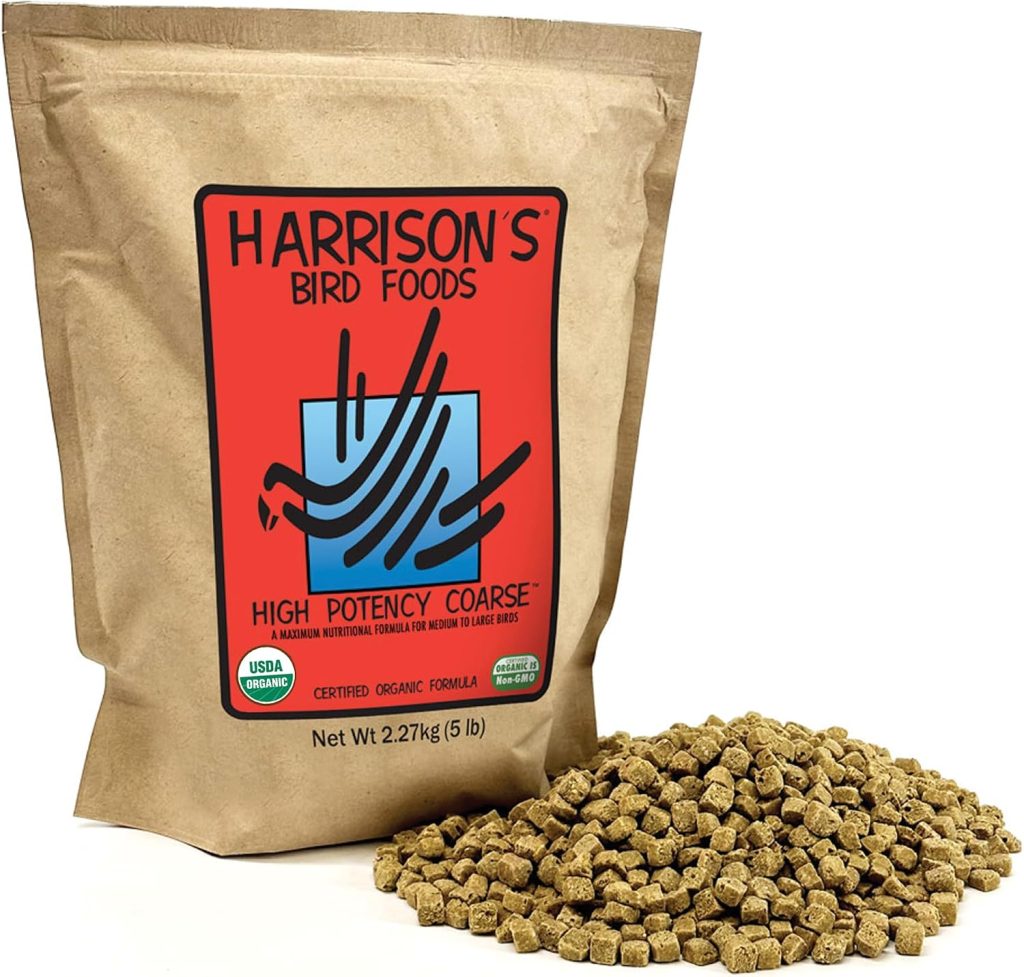
Harrison’s Bird Foods consistently ranks among the top choices recommended by avian veterinarians and bird owners. It’s USDA certified organic, made with human grade ingredients, and contains no synthetic preservatives, artificial dyes, or added sugar. The food is also cold pressed rather than steam extruded, a process some avian nutrition experts believe may help preserve more of the nutrients naturally found in the ingredients.
The biggest downside is the price. Harrison’s costs more per pound than many competitors and typically comes in smaller bags. Some birds (especially those that have eaten a seed based diet for years) may also take a little longer to make the switch.
Best for: Owners looking for a high quality organic formula.
Best Value Daily Pellet Roudybush Daily Maintenance Crumble
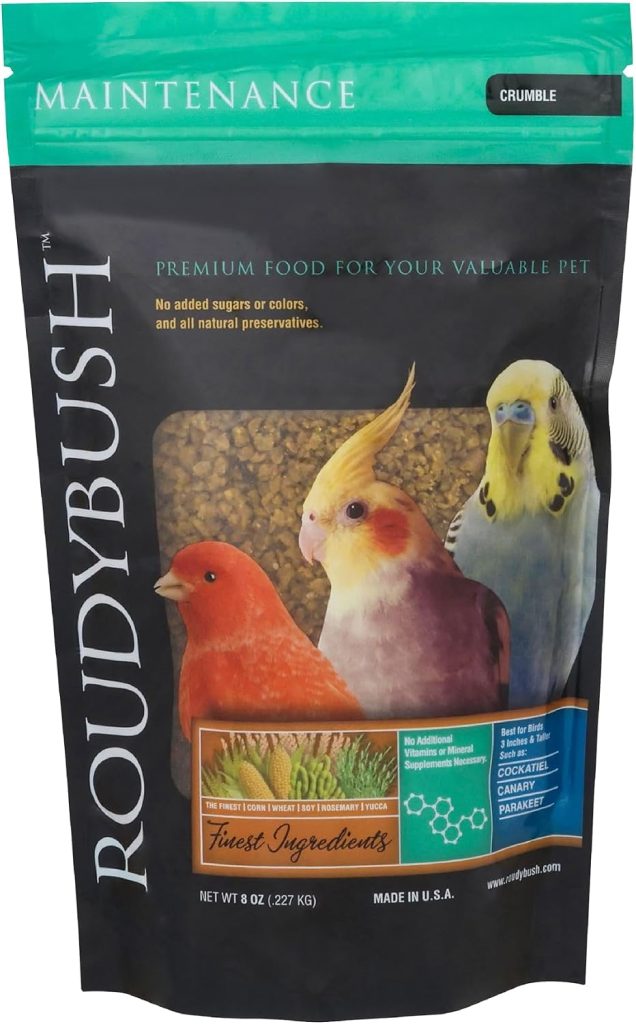
Roudybush is a popular starting point for birds that are new to pellets, especially because its texture and flavor tend to appeal to picky eaters. It’s fortified, free from artificial preservatives and dyes, and comes in a wide range of formulas, including Daily Maintenance, Low Fat Maintenance, Breeder, Formula 3 for hand feeding, and California Blend with added fruit and vegetable pieces.
The main tradeoff is that it isn’t certified organic, and some owners prefer the cold pressed process used by other premium brands over Roudybush’s steam pelleting method. Still, for multi bird households where food costs can add up quickly, Roudybush offers solid nutritional quality without the premium price tag.
Best for: Budget conscious owners and multi bird households looking for a nutritionally complete pellet without breaking the bank.
Best Budget Pellet ZuPreem True Harvest
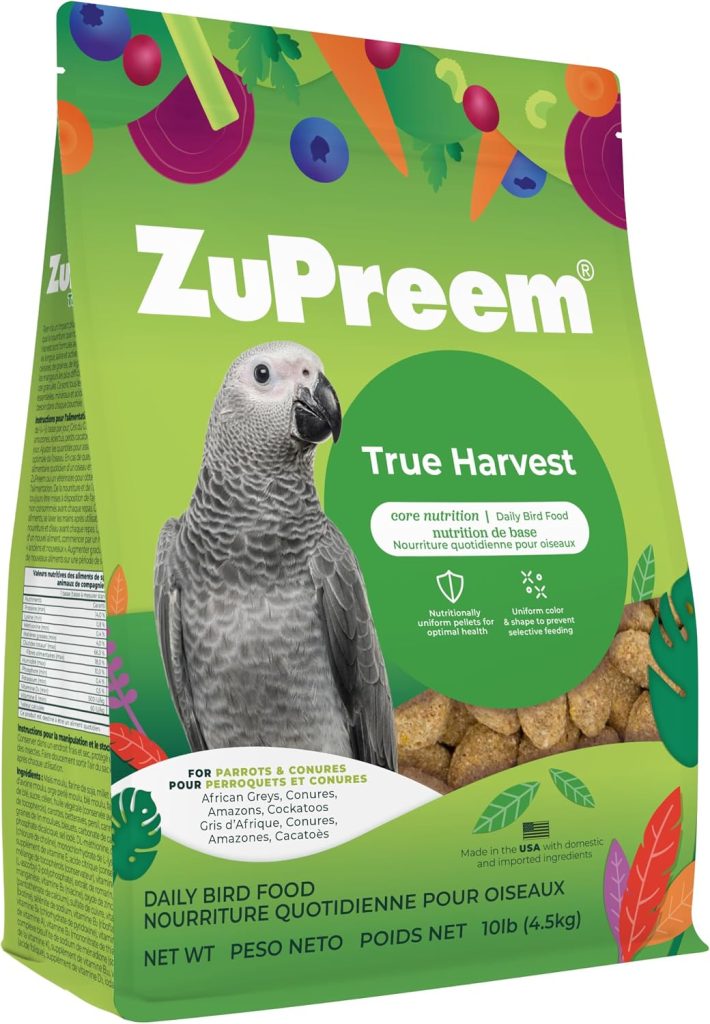
ZuPreem is one of the most widely available pellet brands, so it’s easy to find at pet stores and online.
The True Harvest line blends whole grains, seeds, and vegetable pieces into a fortified pellet formula, giving birds more textural variety at the bowl than a single shape pellet while still delivering the full spread of vitamins and minerals in every bite.
It isn’t certified organic, and as with most ZuPreem lines, some birds take a bit to warm up to a new pellet shape after being on seeds. But for the price point and shelf availability, it’s a solid option that beats seed only feeding by a wide margin.
Best for: New bird owners transitioning from seed or those looking for an affordable, widely stocked pellet with added variety.
Best Foraging Supplement Lafeber Tropical Fruit Nutri-Berries
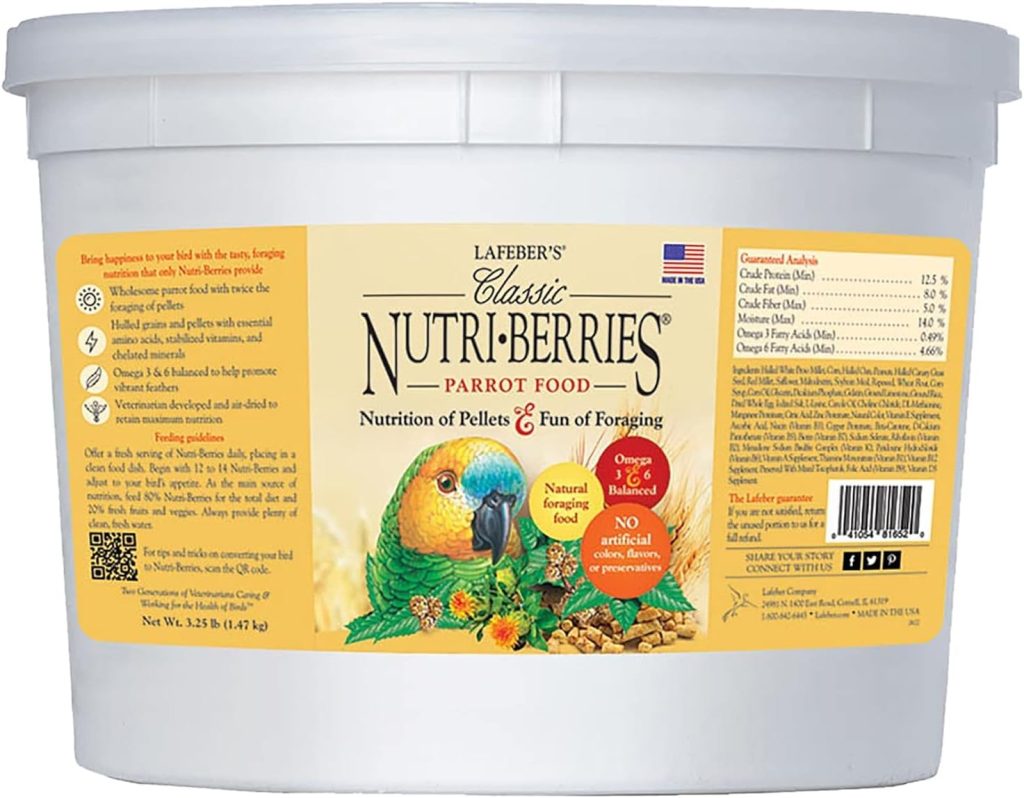
Nutri-Berries aren’t meant to completely replace your parrot’s pellet diet, but they’re a popular choice because they make mealtime more engaging and encourage natural foraging and chewing behaviors. The berry shaped pieces give birds something fun to pick apart and manipulate, while the formula is free from chemical preservatives and artificial dyes.
One thing to keep in mind is that they contain molasses as a binder, which means they have more sugar than a typical pellet. They’re best used as a supplement, enrichment food, or training treat rather than as your bird’s entire diet.
Best for: Adding enrichment, chewing, and foraging opportunities to a diet that’s built around a complete pellet.
Best Certified Organic Alternative TOP’s (Totally Organic Pellets)
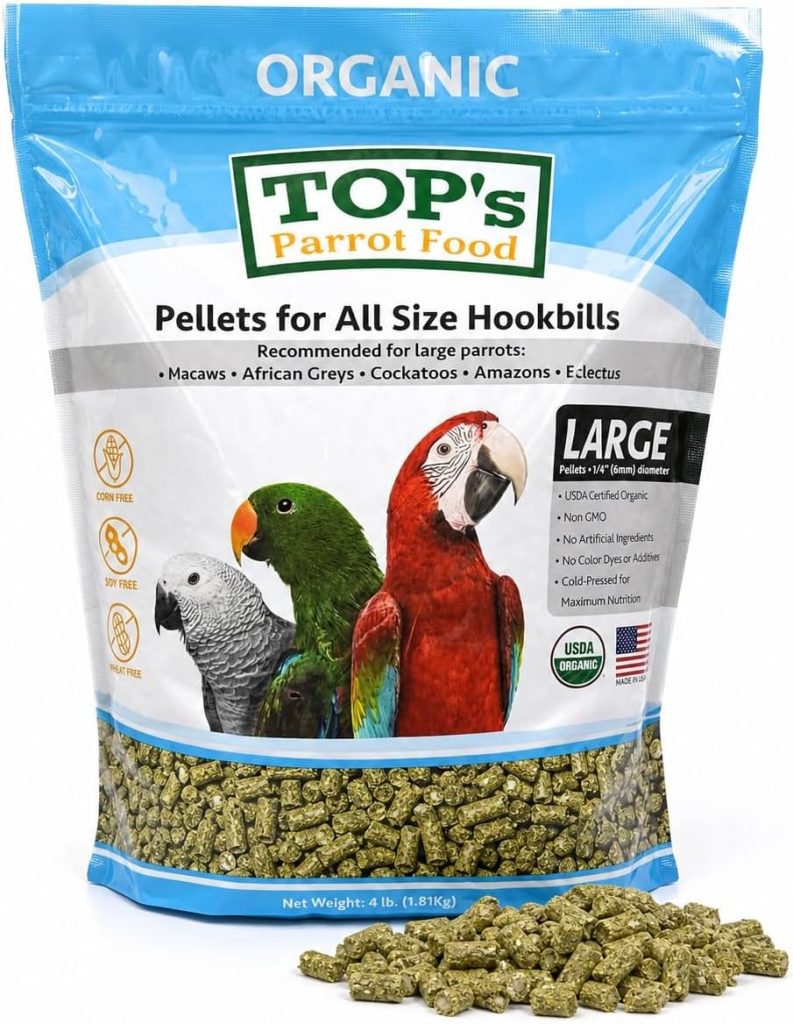
TOP’s is one of the cleanest parrot food formulas available. It’s USDA certified organic, non-GMO, cold pressed, and it’s free from soy, peanuts, wheat, and spirulina—ingredients that some owners prefer to avoid due to allergies or sensitivities.
It’s also priced similarly to Harrison’s, typically costing around $35 to $50 for a 4 pound bag. If you’re looking for an organic option but want a different ingredient profile than Harrison’s, TOP’s is definitely worth considering.
Best for: Owners looking for a premium organic parrot food with a clean, simple, and allergen conscious formula.
How to Switch Your Bird to a New Food
Whatever food you choose, don’t switch your parrot’s diet overnight. Most parrots do better with a gradual transition, and making the change too quickly can cause them to reject the new food—or worse, stop eating altogether.
A simple way to make the switch is:
- Start with 25% new food and 75% old food for the first few days.
- Move to a 50/50 mix over the next several days, while keeping an eye on your bird’s droppings and body weight.
- Gradually increase the new food until you’ve fully made the switch. If your bird starts losing weight or avoids the new food, slow the transition down.
- Keep fresh fruits and vegetables included in their daily diet throughout the process. The added variety can help keep your parrot interested in eating while they adjust to the new food.
- If your bird refuses to eat for more than 24 hours during the transition, slow things down and consult an avian vet before continuing.
The Bottom Line
The truth is there’s no single “best” parrot food—it really comes down to what works best for your bird, your budget, and how much you care about things like ingredients and sourcing.
Harrison’s and TOP’s are great options if you’re looking for premium organic formulas.
Roudybush offers a good balance of quality and affordability for everyday feeding, while ZuPreem True Harvest is a solid choice for birds transitioning away from a seed based diet.
And Nutri-Berries can be a fun way to add enrichment and encourage natural foraging, but they’re best used alongside a complete diet rather than as a replacement.
At the end of the day, the biggest nutritional improvement for many parrots isn’t switching from one premium brand to another—it’s moving away from a seed only diet and establishing a nutritionally complete pelleted foundation.