Living in an apartment doesn’t mean you have to give up on your dream of owning a pet reptile. In fact, many reptiles are perfectly suited to apartment living – they’re quiet, low maintenance, and don’t require outdoor space, making them ideal for close quarters.
Whether you’re a first time reptile owner or an experienced keeper adapting to apartment life, this guide will help you find the perfect scaly companion.
Why Reptiles Make Excellent Apartment Pets
Before exploring specific species, here’s why reptiles are particularly well-suited for apartment living:
- Space Efficiency: Most reptiles require significantly less space than traditional pets like dogs or cats. A properly designed terrarium can fit comfortably in even the smallest studio apartment.
- Quiet Companions: Reptiles don’t bark, meow, or make noises that could bother neighbors – an important advantage in apartments with thin walls.
- No Outdoor Requirements: Unlike dogs, reptiles don’t need walks or outdoor bathroom breaks, making them perfect for busy apartment dwellers.
- Minimal Odor: When their enclosures are well-maintained, reptiles produce very little odor compared to litter boxes or pet bedding.
- Landlord Friendly: Many rental properties that restrict traditional pets allow reptiles – but it’s important to always check your lease to confirm this before getting a pet reptile.
Top 10 Best Reptiles for Apartment Living
1. Leopard Gecko
Minimum Enclosure Size: 20 gallon tank (30″ x 12″ x 12″)
Leopard Geckos are consistently ranked among the best reptiles for apartment living – and it’s easy to see why. These docile, beautifully patterned lizards are low maintenance and ideal for beginners.
Why They’re Perfect for Apartments:
- Extremely quiet, so neighbors won’t be disturbed
- Don’t require specialized UVB lighting (but they still benefit from it)
- Can thrive in a 20 gallon tank their entire life
- Easy to handle and rarely bite
- Lifespan of 10 to 20 years with proper care
- Juveniles (under 1 year) need food daily, but healthy adults can be fed every other day to every 5 days (about 2 to 3 times a week)
Care Requirements:
- Leopard Geckos need a temperature gradient of 88°F to 92°F on the warm of their enclosure and ambient room temperature on the cool side.
- Their diet consists of crickets, mealworms, and other readily available insects.
- Their straightforward heating and dietary needs make them especially convenient and cost effective for apartment living.
2. Crested Gecko
Minimum Enclosure Size: 20 gallon tall tank (24″ x 18″ x 18″)
Crested Geckos have exploded in popularity over the past decade and are perfectly suited to apartment living. These arboreal geckos are easy to care for and come in stunning color variations.
Why They’re Perfect for Apartments:
- Thrive at room temperature (72°F to 78°F), often requiring no supplemental heating
- Vertical tanks have a small floor footprint
- Completely silent
- Don’t require UVB lighting (but it’s still beneficial)
- Excellent for beginners
Care Requirements:
- Crested Geckos need a tall enclosure with ample climbing space, branches, and foliage.
- They eat a powdered diet mixed with water along with various insects, making feeding simple and relatively mess free.
- Daily misting maintains humidity levels between 60% to 80%, which is essential for their health and shedding.
3. Corn Snake
Minimum Enclosure Size: 20 gallon tank for juveniles, 40 gallon for adults
Corn Snakes are classic beginner snakes and among the most apartment friendly reptiles. Their moderate size, calm temperament, and striking color morphs make them highly appealing.
Why They’re Perfect for Apartments:
- Eat only once every 5 to 7 days
- Completely silent
- Don’t require large enclosures (a 40 gallon tank is sufficient for adults)
- Rarely defensive and easy to handle
- Simple heating requirements
- Can live 15 to 20 years with proper care
Care Requirements:
- Corn Snakes need a temperature gradient with a basking spot around 85°F and a cooler side around 75°F.
- They eat thawed-frozen mice, which can be conveniently stored in a freezer.
- Their enclosures require minimal maintenance – spot clean as needed and perform a full clean monthly.
4. Ball Python
Minimum Enclosure Size: 40 gallon tank for adults
Ball Pythons are renowned for their docile nature and beautiful patterns. While larger than Corn Snakes, they’re still manageable in apartment settings and make wonderful pets for those wanting a more substantial snake companion.
Why They’re Perfect for Apartments:
- Extremely calm and rarely bite
- Nocturnal, so they won’t be active during the day
- Can comfortably live in a 40 to 55 gallon enclosure
- Only need to eat once every 7 to 10 days as adults
- Don’t produce significant odor when maintained properly
- Can live 20 to 30 years with proper care
Care Requirements:
- Ball Pythons require a temperature gradient with 78°F to 80°F on the cool side and 88°F to 92°F on the warm side.
- Humidity should be maintained around 50% to 60%.
- They feed on thawed-frozen rats, which are convenient to store and prepare.
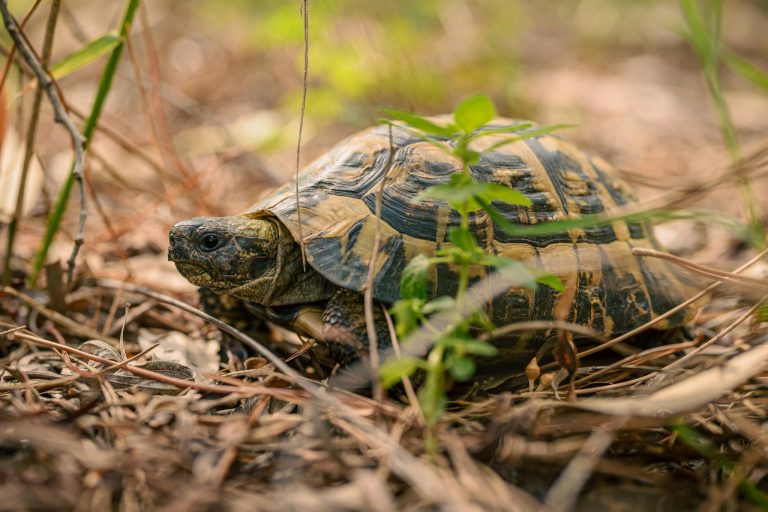
5. Russian Tortoise
Minimum Enclosure Size: 8 to 10 square feet of floor space
Russian Tortoises are ideal for apartment dwellers seeking a long term, low maintenance companion. Hardy and personable, these tortoises adapt very well to indoor living.
Why They’re Perfect for Apartments:
- Completely quiet
- Can thrive in a large plastic enclosure or tortoise table
- Herbivorous diet is simple, healthy, and affordable
- Hardy and beginner friendly
- Develop distinct personalities
- Lifespan of 40 to 50+ years
Care Requirements:
- Russian Tortoises need ample floor space but minimal height.
- Provide UVB lighting and a basking spot around 95°F.
- Their diet should consist of leafy greens, vegetables, and occasional hay.
- With supervision, they can enjoy safe floor time in your apartment.
6. Blue Tongued Skink
Minimum Enclosure Size: 40 to 55 gallon tank (minimum 4 feet long)
Blue Tongued Skinks are often called the “puppies” of the reptile world due to their curiosity, intelligence, and interactive nature. While they require more space than geckos, they are still very manageable in most apartment settings.
Why They’re Perfect for Apartments:
- Extremely docile and enjoy handling
- Omnivorous diet is easy to provide
- Don’t require much climbing space, so enclosures can be low profile
- Hardy and forgiving for beginners
- Live 15 to 20 years
- Recognize and interact with their owners
Care Requirements:
- Blue Tongued Skinks need a basking spot around 95°F to 100°F and UVB lighting.
- Their diet should include a mix of vegetables, fruits, and protein (insects, eggs, etc.) making feeding straightforward and affordable.
7. African Fat Tailed Gecko
Minimum Enclosure Size: 20 gallon tank
Often considered the “other” Leopard Gecko, African Fat Tailed Geckos are excellent for apartment living and are generally even more docile than Leopard Geckos.
Why They’re Perfect for Apartments:
- Extremely calm and easy to handle
- Thrive in small enclosures
- Similar care requirements to leopard geckos
- Don’t require UVB lighting (but it’s still beneficial)
- Quiet and virtually odor free
- Perfect for beginners
Care Requirements:
- Nearly identical to Leopard Geckos, African Fat Tailed Geckos need a temperature gradient of around 88°F to 90°F on the warm side and room temperature on the cool side.
- They primarily eat insects and require slightly higher humidity (50% to 70%) compared to Leopard Geckos.
8. Kenyan Sand Boa
Minimum Enclosure Size: 20 gallon tank
Kenyan Sand Boas are docile snakes ideal for apartment living, especially if space is limited. They spend much of their time burrowed in substrate, making them low maintenance and unobtrusive pets.
Why They’re Perfect for Apartments:
- Manageable size – adult males grow to only about 15 inches while adult females can sometimes reach 26 to 32 inches (2 feet)
- Can live in a 20 gallon tank for life
- Extremely calm and slow moving
- Only eat once every 7 to 10 days
- Minimal maintenance required
- Live 15 to 20 years
Care Requirements:
- Kenyan Sand Boas need a warm side around 90°F and a deep substrate for burrowing.
- Their diet consists of thawed-frozen mice.
- They require minimal handling and interaction, making them excellent low stress companions.
9. Long Tailed Lizard
Minimum Enclosure Size: 20 gallon long tank
Long Tailed Lizards are small, active, and fascinating to watch. While they’re not ideal for handling, they make excellent display pets for apartment dwellers looking for a lively, low maintenance reptile.
Why They’re Perfect for Apartments:
- Require very little space
- Affordable to buy and care for
- Diurnal (active during the day) and visually engaging
- Easy to maintain with simple husbandry
- Can be housed in small groups with adequate space
Care Requirements:
- These lizards need basking temperatures around 90°F and UVB lighting.
- Feed small crickets or other appropriately sized insects.
- Mist the enclosure daily to maintain humidity.
- While they’re more delicate than some other species, their minimal space and quiet nature make them a great choice for compact living spaces.
10. Red Eared Slider Turtle (With Caveats)
Minimum Enclosure Size: 75 to 100 gallons for adults
While Red EaredSsliders need substantial space as adults, they’re worth mentioning for apartment dwellers who can accommodate a large aquarium. These popular turtles are intelligent, interactive, and incredibly long lived.
Why They Can Work in Apartments:
- Aquatic habitat doesn’t take up floor space like other pets
- Interactive and responsive to their owners
- Tanks can be placed in areas unsuitable for furniture
- Can live 30 to 40 years with proper care
Important Considerations:
- Red Eared Sliders may start out relatively small, but these turtles grow to 8 to 12 inches in shell length when fully mature.
- They require strong filtration, UVB lighting, and a large volume of warm clean water.
- These turtles are a long term commitment and are best suited for apartment keepers with both the space and dedication to maintain a large aquatic setup for decades.
Essential Factors to Consider When Choosing an Apartment Reptile
Enclosure Size and Placement
- Space is often at a premium in apartments, so carefully plan where your reptile’s enclosure will go before choosing a pet.
- Make sure to measure the available space before committing to a species.
- Remember that you need access to all sides for maintenance, and the enclosure should be away from high traffic areas and windows (to prevent temperature fluctuations).
PRO TIP: Vertical enclosures for arboreal species (like crested geckos) maximize your floor space. Furniture-style terrariums can also double as attractive décor.
Electricity Costs
- Reptile heating and lighting requirements vary by species and can affect your utility bill.
- Reptiles that thrive at or near room temperature (such as crested geckos or leopard geckos with minimal additional heating needs) are ideal for cost conscious apartment keepers.
Noise Level
- While all reptiles are relatively quiet, some setups can generate background sounds.
- Aquatic turtles produce splashing and filter noise, while terrestrial reptiles like snakes and geckos are virtually noiseless.
Feeding Logistics
- Plan ahead for food storage and preparation.
- Frozen rodents require freezer space, while live insects need separate containers.
- Powdered diets for crested geckos or leafy greens for tortoises are more convenient options for small living spaces.
Lease Compliance
- Always review your lease agreement before bringing home a pet reptile.
- While many apartments that prohibit cats and dogs allow pet reptiles, some have blanket “no pets” policies that include all animals.
- Get written permission from your landlord to avoid future disputes or potential eviction.
Maintenance and Odor Control
- Cleanliness is key in a confined environment.
- Most reptiles produce minimal odor when their enclosures are cleaned regularly.
- Spot clean daily, deep clean monthly, and use odor absorbing substrates with adequate ventilation to keep your space fresh.
Temperature Stability
- Apartment heating and cooling can fluctuate more than in houses.
- Choose species that tolerate mild temperature variations or use thermostats and backup heat sources in winter.
- Avoid placing enclosures near vents, radiators, or drafty windows.
Lifespan Commitment
- Many reptiles live for decades.
- Consider your long term plans – if you move often, smaller easily portable species are more practical than large snakes or aquatic turtles that require complex setups.
Setting Up Your Apartment for Reptile Success
Choosing the Right Location
Selecting the perfect spot for your reptile’s enclosure ensures both comfort for your pet and convenience for you. The ideal location should be:
- Away from direct sunlight and drafty windows
- On stable, level furniture that can safely support the enclosure’s weight
- In a quiet, low traffic area to reduce stress
- Distant from loud speakers or televisions
- Easily accessible for daily maintenance and observation
- Positioned at a comfortable height for viewing and interaction
Minimizing Equipment Footprint
Apartment living often means limited space, so efficient setup design is key. Try these space saving strategies:
- Use under tank heaters instead of bulky basking lamps when appropriate
- Choose compact, energy efficient LED UVB bulbs that generate less heat
- Mount thermometers and hygrometers inside the enclosure to save space
- Store supplies in stackable containers to reduce clutter
Creating an Attractive Display
Your reptile’s habitat can be both functional and visually appealing. Modern terrariums can serve as living art or elegant furniture pieces.
Consider bioactive setups with live plants, natural substrates, and realistic décor. Many manufacturers now offer designer enclosures that blend seamlessly into living rooms – perfect for apartment reptile enthusiasts who value style and practicality.
Common Mistakes to Avoid
❌ Underestimating Adult Size
Many reptiles start small and adorable but grow much larger than expected. Always research the adult size and enclosure requirements of any species before purchasing to avoid outgrowing your available space.
❌ Inadequate Temperature Control
Apartment climates can fluctuate with the seasons. Invest in quality thermostats and reliable backup heating to maintain consistent temperatures and prevent stress or illness in your reptile.
❌ Ignoring Humidity Needs
Dry indoor air (especially in heated or air conditioned apartments) can cause serious health issues for tropical reptiles. Either choose species that tolerate lower humidity or install misting systems and humidifiers to maintain proper moisture levels.
❌ Impulse Purchases
Reptiles require specific environments that must be established before they arrive. Avoid buying on impulse – set up the enclosure completely and let it run for at least a week to ensure stable temperature and humidity conditions.
❌ Neglecting Veterinary Care
Reptile veterinarians (herp vets) can sometimes be hard to find. Research and identify a qualified exotic vet before you bring home your pet, so you’re prepared in case of emergencies or health concerns.
Which Apartment Friendly Pet Reptile Is Right For You?
The best pet reptile for your apartment depends on your lifestyle, experience level, available space, and personal preferences.
For absolute beginners or those with limited room, leopard geckos and crested geckos are unbeatable choices – they’re forgiving, low maintenance, affordable, and highly adaptable to small spaces.
If you’re looking for a pet reptile you can handle regularly, corn snakes or blue tongued skinks make excellent, interactive pets with calm temperaments.
For those seeking a long term companion with personality and charm, a Russian tortoise offers decades of enjoyment in a compact, easy to manage package.
Regardless of which species you choose, responsible reptile keeping in an apartment requires commitment to proper care, consistent maintenance, and consideration for your neighbors and landlord. With thoughtful preparation and the right species choice, you’ll find that reptiles make exceptional apartment pets – quiet, captivating, and perfectly suited to modern urban living.
Before making your final decision,visit local reptile shops or expos to meet these species in person, speak with experienced keepers, and ensure you’re ready for the responsibility. Your perfect scaly roommate may be closer than you think!