Cross Grazing for Horse Owners How to Use Other Animals to Build a Healthier Pasture
Discover a smarter, more natural approach to horse pasture management that reduces parasites, cuts costs, and builds healthier soil—all without chemicals.
If your horse pasture looks more like a patchwork of weeds and bare dirt than a lush, thriving meadow, the issue might not be your soil, seed, or fertilizer—it could simply be that only horses are grazing it.
Cross grazing—the practice of rotating different animal species through the same pasture—is a time-tested and highly effective strategy in sustainable land management.
Despite its benefits, many horse owners have never tried it—but they should.
Here’s what you need to know about cross grazing to improve your pasture quality, control parasites, manage weeds, and build healthier land for the long term.
What Is Cross Grazing?
Cross grazing—also known as multi-species or mixed grazing—simply involves allowing two or more different animal species to share the same pasture, either simultaneously or in rotation, with one species following another over weeks or months.
The concept comes from how natural ecosystems actually work. Wild grasslands developed under the influence of diverse herbivores—bison, elk, antelope, rabbits, birds—all grazing in overlapping patterns, each fulfilling a unique ecological role. Modern pastures dominated by a single species miss much of that complexity, which helps explain why horse-only pastures often degrade over time.
Cross grazing brings some of that complexity back, and the results are measurable and can be clearly observed.
The Core Problem with Horse-Only Pastures
To understand why cross grazing works, it helps to look at what horses do to pasture when they’re the only grazing animal.
Pasture Management
Why Horse-Only Pastures Struggle
Horses are not to blame — but grazing a single species on the same land, indefinitely, creates predictable and compounding problems. Here’s what’s really happening to your pasture.
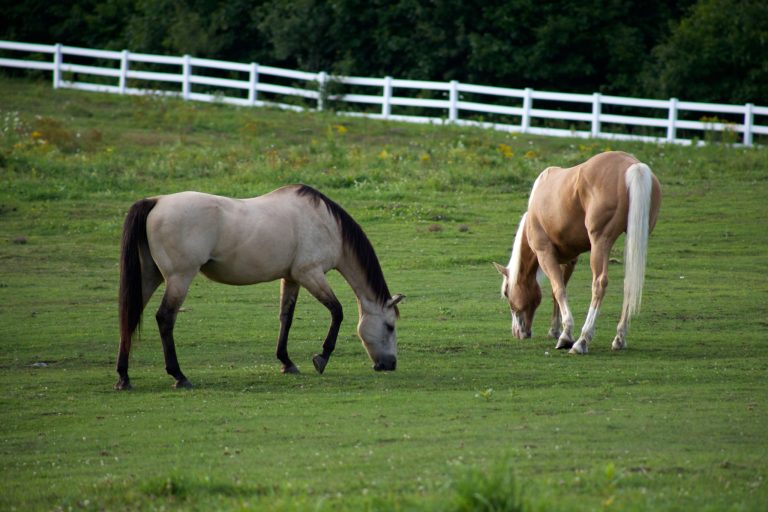
Horses clip certain areas to bare soil while ignoring others entirely. Over time, your pasture splits into two zones — and the usable grazing area shrinks every season.
Strongyles shed in manure develop into larvae that migrate onto surrounding grass. Horses avoid grazing near feces — but not the larvae that spread from it.
Hooves and body weight compress soil in high-traffic zones, reducing water infiltration and damaging root systems — creating the perfect conditions for weed invasion and erosion.
None of this is the horse’s fault. These are the predictable outcomes of grazing land the way it was never meant to be grazed — by one species, indefinitely. Cross grazing introduces the ecological complexity that single-species pastures are missing, and directly addresses all three of these problems.
The Best Animals to Cross Graze with Horses
Not every animal is a good cross-grazing partner for horses. Compatibility depends on parasite biology, grazing behavior, fencing requirements, and practical management. Here are the animals most commonly used—and most effective—alongside horses:
Pasture Management
Perfect Pasture Partners for Horses
Multi-species grazing is one of the most effective tools for reducing parasites, controlling weeds, and building healthier pasture — naturally.
Cattle wrap their tongues around tall, rough stems horses leave behind, creating a more even sward. From a parasite standpoint, they’re near-perfect: equine strongyle larvae cannot survive in a bovine host, and bovine parasites don’t affect horses. Each species acts as a biological dead end for the other’s worst worms.
Sheep are highly versatile and accessible, especially on smaller acreage. They’re effective at controlling broadleaf weeds and evening out pasture height. Like cattle, equine strongyle larvae cannot develop in sheep — making them ideal for breaking the parasite cycle where extended rest periods aren’t possible.
Goats are specialists in brushy, woody, shrubby vegetation — brambles, thistles, blackberries, young trees. Where horses and cattle won’t touch these plants, goats actively seek them out. Use them strategically to reclaim problem areas rather than as routine rotation partners, and plan for their escape-artist tendencies.
Chickens, turkeys, and guinea fowl scratch through manure consuming fly larvae — reducing face flies, horn flies, and stable flies that stress horses in summer. They also eat grasshoppers and beetles that damage turf. A small flock following horses through a rotation mirrors how oxpecker birds work with wild herbivores.
Cross Grazing Strategies How to Structure Your System
Cross grazing works best when it’s built into a rotational grazing system. Here’s how to think about structuring it practically:
Pasture Management
Cross Grazing 101: Strategies Every Horse Owner Should Know
Three practical approaches to multi-species grazing — choose the one that fits your land, your animals, and your management style.
Horses graze a paddock first, then a second species — typically cattle or sheep — follows through the same paddock. The following species mops up the rough, selective grazing horses leave behind, evens out the sward, and ingests and destroys any horse parasite larvae present. Horses return to find more uniform pasture with dramatically lower parasite pressure.
The rest period is critical. Most equine strongyle larvae die within 3–4 weeks of warm, dry weather, or are consumed by the following species. Never skip it.
Different species share the same paddock at the same time rather than in sequence. Horses and sheep generally coexist peacefully and work well together on larger properties where animals have enough space to establish their own grazing zones. Cattle can also be co-grazed with horses, though individual temperament matters more — some horses are anxious around cattle, and younger stock may be bullied at shared water points.
Co-grazing is less controlled from a pasture management standpoint, but it’s simpler to run and still captures most of the parasite and grazing complementarity benefits.
Sheep and horses are the most compatible pairing for simultaneous grazing. Introduce animals gradually and monitor temperament at shared feed and water points.
No full rotation system required. Use cross grazing strategically wherever your pasture needs it most — without the infrastructure of a complete multi-paddock setup.
Practical Considerations Before You Start
Cross grazing isn’t complicated, but a few practical points will help you avoid common mistakes.
Pasture Management
Planning Ahead: How to Make Cross Grazing Work on Your Farm
Five things to assess and plan for before introducing a second species to your horse pasture — covering fencing, minerals, vet coordination, stocking, and introductions.
Your existing horse fencing may not be sufficient to contain all species. Evaluate your perimeter and subdivision fencing honestly before introducing other animals. Sheep and cattle can often be managed with a single strand of electric wire inside an existing horse fence perimeter. Goats require considerably more effort.
Different species have different mineral needs. Horses and cattle can generally share water troughs, but mineral supplementation must be species-appropriate. Keep mineral feeders strictly separate between species.
Copper toxicity warning: Many mineral products formulated for cattle contain copper levels that are toxic to sheep. Never allow sheep access to cattle mineral feeders.
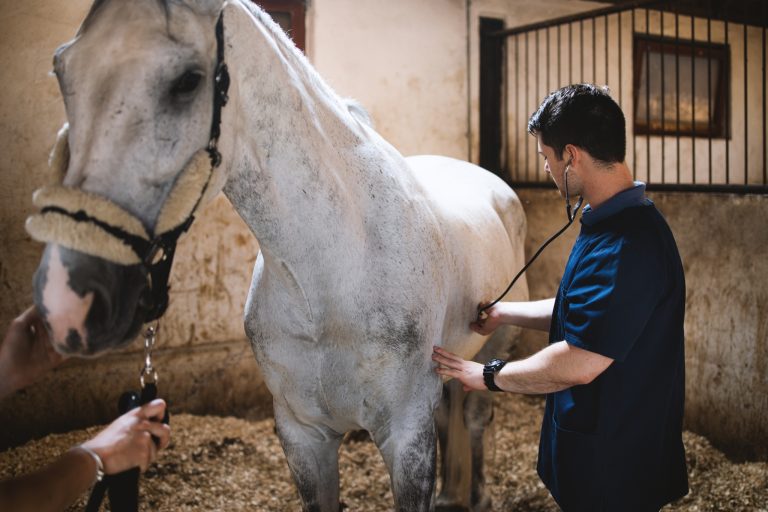
Discuss your cross-grazing plan with your equine vet before you start, particularly around parasite monitoring. Run regular fecal egg counts on your horses both before and after implementing cross grazing to measure the impact on parasite burdens over time. This data will help you refine your rotation timing and confirm the strategy is working.
Cross grazing changes the composition of animals on your land — it does not increase the total carrying capacity. You cannot run more animal units than your pasture can sustainably support just because you’re mixing species. Be honest about your land’s limits and do not overstock.
Calculate total animal units across all species combined, not per species individually. Your agronomist or local extension service can help you assess your property’s carrying capacity.
Horses that haven’t shared pasture with other species may need time to adjust. Introduce new animals with consideration for individual temperaments — not all horses or livestock will accept new companions immediately. Monitor closely for the first few days, particularly at shared water sources, gates, and shelter areas where competition is most likely.
What Cross Grazing Does for Your Soil The Bigger Picture
Beyond controlling parasites and creating more uniform grazing, cross grazing delivers a deeper, more lasting benefit: healthier soil.
Different species deposit manure with distinct nutrient profiles and intensities. Horse manure tends to be lower in immediately available nitrogen, while cattle manure is richer, and sheep or goat manure is concentrated and nutrient-dense. When multiple species share a pasture, this diversity in manure spreads nutrients more evenly and supports a richer, more resilient soil microbiome.
Mixed grazing also encourages stronger, more complex root systems. Because different grazers leave plants at varying heights, a wider range of plant species survives, producing deeper and more intricate root networks. Over time, this increases soil organic matter, improves water infiltration, and enhances the land’s resistance to drought and erosion.
In short, cross grazing isn’t just about managing horses better—it’s about restoring the ecological complexity that makes pastures truly productive.
The Bottom Line on Cross Grazing
Cross grazing is not a silver bullet, and it doesn’t replace good rotational grazing management, adequate rest periods, or appropriate stocking rates—but as a component of a thoughtful pasture management program, it is one of the most cost-effective interventions available to horse owners.
The parasite control benefits alone—reducing reliance on dewormers, slowing the development of resistance, and interrupting the cycle of pasture contamination in an era when effective anthelmintics are increasingly scarce.
Beyond parasites, cross grazing improves pasture uniformity, suppresses weeds, enhances soil health, and even helps with fly control. Bringing in cattle, sheep, or even a small flock of chickens can transform your horse property into a healthier, more productive ecosystem.
The land was always meant to support multiple species. Cross grazing is simply remembering that fact—and working with it, rather than against it.