What Humidity Does a Blue-Tongued Skink Need? A Complete Keeper’s Guide
Incorrect humidity is one of the top causes of health issues in pet skinks. Learn the right levels, best substrates, and how to maintain them.
- Why Humidity Matters for Blue-Tongued Skinks
- Humidity Requirements by Species
- How to Measure Humidity in a Skink Enclosure
- How to Increase Humidity
- How to Decrease Humidity
- The Humidity Gradient: Think in Zones, Not Numbers
- Humidity and Shedding: What to Watch For
- Humidity and Respiratory Health
- Seasonal Humidity Adjustments
- Quick Reference: Blue-Tongued Skink Humidity Chart
- Final Thoughts on Skink Humidity
If you’re keeping a blue-tongued skink, humidity isn’t a minor detail—it’s a core part of proper care. It directly influences your lizard’s shedding, respiratory health, and overall wellbeing, yet it’s one of the most frequently misunderstood elements of skink husbandry.
This guide breaks it down clearly: ideal humidity ranges by species, how to measure and maintain those levels with consistency, and how to recognize early warning signs before a small imbalance turns into a serious health issue.
Why Humidity Matters for Blue-Tongued Skinks
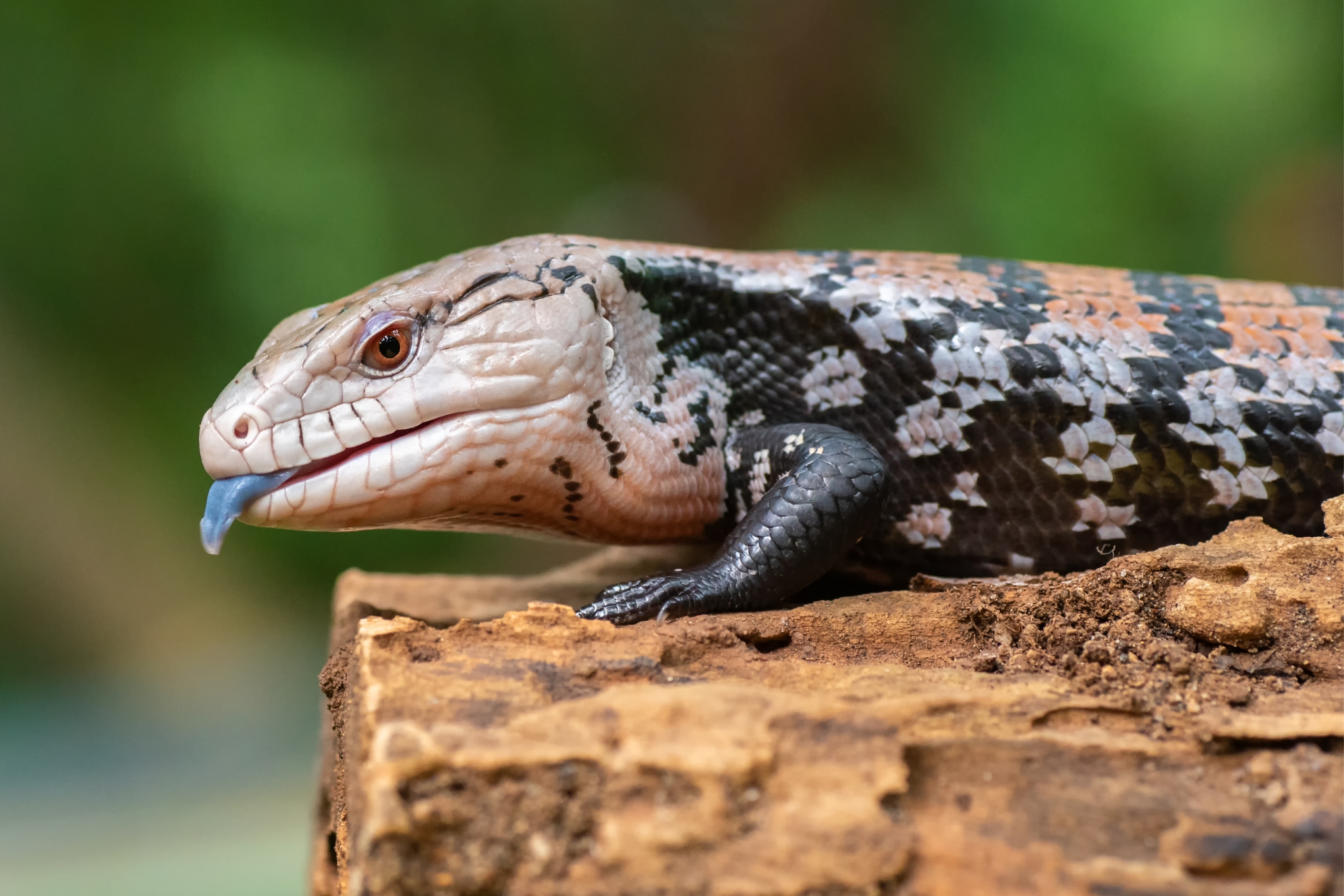
Blue-tongued skinks (Tiliqua spp.) are medium to large lizards native to Australia, New Guinea, and parts of Indonesia. Their natural habitats span everything from dry, open scrublands to humid tropical environments—which is why humidity requirements can vary so widely between species.
In captivity, getting humidity wrong isn’t a minor oversight. It’s directly linked to several common health issues, including:
- Dysecdysis (retained or incomplete shed): most often the result of conditions that are too dry
- Respiratory infections: typically associated with excessive humidity combined with poor ventilation
- Skin infections and scale rot: frequently caused by persistently damp substrate in high humidity setups
- Dehydration: a gradual but serious risk when enclosures remain too dry over time
The key point is simple: humidity is not one size fits all—correct husbandry starts with accurately identifying your skink’s species and aligning its environment with the conditions it has adapted to in the wild.
Humidity Requirements by Species
Northern Blue-Tongued Skink (Tiliqua scincoides intermedia)
💧Target Humidity: 40% to 60%
Native to the tropical savannas of northern Australia, the Northern blue-tongued skink is the most commonly kept species in the hobby. It does well in moderate humidity, especially when there’s a subtle gradient in their enclosure—drier on the basking side, with a touch more moisture on the cooler end.
Eastern Blue-Tongued Skink (Tiliqua scincoides scincoides)
💧Target Humidity: 40% to 60%
Similar to its Northern cousin, the Eastern blue-tongued skink thrives in moderate humidity. In the wild, it ranges across southeastern Australia in a mix of environments, which gives it a bit more natural flexibility in captivity.
Indonesian Blue-Tongued Skinks (Tiliqua gigas group — including Halmahera, Irian Jaya, and Merauke)
💧Target Humidity: 60% to 80%
Indonesian species come from lush, tropical island environments and need noticeably higher humidity than their Australian counterparts. Halmahera blue-tongued skinks, in particular, do best with consistently high humidity year round. Letting things dry out too much—even briefly—can lead to tough sheds and added stress.
Tanimbar Blue-Tongued Skink (Tiliqua scincoides chimaerea)
💧Target Humidity: 50% to 70%
Tanimbar skinks sit comfortably between the Australian and Indonesian extremes. They do best with moderate to high humidity and can be a bit sensitive if conditions stay too dry for too long.
Blotched Blue-Tongued Skink (Tiliqua nigrolutea)
💧Target Humidity: 40% to 60%
Blotched skinks come from the cooler regions of southeastern Australia and Tasmania. They do best with moderate humidity and a generally cooler setup. Unlike their Indonesian counterparts, they don’t need—and don’t thrive in—high humidity environments.
Shingleback / Bobtail Skink (Tiliqua rugosa)
💧Target Humidity: 30% to 50%
Shinglebacks are the outliers of the group—they’re true arid specialists. s one of the driest-kept blue-tongued skink species, they’re particularly sensitive to excess humidity, with overly damp conditions often leading to respiratory issues.
How to Measure Humidity in a Skink Enclosure
The only reliable way to know your enclosure’s humidity is to measure it since relying on how the setup “looks” or feels simply isn’t accurate enough.
A hygrometer is an essential piece of equipment here. Digital models with a probe are generally more reliable than analog dials, which can drift and lose accuracy over time. For the most useful reading, place the probe around mid-level in the enclosure, away from both the heat source and the water dish.
For setups using a humidity gradient, it’s worth using 2 hygrometers—one on the warm side and one on the cool side. This gives you a clear, complete picture of the environment your skink is actually experiencing.
How to Increase Humidity
If your enclosure is running too dry, there are several reliable ways to bring humidity back into balance:
1. Substrate Choice
- Substrate is the biggest factor in humidity control
- Moisture retaining options like topsoil, coconut fiber (coco coir), organic potting soil (without perlite or fertilizers), or bioactive style mixes hold humidity far more effectively than paper towels, newspaper, or reptile carpet
- A deeper layer—around 4 to 6 inches—helps stabilize conditions even further
2. Misting
- Lightly misting your lizard’s enclosure walls and substrate once or twice a day can help raise humidity, especially for Indonesian species
- Avoid spraying your skink directly, and make sure the enclosure has time to dry slightly between mistings to prevent bacterial or fungal issues
3. Water Dish Placement
- A larger water dish placed on the warm end of the enclosure will slowly increase ambient humidity through evaporation—it’s a simple, steady way to add moisture without overdoing it
4. Partially Covering the Screen Top
- Screen lids allow humidity to escape quickly
- Covering 30% to 60% of the top with glass, foam, or a fitted cover can dramatically reduce moisture loss—just be sure to maintain enough ventilation to keep airflow healthy
5. Humid Hide
- A humid hide—essentially a sheltered box filled with damp sphagnum moss—gives your skink a dedicated microclimate with higher humidity
- Humid hides are especially useful during shedding cycles and are widely considered a staple for proper husbandry
How to Decrease Humidity
If humidity is running too high—especially when combined with poor airflow—it can become a real husbandry issue. The goal is always to bring levels back into a safe, stable range.
1. Improve Ventilation
- Good airflow is essential
- Cross-ventilation—such as side vents paired with a screen top—helps keep air moving and prevents stagnant, overly humid pockets from forming
- Enclosures with only top ventilation are especially prone to trapping moisture
2. Switch to a Drier Substrate
- Drier substrates like paper towels or sandy soil blends retain very little moisture and naturally help reduce humidity—these are commonly used for arid species like shinglebacks
3. Adjust the Water Dish
- An oversized water dish can quietly raise ambient humidity, particularly in smaller enclosures
- Reducing the size or relocating it to the cooler end can help bring levels down
4. Add Gentle Ambient Airflow
- A small fan placed near—but not directed at—the enclosure can help move air and encourage evaporation of excess moisture
- Avoid direct airflow onto the skink itself
5. Use a Room Dehumidifier
- If you live in a naturally humid environment, room humidity may be influencing your lizard’s entire setup—a dehumidifier can address the issue at its source and create more stable conditions overall
The Humidity Gradient Think in Zones, Not Numbers
Rather than focusing on a single humidity number across the entire enclosure, it helps to think in terms of a gradient. A well-designed setup offers a range of conditions the skink can move through as needed:
- A dry basking zone near the heat source, with lower humidity and higher temperatures
- A cooler, slightly more humid zone on the opposite end
- A humid hide available at all times to support shedding and hydration needs
This kind of structure allows your skink to self-regulate and choose where to be based on both temperature and moisture preference. It mirrors natural behavior more closely and takes much of the guesswork out of humidity management.
Humidity and Shedding What to Watch For
Blue-tongued skinks should shed in large, intact pieces. When shedding becomes difficult (dysecdysis), it’s often one of the earliest signs that humidity has been too consistently low.
Warning Signs of a Humidity-Related Shedding Issue:
- Shed coming off in small, dry fragments
- Retained skin around toes, tail tip, or eye caps
- Skin remaining dull or grey for an extended period before shedding begins
- Excessive rubbing against decor or enclosure surfaces
Important
If you notice retained shed on your lizard’s toes, it should be addressed promptly—constriction can restrict circulation and, in severe cases, lead to permanent damage. A standard first step is a 15 to 20 minute soak in shallow, warm water, followed by careful removal with a damp cotton swab if the shed loosens easily.
Humidity and Respiratory Health KNOW THE SIGNS
The flip side of low humidity is the respiratory risk associated with sustained high humidity combined with poor airflow. Blue-tongued skinks are susceptible to respiratory infections and a chronically damp, stagnant enclosure is a major contributing factor.
Signs of a Respiratory Infection Include:
- Wheezing, clicking, or crackling sounds during breathing
- Mucus or discharge from the nostrils or mouth
- Open mouth breathing or visibly labored respiration
- Lethargy, reduced appetite, or a persistent elevated posture
Respiratory infections require veterinary care—typically antibiotics prescribed by a veterinarian experienced with reptiles. This is not a condition to monitor at home over time—prompt professional treatment is essential.
Seasonal Humidity Adjustments
In the wild, many blue-tongued skink habitats cycle through distinct wet and dry seasons. Some keepers choose to replicate this pattern in captivity—particularly for breeding projects or to encourage more natural seasonal behaviors.
A controlled “dry season,” with slightly reduced humidity and marginally cooler temperatures for 2 to 3 months, followed by a return to normal conditions, can help stimulate breeding responses in Australian species.
For most pet owners, however, especially those focused on general health and welfare rather than reproduction, this isn’t necessary. Maintaining stable, appropriate humidity year round within the correct range for the species is entirely sufficient and often the most practical approach.
Blue-Tongued Skink Humidity Chart Quick Reference
Species Humidity Ranges
| Species | Humidity Range |
|---|---|
| Northern BTS (T. s. intermedia) | 40% – 60% |
| Eastern BTS (T. s. scincoides) | 40% – 60% |
| Halmahera BTS (T. gigas gigas) | 60% – 80% |
| Irian Jaya BTS (T. gigas sp.) | 60% – 80% |
| Merauke BTS (T. gigas evanescens) | 60% – 80% |
| Tanimbar BTS (T. s. chimaerea) | 50% – 70% |
| Blotched BTS (T. nigrolutea) | 40% – 60% |
| Shingleback (T. rugosa) | 30% – 50% |
Final Thoughts on Skink Humidity
Humidity management for blue-tongued skinks is far from one size fits all.
Start by correctly identifying your species, invest in a reliable digital hygrometer, and choose a substrate that supports your target range. Always provide a humid hide, establish a clear humidity gradient across the enclosure, and use shed quality as a practical, real world indicator of weather conditions are properly dialed in.
Get the humidity right, and you’ll have a healthier, more active skink with far fewer trips to the vet. It’s one of the highest impact aspects of blue-tongued skink husbandry—and fortunately, once the setup is correct, it largely takes care of itself.