9 Outdoor Red Fox Enclosure Tips That Most Guides Don’t Tell You
Planning an outdoor enclosure for your pet red fox? Here are the expert tips that go beyond the basic permit minimums.
- Dig Defense Is Your First Priority
- Roof the Entire Structure
- Hardware Cloth Over Chain-Link, Always
- Plan for Extreme Weather on Both Ends
- Enrichment Infrastructure Isn’t Optional
- Separate Sleeping and Activity Zones
- Drainage Is a Hygiene Issue, Not Just a Comfort Issue
- Know the Noise and Odor Realities Before You Build
- Double Check Your Local Permit Requirements Before You Pour Concrete
- Final Thoughts on Outdoor Fox Enclosures
Red foxes are curious, driven, and extremely intelligent animals, and any enclosure you build for them will be tested constantly.
They’re also natural problem solvers with a strong instinct to dig, climb, squeeze through small openings, and explore every possible weak point—so even small design flaws can quickly turn into bigger issues.
Here are 9 expert tips to keep in mind when building or upgrading your pet fox’s enclosure:
1. Dig Defense Is Your First Priority
Foxes are extremely determined diggers—and they will often find and test weak points in your perimeter quickly. Because of this, proper ground security is one of the most important parts of any pet fox enclosure design.
Burying a hardware cloth apron at least 18 to 24 inches deep—ideally bent outward in an L-shape—is one of the most effective ways to prevent digging escapes.
Another option is a flat apron that extends horizontally along the ground and is then covered with soil or sod, which can be easier to install while still offering strong protection.
It’s also important to note that chain-link fencing alone—even with a buried skirt—is not enough for determined adult foxes.
2. Roof the Entire Structure
An open-top enclosure is not a safe option for a fox—and it should only ever be considered a temporary holding setup, because red foxes are excellent climbers and can scale chain-link, wood framing, and hardware cloth with surprising ease.
For that reason, a fully enclosed roof is essential. Using welded wire or heavy gauge hardware cloth creates a secure top barrier that helps prevent escapes and keeps the enclosure truly fox-proof.
If your fox’s enclosure is large enough to walk into, a double door entry system is strongly recommended. This added layer helps prevent accidental escapes whenever you enter or exit the enclosure.
3. Hardware Cloth Over Chain-Link, Always
Chain-link fencing might seem sturdy, but it actually has gaps large enough for a fox to push through—especially younger animals. The diamond pattern also gives them just enough grip to climb, which makes it far from ideal for secure housing.
For proper fox enclosures, welded wire hardware cloth is the standard. Look for openings no larger than 1″ x 1/2″ to prevent squeezing or escape attempts.
For the walls, 14 gauge wire is recommended for strength, while 16 gauge can be used for roofing panels if you’re working within a budget.
It’s also important to regularly inspect all welds and connections. Over time, rust and wire fatigue can develop small weak points, and those are often what determined animals learn to exploit first.
4. Plan for Extreme Weather on Both Ends
Outdoor fox enclosures need to be designed with both summer heat and winter cold in mind. Red foxes can handle colder temperatures fairly well, but wind chill and wet conditions can quickly become dangerous without proper shelter.
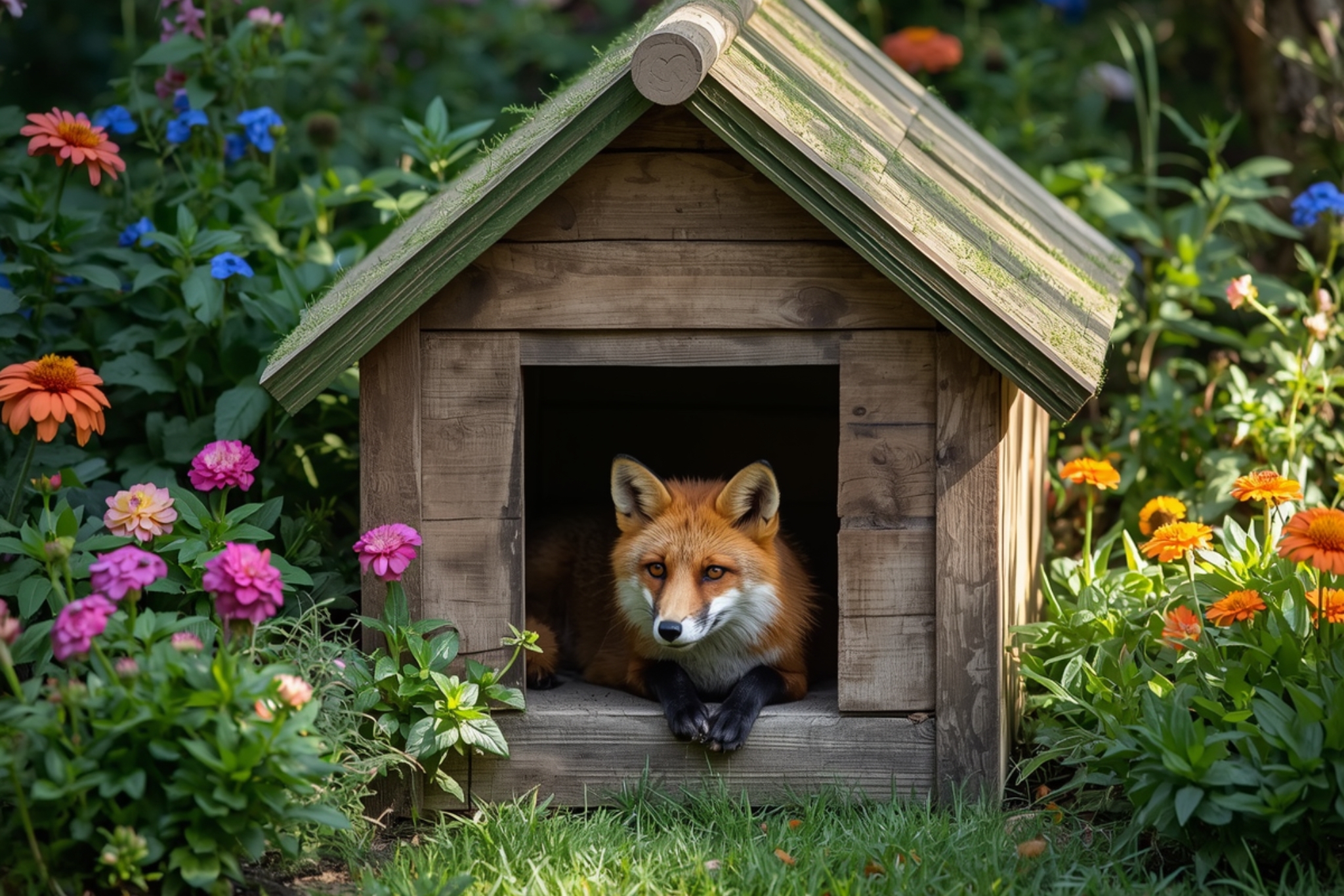
An insulated den box is essential—ideally made of wood, slightly elevated off the ground, and designed with a single entry point to help retain warmth. Inside, giving your fox some dry bedding like straw provides added insulation and comfort.
In the summer months, shade becomes just as important. At least half of your fox’s enclosure should be covered to protect against direct sun, and airflow should be carefully considered.
Keep in ind that heat stress in foxes can develop quickly and become severe, so any structure that traps heat during hot months can pose a serious risk.
5. Enrichment Infrastructure Isn’t Optional
A bored fox is often a destructive fox, so enrichment should be built into the enclosure from the very beginning rather than added as an afterthought.
Elevated platforms, tunnels, digging boxes filled with sand or soil, and multiple types of toys all provide healthy outlets for their natural behaviors like climbing, digging, and exploring.
It’s also important to rotate enrichment regularly, since foxes can habituate quickly and lose interest in the same setup over time. The goal is to create an environment that encourages them to stay active, curious, and mentally engaged throughout the day.
6. Separate Sleeping and Activity Zones
Foxes do best when their enclosure has clearly defined areas for rest, play, and feeding.
A dedicated den space that is dark, quiet, and sheltered helps encourage natural sleep patterns and can reduce overall stress levels.
Feeding in a consistent spot that’s separate from the den is also helpful, as it discourages food guarding and keeps the sleeping area cleaner and more comfortable.
This kind of simple “zoning” approach also makes it easier to notice changes in behavior. When a fox has a steady routine, any shifts from their normal habits stand out more clearly, which can be an important indicator of their health and overall wellbeing.
7. Drainage Is a Hygiene Issue Not Just a Comfort Issue
One often overlooked part of a fox enclosure is good drainage. Without it, your pet’s space can quickly turn into a muddy mess and create conditions where bacteria and parasites can thrive.
To prevent this, the ground should be properly graded so water naturally flows toward a drainage point. Another effective option is building up a base layer of compacted gravel topped with sand to help with both drainage and stability.
Bare soil is best avoided when possible, since it holds moisture, encourages parasite buildup, and makes routine cleaning much more difficult.
Concrete flooring can be easier to sanitize, but it should always be paired with softer surfaces like rubber matting or bedding areas to protect your fox’s feet and joints.
8. Know the Noise and Odor Realities Before You Build
Red foxes are naturally vocal animals, especially during breeding season. Screaming, barking, and chattering at night are all normal behaviors, but they can easily lead to neighbor complaints if you’re not prepared. In some areas, that can even put your permit status at risk, so planning ahead really matters.
To prevent issues and keep your fox safe, enclosure placement is key—situating it as far from property lines and neighboring homes as your space allows can make a big difference.
Odor management is also an important factor, since fox urine is strong and can linger if not properly maintained.
For that reason, it’s smart to design your fox’s enclosure with easy cleaning access from the start. Being able to power wash and disinfect efficiently, along with setting up a consistent weekly cleaning routine, helps keep both odor and hygiene under control long term.
9. Double-Check Your Local Permit Requirements Before You Pour Concrete
Fox enclosure construction requirements are often outlined directly in state and county exotic animal permit regulations, and they can vary quite a bit depending on where you live.
It’s important to know your specific state’s requirements, since minimum size guidelines, fencing materials, roofing standards, and even inspection schedules can all be outlined in your permit conditions.
If your state, county, or city has specific requirements, make those official standards your first priority when building. From there, you can always go above and beyond to improve safety, durability, and overall enclosure quality.
Remember, even a well-built setup can still be considered noncompliant if it doesn’t meet regulatory guidelines, which can lead to serious consequences, including confiscation.
If there’s any uncertainty, it’s always best to reach out to your state wildlife agency before starting construction to make sure everything is fully compliant from the beginning.
Final Thoughts on Outdoor Fox Enclosures
The best outdoor fox enclosures are intentionally overbuilt—these are animals with the strength, intelligence, and determination to find even the smallest flaw in a design.
The safest approach is to build with the mindset that your fox will test every weak point—because it likely will. When you plan for that level of challenge, you end up with a setup that’s more secure, more humane, and ultimately lower stress for both you and the animal.