Why Rushing Young Horses Is a Recipe for Disaster The Science Behind Patient Development
A science-backed look at why young horses need time, not pressure, for proper physical and mental development.
If you’re involved in the horse world—whether as an owner, trainer, or breeder—you’ve likely felt the pressure to get young horses working “on schedule.” Whether it’s a sales deadline, a looming show season, or simply the anticipation of seeing a promising youngster reach its potential, the urgency can be hard to ignore.
However, a growing body of scientific evidence makes one thing increasingly clear: rushing a young horse’s development can cause lasting harm, and the long-term consequences far outweigh any short-term progress.
This article explores why patience in training isn’t just good horsemanship—it’s a biological necessity.
Understanding the Young Horse’s Skeletal System
To understand why early, intensive training can be so damaging, it helps to first understand how a horse’s skeleton develops.
Unlike humans, horses have a notably long and gradual skeletal maturation process. Their growth plates—known as physes—are areas of cartilage located near the ends of bones that slowly harden into bone through a process called ossification. This development continues well into maturity, with some growth plates not fully closing until a horse is 5 or 6 six years old.
Key growth plates are found in the vertebrae, pelvis, hocks, and knees—when a young horse is placed under saddle and asked to carry weight before these structures have fully closed, the repeated compressive forces can lead to microdamage, irregular development, or premature closure. Over time, this can permanently alter the horse’s biomechanics.
The Cartilage Problem
Articular cartilage—the smooth, protective tissue that covers the ends of bones within joints—is especially vulnerable in young horses. This tissue has a very limited blood supply and, once damaged, has minimal capacity to repair itself.
Horses that are worked intensively as 2 or 3 year olds often begin showing joint changes in the hocks, stifles, and fetlocks by the age of 7 or 8—just as they should be entering their athletic prime.
Osteochondrosis dissecans (OCD), a developmental joint disorder, is also strongly linked to both nutritional imbalance and mechanical stress during growth. While genetics can influence susceptibility, early intensive work significantly increases the risk of lesions developing or worsening when a young horse’s joints are not yet fully prepared for sustained athletic demand.
The Spine Is Not Ready
One of the most overlooked aspects of young horse development is the spine. The lumbar vertebrae, which carry a significant portion of the rider’s weight and play a central role in transmitting energy through collected and extended gaits, are among the last structures in the body to fully mature.
Research from veterinary orthopedic specialists suggests that the growth plates in the thoracolumbar region may not fully close until a horse is between 4 and 5 years of age, while taller horses (e.g., 17 hands) or those with longer necks may not have their vertebrae fully fuse until 7 or 8 years old.
Placing a rider on a 2 year old—regardless of how light or experienced that rider may be—introduces compressive and shear forces to structures that have not yet fully ossified. Over time, this can contribute to conditions such as kissing spines (overriding dorsal spinous processes), sacroiliac dysfunction, and chronic back pain.
These issues are increasingly observed in sport horses that were brought into work before their bodies were physically ready.
Tendons and Ligaments: The Silent Victims
Bone isn’t the only structure at risk— young horse tendons and ligaments are still developing their tensile strength and structural integrity well into their third and fourth years.
Key structures—including the superficial and deep digital flexor tendons, the suspensory ligament, and the collateral ligaments of the fetlock and coffin joints—are particularly vulnerable when exposed to the demands of trot and canter work, jumping, or training on hard surfaces before they have fully matured.
Tendon injuries are especially problematic, as they heal slowly and often require months of careful rehabilitation. Horses that sustain tendon damage early in their careers are also far more prone to re-injury later on. What may initially present as a minor soft tissue strain in a 3 year old can easily develop into a recurring, career-limiting issue by the time that same horse reaches 7 or 8.
Tendon injuries are notoriously slow to heal — often requiring six months to a year of rest — and horses that sustain tendon damage early in their careers are at significantly higher risk of re-injury throughout their working lives. What looks like a minor soft tissue issue in a three-year-old can become a recurring career-limiting problem in the same horse at seven or eight.
The Psychological Cost of Being Rushed
The risks and damage to young horses are not solely physical.
Equine behavioral research has shed increasing light on the mental and emotional development of horses, and the findings are consistent: horses pushed into demanding training before they have the psychological maturity to handle it often develop learned helplessness, stereotypies (repetitive behaviors like cribbing or weaving), or persistent anxiety responses that make them difficult to train throughout their careers.
At a young age, horses are still shaping their relationship with humans, developing their ability to focus, and learning how to process and tolerate stress. When that early experience is dominated by pressure or confusion, the effects can be profound.
Rather than a temporary setback, the horse may begin to form patterns of fear and avoidance—responses that can take years of careful, patient retraining to improve, and in some cases, may never be fully resolved.
The Young Horse Show Problem
This is where science and industry practice begin to diverge—and it’s a conversation the horse world desperately needs to have.
Young horse competitions, including futurities, championships, and breed inspections for 2 and 3 year olds, place significant commercial pressure on early performance.
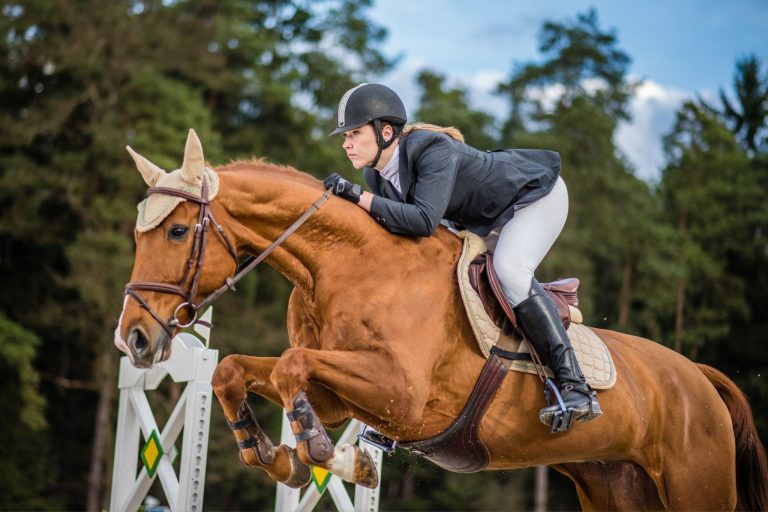
Horses are expected to go well under saddle, demonstrate collection, or even jump courses at an age when their bodies are still developing. The futurity model—particularly prominent in Western disciplines, but also present in certain warmblood breeding programs and Thoroughbred racing—actively rewards early readiness rather than long-term soundness.
The implications are difficult to ignore:
- Trainers aiming for young horse titles are incentivized to produce results quickly.
- Buyers expect to see expressive movement, responsiveness, and early signs of advanced training.
- Breeders want young stock that stands out.
The entire system, intentionally or not, encourages accelerated development.
The consequence is a steady stream of talented horses whose physical limitations begin to surface just as they should be reaching their competitive prime. Veterinary data has repeatedly shown a correlation between early competition and the onset of musculoskeletal issues well before the age of 10. Many promising young horses never progress to Grand Prix, FEI-level sport, or the upper tiers of their discipline—not due to lack of ability, but because their bodies were asked for too much, too soon.
This is not a fringe concern—leading equine veterinarians and researchers have raised questions about the structure of young horse competitions and have called for minimum age requirements that more closely align with biological development.
While perspectives on the issue vary, the conversation continues to evolve as the industry balances tradition, performance expectations, and emerging scientific understanding.
What Science Recommends Instead
The evidence strongly supports a development timeline that prioritizes long-term soundness over short-term performance.
While individual variation exists depending on breed, size, and genetics—warmbloods and draft crosses, for example, tend to mature more slowly than Thoroughbreds or Arabians—the general framework recommended by equine veterinarians and behavioral scientists looks something like this:
- In the first 2 years, the emphasis should remain on proper nutrition, socialization, and basic handling. Young horses benefit most from turnout with companions on varied terrain, where natural movement encourages bone development and overall strength through low-impact activity—essentially, structured freedom.
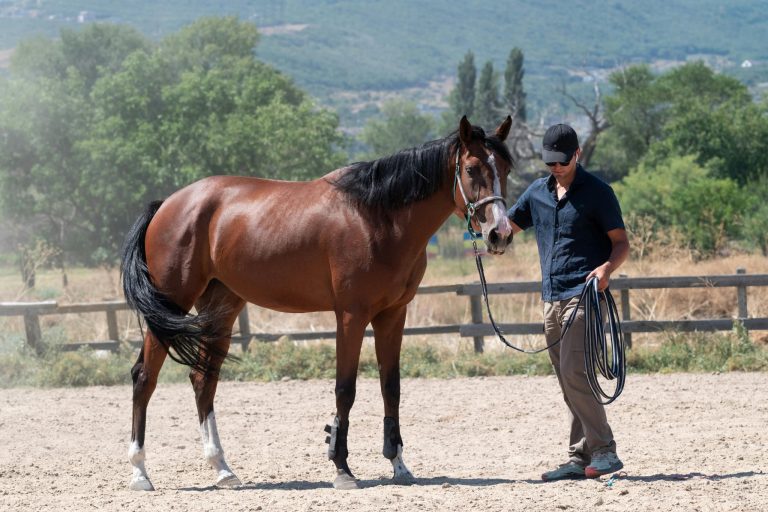
- By the third year, groundwork such as longeing, long reining, and in-hand exercises can be introduced in short, low-intensity sessions. These early interactions help establish communication and understanding without placing significant physical demands on the horse.
- Backing—the initial introduction of a rider—is often appropriate between 3 and 4 years of age, depending on the individual. However, this stage should remain light, typically limited to walking work, with the horse still spending the majority of its time at turnout.
- More consistent training under saddle, incorporating walk, trot, and canter, can gradually develop between 4 and 5 years of age. Even then, expectations should be guided by the horse’s physical and mental readiness, rather than external timelines.
- For most horses, the demands of more advanced work—such as jumping, collection, or intensive conditioning—are best introduced around 5 years of age.
- Many individuals, in fact, benefit from an even more patient approach, reaching their full potential when more intensive training is delayed until 6 or 7.
The Long Game Pays Off
Some of the most celebrated sport horses in history—those with careers spanning well over a decade at the highest levels—were given time. Time to grow, to mature, and to develop the physical and mental foundation required to sustain the demands of elite competition.
At the same time, veterinary records for some other horses show a very different story: horses that showed remarkable promise at 3, yet struggled with soundness by 8 or 10. Their histories frequently point to joints and structures that were asked to do too much, too early in development
For owners, breeders, and trainers, there is an opportunity to approach development with long-term soundness in mind. That may mean selecting programs that prioritize gradual progression, supporting breeding practices that allow young horses to mature at a natural pace, and resisting the urge to accelerate training—even when a horse appears capable or external pressures exist.
Horses that are given the time to develop thoughtfully often demonstrate greater durability, consistency, and longevity over the course of their careers. The science increasingly supports this approach—it’s time we start rewarding patience in the horse world.