Toucan Facts: Habitat, Behavior, Threats & Conservation
With their brightly colored beaks, playful personalities, and tropical appeal, toucans are some of the most iconic birds in the world. These rainforest dwellers aren’t just pretty faces – they also play a vital role in the ecosystems they call home.
In this article, we’ll dive into some fascinating toucan facts, covering everything from their natural habitat and behavior to their diet and the challenges they face in the wild. We’ll also explore the ongoing conservation efforts aimed at protecting these vibrant and unique birds for future generations.
Quick Toucan Facts
- Common Name: Toucan
- Scientific Family: Ramphastidae
- Number of Species: Over 40 including the Keel-billed Toucan, Toco Toucan, and Aracari species
- Size: 11 to 25 inches depending on species
- Weight: 4 to 24 oz (113 to 680 g)
- Lifespan: 15 to 20 years in captivity
- Native Range: Central and South America
- Conservation Status: Varies by species (some are Least Concern, others Near Threatened)
Where Do Toucans Live?
Toucans are native to Central and South America. They are found in:
- Rainforests of the Amazon Basin
- Cloud forests of the Andes
- Lowland tropical forests of Costa Rica, Brazil, Colombia, Ecuador, and more
Toucans spend most of their lives in the canopy layer of tropical rainforests, where they prefer to hop and glide short distances between tree branches rather than engage in long-distance flight. These colorful birds are also non-migratory, meaning they remain in the same region throughout the year, relying on the forest’s consistent climate and abundant food sources to meet their needs.
Toucan Behavior & Social Life
Toucans are highly social birds that typically live in small flocks ranging from 6 to 12 individuals. Living as a social species in flocks provides toucans with several advantages, including opportunities for cooperative behaviors and increased protection from predators.
Toucans are diurnal birds, meaning they spend their days actively foraging for food and socializing with their flock. When night comes, they retreat to cozy tree hollows or natural cavities to rest, finding shelter and protection in these safe spots until morning.
Key Behavioral Traits:
- Playful & Vocal: Toucans communicate using a variety of croaks, rattles, and calls.
- Beak Fencing: They sometimes “duel” with their beaks in a playful or social manner.
- Territory Defense: Both males and females will defend their roosts or feeding areas.
Despite their large and striking beaks, toucans are surprisingly gentle creatures and are rarely aggressive. Their peaceful nature helps maintain harmony within their social groups and allows them to coexist calmly.
Why Is a Toucan’s Beak So Big?
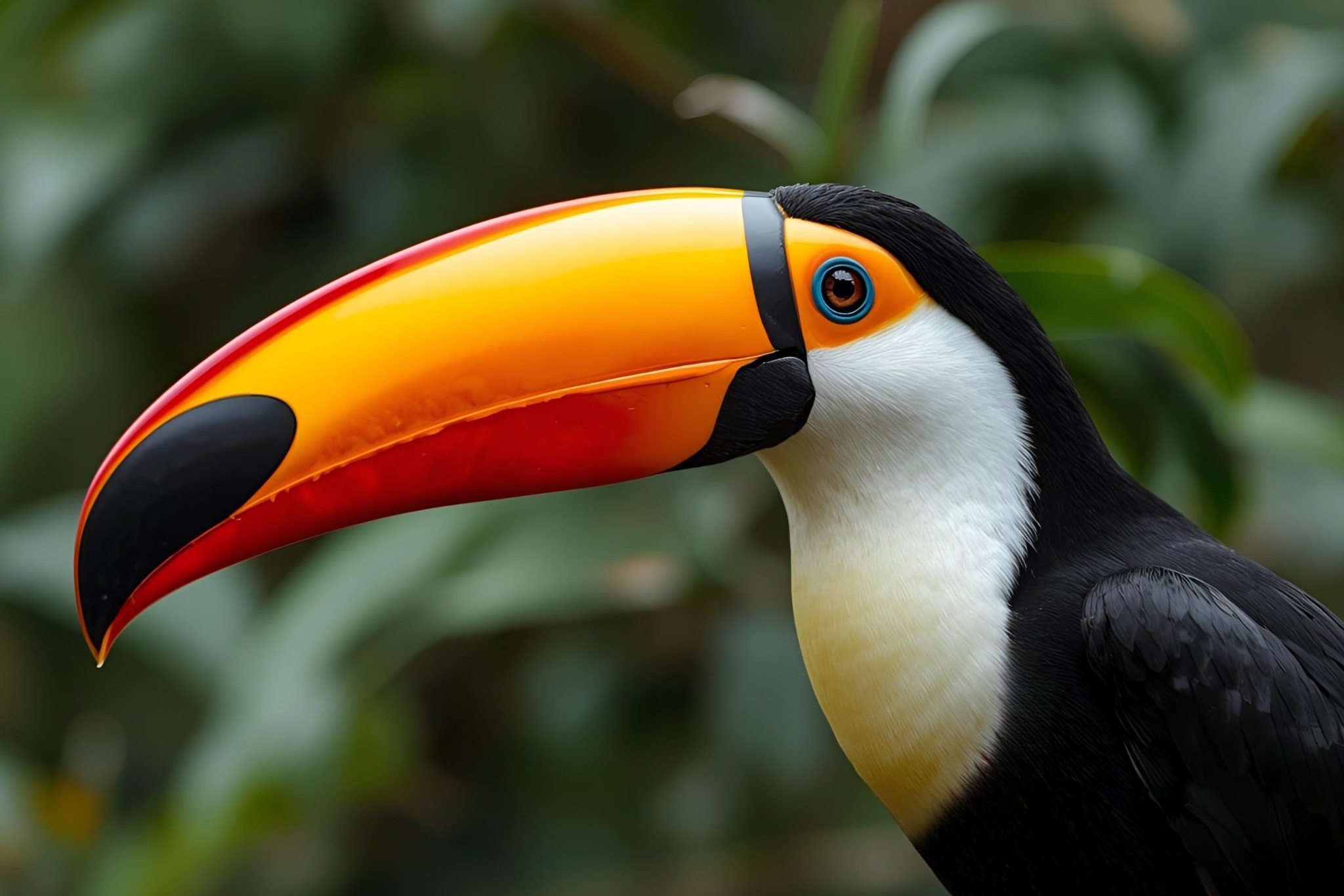
A toucan’s beak may look heavy and cumbersome, but it’s actually lightweight and hollow. Theur beaks are made of keratin and supported by a spongy structure.
A toucan’s beak might appear large, heavy, and cumbersome at first glance, but in reality it is surprisingly lightweight and hollow. Their beaks are composed primarily of keratin (the same material found in human hair and nails) and are reinforced by a unique spongy honeycomb-like internal structure that provides strength without adding extra weight. This design allows toucans to use their beaks efficiently for feeding, grooming, and communication.
Big Beaks are Useful
- Thermoregulation: The beak plays a crucial role in helping toucans release excess heat and regulate their body temperature, especially in the warm and humid environments of the rainforest. By adjusting blood flow to their beaks, toucans can effectively dissipate heat, keeping themselves cool and comfortable throughout the day.
- Feeding Tool: The toucan’s long beak acts as an essential feeding tool, allowing them to reach fruit and other food items on thin branches that are too fragile to support their body weight. This adaptation lets them access a wider range of food sources without having to land on unstable branches, increasing their feeding efficiency and safety.
- Defense & Display: The toucan’s brightly colored and sizable beak serves multiple purposes beyond feeding. It can act as a visual deterrent to potential predators, making the bird appear larger and more intimidating. Additionally the vibrant beak plays a key role in social displays, helping toucans attract mates and communicate with others within their flock during breeding season.
DID YOU KNOW? – The Toco Toucan has the largest beak-to-body ratio of any bird in the world!
What Do Toucans Eat?
Toucans are omnivores but their diet is mainly frugivorous (fruit-based). These birds play a vital role in seed dispersal and help maintain the health and diversity of rainforests.
Toucan Diet Includes:
- Fruits like figs, papayas, guavas, berries, etc
- Insects
- Small reptiles and amphibians
- Bird eggs and nestlings (occasionally)
Toucans skillfully use their long beaks to pluck fruit from branches and then toss it back into their mouths with impressive precision – a behavior that’s not only highly effective for feeding but also quite entertaining to watch in action!
Breeding and Nesting
- Toucans nest in tree cavities, often using old woodpecker holes.
- They lay 2 to 4 white eggs per clutch.
- Both parents share incubation and feeding duties.
- Hatchlings are born blind and featherless and rely heavily on parental care for the first 6 to 8 weeks.
⚠️ Threats to Toucans in the Wild
Although some species like the Toco Toucan are relatively stable, many toucans face growing environmental pressures that threaten their populations.
Major Threats Include:
1. Habitat Loss
- Deforestation for agriculture, logging, and cattle ranching destroys nesting and feeding grounds.
- Fragmented forests make it hard for toucans to find food and mates.
2. Illegal Wildlife Trade
- Toucans are sometimes captured for the exotic pet trade.
- Capture and transport often lead to injury or death.
3. Climate Change
- Rising temperatures and changing rainfall patterns affect fruiting seasons and forest health.
- Heat stress can impact toucan health, especially in fragmented habitats.
4. Human Encroachment
- Urban development and roads cut through habitats, increasing mortality and reducing genetic diversity.
Toucan Conservation Efforts
What’s Being Done to Protect Toucans?
✅ Protected Areas & National Parks
- Many toucans live within protected forests, such as the Amazon Rainforest, Costa Rica’s cloud forests, and Ecuador’s Yasuni National Park.
✅ Reforestation & Habitat Restoration
- Nonprofits and eco-tourism programs are helping restore forest corridors for toucans and other wildlife.
✅ Environmental Education
- Programs teach local communities the importance of toucans in maintaining rainforest ecosystems.
✅ Laws Against Illegal Trade
- International trade of toucans is regulated and restricted under CITES (Convention on International Trade in Endangered Species).
✅ Captive Breeding & Rehabilitation
- Some zoos and rescue centers breed toucans or rehabilitate injured birds with the aim of reintroducing them to the wild.
How You Can Help Toucan Conservation
- Support reforestation efforts through donations or volunteering.
- Avoid buying wild-caught exotic pets which fuels illegal trade.
- Visit ethical eco-tourism programs that protect wildlife and support local economies.
- Spread awareness about the role toucans play in rainforest health.
- Reduce your carbon footprint to help slow deforestation and climate change.
Toucans Do Matter
Toucans aren’t just vibrant tropical icons – they play a vital role in maintaining the health and balance of their ecosystems. By spreading seeds from the fruit they eat, controlling insect populations, and contributing to the diversity of plant life, they help sustain the rich biodiversity of one of the planet’s most important and delicate biomes: the rainforest.
Thanks to ongoing conservation efforts and increasing public awareness, there is hope that these colorful charismatic birds will continue to thrive and remain an integral part of the rainforest chorus for many generations to come. Protecting toucans means protecting the very forests they call home – and the countless other species that depend on them.