Feathers Meet Fur The Pet Parent’s Guide to Parrots and Dogs Living in Harmony
Parrots and dogs CAN live together peacefully! Learn expert tips on safe introductions, training, and creating a happy home for both pets.
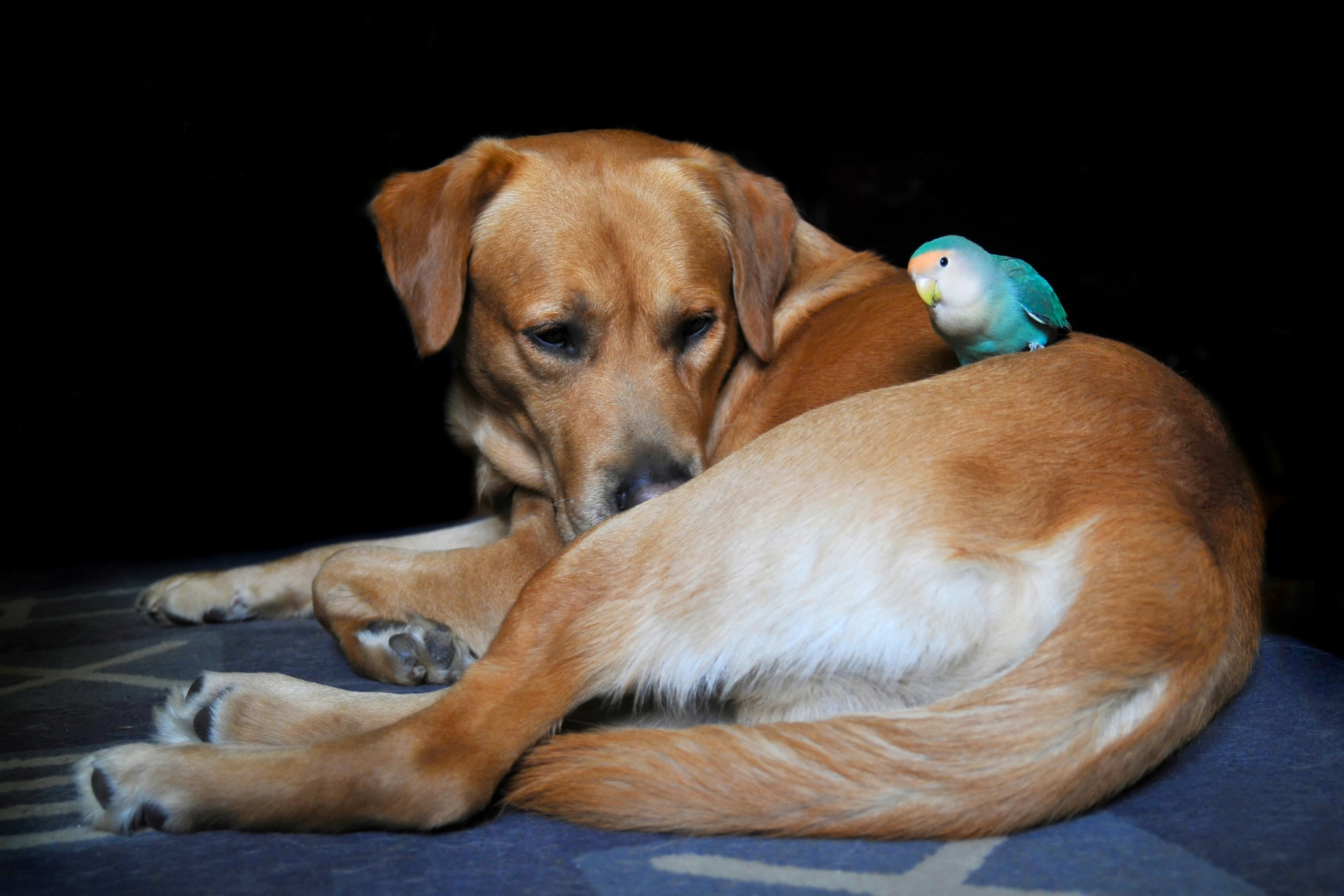
- Why This Combo Can Be Tricky (But Totally Worth It)
- Assess Your Dog’s Temperament First
- Nail the “Sit,” “Stay,” and “Leave It” Commands
- Set Up Your Parrot’s Space as a Safe Sanctuary
- Take Introductions Painfully Slowly (We Mean It)
- Read Your Parrot’s Body Language Like a Pro
- Never Leave Them Unsupervised
- Create Enrichment Strategies for Both Animals
- Consult Your Avian Vet Regularly
- Celebrate Every Win
- The Bottom Line on Parrots and Dogs
Dogs and parrots are both intelligent, social animals with big personalities, which can make for a fascinating household dynamic. And while these two pets can successfully live under the same roof, building a safe and harmonious relationship takes time, patience, and careful planning.
Whether you’re a dog owner considering adding a parrot to the family or a bird enthusiast welcoming a new puppy into your home, understanding how to introduce and manage these very different animals is essential.
In this guide, we’ll cover practical tips and expert-backed strategies to help both your canine and feathered companions coexist safely and comfortably. Let’s dive in!
Why This Combo Can Be Tricky (But Totally Worth It)
Before introducing your pets, it’s important to understand that these animals experience the world very differently.
Dogs are natural predators and may be inclined to chase, investigate, or react to fast movements. Parrots on the other hand, are prey animals with strong instincts that help them quickly identify potential threats.
While these differences can present challenges, it doesn’t mean the two can’t successfully share a home. Many pet owners have created safe, positive relationships between their dogs and parrots with patience, training, and proper management.
The key to success is to approach introductions carefully, be patient and consistent, and never assume that a good outcome will happen on its own.
1. Assess Your Dog’s Temperament First
Before you start introducing your dog and parrot, take an honest look at your dog’s temperament and behavior. Every dog is different, and understanding how your dog typically responds to small animals, fast movements, and exciting situations can help set realistic expectations.
Ask yourself a few questions:
- Does your dog constantly chase squirrels or rabbits?
- Do they become overly excited around birds or other small pets?
- Have they shown signs of resource guarding or reactive behavior?
These traits don’t automatically mean a dog can’t live with a parrot, but they are important factors to keep in mind when you’re planning introductions.
Dogs with a strong prey drive may require a slower, more structured introduction process and closer supervision. On the other hand, dogs that are calm, responsive to commands, and well socialized often adapt more easily.
Regardless of your dog’s breed or personality, a solid foundation of obedience training is one of the most important tools for creating a safe multi-pet household.
|
2. Nail the “Sit,” “Stay,” and “Leave It” Commands
Seriously—these 3 commands could save your parrot’s life. Before you even schedule a meet and greet between your pets, make sure your dog has a solid foundation in basic obedience training.
These key commands can make introductions safer and give you greater control during interactions:
Sit and Stay
Your dog should be able to hold a stay position calmly, even when distracted by movement, sound, or the delightfully unhinged screeching your cockatoo occasionally performs at 7 a.m.
Leave It
This is one of the most important commands for a multi-pet household!
“Leave it” teaches your dog to disengage from something that has captured their attention and focus on you instead. Start by practicing with food and toys before gradually working up to more challenging distractions.
When training these commands, be consistent, use positive reinforcement, and gradually increase the level of difficulty. The goal isn’t simply for your dog to know the commands—it’s for them to respond reliably, even in exciting situations.
3. Set Up Your Parrot’s Space as a Safe Sanctuary
Your parrot’s enclosure is their castle, and it should be a safe, secure space where they can relax without worrying about curious paws or noses. Creating a secure environment helps your bird feel comfortable and confident while also reducing potential risks in a multi-pet household.
That’s why taking the time to properly set up your parrot’s cage is so important. A well-designed enclosure placed in an appropriate location can help minimize stress, support your bird’s well-being, and create a safer environment for both your parrot and dog.
When choosing a cage, look for one that is sturdy and equipped with secure locks. Parrots are surprisingly clever and can figure out simple latches, so a well designed cage is important for preventing accidental escapes.
The location matters, too. Whenever possible, place your bird’s cage in an area where your dog does not have unsupervised access.
|
It’s also a good idea to bird-proof any rooms where your parrot will spend time outside the cage. Close doors and windows, remove potential hazards, and make sure there are no easy escape routes.
4. Take Introductions Painfully Slowly (We Mean It)
One of the biggest mistakes pet owners make is moving too quickly through the introduction process. Even if both of your animals seem calm at first, successful introductions take time.
A gradual, structured approach helps build positive associations and allows you to monitor both pets for signs of stress or discomfort.
Step 1: Scent Introductions
Before your dog and parrot see each other, allow them to become familiar with one another’s scent.
You can do this by placing a toy, blanket, or other safe item that carries the other pet’s scent nearby. Watch for relaxed curiosity rather than intense fixation.
Step 2: Visual Introductions from a Distance
Once both of your pets appear comfortable with scent introductions, allow them to observe each other from a safe distance using a barrier such as a baby gate or closed door.
Don’t forget to keep sessions short (about 5 to 10 minutes) and reward calm behavior from your dog while monitoring your parrot’s body language for signs of stress.
Step 3: Supervised Time in the Same Room
When both animals remain calm during visual introductions, you can begin carefully supervised sessions in the same room.
Keep your dog on a leash and your parrot safely inside their cage or on a secure perch. Allow both animals to observe each other without forcing interaction.
As trust and comfort grow over time, you can gradually reduce the distance between them. The goal is not to create a friendship overnight, but to help both pets feel safe and relaxed in each other’s presence.
|
5. Read Your Parrot’s Body Language Like a Pro
Your dog might be doing everything right, but if your parrot is feeling stressed, the relationship won’t progress in a healthy way. Learning to read your bird’s body language is essential for keeping interactions safe and positive.
Signs your Parrot Feels Safe and Curious:
- Relaxed feathers
- gentle eye pinning (pupils subtly dilating and contracting)
- Head bobbing
- Vocalizing in response to your dog. In many cases, a parrot that starts “talking” or engaging with your dog is showing positive interest
Signs Your Parrot is Stressed or Threatened:
- Feathers slicked tightly against the body
- Crouching low on the perch
- Beak open with wings spread (a defensive posture)
- Screaming
- Frantic movement
If you see these signs, increase distance immediately and end the session calmly.
|
6. Never Ever Leave Them Unsupervised
Let’s be very clear on this point: no amount of calm, positive interactions makes unsupervised cohabitation safe.
Even the most gentle, well-trained dog can have a reactive moment, and even the most relaxed parrot can do something that triggers a sudden chase instinct.
Dogs have extremely powerful jaws, and what seems like a minor nip can be dangerous—or even fatal—for a bird. On the other side, bird bites or scratches can introduce harmful pathogens, including bacteria such as Chlamydia psittaci or other environmental microbes, which may lead to infections in dogs.
For that reason, it’s important to set a firm household rule: your parrot should only be out when your dog is fully managed—whether that means being leashed, crated, fully supervised, or kept in another room.
This isn’t about being overly cautious—it’s about responsible, long term safety for all of your animals.
7. Create Enrichment Strategies for Both Animals
A bored dog is more likely to fixate on your bird, while a stressed parrot may scream or become agitated—behaviors that can, in turn, can excite your dog. Breaking this cycle comes down to providing proper enrichment for both animals:
For Your Dog:
A well-exercised dog is typically calmer and more relaxed. Daily structured exercise before any parrot out of cage time can make a significant difference in your dog’s ability to get along with your bird.
Puzzle feeders, scent-based walks, and training sessions also help keep their mind engaged and reduce overall arousal levels.
For Your Bird:
A content, engaged parrot is less likely to display high-energy behaviors that may trigger your dog’s instincts.
Foraging toys, rotating enrichment items, gentle background sounds like music or nature audio, and regular, high quality out of cage time with you all help to keep your bird mentally stimulated and emotionally balanced.
8. Consult Your Avian Vet Regularly
This is an important point that often gets overlooked—but parrots are experts at hiding illness, which is a natural survival trait that helps them avoid appearing vulnerable in the wild.
Because of this, stress—especially ongoing, low level stress like living near a predator species—can quietly impact their health and immune system without obvious outward signs.
That’s why regular checkups with an avian veterinarian is essential. Parrots have highly specialized care needs, so it’s important to see a vet experienced in avian medicine rather than a general practice provider.
Be sure to mention that you have a dog in the household, since this information can help your vet better evaluate your bird’s environment, stress levels, and overall well-being, and suggest any adjustments if necessary.
9. Celebrate Every Win
Multi-species households take thoughtful management, and it’s easy to get caught up in what could go wrong. But it’s just as important to notice the progress along the way.
Don’t forget to celebrate the small wins—like the first time your dog calmly looks away from the birdcage and chooses a treat instead, the moment your parrot starts mimicking your dog’s name, or the quiet afternoon when you realize they’ve both settled into the same sunbeam without tension.
These little milestones are what make the effort worthwhile. Take time to notice them, document them, and let them remind you that steady, consistent progress really does add up over time.
The Bottom Line on Parrots and Dogs
Parrots and dogs living harmoniously isn’t a fairy tale—it’s absolutely achievable with the right foundation.
|
Your pets are relying on you to be their advocate, their trainer, and their protector. With thoughtful preparation and plenty of care, you can create a home where both animals feel secure, understood, and supported.