Pet Skunk Obesity Causes, Health Risks, & a Step-by-Step Weight Loss Plan
Pet skunk obesity is more common than you think. Learn the causes, health risks, and exactly what to do to prevent or reverse weight gain in your skunk.
- Why Are Pet Skunks So Prone to Obesity?
- What Does a Healthy Skunk Weight Look Like?
- Health Risks of Obesity in Pet Skunks
- How to Prevent Pet Skunk Obesity
- How to Help an Overweight Pet Skunk Lose Weight Safely
- Foods to Avoid Entirely
- A Note on Seasonal Weight Changes
- Your Skunk’s Weight Is in Your Hands
Domesticated skunks are known for their playful personalities, intelligence, and healthy appreciation for food.
While that enthusiasm is certainly part of their charm, it can also make them more prone to weight gain. As a result, obesity has become one of the most common health challenges facing pet skunks today.
This article covers everything you need to know about why pet skunks gain weight, how to stop it before it starts, and what to do if your skunk is already carrying too many pounds.
Why Are Pet Skunks So Prone to Obesity?
Understanding why pet skunks gain weight so easily is the first step toward preventing it. Here are some of the most common factors that contribute to obesity in domesticated skunks:
1. Their Biology Was Built for a Different Lifestyle
Wild skunks are opportunistic omnivores that spend much of their time exploring and foraging for food.
Food availability can vary throughout the year, so skunks evolved to take advantage of abundant resources when they find them. As a result, their bodies are naturally very good at storing extra energy as fat for times when food is harder to come by.
Pet skunks still have that same biology—but without the long distance foraging, seasonal food shortages, and other natural challenges that help balance their energy intake.
That means that In a home environment, those same fat storing instincts can quickly lead to unwanted weight gain.
Pet skunks still have that same fat storing biology—but they no longer face the long days of foraging, seasonal food shortages, and other natural challenges that help balance their food intake in the wild.
And in a home environment, those instincts can work against them, making it much easier for excess weight to accumulate over time.
2. Not Enough Daily Activity
Even the most loved pet skunk doesn’t move nearly as much as a wild skunk does. Without plenty of opportunities to explore, dig, climb, investigate, and play, many skunks end up living relatively sedentary lifestyles and burn far fewer calories than they consume.
3. Too Many Calories
It’s easy to overfeed a skunk, especially when they’re enthusiastic eaters and experts at convincing their humans they’re still hungry. Extra treats, oversized portions, and calorie dense foods can add up quickly.
Foods like insects, eggs, and meats can absolutely be part of a healthy skunk diet, but without proper portion control, they can contribute to gradual weight gain over time.
4. Spaying and Neutering
Most pet skunks are spayed or neutered, which is generally recommended by experts for both health and behavioral reasons.
However, like many animals, altered skunks often have lower energy requirements and can be more prone to weight gain if their diet and activity levels aren’t adjusted to match it.
What Does a Healthy Skunk Weight Look Like?
The best way to assess your pet skunk’s weight isn’t by relying on the number on a scale alone—it’s by evaluating their overall body condition.
A healthy skunk should have:
- A visible waist when viewed from above
- Ribs that can be felt easily but are not prominently visible
- A smooth, gently tapered body shape without a pronounced belly
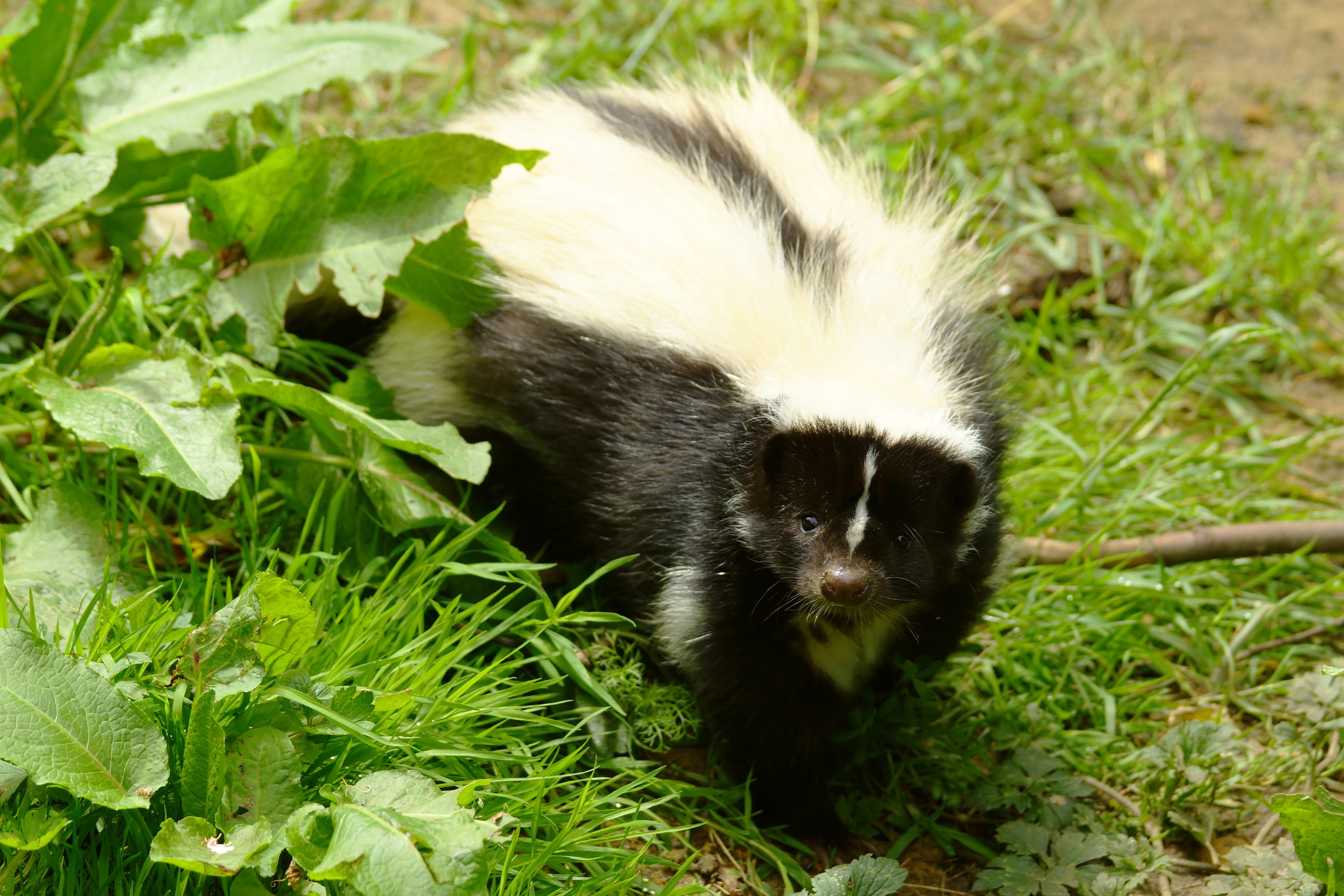
An overweight skunk will often appear wider and more rounded, with a belly that hangs low to the ground. You may also notice fat deposits around the neck, shoulders, and hindquarters.
As obesity progresses, skunks may struggle with grooming, climbing, turning around comfortably, and other normal daily movements.
Health Risks of Obesity in Pet Skunks
Obesity is way more than a cosmetic issue—it can significantly impact both a skunk’s health and overall quality of life. Some of the most well-documented health risks include:
Heart Disease and Hypertension
Excess body fat places extra strain on the cardiovascular system, increasing the risk of heart disease and high blood pressure.
Insulinoma and Metabolic Disorders
Overweight skunks are at higher risk for insulinoma (tumors of the insulin producing cells in the pancreas) and other metabolic conditions linked to blood sugar regulation.
Insulinoma is already one of the most common serious diseases seen in pet skunks.
Hepatic Lipidosis (Fatty Liver Disease)
When fat accumulates in the liver, normal function can be impaired. In severe cases, fatty liver disease can become life threatening if not addressed promptly.
Arthritis and Joint Pain
Extra weight places ongoing stress on joints, increasing the risk of arthritis and reducing mobility—especially concerning for naturally active, curious animals like skunks.
Respiratory Issues
Excess fat around the chest can make breathing more difficult, limiting activity and creating a cycle of reduced movement and further weight gain.
Reduced Lifespan
Healthy, well-managed skunks can live 10 years or more, but obesity is strongly associated with shortened lifespan and reduced long term wellbeing.
How to Prevent Pet Skunk Obesity
Prevention is always easier than treatment, and that’s especially true when it comes to maintaining a healthy weight in pet skunks.
A few consistent habits can make a big difference over time:
1. Feed a Balanced, Portion Controlled Diet
There really isn’t a single commercial diet made specifically for skunks, so owners need to be intentional about building a balanced plan. In general, a healthy skunk diet includes:
- Lean high quality protein: cooked chicken, turkey, and occasional eggs
- Vegetables: a wide mix of low starch options like leafy greens, bell peppers, zucchini, green beans, and broccoli
- Limited fruit: small amounts only, such as berries or melon
- Minimal grains and starches: avoid corn, rice, bread, potatoes as staples
- Avoid altogether: processed human foods, sugary or salty snacks, onions, garlic, grapes, raisins, chocolate, and fried foods
|
2. Keep Treats Limited
Treats should make up no more than 5% to 10% of your skunk’s total daily calories. Good options include small pieces of cooked meat, a bit of low sugar fruit, or vegetables.
Higher fat treats like mealworms should be occasional rather than routine.
|
3. Build in Daily Movement
Regular activity is essential for weight control. Some helpful strategies include:
- Supervised roaming time: several hours of safe exploration outside the enclosure
- Enrichment feeding: hiding food in puzzle feeders or scattering it to encourage foraging
- Tunnels and dig boxes: setups that allow natural digging and exploring behaviors
- Interactive play: using toys that encourage chasing, investigating, and movement
4. Track Weight Regularly
Weigh your skunk once a month using a small scale and keep a simple log. Even gradual changes are easier to manage when caught early.
5. Stay Consistent with Vet Care
Work with an exotic animal veterinarian who has experience with skunks. Regular wellness exams—at least once a year—help monitor body condition, catch early health issues, and fine tune diet and care as needed.
How to Help an Overweight Pet Skunk Lose Weight Safely
If your skunk is already overweight, the encouraging news is that with patience and consistency, healthy weight loss is absolutely achievable.
The key is safety—crash diets or sudden food restriction can be dangerous for skunks and may even increase the risk of conditions like hepatic lipidosis.
Step 1: Start with Your Exotic Veterinarian
Before making any changes, schedule a veterinary checkup. Your vet can:
- Confirm if your skunk is overweight or obesity
- Rule out underlying medical conditions (such as hypothyroidism or insulinoma)
- Set a safe target weight and realistic timeline
- Identify any health issues made worse by excess weight
This step is essential, since what looks like simple weight gain can sometimes have an underlying medical cause.
Step 2: Reduce Calories Gradually
Work with your vet to make small, controlled adjustments—usually starting with about a 10% to 15% reduction in calories. The goal is slow, steady weight loss of roughly 1% to 3% of body weight per month.
This often includes:
- Swapping higher calorie foods for low calorie, high fiber vegetables
- Temporarily cutting back or removing treats
- Eliminating all processed human foods, grains, and starches
- Reducing portion sizes while maintaining balanced nutrition
Step 3: Build Activity Slowly
Overweight skunks may struggle with movement at first, so it’s important not to overdo exercise.
- Start with short, gentle free-roam sessions (around 15 to 20 minutes, several times a day)
- Gradually increase activity as fitness improves
- Use puzzle feeders and scatter feeding to encourage natural movement
- Avoid forcing strenuous climbing or steps that could strain joints
Step 4: Monitor Progress Regularly
Weigh your skunk weekly during weight loss and share updates with your veterinarian. Slow progress is normal, but sudden changes in appetite, energy, or behavior should be addressed promptly.
Step 5: Look at the Bigger Picture
Weight gain often has environmental or behavioral causes as well. It helps to consider:
- Is everyone in the household following the same feeding rules?
- Is your skunk getting enough mental stimulation?
- Is the feeding routine consistent and structured?
Don’t overlook this step, since even small inconsistencies can slow progress.
Step 6: Stay Patient and Consistent
Weight loss in skunks takes time. A gradual gain didn’t happen overnight, and a gradual loss won’t either.
Most skunks show noticeable improvements in energy and mobility well before they reach their ideal weight, which can make the process feel rewarding long before the finish line.
Foods to Avoid Entirely
Regardless of weight, there are some foods that should never be part of a pet skunk’s diet:
- Chocolate and candy
- Onions and garlic
- Grapes and raisins
- Avocado
- Alcohol
- Salty or heavily processed snack foods (like chips, crackers, and deli meats)
- Sugary cereals or baked goods
- Cat or dog food as a primary diet (while small amounts are occasionally used in specific cases, they are not appropriate as a staple food)
A Note on Seasonal Weight Changes
Just like their wild counterparts prepare for colder months and periods of lower activity, domesticated skunks often gain a bit of weight in the fall and winter.
If your skunk gets a little chubby, there’s usually no need to worry—small seasonal changes can be completely normal.
But if your skunk continues to gain weight year round or doesn’t shed that extra weight in the spring, it’s a good idea to bring it up with your veterinarian.
Your Skunk’s Weight Is in Your Hands
Because pet skunks rely entirely on their owners for food and daily activity, their weight is largely within your control. That’s both a responsibility and an opportunity.
The everyday choices you make—what goes into the bowl, how much time your skunk spends exploring and playing, and how closely you monitor their health—directly influence both their lifespan and quality of life.
Obesity in pet skunks is common, but it isn’t inevitable.
With a balanced diet, consistent exercise, regular veterinary care, and a little discipline when those “give me a treat” eyes appear, you can help keep your skunk at a healthy weight for life—or gently guide an overweight skunk back toward better health.
When in doubt, an exotic animal veterinarian with skunk experience is always your best resource. They can help you make informed decisions to keep your one of a kind companion as healthy and comfortable as possible for years to come.