The Truth About Pet Praying Mantises
Thinking about a pet praying mantis? Get the honest scoop on care, cost, and temperament — myths busted, no fluff.
If you’ve spent any time scrolling through mantis videos online, you already know the appeal: a tiny alien-looking predator with big personality, incredible camouflage, and a habit of turning its head to watch you right back. They can look like a little piece of nature’s magic living on your shelf, and it’s easy to see why so many people are fascinated by them.
But before you order an ootheca (a mantis egg case—we’ll get into that!) or bring home a tiny nymph, it’s worth separating the reality of mantis care from the perfectly staged photos and viral videos.
They’re fascinating pets, but they have specific needs and a very different kind of companionship than more traditional animals.
Here’s what you should know before bringing one home…
Myth #1 They’re a Low Maintenance Starter Bug
The Truth: mantises are low cost, but not necessarily low effort—and there’s a big difference between the two.
You won’t be taking them for walks or cleaning up after them like a traditional pet, but they still need consistent care. Most species require regular feeding (usually with live insects), proper humidity through misting, and close attention during molting. That final part is especially important because a successful molt can make the difference between a healthy mantis and a serious health issue.
Another ting to consider is that a mantis isn’t really a “feed it once and forget it” kind of pet. Their care may be small scale, but it still requires routine and attention.
If you’re looking for a more hands-off invertebrate experience, something like a tarantula may be a better match. Mantises are fascinating, active little predators—but they thrive best with an owner who enjoys being involved in their care.
Myth #2 All Mantises Are Basically the Same to Keep
The Truth: species choice matters a lot—because not every mantis has the same care requirements, personality, or level of difficulty.
Some species, like ghost mantises and Sphodromantis (African mantises), are often considered more beginner friendly because they’re hardy, adaptable, and a little more forgiving when you’re learning the ropes.
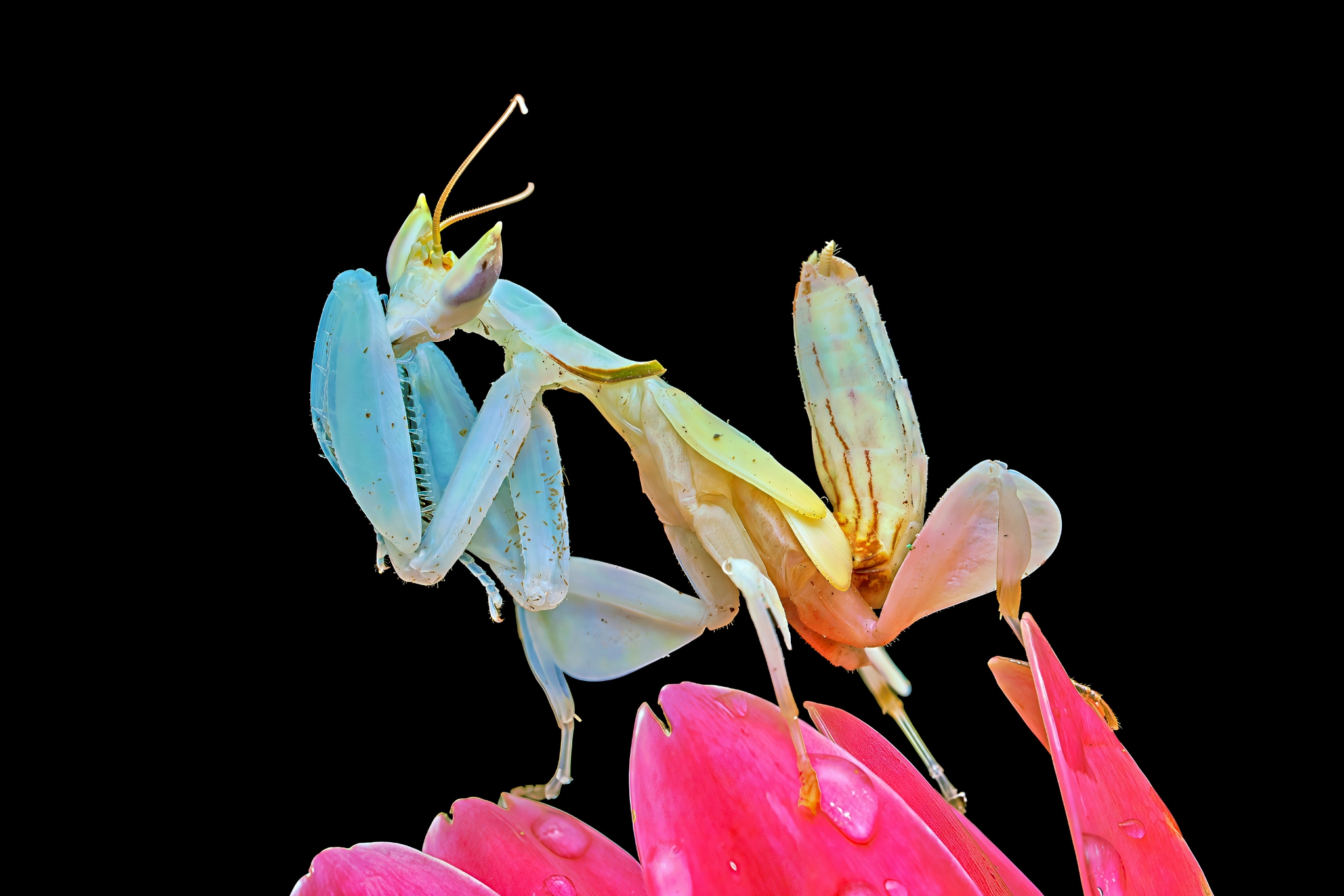
On the other end of the spectrum, species like orchid mantises or devil’s flower mantises are absolutely stunning—but they’re also much more sensitive and require tighter control over humidity and temperature, with far less room for error.
Myth #3 You Can Cuddle Them Like a Tiny Green Cat
The Truth: sort of—but with some very important limits.
A pet mantis is definitely not your typical cuddly companion. They aren’t the kind of pet you’ll be curling up with on the couch, but many keepers find that with patience and gentle interaction, mantises can become comfortable being handled.
Their connection you have with a pet mantis is less about cuddling and more about observing their unique behaviors and getting to know their curious little personalities.
Their charm comes from something completely different: they’re curious, observant, and surprisingly interactive in their own way. A mantis may track your movements, climb onto your hand, sit on your sleeve, or turn to watch what you’re doing.
That being said, just because they’re comfortable with handling doesn’t mean a mantis is completely harmless. Keep in mind that their front legs are specially designed for catching prey, and a startled or hungry mantis may give a surprising little pinch.
It’s nothing like a bite from a larger animal, but it’s a good reminder that even tiny pets are still wild creatures with their own instincts.
Myth #4 Feeding Them Is Gross and Complicated
The Truth: feeding a mantis is actually pretty straightforward, but there’s one important thing you need to be comfortable with… they are predators, and they eat live prey.
Young mantises typically start with tiny feeders like fruit flies, then graduate to larger options such as houseflies, roaches, or other appropriate insects as they grow.
For many keepers, finding and offering live food becomes just another part of the routine. For others, the biggest challenge isn’t the care—it’s getting past the “this is my pet eating another bug” moment. If live feeding isn’t something you’re comfortable with, it’s worth thinking about before bringing a mantis home.
One thing to keep in mind: crickets are a popular feeder because they’re affordable and easy to find, but some keepers choose other options because feeder quality and sourcing can vary. Using properly raised feeders from a reliable source can help reduce potential risks.
Many experienced mantis keepers consider options like flies and roaches to be dependable staple choices when available, especially when they come from reputable breeders or suppliers.
Don’t underestimate your tiny predator. A mantis may be small, but its hunting instincts are very real—and providing the right food is one of the most important parts of keeping it healthy, active, and thriving.
Myth #5 They’re an Easy Classroom or Kid Pet
The Truth: mantises can be amazing educational pets, but “easy” depends on the situation and the level of supervision involved.
Watching a mantis hunt, molt, or even create an ootheca (egg case) can be an incredible learning experience. They’re truly fascinating little creatures that give kids a close-up look at nature in a way few pets can.
But they still do require care and attention.
Mantises are surprisingly good at escaping, quick when they need to be, and delicate enough that accidental handling can cause serious harm. A loose mantis isn’t going to come running back when called, and a busy classroom or home with curious hands and other pets can create extra challenges.
The best setup is one where an adult is responsible for the enclosure and daily care, while kids get to enjoy the fun part.
Honest Pros and Cons
Now that we’ve cleared up the myths, here’s the real picture…
Mantises can be incredible pets, but they’re not the perfect fit for everyone. If you’re deciding whether one belongs in your home, these are the points that matter most:
The Pros:
- Small footprint: A mantis enclosure takes up very little space compared to most traditional pet setups, making them a great option for smaller homes or apartments.
- Surprisingly interactive: Mantises may be tiny, but they have big personalities. They often track movement, turn to watch you, and seem to genuinely notice their surroundings.
- Affordable to start: The initial setup is usually much less expensive than many other pets. A proper enclosure, supplies, feeders, and the mantis itself are generally budget friendly.
- Fascinating life cycle: From ootheca to nymph to adult, keeping a mantis feels like having a front row seat to the natural world. Their growth and behavior are endlessly interesting to observe.
- Quiet, clean, and allergy friendly: No fur, no barking, no litter box—just a unique little creature with a fascinating routine.
The Cons:
- Short lifespan: Most pet mantises have a relatively short life, often around a year depending on species and care. They’re an amazing experience, but they aren’t a long term companion like a dog, cat, or other traditional pet.
- Live feeding required: There’s no avoiding their predator lifestyle. Live feeders are part of regular care, so it’s important to be comfortable with that commitment.
- Molting requires care: Molting is one of the most delicate parts of a mantis’s life. Proper humidity, enough space, and a low stress environment become especially important during this time.
- Species choice matters: Different mantis species have different needs. Choosing one that matches your experience level can make the difference between a smooth experience and a frustrating one.
- Not legal everywhere: Some mantis species are regulated or restricted in certain areas due to concerns about invasive species or agricultural impact. Always remember to check your local rules before purchasing.
Who Should Actually Get One
A pet praying mantis can be a wonderful choice if you’re looking for something unique, quiet, visually fascinating, and a little outside the ordinary. They’re a great fit for someone who enjoys observing animal behavior and doesn’t mind the reality of caring for a short lived, live feeding invertebrate.
For first time keepers, starting with a hardier species like a ghost mantis can make the experience much more enjoyable. Don’t forget to have the enclosure fully set up before your mantis arrives, make sure it’s properly ventilated, and be prepared to check in daily—not just when you remember.
A mantis isn’t a “set it and forget it” pet, and it’s definitely not a cuddly one… but for the right person, this tiny predator can become one of the most fascinating and rewarding animals you’ll ever care for.