Hoof Oil 101 When It Helps, and When It’s a Waste of Money
Wondering if your horse needs hoof oil? Get the facts on hoof moisture, cracking causes, and how to choose the right product.
If you’ve ever found yourself standing in the tack or feed store, wondering whether your horse really needs a hoof conditioner, you’re not alone.
With so many oils, dressings, and creams lining the shelves, it’s hard to know what’s actually helpful and what’s just clever marketing. The truth is, hoof conditioners can have a place in your horse’s care—but only when they’re used for the right reasons.
Understanding what they do (and what they can’t do) can help you decide if they’re worth adding to your grooming routine.
How a Healthy Hoof Actually Regulates Moisture
Before diving into hoof oil and conditioners, it helps to understand how a horse’s hoof works.
The hoof wall is made of keratin—the same protein found in your fingernails—and it’s designed to regulate moisture naturally.
Most of that moisture comes from the inside out, thanks to healthy blood flow, proper hydration, and good nutrition, rather than anything applied to the outside of the hoof.
That’s where one of the biggest misconceptions comes in.
It’s easy to think that brushing on a hoof oil or conditioner “hydrates” the hoof the way lotion moisturizes your skin, but that’s not really how it works.
The outer hoof wall acts more like a protective barrier than a sponge. In fact, a healthy hoof already has its own natural protective coating, called the periople, near the coronary band that helps slow moisture loss and protect the hoof.
So What Does Hoof Oil Actually Do?
Hoof oil isn’t a miracle product, but that doesn’t mean it’s useless. The key is knowing what it’s designed to do—and what it isn’t.
Here are a few situations where it can be helpful:
1. It Can Help Slow Moisture Changes
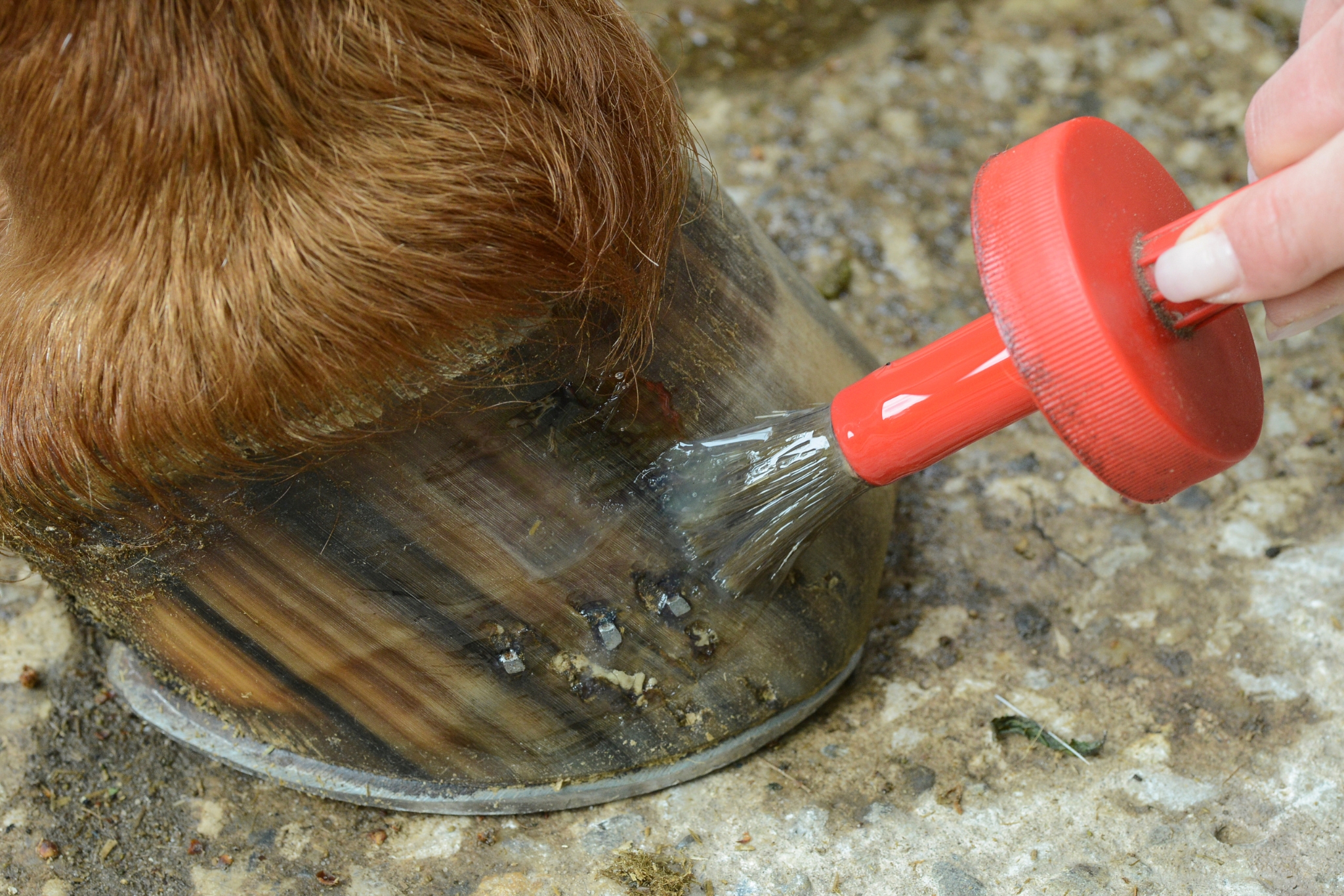
In very wet conditions, like muddy paddocks or frequent washing, or in very dry climates where hooves lose moisture quickly, hoof oil can create a temporary barrier that slows the movement of moisture in and out of the hoof.
This may help reduce cracking caused by repeated wet and dry cycles.
2. It Aan Help After a Hoof Soak or Bath
Applying a hoof conditioner after the hoof has been cleaned or soaked may help hold in some of that moisture. This can be useful for horses with brittle hooves or those living in environments where the hoof dries out quickly.
3. It Gives Hooves a Polished Look
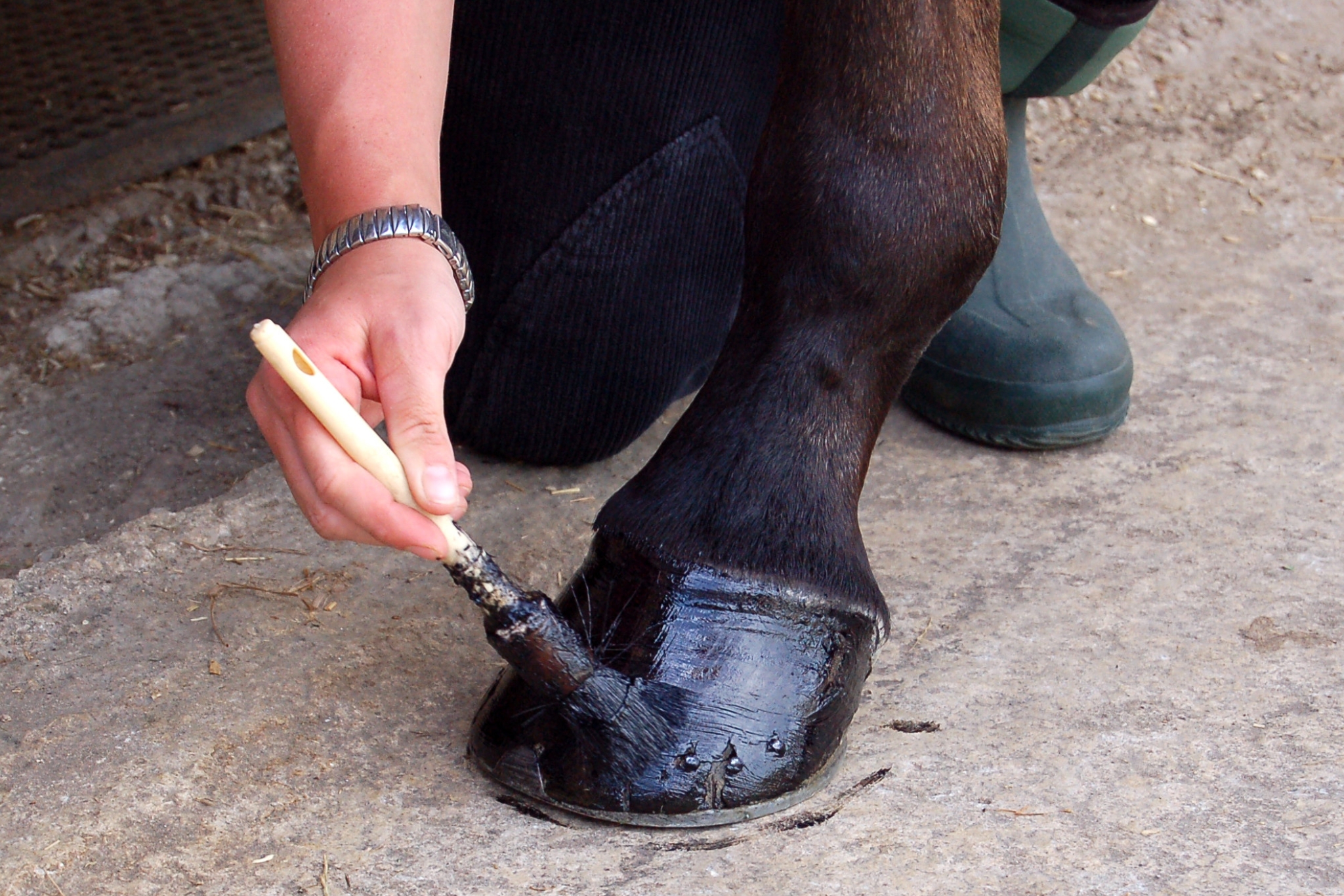
One of the most common reasons people use hoof oil is simply for appearance. A glossy finish can make hooves look their best for shows, competitions, or photos.
4. Some Formulas Offer Extra Protection
Certain hoof conditioners contain ingredients that help discourage bacteria or fungi on the hoof surface.
While they may support horses dealing with issues like thrush or white line disease, they’re not a replacement for proper hoof care or treatment recommended by your farrier or veterinarian.
When Hoof Oil Genuinely Helps
Not every horse needs a hoof conditioner, but there are times when it can be a helpful addition to your hoof care routine.
1. Horses Living in Very Wet or Very Dry Climates
Horses that regularly go from muddy turnout to a dry stall—or experience big seasonal swings between wet and dry weather—often put more stress on their hooves.
It’s the constant expansion and contraction of the hoof, rather than dryness alone, that can contribute to cracks. In these situations, a hoof conditioner may help slow those rapid moisture changes.
2. Horses With Brittle or Cracking Hooves
If your farrier has mentioned that your horse has brittle, shelly, or cracking hoof walls, a hoof oil may be one part of the solution.
It won’t fix poor hoof quality on its own, but it can complement a good trimming schedule, balanced nutrition, and overall hoof care.
3. After a Bath or Hoof Soak
After washing your horse’s legs or soaking a hoof for an abscess or another hoof issue, applying a conditioner can help reduce how quickly the hoof absorbs additional moisture. This may be especially helpful if your horse is prone to soft hooves, bruising, or thrush.
4. Before a Show or Sale
Sometimes the goal is simply to make your horse look their best. A quality hoof oil can give hooves a clean, glossy finish that’s perfect for the show ring or sale photos.
There’s nothing wrong with using it for cosmetic reasons—as long as you remember that shine and hoof health aren’t the same thing.
When Hoof Oil Won’t Fix the Problem
While a hoof conditioner can be helpful in certain situations, it’s important that horse owners keep in mind that it isn’t a cure-all.
Many common hoof problems actually start from the inside or are related to hoof care—and it’s not something you can quickly solve with a topical product.
Some examples include:
1. Poor Nutrition
Brittle, slow growing, or weak hooves are often linked to diet. Deficiencies in nutrients like biotin, zinc, copper, protein, or essential amino acids can all affect hoof quality.
If nutrition is the underlying problem, using a hoof conditioner won’t solve it.
2. An Overdue or Unbalanced Trim
Regular farrier care has a much bigger impact on hoof health than any oil or dressing. Long trim intervals or poor hoof balance can lead to cracks, flares, and chipping that no topical product can prevent.
3. Thrush or White Line Disease
These are infections that require proper treatment. While some hoof conditioners contain ingredients that may help support a healthy hoof environment, they aren’t a substitute for cleaning, targeted treatment, or guidance from your farrier or veterinarian.
4. Genetics and Hoof Structure
Some horses naturally have thinner or more fragile hooves than others. A hoof conditioner may help protect the hoof surface, but it can’t change your horse’s natural hoof quality or conformation.
Think of hoof oil as a supportive tool — not a solution.
The foundation of healthy hooves will always be good nutrition, regular farrier care, proper management, and prompt treatment when problems arise.
Hoof Oil vs. Hoof Conditioner What’s the Difference?
If you’ve shopped for hoof care products, you’ve probably noticed there are dozens of formulas, each claiming to be the best. While the names vary, most products fall into a few basic categories.
- Traditional hoof oils (such as vegetable oil, linseed oil, or mineral oil based products) mostly stay on the surface of the hoof. Their main job is to create a protective barrier that slows moisture loss or absorption.
- Hoof conditioners are often marketed as products that penetrate deep into the hoof to moisturize it from the inside. In reality, the hoof wall is made of dense layers of keratin, so there’s only limited penetration. Their biggest benefit is still helping protect the hoof’s outer surface.
- Petroleum or pine tar based dressings create a thicker, more durable barrier and are commonly used in wet conditions or on horses prone to thrush. They tend to be more protective but can leave a heavier finish that isn’t always ideal if you’re looking for a polished show ring appearance.
For most horses, the specific product matters less than using it for the right reason. A quality hoof oil or conditioner can help protect the hoof under certain conditions, but it works best as part of an overall hoof care routine—not as a replacement for good nutrition, regular farrier visits, and proper management.
Ingredients Worth Avoiding
Not all hoof oils and conditioners are made the same.
Some older or more traditional formulas contain harsh solvents or drying ingredients, such as acetone or strong alcohols, that can strip away the hoof’s natural protective oils over time.
Instead of helping, these products may actually leave the hoof drier and more brittle with repeated use.
When shopping for a hoof conditioner, take a minute to read the ingredient list. In general, products with simple, high quality ingredients are a better choice than those loaded with harsh solvents, heavy fragrances, or unnecessary additives.
The goal is to support your horse’s natural hoof health—not work against it.
How Often Should You Apply It?
There’s no one size fits all schedule for using hoof oil or conditioners. How often you apply it depends on your horse’s needs, the weather, and why you’re using it in the first place.
For horses dealing with hoof cracks, thrush, or frequent changes between very wet and very dry conditions.
For routine hoof care in normal conditions.
If you’re using it mainly to give the hooves a polished, glossy appearance before shows or events.
Keep in mind that more isn’t always better.
Applying hoof oil too often won’t necessarily improve your horse’s hoof health, so it’s best to follow the product directions and use it as part of a complete hoof care routine rather than relying on it alone.
The Bottom Line on Hoof Oil
For most horses, regular farrier care, good nutrition, and a healthy environment are all that’s needed to maintain strong, healthy hooves. In those cases, a hoof conditioner may not be necessary.
That said, not all hoof oils aren just a marketing gimmick.
They can be a useful tool for horses that experience frequent wet to dry weather changes, need extra protection after hoof soaking or bathing, or have hoof quality issues that are being managed with the help of a farrier or veterinarian.
The best way to think about hoof oils and conditioners is as a layer of protection—not a cure.
It can help shield your horse’s hoof from changing environmental conditions, but it can’t replace the basics of good hoof care.
A balanced diet, routine farrier visits, regular exercise, and proper management will always have the biggest impact on your horse’s long term hoof health.
- Hoof moisture is regulated mostly from the inside, not by topical products
- Hoof oil works best as a barrier, not a moisturizer
- Cracking and poor hoof quality are usually diet or trim-related, not a "needs oil" problem
- Wet-dry climate cycling, post-soak care, and cosmetic prep are the strongest use cases
- Choose clean, simple formulations over harsh solvent-based dressings