Warmblood Stallion Licensing USA Inspections Explained
New to warmblood breeding? Learn how stallion licensing works in the USA, what judges look for, what scores mean, and why approval matters.
- What Is Warmblood Stallion Licensing?
- Why Does Stallion Licensing Matter?
- Which Registries License Stallions in the USA?
- What Do Judges Look for During a Stallion Inspection?
- How Does the Inspection Process Actually Work?
- What Happens After Licensing?
- Can a Stallion Be Licensed with Multiple Registries?
- What Does Stallion Licensing Cost?
- Tips for Beginners Watching or Attending a Stallion Inspection
- Common Questions About Warmblood Stallion Licensing
- Final Thoughts on Stallion Licensing
If you’re new to the warmblood world, the term “stallion licensing” can sound a bit intimidating. What exactly does it mean? Why does it matter? And how does the process actually work here in the United States?
Consider this your clear, polished introduction to one of the most important—and genuinely fascinating—aspects of warmblood breeding.
What Is Warmblood Stallion Licensing?
Stallion licensing—also called stallion approval or inspection—is a formal evaluation in which a warmblood stallion is assessed by a breed registry to determine whether he meets the standard required to breed within that organization.
At its core, it functions as a carefully structured quality control system. Not every stallion is automatically granted the right to pass on his genetics. Every single stallion must demonstrate—before a panel of judges—that he possesses the conformation, movement, temperament, and overall breeding value to positively influence the next generation.
The tradition traces back to Europe—particularly Germany—where regional breed societies, or Verbände, have overseen warmblood breeding for centuries. As these registries expanded into North America, they carried those same rigorous licensing practices with them.
Why Does Stallion Licensing Matter?
Warmblood breeds—including the Hanoverian, Oldenburg, Dutch Warmblood (KWPN), Westphalian, and Trakehner—are purpose bred sport horses, developed for disciplines like dressage, show jumping, and eventing. The aim of licensing is to protect and refine the breed standard, ensuring each generation is sounder, healthier, and increasingly athletic.
For breeders and buyers alike, licensing carries real weight:
- It signals quality. A licensed stallion has been evaluated and approved by knowledgeable experts within the breed.
- It affects registration. In many registries, foals must be sired by an approved stallion to receive full registration rather than a secondary designation.
- It influences value. Stallions with strong scores or premium status often command higher stud fees, and their offspring typically reflect that in the marketplace.
- It provides transparency. Inspection results and scores are generally public, giving mare owners meaningful insight when making breeding decisions.
Which Registries License Stallions in the USA?
Several major warmblood registries run stallion licensing programs across the United States, each with its own standards, inspection style, and levels of approval. Among the most prominent
- Hanoverian Society of North America (HANA / American Hanoverian Society) One of the largest warmblood registries in the US, the American Hanoverian Society holds annual stallion approvals. Inspections follow the standards of the Hannoveraner Verband in Germany.
- ISR/Oldenburg NA The International Sporthorse Registry and Oldenburg NA approve stallions for the Oldenburg breed and also offer open approvals for horses of various backgrounds through their umbrella registry.
- KWPN-NA (Dutch Warmblood) The North American branch of the Royal Warmblood Studbook of the Netherlands (KWPN) holds inspections aligned with Dutch standards, placing particular emphasis on movement and rideability.
- Westfalen NA Affiliated with the Westphalian Studbook in Germany, this registry approves stallions meeting Westphalian breed standards.
- American Trakehner Association (ATA) The Trakehner is one of the oldest and most refined warmblood breeds. The ATA holds its own licensing events with strict standards reflecting the breed’s Thoroughbred and Arabian influence.
What Do Judges Look for During a Stallion Inspection?
The specific criteria vary by registry, but most warmblood inspections evaluate stallions across several key categories:
1. Conformation
Judges assess the stallion’s overall structure—his frame, correctness of limbs, quality of bone, neck, shoulder, back, hindquarters, and feet. A stallion must be built in a way that suggests durability, soundness, and the ability to perform athletically.
2. Movement (the Gaits)
Movement is often the most heavily weighted factor in warmblood inspections. Judges evaluate the walk, trot, and canter for:
- Regularity and rhythm
- Elasticity and suspension
- Engagement of the hindquarters
- Freedom through the shoulder
- Overall expression and “swing”
Inspections typically include a free movement phase, where the stallion moves at liberty in a round pen or arena so judges can assess his natural expression and quality without a rider’s influence.
3. Jumping Ability (for Sport Horse Registries)
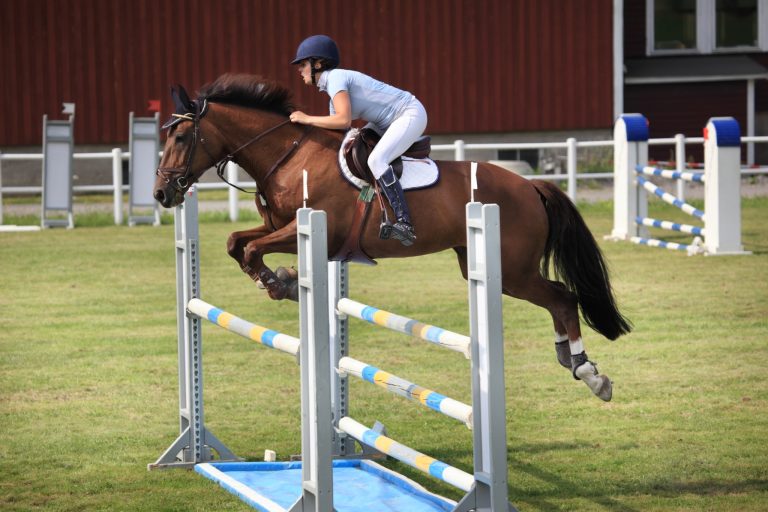
For registries focused on show jumping or eventing, stallions are asked to jump a course of fences loose (free jumping) or under saddle. Judges evaluate technique, scope, carefulness, and athleticism over the fence.
4. Rideability and Temperament
Most inspections include a ridden phase. Judges or designated test riders assess how the stallion responds to the aids, his trainability, and his overall demeanor. A good stallion should be willing, responsive, and mentally manageable.
5. Breeding and Pedigree
A stallion’s bloodlines are carefully reviewed. Registries want to see proven sport horse genetics—sires and damsires with strong competition records or proven influence as breeding stallions.
6. Veterinary Examination
The licensing processes requires a thorough pre-purchase style veterinary exam, including radiographs (X-rays) of key joints, to screen for hereditary conditions or conformational issues that could be passed to offspring.
How Does the Inspection Process Actually Work?
While each registry is slightly different, here is a general overview of what to expect when preparing a stallion for licensing:
Step 1: Application
The owner submits an application to the relevant registry, including the stallion’s registration papers, pedigree documentation, proof of identity (microchip or brand), and any required health certificates or veterinary records.
Step 2: Veterinary Pre-Screening
Many registries require X-rays and a full veterinary soundness evaluation before the stallion even arrives at the inspection site. Results are submitted in advance or reviewed at the event.
Step 3: Attending the Inspection Event
Stallion inspections are typically held at a designated equestrian facility, often in conjunction with a mare and foal inspection. Events are usually 1 or 3 days long. The stallion is presented in-hand (led by a handler) and often moved on a hard surface (to assess hoof quality and soundness of movement) as well as on a soft surface like an arena.
Step 4: The Evaluation
The stallion is evaluated through each phase—conformation, movement, and (if applicable) jumping. Judges score each phase, typically on a scale of 1 to 10, similar to dressage scoring.
Step 5: Announcement of Results
At the conclusion of the inspection, results are announced publicly. Depending on the registry and the stallion’s scores, he may receive one of several designations:
- Full Approval / Premium Approval — The highest designation; the stallion has met or exceeded the breed standard
- Conditional Approval — The stallion is approved with conditions (such as re-inspection after completing a performance test)
- Not Approved — The stallion did not meet the minimum standards for that registry at that time
What Happens After Licensing?
In many European registries—and in their North American counterparts—licensing is only the beginning. A number of organizations also require stallions to complete a performance test (often referred to as an SPT).
This is a more in-depth, multi-day or multi-week evaluation where licensed stallions are ridden and assessed by trainers and judges. The focus shifts to qualities like trainability, willingness to work, and athletic ability under saddle—offering a far more complete picture than a brief inspection alone.
Strong performance test results can elevate a stallion’s standing considerably, enhancing both his reputation within the registry and his appeal to breeders.
Can a Stallion Be Licensed with Multiple Registries?
Yes—and this is actually quite common in the warmblood world. Many North American stallions carry approvals from multiple registries.
Because several of these organizations operate under the umbrella of the World Breeding Federation for Sport Horses (WBFSH), there can be overlap or reciprocal recognition in certain cases, though each studbook ultimately maintains its own rules.
Having multiple approvals can significantly expand a stallion’s influence, making it easier for breeders to register foals with their preferred registry and increasing his visibility across the sport horse community.
What Does Stallion Licensing Cost?
Costs vary by registry but typically include:
- Application fees (ranging from a few hundred to over a thousand dollars)
- Pre-inspection veterinary fees (X-rays, health certificates, Coggins test)
- Travel and stabling costs to attend the inspection event
- Licensing fees
For stallion owners, these costs are an investment—an approved stallion can command significantly higher stud fees and attract a larger book of mares.
Tips for Beginners Watching or Attending a Stallion Inspection
If you’re new to the warmblood world and want to learn more, attending a stallion inspection as a spectator is one of the best educations you can get. Here’s how to make the most of it:
- Listen to the judge’s commentary. Many inspections include a microphone announcement of scores and brief commentary on each horse—a real time education in what judges are looking for.
- Compare horses side by side. Watching multiple stallions move in the same setting helps train your eye faster than any textbook.
- Talk to breeders. Stallion inspections attract knowledgeable horsemen and women who are often happy to explain what they’re seeing.
- Review published results. After the event, most registries publish full scores online. Comparing scores to your own impressions is a great learning exercise.
Common Questions About Warmblood Stallion Licensing
Does a licensed stallion automatically produce exceptional offspring?
Not quite—licensing confirms that a stallion meets established breed standards, but genetics are far more nuanced—and the mare’s quality plays an equally significant role. Approval serves as a filter, not a promise.
Can a non-warmblood stallion be licensed?
In some cases, yes. Certain open registries will consider stallions with Thoroughbred, Arabian, or other bloodlines, particularly if they’ve proven themselves in sport. Requirements vary widely.
Does licensing expire?
Generally, approval is permanent once granted. That said, some registries require updated health documentation or periodic reviews, and may revisit a stallion’s status if concerns arise.
What if a stallion is not approved?
A single rejection is not necessarily the end of the road. Owners often explore alternative registries, allow time for the horse to mature, or address veterinary findings before presenting the stallion again.
Final Thoughts on Stallion Licensing
Warmblood stallion licensing can feel like a complex and highly selective system, but at its heart, it serves a simple purpose: producing better horses.
For breeders, mare owners, and sport horse enthusiasts alike, understanding how licensing works offers real insight into how warmblood breeds are developed—and why top sport horses are so consistently athletic, correct, and rideable.
Whether you’re planning a breeding decision, evaluating a young stallion, or simply exploring the sport horse world, licensing is one of those topics that rewards a closer look. The more familiar you become with it, the more you start to appreciate the care, structure, and long term thinking behind these exceptional equine athletes.