Parrot Safe Flowers For Foraging, Chewing, and Snacking
From calendula to hibiscus, learn which flowers parrots can safely eat and play with, how to prepare them, and which common blooms are dangerous.
- Why Flowers Matter for Parrot Enrichment
- Ground Rules Before You Offer Any Flowers
- Flowers that are Safe for Parrots to Eat
- Flowers Best for Shredding and Play (Not Necessarily Eating)
- How to Prepare and Offer Flowers Safely
- Flowers and Plants to Avoid Completely
- Signs of Flower or Plant Toxicity in Parrots
- Frequently Asked Questions
- The Bottom Line
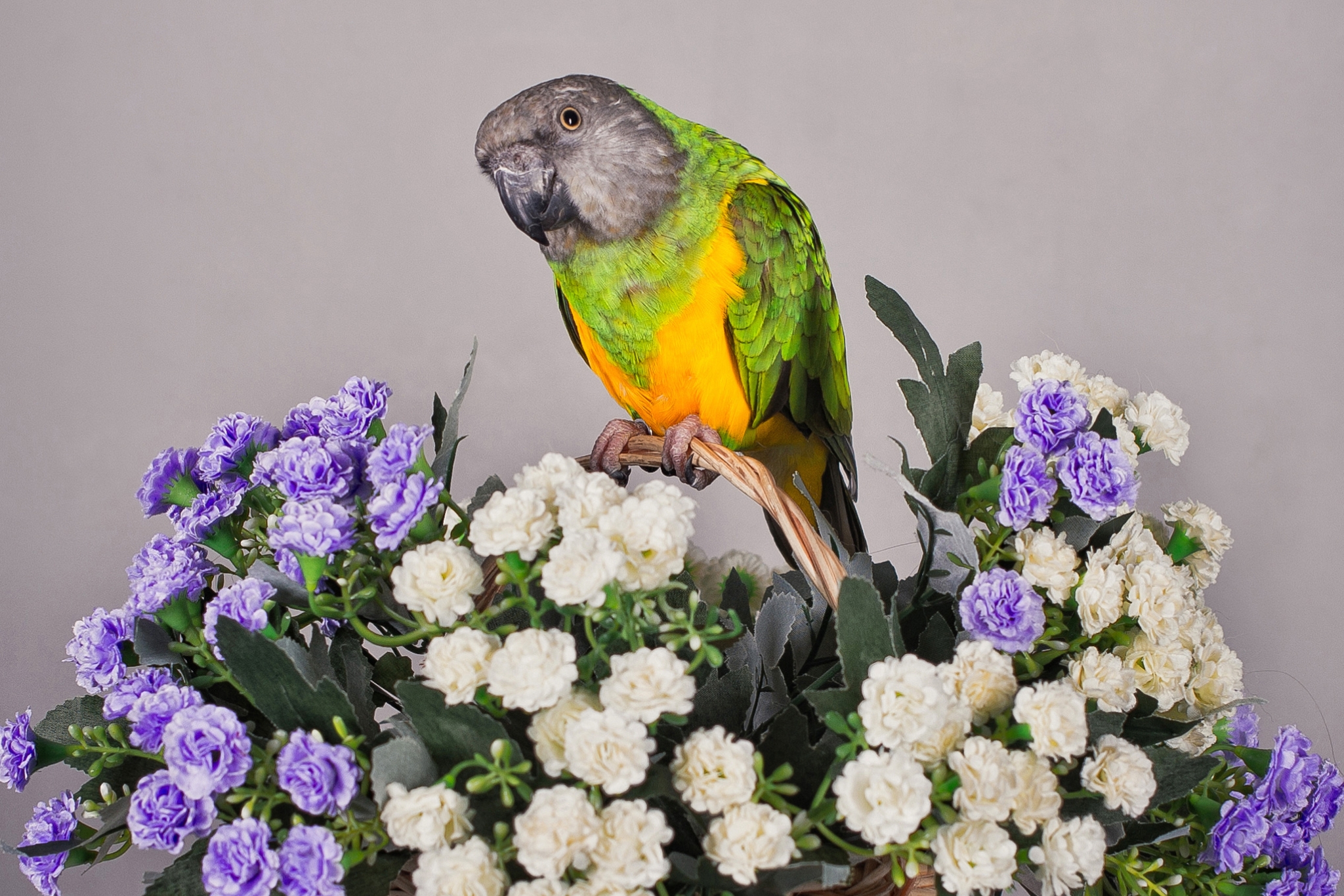
If you’ve ever watched a parrot explore the outdoors, you know they’re not exactly picky about what counts as a toy. Petals, buds, stems, whole flowers—if it looks interesting, your parrot is probably going to investigate it with its beak, tongue, and usually its feet too.
Flowers aren’t just a pretty decoration for your bird’s day. They can be a great source of enrichment and, depending on the plant, can even add useful nutrients to the diet.
The tricky part is that “flower” covers a huge range of plants, and not all of them are safe. Some can cause mild stomach upset, while others can be seriously toxic or even fatal to parrots.
This article breaks down which flowers are safe for parrots to eat, explore, and shred, how to prepare and offer them safely, and which blooms should stay far away from your bird’s cage.
Why Flowers Matter for Parrot Enrichment
Wild parrots spend a huge part of their day foraging—including searching for food, figuring out how to reach it, and working to eat it once they find it.
Pet parrots, on the other hand, often get their meals from a bowl that takes practically no effort to access. That’s convenient for us humans, but it can leave some of your parrot’s natural behavioral needs unmet.
Thankfully, adding flowers to your parrot’s routine is an easy way to help fill that gap in several ways:
They encourage foraging.
Picking through petals, searching for hidden buds, and pulling apart a flower all mimic the search and extract behaviors parrots naturally enjoy.
They provide a safe outlet for shredding.
Destroying things is completely normal for parrots. Giving them flowers to tear apart lets them satisfy that instinct without turning your furniture, curtains, or window trim into the next target.
They add sensory variety.
Different colors, textures, scents, and shapes give your bird something new to investigate. That kind of variety can provide a level of mental stimulation that a predictable diet simply can’t.
They can add nutritional variety.
Some edible flowers contain nutrients such as vitamins A and C, antioxidants, and small amounts of minerals, giving your bird beneficial extras alongside their regular diet.
Ground Rules Before You Offer Any Flowers
Before you pick a single flower for your parrot, there are a few important rules to keep in mind:
1. Know exactly what plant you’re dealing with.
Common names can be confusing—”lily” alone covers dozens of species, some safe adjacent and some deadly.
Before offering a new flower, confirm its exact species and, when possible, its scientific name.
2. Pay attention to where the flowers came from.
Only offer flowers you’ve grown yourself without pesticides or bought from a source that specifically confirms they’re organic and pesticide free.
Florist bouquets, roadside flowers, and plants from garden centers that aren’t clearly labeled as pesticide free should be avoided. Chemicals used on ornamental plants can be dangerous to birds even when the plant itself is considered safe.
3. Wash them thoroughly.
Give flowers a good rinse to remove dirt, dust, insects, pollen, and any possible residue. Don’t forget to let them air dry before giving them to your bird.
4. Introduce one flower at a time.
Start with a small amount of one species and watch your parrot for any signs of digestive upset or other unusual reactions before introducing something new.
5. Keep flowers as an addition, not a staple.
Even safe flowers shouldn’t replace your parrot’s regular diet. A nutritionally complete diet should remain the foundation, with flowers added mainly for variety and enrichment.
6. When you’re not sure, leave it out.
If you can’t positively identify a flower or verify that it’s safe, it’s best if you don’t offer it to your bird. And this rule applies to backyard weeds just as much as cultivated garden flowers.
Flowers that are Safe for Parrots to Eat
The following flowers are widely recognized as safe for parrots when sourced organically, washed, and offered in moderation. They can be given fresh, lightly wilted, or air dried for a homemade dry mix.
Calendula (Pot Marigold)
- Bright, edible, and commonly used in commercial bird food blends for its color and mild anti-inflammatory properties.
Chamomile
- A gentle calming flower that’s often used in bedtime or stress relief blends.
- A good choice for birds that get anxious around new people, travel, or household changes.
Dandelion
- The whole plant is chew safe, not just the flower!
- High in vitamins and a favorite forage plant for many species, provided it’s pulled from an area that’s free of herbicide and pesticide treatment.
Hibiscus
- Rich in vitamin C.
- Has a tart fruity flavor many parrots find genuinely exciting.
- A staple in a lot of commercial bird tea and treat blends.
Lavender
- Aromatic and mildly calming.
- Not every bird is a fan of the scent, but it’s non-toxic and safe to offer.
Marigold
- Similar profile to calendula.
- Edible petals with a mild flavor and cheerful color that hold up well dried.
Nasturtium
- Both the flowers and leaves are safe.
- Has a peppery bite that some birds love and others reject outright.
- Worth offering just to see the reaction.
Pansies and Violas
- Safe, colorful, and mild flavored.
- A good low stakes flower to start with if you’re introducing flowers for the first time.
Rose
- Petals are safe, provided the plant hasn’t been treated with pesticide or florist preservatives.
- Has vitamins A, C, and E.
- Skip anything from a flower shop unless it’s specifically labeled organic.
Rose Hips
- The seed pod left behind after a rose blooms.
- Often dried and included in bird food mixes for its vitamin C content.
Sunflowers
- Petals, and eventually seeds, are both safe and nutritious.
- Provides healthy fats and protein alongside the enrichment value of picking apart a large flower head.
Violets
- A good source of antioxidants and vitamin C.
- Best offered in moderation.
Squash and Pumpkin Blossoms
- Often overlooked, but they’re safe, soft textured, and appealing for birds that enjoy something a little more substantial to work through.
Clover
- Both the flower and the leaf are safe.
- Makes an easy, low effort addition to a foraging mix or chop.
Flowers Best for Shredding and Play (Not Necessarily Eating)
Some flowers are better thought of as enrichment toys instead of as food. These are safe for parrots to explore, shred, and play with, even if your bird doesn’t actually eat much of them.
Carnation
- The sturdier petals hold up well to beak play.
- These offer a different texture than most softer, more delicate flowers.
Butterfly Bush (Buddleia)
- Non-toxic and soft petaled.
- A fun option for foraging trays or hanging enrichment.
Lilac
- Non-toxic
- Great for shredding, especially for birds that enjoy tearing things apart more than eating them.
How to Prepare and Offer Flowers Safely
There’s no single right way to offer flowers to your parrot. You can use them in a few different ways depending on what your bird enjoys:
Fresh and Whole
Clip an entire flower head to the side of the cage or tuck it into an existing toy. Your parrot can pick at the petals, pull it apart, and investigate it at their own pace.
Mixed Into Chop
Tear or chop the petals into a vegetable chop to add a little extra color, texture, and variety to your bird’s bowl.
Air Dried
You can dry flowers at a low temperature or let them dry naturally in a well ventilated area away from direct sunlight.
Once completely dry, they can be stored and added to dry foraging mixes later, which is a handy way to save some from a pesticide free garden for the winter.
Added to a Foraging Box
Hide petals among shredded paper, inside an empty toilet paper roll, or throughout a dedicated foraging box. This turns the flowers into part of a larger search and discover activity rather than simply putting them in a bowl.
Flowers and Plants to Avoid Completely
Some common garden and florist flowers can be toxic to parrots, with certain plants potentially causing life threatening poisoning.
This isn’t a complete list
A good rule is to treat any flower as unsafe until you’ve specifically confirmed that it’s safe for parrots.
Some important flowers and plants to keep away from your bird include:
❌ Lilies (most species): Can cause serious digestive problems and potentially kidney damage.
❌ Oleander: Every part of the plant is dangerous and can affect the heart.
❌ Tulips: The bulbs are especially toxic.
❌ Foxglove: Contains cardiac glycosides that can interfere with heart function.
❌ Azalea and rhododendron: Contain grayanotoxins that can cause digestive and cardiovascular problems.
❌ Lily of the Valley: Contains compounds that can affect the heart.
❌ Poppies: Most species should be avoided because some contain opium related compounds. California poppy is an exception commonly listed as safe, but identification still needs to be certain.
❌ Daffodils, Amaryllis, and Hyacinths: The bulbs are particularly dangerous.
❌ Hydrangea: The flower buds and other parts can be problematic.
❌ Larkspur, Monkshood, and Delphinium: All should be kept away from parrots.
❌ Poinsettia: The milky sap can be irritating and harmful.
❌ Autumn Crocus: Highly toxic.
❌ Jimsonweed / Datura (Angel’s Trumpet): Toxic and potentially dangerous in very small amounts.
❌ Morning Glory: The seeds in particular can be hazardous.
Florist bought flowers deserve an extra level of caution. Even when the plant itself is considered safe, bouquets may have been treated with pesticides, preservatives, floral chemicals, or other substances that aren’t safe for birds.
When it comes to parrots, knowing exactly which flower you’re dealing with is only half the equation. You also need to know how that flower was grown and what it may have been treated with.
A flower can be completely safe for parrots in its natural form and still become a problem after going through a commercial floral supply chain.
Pesticides, preservatives, fertilizers, or other chemical treatments that aren’t always obvious from the label… and some of these substances can be harmful to a parrot’s sensitive respiratory and digestive systems, even if the flower itself is considered non-toxic.
That’s why it’s not enough to just recognize a flower as a “safe” species.
Where it came from and how it was grown matter just as much. For your bird’s safety, stick with flowers you’ve grown yourself without chemicals or ones from a source that can specifically confirm they’re pesticide free and bird safe.
Signs of Flower or Plant Toxicity in Parrots
If your bird gets into a flower or plant they shouldn’t have, keep a close eye on them for any unusual symptoms.
Signs of possible poisoning or illness can include:
- Vomiting or regurgitation that goes beyond your bird’s normal behavior, especially if it’s repeated or accompanied by other symptoms.
- Diarrhea or noticeably abnormal droppings.
- Lethargy, including sitting fluffed up, appearing unusually weak, or being difficult to engage.
- Tremors, seizures, or problems with coordination.
- Labored or unusual breathing.
- Sudden changes in behavior, such as disorientation, unusual aggression, or becoming much quieter than normal.
If you notice any of these signs after your bird has had access to a potentially toxic flower or plant, don’t wait to see whether the symptoms pass on their own.
Contact an avian veterinarian or emergency veterinary service right away!
Parrots can become seriously ill quickly, and early treatment can make a significant difference.
Frequently Asked Questions
1. Can parrots eat flowers from the grocery store or florist?
It’s usually best to avoid them unless they’re specifically labeled as organic and pesticide free. Commercial flowers are usually treated with pesticides, preservatives, or other chemicals that aren’t safe for birds, even when the flower species itself is considered non-toxic.
2. Are dried flowers as safe as fresh ones?
They can be, as long as the flower itself is confirmed safe and it was dried without preservatives, oils, fragrances, or other coatings.
If you want the safest option, drying flowers yourself at home gives you the most control over what your bird is exposed to.
3. Can I give my parrot flowers every day?
Flowers are best used as a rotating addition to a varied diet rather than becoming a daily staple. Think of them more like an enrichment food or occasional treat—they can be offered regularly, but they shouldn’t replace the nutritional foundation of your bird’s diet.
4. My parrot shredded a flower but didn’t actually eat it. Is that a problem?
Not if the flower is confirmed to be safe. Shredding, tearing, and pulling flowers apart are completely normal parrot behaviors and are part of what makes flowers such useful enrichment.
The important distinction is that toxic flowers should never be offered for shredding, because a bird can still ingest small pieces while playing with them.
5. What if I’m not sure whether a flower in my yard is safe?
Skip it—trust me, it’s not worth the risk.
When it comes to parrots, “it’s probably fine” isn’t a good enough standard. The plant should be positively identified down to the species level and its safety verified before you offer it.
When in doubt, stick with flowers you’ve deliberately grown from a known, pesticide free source and have confirmed they are safe for parrots.
The Bottom Line
Flowers are one of the easiest and most enjoyable ways to bring a little more natural foraging and variety into a captive parrot’s daily routine. They give your bird something new to explore, shred, and investigate, while adding a change of texture, color, and scent to an otherwise familiar environment.
At the same time, there isn’t much room for guessing when it comes to plant safety. Stick with flowers you can positively identify, source from a pesticide free or organically grown source, and verify against a reliable list of parrot safe plants.
Don’t forget to introduce new flowers gradually rather than offering a large amount all at once, and pay attention to your bird’s behavior and droppings afterward.
When its done carefully, rotating safe flowers into your parrot’s routine is a simple form of enrichment that can make a noticeable difference.
A few fresh blooms can turn an ordinary day into something your bird gets to explore, forage through, and tear apart… which is exactly the kind of activity many parrots naturally enjoy.