What Is Equine Osteopathy? A Complete Guide for Horse Owners
Your complete guide to equine osteopathy, including benefits, session breakdown, state laws, and how to find a qualified practitioner.
- What Is Equine Osteopathy, Really?
- Osteopathy vs. Chiropractic vs. Massage: What’s the difference?
- The Legal Landscape: Veterinary Practice Acts Matter
- Where Equine Osteopathy Training Actually Comes From
- Signs Your Horse Would Benefit From an Osteopathic Evaluation
- What Actually Happens During a Session
- Cost and Frequency
- Choosing a Qualified Equine Osteopath in the USA
- The Bottom Line
For some American horse owners, osteopathy can feel a little unfamiliar, especially compared with Europe, where it has been around longer and has a more established professional presence.
There are plenty of reasons horse owners turn to osteopathy. Sometimes a horse isn’t moving quite right or seems uncomfortable, but the usual veterinary tests don’t reveal an obvious problem. Other times, the horse is doing just fine, and the goal is simply to support mobility, comfort, balance, or performance. And when there is a known issue, an osteopath can work alongside your veterinarian as part of the horse’s overall care.
Osteopathy takes a whole body approach, looking at how a horse’s body moves and functions rather than focusing only on a specific injury. It can be part of a horse’s regular wellness and performance routine, or it can be used alongside your veterinarian when there is a specific issue that needs attention.
In this guide, we’ll look at what equine osteopathy actually is, how it differs from other hands-on therapies you might come across at the barn, what the rules look like from state to state, and how to find someone who is properly qualified.
What Is Equine Osteopathy, Really?
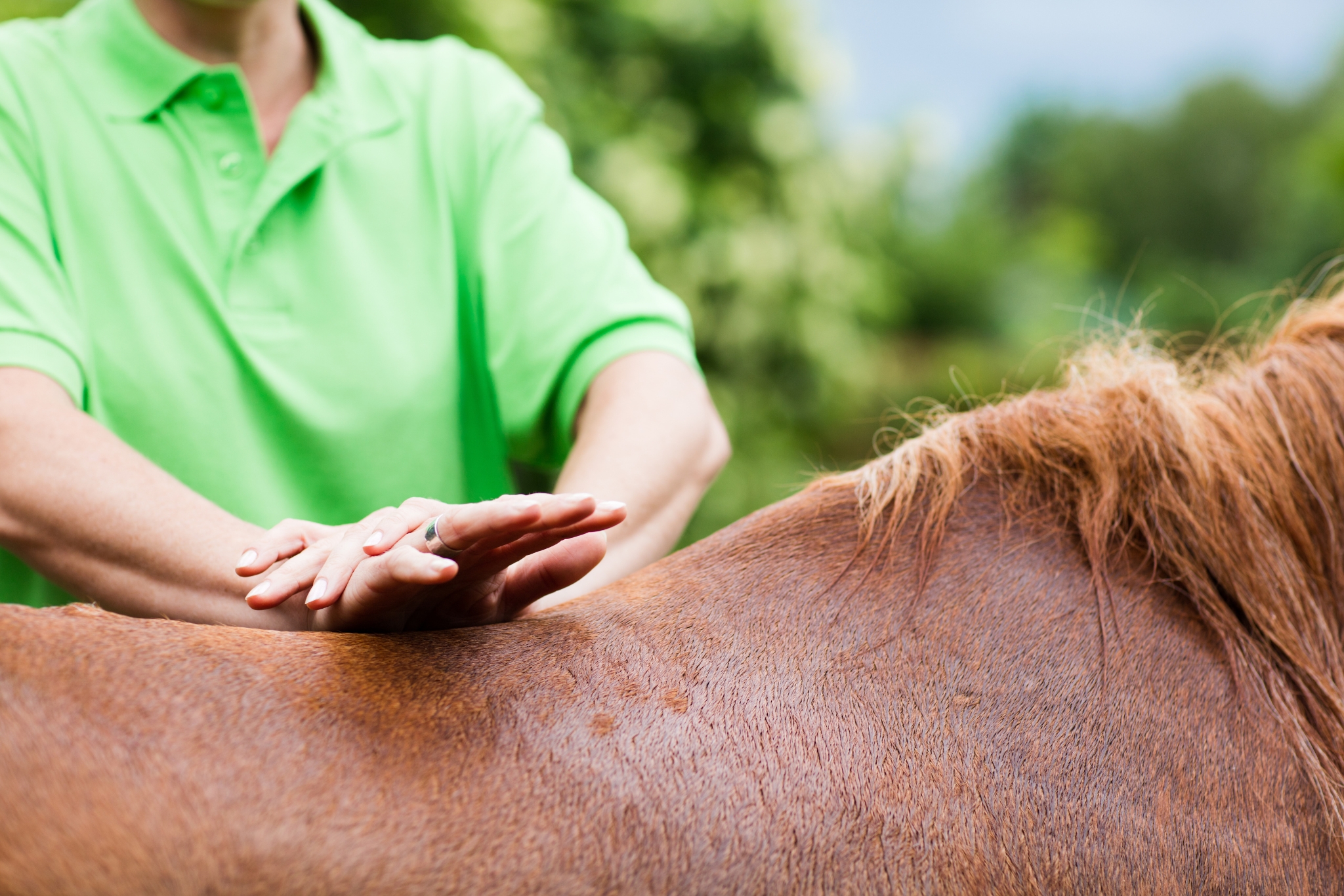
Osteopathy is a hands-on whole body approach that identifies and treats restrictions in movement. And it’s not just about the spine—it also includes the musculoskeletal system, fascia, joints, and structures connected to organ function and cranial mobility.
The founding principle (going back to Andrew Taylor Still’s development of osteopathic medicine in Kirksville, Missouri in the 1870s) is that structure and function are interrelated, and that the body has an inherent capacity to self regulate and heal when structural restrictions are removed. Equine osteopathy adapts this framework specifically to a horse’s biomechanics.
In practice, this means an osteopath looks at how every part of the horse’s body works together and moves in relation to every other part. Instead of only focusing on where the horse seems uncomfortable, they look for possible compensation patterns throughout the body
A horse compensating for a subtle sacroiliac restriction, for example, might present with tension through the poll, an unlevel canter lead, or resistance to the bit—none of which are anywhere near the actual source.
No medication.
No shortcuts.
Osteopathy skips the quick, high-velocity adjustments typically associated with chiropractic care.
Instead, its techniques use gentle sustained pressure, stretching, joint mobilization, and complementary therapies (such as cryotherapy) to ease restrictions and restore normal range of motion.
Osteopathy vs. Chiropractic vs. Massage What’s the difference?
This is where things can get a little confusing in the USA, because the terms aren’t always used consistently. There’s also quite a bit of overlap between the different types of hands-on therapy, and some practitioners use techniques from more than one approach.
- Equine massage therapy focuses mainly on soft tissue, including muscles, tendons, and fascia. The goal is generally to release tension and support circulation. Training and certification programs are widely available, and the amount of regulation varies from state to state.
- Animal chiropractic focuses more on the spine and joints, typically using quick targeted adjustments. Of these three therapies, chiropractic is generally the most regulated in the USA. The American Veterinary Chiropractic Association (or AVCA) certifies practitioners, and many states require animal chiropractic to be performed by a licensed veterinarian or under veterinary referral or supervision.
- Osteopathy takes a broader whole body approach. Depending on the practitioner, it may include soft tissue work, joint mobilization, fascial techniques, cryotherapy and other complementary therapies, and sometimes visceral or cranial techniques. The movements are generally slower and more sustained than the quick adjustments associated with chiropractic care.
There’s also an important difference between the USA and countries such as France and the UK. In the United States, “osteopath” isn’t a protected or licensed title for animal practice. Human osteopathic physicians, or DOs, go through medical school and board certification, but there isn’t an equivalent state licensing system for animal osteopathy.
That means the training behind the person you hire really matters. Some programs are much more thorough than others, so it’s worth taking a close look at a practitioner’s education, certification, and experience before letting them work on your horse.
The Legal Landscape Veterinary Practice Acts Matter
This is the part that usually gets overlooked, but it’s actually one of the most important things to understand as a horse owner.
Every state has its own Veterinary Practice Act that spells out what counts as practicing veterinary medicine. And in some states, hands-on therapies performed on animals can fall under that definition unless there’s a specific exemption. In practice, the rules can look pretty different depending on where you live:
- Some states (including California, Colorado, and Florida) require non-veterinarians who perform chiropractic or similar hands-on therapies on animals to work under veterinary referral or supervision.
- Other states have less specific rules or don’t directly address animal osteopathy in their laws, which can leave things a little unclear.
- Some states have also created exemptions for certain types of massage therapy, while keeping techniques involving joint manipulation or chiropractic-style adjustments more restricted.
So what does this mean for you? A reputable equine osteopath should be able to clearly explain how they operate legally in your state. They should know whether they work through a veterinary referral, under veterinary supervision, or under a specific legal exemption.
If someone can’t give you a straightforward answer about this, that’s worth paying attention to. It’s not just a technical detail—it’s an important part of making sure you’re choosing someone who is operating responsibly.
Where Equine Osteopathy Training Actually Comes From
Because there isn’t a single USA licensing body for equine osteopathy, credentials and reputation come down to where someone trained and how much hands-on experience they have.
Some of the more respected training paths for USA based equine osteopaths include:
- The Vluggen Institute for Equine Osteopathy: One of the more established programs, with training focused specifically on horses and covering structural, fascial, and visceral approaches.
- London College of Animal Osteopathy: A recognized training program in animal osteopathy that provides formal education and specialized training for practitioners pursuing a professional foundation in animal osteopathy.
- European trained practitioners: Quite a few of the more experienced equine osteopaths working in the U.S. originally trained in Germany, France, or the UK before relocating and building a client base.
- Integrated equine bodywork programs: There are also certificate programs that blend massage, myofascial release, and osteopathy influenced techniques. These practitioners are not trained osteopaths, but their programs are generally positioned more broadly as equine bodywork rather than specifically as osteopathy.
Signs Your Horse Would Benefit From an Osteopathic Evaluation
Osteopaths are often called in when something just doesn’t seem quite right with a horse, even when there isn’t an obvious finding on an X-ray or ultrasound. They may also work with horses as part of regular maintenance, particularly those that are ridden, trained, or competing on a regular basis.
Some of the most common reasons owners seek out an equine osteopath include:
- Uneven or “off” movement that comes and goes, especially when it shows up in a specific gait
- Resistance to bending one direction or consistently favoring one lead
- A hollow, tense, stiff, or reluctant back, especially under saddle
- Changes in behavior during tacking, girthing, mounting, or riding
- Head tilting, poll tension, or resistance to the bridle
- Muscle tension, stiffness, or changes in posture
- Compensation or imbalances that develop through training or changes in workload
- Recovery and rehabilitation following an injury or episode of lameness, once the acute issue has been medically cleared
- Postural compensation after a fall, period of box rest, or trailering incident
- Regular maintenance for horses that are ridden or worked consistently, helping address the physical demands of their workload
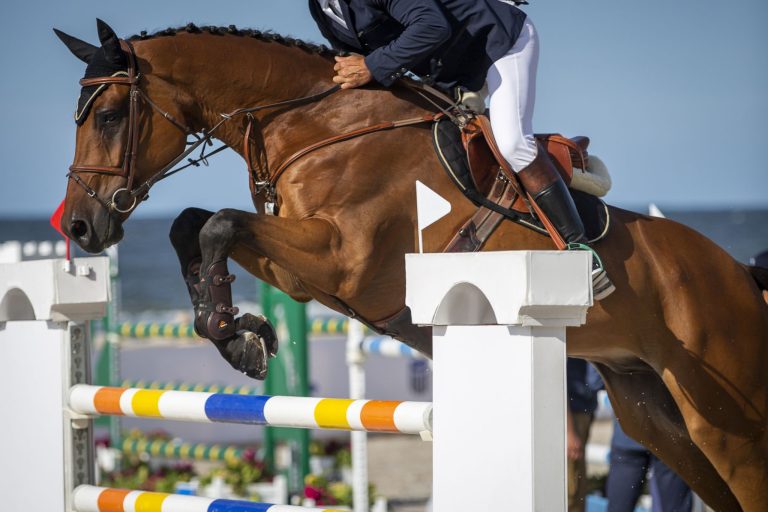
- Routine care for show and performance horses, including those competing in show jumping, dressage, eventing, reining, racing, barrel racing, and other demanding disciplines
- Supporting horses that may benefit from regular sessions to help maintain mobility, balance, comfort, and overall physical function
Regular maintenance catches developing tension, stiffness, and compensatory patterns early — especially for horses in demanding work.
Skip it, and those same patterns tend to build quietly until they surface as a far more obvious (and harder to resolve) problem.
Of course, osteopathic care isn’t a replacement for veterinary care or proper diagnostics. A good equine osteopath will want to make sure any potential orthopedic, neurological, and dental issues have been properly evaluated first. If a horse has an unexplained lameness, many practitioners will also want a veterinarian involved before providing treatment.
What Actually Happens During a Session
A typical session usually starts with observation. The osteopath will watch your horse standing, walking, and trotting in hand, and may also ask to have them lunged, depending on the horse and what they’re looking for. This gives them a chance to assess the horse’s overall movement, symmetry, and gait.
From there, the osteopath will palpate different areas of the body, including the topline, limbs, and jaw, looking and feeling for areas of tension, restriction, stiffness, or asymmetry.
Depending on what the practitioner finds, treatment may include a combination of techniques:
- Myofascial release: gentle sustained pressure used to help release tension in the fascia and muscles
- Joint mobilization: gentle rhythmic movements through a joint’s natural range of motion to encourage mobility
- Cranial and visceral techniques: subtler approaches that some practitioners use to address tension patterns involving areas such as the poll and jaw, as well as movement or mobility associated with the internal organs
The practitioner gets to know your horse and a baseline is established.
Once they’re familiar with your horse and know what’s normal for them, maintenance sessions are usually shorter.
During an osteopath session, it’s pretty common to see horses show little signs that they’re relaxing, like licking and chewing, yawning, taking a deep sigh, or letting their head and neck drop.
After the session, many practitioners also recommend keeping things quiet for a day or two rather than jumping straight back into hard training. This gives your horse some time to relax, adjust, and let their body settle after the work.
Cost and Frequency
The cost of an equine osteopathy session can vary quite a bit depending on where you live and the practitioner’s experience. In the USA, sessions generally run around $150 to $350, with an initial evaluation sometimes costing more than a regular follow-up.
Practitioners that are working in major equestrian areas—such as Wellington, Ocala, the Thermal/Desert circuit in California, Aiken, and the Northeast eventing corridor—often charge toward the higher end of that range.
How often a horse may benefit from a session really depends on their age, workload, and what they’re doing:
Light use or trail horses:
- Usually once or twice a year for routine maintenance
- Additional sessions after a specific incident, such as a fall or trailering issue
- A session may also be helpful if you notice a change in movement, behavior, or comfort
Show horses, regularly competing, and performance horses:
- Typically every 6 to 8 weeks, depending on workload
- Sessions can be scheduled around their training and competition calendar
Young horses starting under saddle:
- A session before they begin under saddle work
- Follow-up sessions during training to see how their bodies are adapting
- Additional work after they’re started under saddle to help address new tension or imbalances
Older horses managing ongoing compensation:
- Often monthly or every other month
- Frequency depends on the horse’s individual needs and level of compensation
- More frequent sessions may be appropriate for horses dealing with ongoing or chronic areas of tension
Choosing a Qualified Equine Osteopath in the USA
Because there isn’t a consistent licensing standard for equine osteopathy in the USA, it’s important to do your homework when choosing a practitioner. Look for someone who:
- Has completed recognized training: Ask where they trained and how many hours of education and clinical work were involved. Be cautious of practitioners whose only training is a short weekend course.
- Can explain how they legally practice in your state: A reputable practitioner should be able to clearly explain how their work fits within your state’s Veterinary Practice Act, whether that involves veterinary referral, supervision, or a specific exemption.
- Willing to work alongside your veterinarian: They should be comfortable communicating with your vet and may ask to review recent veterinary records, imaging, or a lameness workup before working with your horse.
- Can explain what they’re finding in clear terms: You should be able to understand what they’re seeing and feeling without relying on vague, overly broad, or purely energetic explanations.
- Has references you can actually verify: Look for recommendations from horse owners, trainers, or veterinarians who are familiar with the practitioner and their work.
The Bottom Line
For many horse owners, osteopathy is an important piece of the puzzle when something about their horse’s movement, comfort, or way of going doesn’t seem quite right. It’s not a replacement for veterinary diagnostics or treatment, but it can be used alongside them to help tension, stiffness, mobility, and compensation.
When used alongside good veterinary care, regular farriery, and a thoughtful training program, osteopathy can be a useful part of a horse’s overall care. It can also be especially beneficial for performance horses, helping address areas of tension, stiffness, and compensation while giving owners and practitioners an opportunity to notice subtle changes before they develop into bigger issues.
If your horse has a movement quirk you can’t quite explain, seems a little stiff or restricted, or you’re managing a competition horse through a demanding season, an osteopathic evaluation can seriously be worth considering.
Osteopathy doesn’t have to be something you only turn to when there’s a problem. For many horses, regular maintenance can be part of a proactive approach to keeping them comfortable, balanced, and moving well.