Can You Raise Foals in Stalls? Here’s What the Research Actually Says
Do foals really need acres of pasture to develop properly? The science says otherwise. Learn what actually builds sound bones and joints in young horses.
“You can’t raise a good horse without acres and acres of pasture.”
That idea is repeated so often that it can start to feel like a hard and fast rule. But if you’re boarding your horses at a public facility, raising them on a five acre property in Texas, or working with land that looks more like dirt and scrub than a lush Kentucky bluegrass farm, it can feel like the deck is stacked against you before you even begin.
Thankfully, the science tells a different story—one that points to a more practical approach, and one that’s far more achievable for breeders raising sound healthy foals.
The Real Question Isn’t Acreage… It’s Movement
Researchers have been looking at this question for decades, and the pattern is pretty consistent: when it comes to a foal’s bone and joint development, regular movement and the way the skeleton is loaded matter far more than the number of acres they happen to live on.
One of the studies often referenced on this topic came out of Michigan State University and followed Arabian weanlings divided into three groups: horses kept stalled full time, horses given 12 hours of pasture turnout, and horses turned out on pasture 24 hours a day.
The results were pretty telling. Both groups that had pasture turnout—whether for 12 hours or around the clock—showed significant increases in bone mineral content and cannon bone growth. The fully stalled group didn’t show those same gains.
That matters because it highlights what the developing skeleton actually needs. It isn’t simply access to a huge amount of land. It’s regular, free movement. Keeping a young horse confined without opportunities to move can limit the normal mechanical stimulus bones need during these critical stages of growth. In contrast, freely moving over pasture provides the kind of natural low impact loading that helps stimulate healthy bone development.
Another study, this one from the Netherlands and involving Warmblood foals, found a similar pattern when looking specifically at stall housing versus movement. Foals kept in box stalls had lower bone density in the hock than foals raised on pasture or foals kept in stalls but given structured daily sprint exercise from birth. The researchers did caution, though, that forced sprint exercise comes with its own risks and isn’t something to casually recreate at home.
When you step back and look at the research as a whole, the takeaway is actually pretty simple: foals, weanlings, and yearlings benefit from substantial daily turnout.
And that doesn’t mean 12 hours on a thousand acres — it means 12 hours somewhere they have the opportunity to actually move.
Why Movement Matters More Than Square Footage
The reason turnout matters so much comes down to bone biology, not romantic ideas about what a horse’s childhood is supposed to look like. Developing bone needs regular low level loading throughout the day. That movement signals to the bone to continually remodel and adapt, helping it become stronger during those critical windows of growth.
Bone is living tissue, and it’s constantly changing in response to the forces placed on it. A foal that is wandering, trotting, playing, stopping, and starting throughout the day naturally creates the kind of varied repeated loading that helps drive healthy skeletal development.
This also helps explain why prolonged confinement can be a problem. Research involving young Thoroughbreds moved into stall confinement during training found that bone mineral content in the cannon bone actually decreased during the confined period. When exercise increased again, bone mineral content climbed back up. In other words, bone responds to whether it’s being loaded or not—and it can respond surprisingly quickly.
And we’re not just talking about bones. Recent research published in the Equine Veterinary Journal, looking at UK stud farms, found that moderate increases in locomotor activity early in life were associated with greater bone size and strength, along with more advanced development of cartilage and tendons. Researchers believe these changes may help protect against injury later in life.
There’s an important balance here, and more isn’t automatically better. Too little movement (like prolonged box rest) can be detrimental. But so can too much repetitive, forced, high intensity exercise.
The goal isn’t to turn a foal into an athlete. It’s to give them consistent, varied, self directed movement.
There’s another piece of this that’s easy to overlook: free play—and it matters not only for a foal’s physical development, but for their confidence, coordination, and overall behavior too.
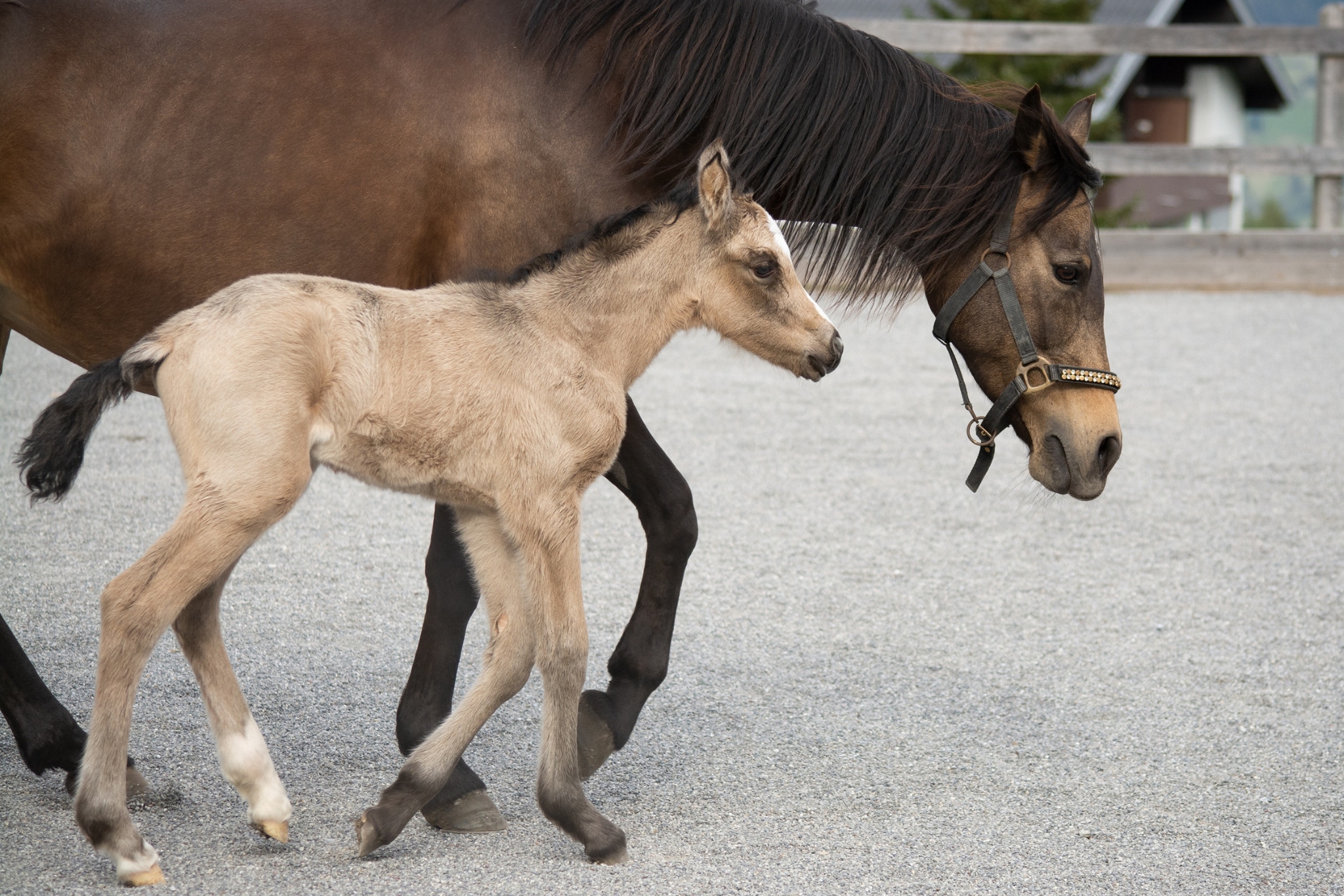
If you watch a group of foals turned out together you’ll see it immediately—the sudden sprint away from Mom, the bucking and spinning, the chasing, the roughhousing with other young horses. It may look like they’re simply burning off energy, but they’re also learning how to use their bodies.
Some researchers compare this kind of locomotor play to the way children develop physical skills through running, climbing, jumping, and playing. Foals are learning balance, coordination, body control, and how to react and adjust while they’re moving.
A foal that doesn’t have the opportunity to buck, spin, chase, and gallop with other foals isn’t simply missing some exercise. They’re missing a natural and important part of learning how to move.
So What Does “Enough” Actually Look Like?
None of this means that having a stall and turnout setup is something you need to apologize for. What matters is how you use the space you have. The research suggests that the way your turnout is structured can matter much more than the acreage number you have available.
A few things are especially worth keeping in mind:
1. Turnout time matters more than acreage size.
The studies showing measurable benefits to bone development are looking at hours of daily movement—not simply how many acres a horse has access to. A well designed paddock that encourages a foal to move for 12 or more hours a day can provide far more developmental value than 5 acres that a foal only gets to use for an hour.
2. Who they’re turned out with matters too.
Foals turned out with their peers, or as part of the mare’s herd, naturally get much more movement than a foal turned out alone. There’s running, dodging, chasing, bucking, and all the little games young horses invent with each other. If your acreage is limited, giving foals the opportunity to move and play together may be more valuable than giving each horse a larger space by itself.
3. The way you use a small space can make a big difference.
This is where small acreage breeders may have more options than they realize. Track systems, sometimes called “Paddock Paradise” systems, use narrower lanes around the perimeter of a property instead of one large open field. The design encourages horses to keep moving rather than simply standing in one spot.
You can also create even more movement by placing hay, water, and shelter in different areas so the horses have a reason to walk between them. You don’t need miles of track to make that worthwhile. Even on a modest property, thoughtful placement of resources can turn a static paddock into a space that encourages much more natural movement.
You can also make use of different surfaces where appropriate—softer areas for resting and firmer footing in other areas for everyday hoof loading and conditioning. It’s about making the space work harder for you and giving the foal more opportunities to move naturally.
4. You don’t want to swing from one extreme to the other.
It’s easy to hear that stall confinement can be problematic and conclude that unlimited completely unstructured turnout must always be better. But the research points to risks at both ends. Prolonged inactivity can be a problem, but so can sudden, excessive, or uncontrolled loading—particularly rough terrain, abrupt changes in herd dynamics, or forced high speed exercise.
The goal isn’t maximum movement at any cost.
It’s predictable, generous, low drama turnout that gives a growing horse plenty of opportunities to move, play, and explore without constantly asking their developing body to do more than it’s ready for.
What This Means If You’re Breeding Without a Large Farm
If you’re raising foals at a public boarding facility, managing a small acreage, or anywhere your “pasture” looks more like dirt and scrub than rolling bluegrass, the science gives you a lot more room to work with than you might think.
Here’s what matters most:
- Aim for 12+ hours of turnout every single day. Consistent daily movement is far more valuable than turning a foal out for a long stretch once in a while and then keeping them confined for days afterward.
- Give them companions. Foals naturally move more when they have other horses to play with, interact with, and follow around. And that play driven movement matters—it’s not the same as simply putting a foal out alone to graze.
- Set up the space to encourage movement. You don’t need a huge pasture. A simple track system, or even a paddock with hay, water, and shelter placed in different areas, can encourage significantly more movement than one static open lot.
- Think of the stall as their home base, not the default. Stalls have an important role for weather, feeding, rest, and overnight safety. But for a growing foal, turnout should be part of their everyday routine—not something that happens only when conditions are perfect.
- Consistency beats intensity. Steady moderate movement every day is way more valuable than occasional bursts of hard exercise.
The idea that a foal needs to grow up on a sprawling lush property to develop into a sound horse is more folklore than physiology.
When you look at the research on bone development, skeletal growth, and injury risk, the message is actually pretty straightforward: foals need regular movement, they benefit from moving with other horses, and they need an environment that encourages them to use their bodies.
Having more acreage can certainly make those things easier to provide, but the acreage itself isn’t what develops the foal. The movement is.