Horse Hoof Cracks and Chips What to Do and What Every Owner Should Know
Found a crack or chip in your horse’s hoof? Learn what to do, what causes them, when to call the vet or farrier, and how to prevent them.
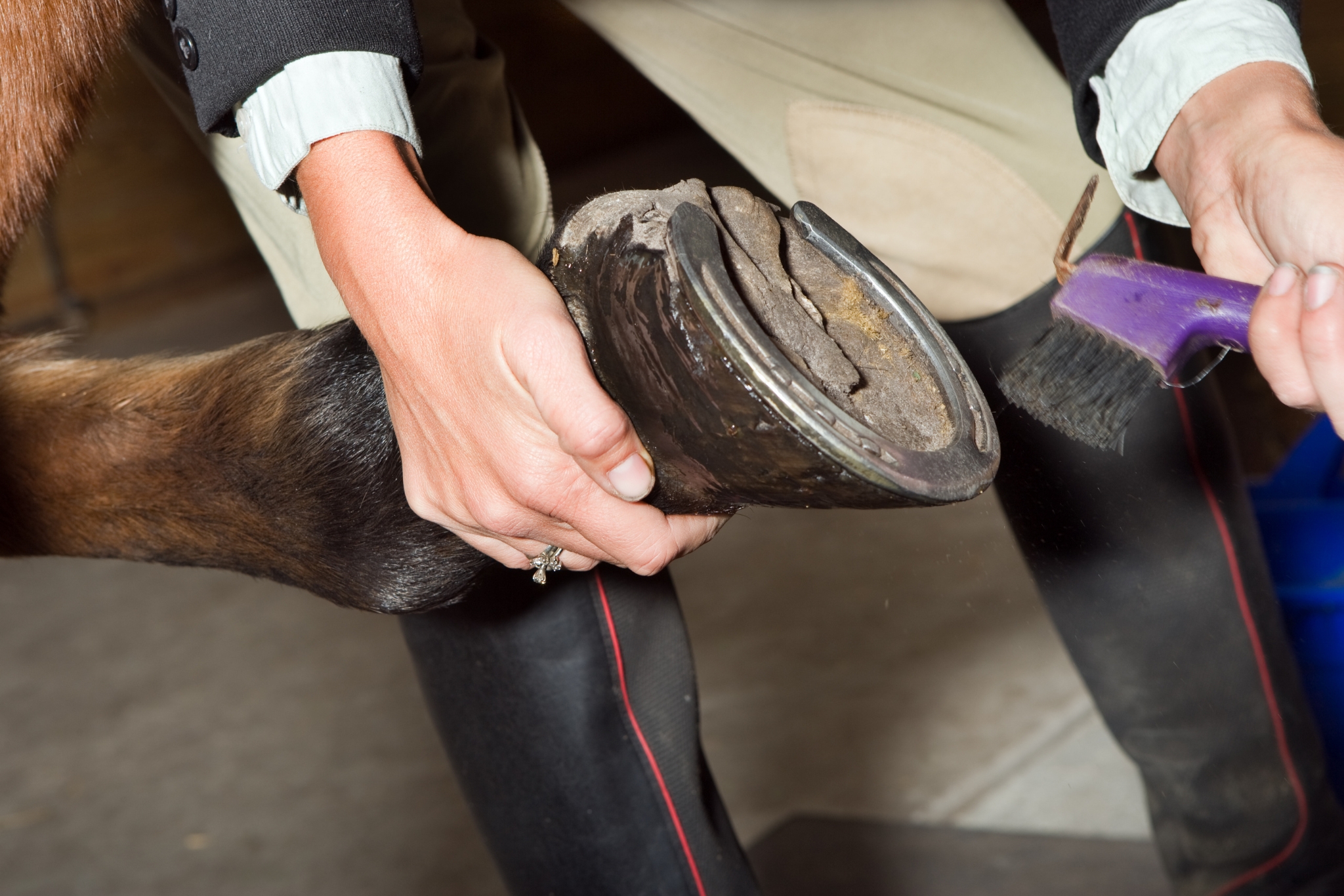
You’re picking out your horse’s hooves before a ride when you spot it… a small chip missing from the hoof wall or a thin crack running up from the bottom edge. Naturally, you start wondering whether it’s something to worry about or just a cosmetic issue.
The honest answer depends on the crack. Some chips and cracks are minor and will simply grow out with the hoof, while others can point to an underlying problem, such as structural weakness, infection, or an imbalance that needs attention.
This article covers how to tell the difference, what to do when you notice a crack, how farriers and veterinarians can help with more serious cases, and what you can do to help prevent hoof cracks from coming back.
First, Know What You’re Looking At
Your horse’s hoof wall is made of keratin (the same protein found in your fingernails) and it grows downward from the coronary band (the hairline at the top of the hoof) at roughly ¼ to ⅜ inch per month.
That means it can take around 9 to 12 months for a completely new hoof wall to grow from the coronet to the ground. That slow growth rate is important to keep in mind when thinking about recovery.
Chips
Chips are small pieces of the hoof wall that break away, usually along the bottom edge. They’re commonly seen in horses, and are usually just the result of normal wear.
Cracks
Cracks are splits in the hoof wall, and they can look different depending on where they start and which direction they travel.
- Grass cracks start at the bottom of the hoof and travel upward without reaching the coronary band (these are usually minor and superficial).
- Sand cracks start at the coronary band and extend downward. Because they begin where new hoof grows, they can be more concerning and may require closer attention.
- Toe cracks appear at the front of the hoof.
- Quarter cracks develop along the sides of the hoof (between the toe and heel). They’re relatively common in performance horses and can sometimes cause lameness.
- Heel cracks occur toward the back of the hoof and can become painful if they deepen or become infected.
- Horizontal cracks (sometimes called blowouts) run across the hoof wall. They can develop after an abscess drains through the coronary band or following an injury to the coronet.
Cracks can also be classified by how deep they go—superficial cracks affect only the outer portion of the hoof wall, while full thickness cracks extend deeper toward the sensitive tissue underneath.
The deeper and more unstable a crack is, the more important it is to have your farrier or veterinarian evaluate it.
Why Do Hooves Crack and Chip?
There’s rarely just one reason a horse develops a hoof crack. More often, several factors come together and put extra stress on the hoof.
- Hoof imbalance and long toes: Uneven trimming or going too long between trims can put uneven pressure on the hoof wall. Long toes and underrun heels are common contributors to toe and quarter cracks.
- Changes in moisture: Hooves expand when they’re wet and contract as they dry. Repeated swings between wet conditions and dry hard ground can put extra stress on the hoof wall over time.
- Nutrition: Hoof quality is closely tied to nutrition. Inadequate protein or certain amino acids and minerals (including methionine, zinc, and copper) can contribute to weaker hoof horn. Biotin is often discussed for hoof health, but it isn’t a cure-all and works best as part of a balanced diet.
- Infection: Problems such as white line disease and thrush can weaken the hoof structure and make cracks more likely to develop or harder to resolve.
- Injury or an abscess: An injury to the coronary band can permanently affect how the hoof wall grows. An abscess that drains through the coronary band can also leave a horizontal defect that gradually grows downward with the hoof.
- Shoeing problems: Nails placed too close to the sensitive structures, shoes that are left on for too long, or poorly fitted shoes can contribute to hoof wall damage.
- Conformation and genetics: Some horses naturally have weaker hoof quality or limb conformation that places more stress on certain areas of the hoof.
- Workload and terrain: Hard, rocky, or abrasive surfaces can wear the hoof faster, especially when combined with heavy work. If the hoof is breaking down faster than it can grow, cracks and chips become more likely.
What to Do Right Now When You Find a Crack or Chip
First, take a breath and then work through these steps.
Not every hoof crack is an emergency, but it’s important to figure out what you’re dealing with before deciding what to do next.
1. Check your horse first
Is your horse comfortable walking and trotting? Look for signs such as heat in the hoof, a strong digital pulse, swelling, or reluctance to put weight on the foot.
If your horse is lame and has a hoof crack, contact your veterinarian.
2. Clean the hoof and take a close look
Pick out the hoof and gently brush away dirt so you can see the crack clearly. Take note of where it starts and ends, how long it is, how deep it appears, and whether it’s open, bleeding, or moving when your horse puts weight on the foot.
3. Take some photos
Take clear photos from several angles, including the side, front, and sole of the hoof. Add the date if possible. These photos can help your farrier or veterinarian monitor changes over time and make it easier to spot whether the crack is improving or getting worse.
4. Watch for red flags
Contact your veterinarian promptly if you notice:
- Bleeding or sensitive pink tissue visible inside the crack
- Lameness, heat, or a strong digital pulse
- A foul smell or dark oozing discharge
- A crack that opens and closes as your horse moves
- A crack that starts at the coronary band
- Swelling at or above the coronary band
5. Contact your farrier
Even if the crack looks minor, let your farrier know and ask when they can take a look. If the crack is deep, unstable, or appears to be spreading, don’t wait until the next routine trimming or shoeing appointment.
6. Keep the area clean and as dry as possible
Mud, manure, and constant moisture can increase the risk of infection (especially if the crack is open). If you can, give your horse access to a cleaner and drier area while you wait for your farrier or veterinarian.
7. Don’t dig, cut, or glue the crack yourself
It can be tempting to grab a rasp, knife, or tube of super glue and try to fix the crack yourself. Avoid doing that unless your farrier or veterinarian has specifically instructed you to. Cutting into the hoof or sealing an open crack can make the problem worse or trap dirt and bacteria inside.
The safest approach is to keep the hoof clean, avoid making the damage worse, and let a qualified professional determine what treatment is needed.
How Cracks Are Treated
Treatment depends on the type of crack, how deep it is, and what caused it in the first place. Your farrier and veterinarian may use one or more of these approaches depending on what they find:
- Balanced trimming: This is usually the foundation of treatment. Your farrier can improve the hoof’s balance and address an overly long toe or other imbalance that’s putting extra stress on the wall. Once those forces are reduced, the crack may have a better chance to grow out.
- Reducing pressure at the bottom of the crack: Your farrier may relieve pressure where the crack meets the ground. They may also roll or bevel the hoof edge to reduce leverage and help prevent the crack from continuing to split.
- Stabilizing the crack: Cracks that flex or move with each step may need additional support. Depending on the situation, a farrier may use patches, acrylics, composite materials, or lacing techniques to stabilize the hoof wall while it grows out.
- Therapeutic shoeing: Some horses benefit from specialized shoes that provide additional support, redistribute weight, or limit excessive hoof movement. Bar shoes, glue-on shoes, and other options may be considered depending on the horse and the type of crack.
- Treating the underlying problem: If thrush, white line disease, an abscess, or another issue is contributing to the crack, that problem needs to be addressed too (otherwise the crack may keep coming back). Your veterinarian may also recommend reviewing your horse’s diet and nutrition.
- Veterinary treatment when necessary: Deep cracks, infections, significant lameness, or injuries involving the coronary band may require veterinary care. Your veterinarian may recommend imaging, debridement, medication, or other treatment depending on the situation.
Be cautious of anyone promising a quick fix. Hooves grow slowly, so even a well-managed crack can take months to grow out. Cracks that involve the coronary band can be especially complicated and may leave a permanent change in the way the hoof grows.
Prevention Keeping Hooves Strong
Preventing hoof cracks is mostly about consistent care and catching small problems before they become bigger ones.
- Stick to a regular trimming or shoeing schedule: Most horses do well with a farrier visit every 4 to 8 weeks. Horses with hoof imbalances, long toes, or a history of cracks may need more frequent visits.
- Feed a balanced diet: Work with your veterinarian or an equine nutritionist to make sure your horse is getting adequate protein, vitamins, and minerals. A ration balancer or hoof supplement can be helpful when it fills a genuine nutritional gap. Horses with metabolic concerns may also need careful management of sugar and starch intake.
- Manage moisture: Try to avoid keeping your horse’s hooves constantly wet or putting them through repeated wet to dry cycles. Keeping stalls and turnout areas clean and reasonably dry can help. Ask your farrier whether a hoof sealant or moisture management product makes sense for your horse.
- Pick the hooves daily: Regular picking helps keep your horse’s feet clean and gives you a chance to spot small cracks, chips, thrush, or other changes early.
- Pay attention to footing: Very hard or abrasive ground can contribute to chipping, while deep or consistently wet footing can soften the hoof. Adjust turnout or riding surfaces when possible.
- Stay on top of shoeing: If your horse wears shoes, don’t let them go overdue. Overgrown hooves and shoes that have shifted out of position can put extra stress on the hoof wall.
- Be patient while the hoof grows out: Take photos about once a month so you can compare the new growth over time. You’re looking for healthy and smooth hoof growth coming down from the coronary band and staying well attached to the wall.
Common Myths About Hoof Cracks
There are plenty of quick fixes and common assumptions about hoof cracks, but not all of them hold up. Here are a few myths worth clearing up:
- “Hoof dressing will fix the crack.” Topical products may help manage surface moisture, but they can’t repair a crack or replace proper trimming, nutrition, and hoof care. Using heavy or greasy products too often may also trap moisture against the hoof.
- “Biotin will solve the problem.” Biotin can support hoof health in some horses, especially when there’s a nutritional need, but it isn’t a cure-all. Many cracks are caused or worsened by mechanical stress, hoof imbalance, or environmental factors that a supplement alone can’t fix.
- “Cracks just need to be glued shut.” Stabilizing a crack can sometimes be part of treatment, but simply sealing it without addressing the underlying cause often means the crack will reopen. Any repair works best as part of a complete hoof care plan.
- “A small crack is never a big deal.” Many small cracks are harmless, but some can grow or become more serious if the underlying problem isn’t addressed. Catching and dealing with a crack early is usually easier, less expensive, and better for your horse.
When to Call the Vet vs. the Farrier
Knowing when to call your farrier and when to bring in your veterinarian can make a big difference when you’re dealing with a hoof crack.
- Call your farrier for minor cracks, small chips, hoof balance concerns, and routine management when your horse is sound and the crack appears superficial.
- Call your veterinarian if your horse is lame, or if you notice bleeding, infection, swelling, heat, or a strong digital pulse. You should also contact your vet if the crack involves the coronary band or suddenly becomes deeper, wider, or worse.
In many cases, the best approach is to have your farrier and veterinarian work together. Your farrier can address the hoof mechanics and trimming, while your veterinarian can evaluate pain, infection, or other underlying health concerns.
Frequently Asked Questions
1. Is a chipped hoof an emergency?
Usually, no. Small chips along the bottom edge of the hoof are fairly common and are often just a result of normal wear. It becomes more concerning if the chip exposes sensitive tissue, is accompanied by bleeding, or your horse becomes lame.
2. How long does a hoof crack take to heal?
Hoof cracks don’t heal quite like a cut on the skin. Instead, the damaged hoof has to grow out. Depending on where the crack starts and how quickly your horse’s hooves grow, it can take several months to grow down from the coronet, and replacing the entire hoof capsule can take around a year.
3. Can I still ride a horse with a hoof crack?
It depends on the type and severity of the crack. A small superficial grass crack on a horse that remains completely sound may not prevent riding, but it’s best to get your farrier’s advice first. Deep, unstable, or bleeding cracks, especially those causing lameness, usually require rest until your veterinarian or farrier says it’s safe to resume riding.
4. Should I put boots on a horse with a cracked hoof?
Hoof boots can provide protection and support in certain situations, but they need to fit properly. Your farrier can help determine whether a boot is appropriate and recommend the right type and fit. A poorly fitting boot can cause rubbing or hold in moisture, which can create additional problems.
5. Do barefoot horses get more cracks?
No! Barefoot horses can have strong healthy hooves, just as shod horses can develop cracks. Hoof health depends on factors such as regular trimming, nutrition, genetics, exercise, and the terrain your horse lives and works on. Proper hoof care matters whether your horse wears shoes or goes barefoot.
The Bottom Line
Cracked or chipped hooves are common, and in many cases they can be successfully managed. The important thing is to take a close look, watch for warning signs, and involve your farrier early rather than waiting for a small problem to become a bigger one.
Regular trimming, balanced nutrition, and consistent hoof care can make a big difference in your horse’s overall hoof health. It’s also important to address what’s causing the crack rather than simply treating the visible damage.
And remember, hooves grow slowly. With patience, regular care, and a solid plan from your farrier or veterinarian, you’re giving your horse’s hooves the best chance to stay healthy and strong for years to come.