How to Bond With Your Ball Python
Want a calmer and more confident ball python? Here’s how to build trust with proven handling tips, enrichment ideas, and a realistic bonding timeline.
- Can You Actually Bond With a Ball Python?
- Step 1: Get the Enclosure Right First
- Step 2: Give Your New Snake Time to Settle In
- Step 3: Get Used to Each Other Without Handling
- Step 4: Learn How to Handle Your Ball Python the Right Way
- How Often Should You Handle a Ball Python?
- How to Read Ball Python Body Language
- Building Trust Through Feeding and Routine
- Enrichment: Another Way to Connect
- Troubleshooting: What If My Ball Python Is Skittish?
- Common Mistakes to Avoid
- Be Patient: The Payoff Is Worth It
- Frequently Asked Questions
If you’ve just brought home a ball python, you’re probably feeling a mix of excitement and nerves. Maybe your new snake is curled up tightly in the corner of its enclosure, and you’re wondering whether it likes you, feels nervous, or has simply decided to pretend you don’t exist.
This behavior is completely normal, and you can absolutely build trust with your ball python, but bonding with a snake looks a little different than bonding with a dog or cat. It’s less about affection and more about helping your snake learn that you’re safe, predictable, and they have nothing to worry about.
This article covers what bonding really means for a ball python, how to set your snake up for success, how to handle it confidently and safely, and how to understand the signals your snake is giving you.
Can You Actually Bond With a Ball Python?
Let’s start with one important expectation—snakes don’t experience affection in quite the same way mammals do.
Your ball python probably won’t greet you at the door or curl up with you for comfort. What it can do is become habituated to you, meaning it learns that you’re familiar, predictable, and not a threat.
As your ball python becomes more comfortable, you may notice that it:
- Stays calm when you open the enclosure
- Explores your hands and arms with relaxed tongue flicks
- Moves slowly and confidently while being handled
- Eats consistently and sheds normally
- Spends less time hiding or tightly balled up when you’re nearby
That calm curious behavior is what bonding can look like with a reptile, and seeing your snake become comfortable around you can be incredibly rewarding.
Step 1 Get the Enclosure Right First
Trust starts with the environment. If your ball python feels stressed or insecure in its enclosure, it’s going to have a much harder time relaxing around you, no matter how gentle you are.
Before focusing on handling, make sure the basics are in place:
- Temperature: Aim for a warm side around 88°F to 92°F and a cool side in the upper 70s to low 80s. This gives your snake the temperature range it needs to regulate its body.
- Humidity: Keep humidity around 50% to 60% most of the time, with a boost to roughly 60% to 70% during shedding.
- Hides: Provide at least two snug hides, with one on the warm side and one on the cool side. Ball pythons tend to feel more secure when their bodies can touch the sides of their hide.
- Clutter and cover: Fake plants, cork bark, and other safe decorations give your snake places to feel hidden and secure, even when it’s exploring outside its hides.
- Enclosure security: Use a secure locking lid. Ball pythons can be surprisingly good escape artists.
Once your snake feels safe and comfortable in its enclosure, it’s much easier for it to relax and become familiar with you.
Step 2 Give Your New Snake Time to Settle In
One of the most common mistakes new ball python owners make is trying to handle their snake too soon. Moving to a new home can be stressful, and a nervous snake may refuse food or become defensive.
Give your snake about 5 to 7 days to settle in before you try handling it. During this time, stick to the essentials such as providing fresh water, spot cleaning their enclosure, and checking temperatures. It’s also a good idea to wait until your snake has successfully eaten before starting regular handling. A successful meal can be a helpful sign that your snake is beginning to feel comfortable in its new environment.
A little patience at the beginning can make a big difference. Giving your ball python time to settle can help set the stage for calmer and more comfortable handling later on.
Step 3 Get Used to Each Other Without Handling
Before you start picking up your snake, give it a chance to get familiar with you in low pressure ways. There’s no need to rush the process.
- Spend time near their enclosure. Sit nearby and read, scroll on your phone, or talk quietly for a few minutes each day. Your snake can get used to your presence without feeling pressured.
- Move slowly around the enclosure. Calm predictable movements help your snake learn that you’re simply part of its normal surroundings.
- Let your snake investigate your hand. Once your snake seems settled, you can place your hand inside the enclosure off to the side (rather than directly in front of its face). Let your snake decide whether it wants to come closer and investigate.
- Give it time to learn your scent. Snakes rely heavily on scent to understand their surroundings, so your smell will gradually become something familiar and normal.
Keep in mind that this adjustment period might take a few days or even a couple of weeks, depending on your snake’s personality. Some ball pythons are confident from the start, while others prefer to take their time.
Step 4 Learn How to Handle Your Ball Python the Right Way
Once your snake is eating consistently and seems comfortable in its new home, you can start introducing short handling sessions. Just remember that the way you approach and support your snake can make a big difference.
Before you start
- Wash your hands with unscented soap. Food smells that are left on your hands can sometimes trigger a feeding response, and clean hands are simply good hygiene.
- Warm up your hands. Cold hands can be startling, especially when your snake isn’t expecting them.
- Choose a calm time in the evening. Ball pythons are nocturnal, so they’re usually more alert and naturally active at night.
How to pick up your snake
- Approach from the side rather than from above. A hand coming down from overhead can resemble the approach of a predator.
- Gently touch their body first. This gives your snake a moment to realize what’s happening instead of being suddenly grabbed.
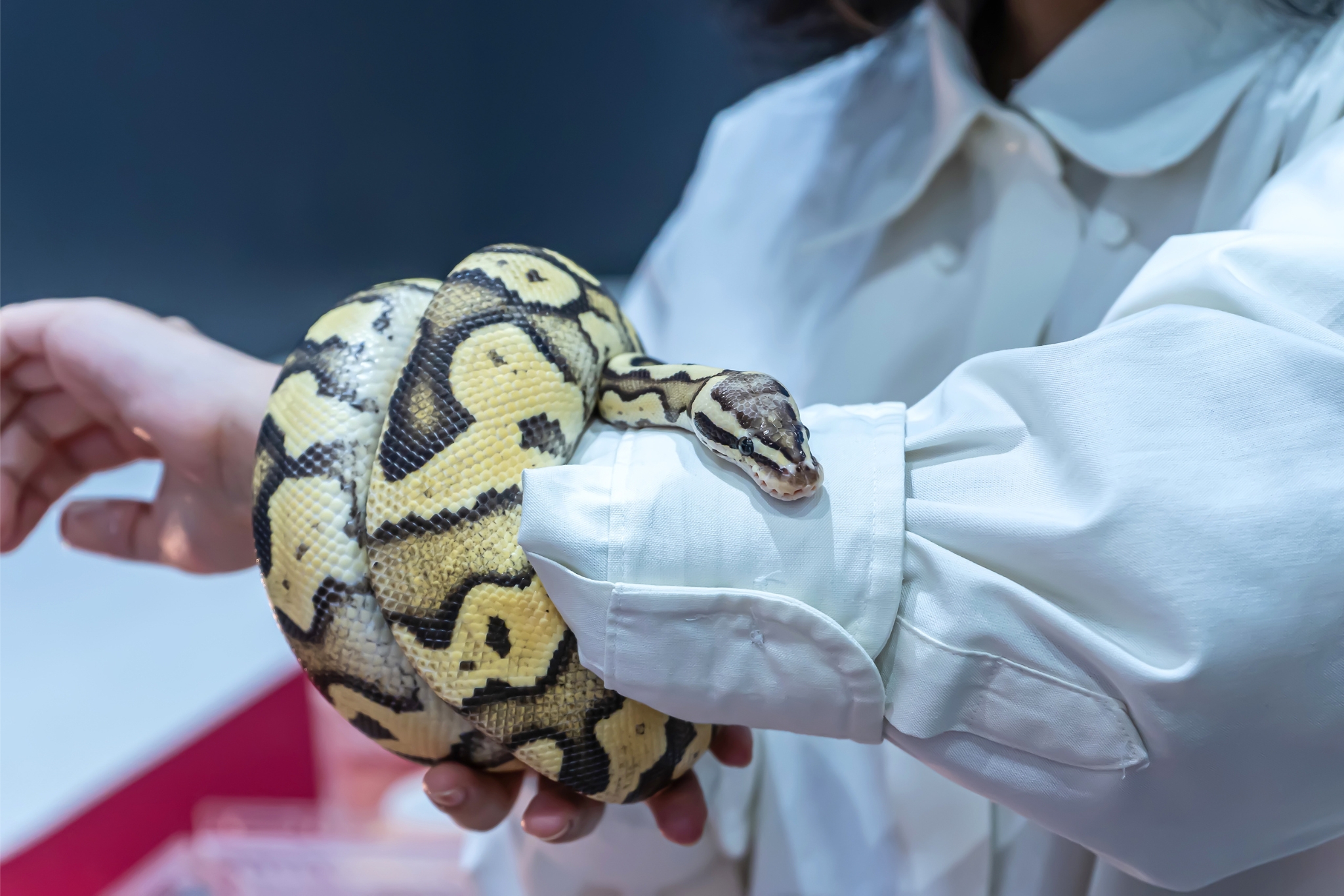
- Use both hands to scoop and support the body. Support your snake around the middle and toward the rear so it feels secure.
- Keep your movements slow and smooth. Avoid sudden movements that could startle your snake.
- Let your snake move through your hands. Think of supporting rather than restraining. Allow your ball python to move naturally instead of gripping it tightly.
How long should you handle?
Start with about 5 to 10 minutes per session and gradually work your way up to around 15 to 20 minutes as your snake becomes more comfortable.
And try to end each session while your snake is still calm and relaxed. This helps create positive experiences and can make future handling easier.
How Often Should You Handle a Ball Python?
For bonding, 1 to 3 handling sessions per week is usually plenty. Consistency matters way more than handling every day. Short predictable sessions can help your snake build trust and become more comfortable with you over time.
When to give your snake some space
- For 48 to 72 hours after eating: Give your ball python time to digest its meal. Handling too soon can increase the risk of regurgitation.
- During shedding: If your snake’s eyes look cloudy or blue and its skin appears dull, it’s best to leave it alone until the shed is finished. Snakes can be more sensitive and irritable during this time.
- When your snake is showing signs of stress: If your ball python seems unusually defensive, tense, or uncomfortable, give it a break and try again another time.
- Right after cleaning or changing the enclosure: A major change to the enclosure can leave your snake feeling unsettled, so give it some time to readjust before handling.
How to Read Ball Python Body Language
Learning to read your snake’s body language is one of the most useful bonding skills you can develop. Your ball python can’t tell you how it’s feeling, but its behavior can give you plenty of clues.
Signs your snake is relaxed and comfortable
- Slow steady movement
- Gentle, regular tongue flicks
- A loosely relaxed body draped over your hands
- Head held up and exploring without looking tense
- No hissing or tight defensive coiling
Signs your snake is stressed or defensive
- Balling up: This is the classic ball python response. Your snake tucks its head into the middle of its coils when it feels threatened or unsure. It’s a sign of fear, not contentment. Stay calm and give your snake time to relax and uncoil.
- Hissing or puffing up: This is your snake’s way of saying it wants some space.
- Rapid or jerky movements: Repeated attempts to escape or sudden frantic movements can indicate that your snake is uncomfortable.
- Musking: A frightened ball python can release a strong smelling secretion as a defensive response.
- Strike posture: If your snake forms a tight S-curve with its neck, it may be preparing to strike. Calmly end the handling session and give it some space.
If your ball python curls into a tight ball while you’re holding it, don’t think of it as a failure. It’s simply giving you information about how it feels. Keep your hands steady, avoid sudden movements, and give it a quiet moment to relax. If it stays tightly balled and tense, gently return it to its enclosure and try again another time.
Building Trust Through Feeding and Routine
Predictability can go a long way with ball pythons. A consistent routine helps your snake learn what to expect and can make everyday interactions feel more comfortable.
- Keep feeding on a regular schedule. Offer appropriately sized frozen-thawed prey when possible (it’s safer than live feeding, which can injure your snake).
- Keep handling days consistent. A predictable routine can help your ball python settle into a rhythm and become more comfortable with handling.
- Avoid hand feeding. Use feeding tongs instead. Keeping feeding and handling separate helps prevent your snake from learning that hands are associated with food.
- If your snake seems to mistake you for dinner, wash your hands before handling and approach calmly from the side. This can help reduce food related reactions and mistaken strikes.
Enrichment Another Way to Connect
A mentally stimulated ball python can become a more confident and curious snake. Enrichment doesn’t replace regular handling, but it can give your snake more opportunities to explore, stay active, and feel comfortable in its environment.
- Rearrange the decor occasionally: Changing things around every few weeks can give your snake something new to investigate, as long as you don’t completely disrupt its familiar hiding spots.
- Add sturdy branches or cork bark: Ball pythons can climb, so secure climbing opportunities can give them another way to explore their enclosure.
- Offer supervised exploration time: A secure snake-proofed area (such as a clean bathtub or appropriate playpen) can give your ball python a safe change of scenery. Make sure there are no gaps or spaces where it could squeeze behind or become stuck.
- Introduce safe changes to the environment: Fresh clean substrate and new hides or enclosure decor can provide interesting new scents and textures for your snake to investigate.
Troubleshooting What If My Ball Python Is Skittish?
Some ball pythons are naturally more cautious than others, and that’s completely okay. If your snake is especially shy or nervous, a slower approach can help it build confidence without feeling overwhelmed.
- Slow things down: Take a break from handling for a week or two and give your snake some extra time to settle.
- Keep handling sessions short: When you start again, try just a few minutes at a time and gradually increase the length as your snake becomes more comfortable.
- Double check your setup: Temperature, humidity, and hide placement can all affect how secure your snake feels. What looks like a difficult temperament may actually be a husbandry issue.
- Stay consistent: Even nervous ball pythons can become more comfortable with calm predictable interactions and plenty of patience.
- Consider a health check: If your snake suddenly becomes defensive, stops eating, or starts behaving unusually, it’s worth having an exotic animal veterinarian check for an underlying health issue.
Common Mistakes to Avoid
Even with the best intentions, it’s easy to make a few handling mistakes when you’re getting to know your ball python. Avoiding these common missteps can help your snake feel safer and make the bonding process much smoother.
- Handling too soon after bringing your snake home: Give your new ball python time to settle into its enclosure before starting regular handling.
- Handling after meals or during shedding: Give your snake time to digest after eating, and let it finish shedding before handling.
- Grabbing from above or restraining your snake: Approach from the side and support your snake’s body rather than holding it tightly.
- Letting handling sessions go on too long: Short calm sessions are usually better than pushing your snake past its comfort level.
- Mistaking balling up for relaxation: A tightly curled ball is generally a defensive response, not a sign that your snake is comfortable.
- Excessive handling to speed up the bonding process: More handling doesn’t necessarily mean faster progress. Patience and consistency work better.
- Skipping handwashing after handling: Reptiles can carry Salmonella, so wash your hands thoroughly with soap and water after handling your snake or anything in its enclosure.
Be Patient The Payoff Is Worth It
Ball pythons can live 20 to 30 years or even longer in captivity, so you’re building a relationship that can last for decades. There’s no need to rush the bonding process. Some snakes become comfortable within a few weeks, while others may take several months. Either way, every time you have a calm and positive interaction it helps build familiarity and trust.
Over time, you may notice your snake moving through your hands with more confidence, exploring its surroundings with curiosity, and settling down instead of immediately curling up or trying to hide.
That growing sense of comfort is what bonding with a ball python is all about, and it can be one of the most rewarding parts of keeping these gentle fascinating animals.
Frequently Asked Questions
1. How long does it take to bond with a ball python?
Every snake is different, but many ball pythons become noticeably more comfortable with gentle consistent handling within a few weeks. Shyer snakes may take a few months, so don’t worry if yours needs a little extra time.
2. Do ball pythons like being held?
Ball pythons can become comfortable with handling, especially when they’re supported properly and handled calmly. They don’t seek out interaction in the same way dogs or other social pets do, so it’s best to keep handling sessions short, gentle, and positive.
3. Why does my ball python ball up when I hold it?
Curling into a tight ball is a natural defensive response. Your snake may be feeling nervous or unsure and is protecting its head. With patience and consistent, gentle handling, many ball pythons become more relaxed and do this less often.
4. Can ball pythons recognize their owners?
Yes, ball pythons can learn to recognize familiar scents, routines, handling patterns, and they can learn that your presence is familiar and predictable.
5. How often should I handle my ball python?
One to three handling sessions per week is a good starting point for many ball pythons. Avoid handling for about 48 to 72 hours after feeding, and give your snake extra space while it’s shedding.
6. Is it okay to handle a ball python every day?
Daily handling isn’t necessary, and some snakes really do find it stressful. For most ball pythons, shorter calm sessions a few times a week are a better approach. Pay attention to your snake’s body language and adjust the frequency if it seems uncomfortable.
Our content is for general educational purposes. If you have concerns about your snake’s health or behavior, consult a qualified veterinarian with reptile experience.