Chameleon Facts Habitat, Behavior, Threats & Conservation
Curious about chameleons? Learn about their habitat, behavior, threats, and conservation efforts to protect these amazing color changing lizards.
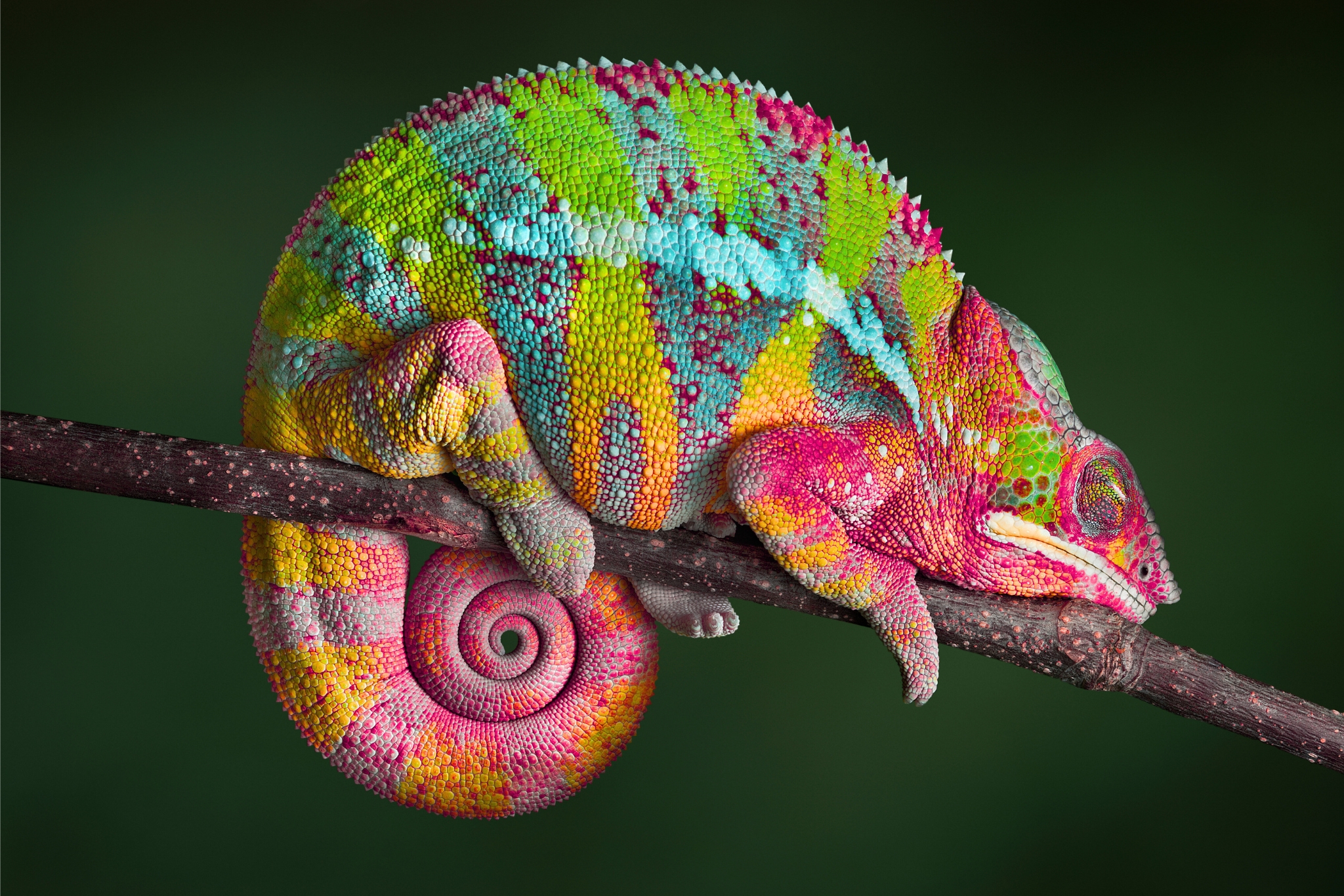
The colorful and enigmatic reptile we know as the chameleon (family Chamaeleonidae) has captured human fascination for centuries. These lizards are equipped with remarkable adaptations – such as independently moving eyes, a projectile tongue, and the ability to change skin colour – which enable them to thrive in varied environments.
In this article, we’ll explore their habitats, behaviors, the major threats they face, and what is being done for their conservation, including some surprising facts you might not know.
1. Habitat & Distribution
Where Do Chameleons Live?
Chameleons are most commonly found in Africa and Madagascar, with a few species found in parts of Europe, Asia, and the Indian Ocean islands.
- Madagascar alone hosts over 200 species of chameleons, many of which are endemic (found nowhere else).
- They inhabit a wide range of environments including:
- Rainforests and dense woodlands
- Savannas and scrublands
- Semi‑deserts and even montane (mountain) forests.
Adaptations to Life in the Trees and Beyond
Chameleons are superbly adapted to an arboreal lifestyle (which means tree dwelling).
- Their feet have a zygodactylous arrangement (two toes pointing forward and two backward) allowing a pincer‑like grip on branches.
- Their prehensile tails function as a fifth limb, allowing them to wrap around branches for stability.
- In arid habitats (like the Namib Desert) some species dig into sand dunes for respite from temperature extremes.
2. Behavior & Unique Features
Colour Change & Communication
Contrary to popular belief, chameleons do not change colour purely to blend into any background. Instead, colour change is often used for communication, temperature regulation, and mood signalling. For example:
- Bright colours attract mates or display dominance.
- Darker colours appear when stressed, cold, or threatened.
Vision & Hunting
- Their eyes swivel independently, enabling near 360 degree vision – this is critical for spotting both prey and predators.
- Once prey is spotted, chameleons fire their long sticky tongue with enormous speed. Some species tongues extend twice the body length and accelerate incredibly fast.
Diet & Activity
- Most chameleons are insectivores – which means they eat insects like crickets, grasshoppers, locusts, worms, and other invertebrates. Some larger species may also eat small vertebrates.
- Many are diurnal (active in daylight) and rest at night in secure spots where they blend seamlessly into the branch structure.
Reproduction
- Most species lay eggs (oviparous) that take from several months up to over a year to hatch in some species.
- A few species give live birth (ovoviviparous), showcasing the diversity in chameleon reproductive strategies.
3. Major Threats to Chameleons
Chameleons face a range of significant threats in the wild – and unfortunately many are linked directly to human activities.
Habitat Loss & Fragmentation
- Deforestation, logging, slash‑and‑burn agriculture, and conversion of natural land to farmland are decimating chameleon habitats (especially in Madagascar and Africa).
- Many chameleon species are confined to extremely restricted ranges (sometimes a single forest patch) and cannot adapt to degraded and fragmented habitats.
Illegal and Legal Pet Trade
- Chameleons’ colourful appearance and novelty value make them a popular species in the exotic pet trade. Some specimens are wild caught, which can deplete local populations and often leads to high mortality.
- Some species are listed under trade regulations (CITES).
Climate Change & Other Threats
- Montane (mountain) dwelling species are particularly vulnerable as warming temperatures force them to seek higher, cooler habitats – and there may be nowhere higher to go.
- Pesticide exposure and invasive species also represent serious threats to chameleons.
Predation and Ecological Pressures
- Even in native habitats, chameleons face natural predators such as: birds, snakes, small mammals, and introduced species. Habitat disturbance often amplifies these risks.
4. Conservation Efforts & What We Can Do
Why Conservation Matters
It’s estimated that over one third of chameleon species are Critically Endangered, Endangered or Vulnerable. Their survival is critical not only for biodiversity, but also for the ecosystems they inhabit.
Key Conservation Strategies
- Establishing and managing protected areas in chameleon‑rich regions like Madagascar.
- Promoting captive breeding for species under severe pressure from wild collection.
- Enforcing international trade regulations (CITES) and cracking down on illegal animal trade.
- Restoring degraded habitats and connecting fragmented forest patches to allow gene flow and species movement.
- Promoting public education about the ecological importance of chameleons and discourage purchasing wild caught animals as pets.
What You Can Do
- Avoid buying wild caught chameleons. Only buy captive bred animals if you are keeping one as a pet.
- Support habitat protection organizations working in places like Madagascar.
- Advocate for sustainable land use practices and responsible agricultural expansion in chameleon habitats.
- Educate others about the threats chameleons face and why these animals deserve protection.
5. Quick Chameleon Facts You Should Know
- There are more than 200 known species of chameleons worldwide.
- Some species’ tongues can extend twice their body length and capture prey at an incredibly fast speed.
- Many chameleons cannot adapt to degraded or altered habitats – they depend on intact forests.
- Colour change is about communication and physiology, not just camouflage.
Why Color Changing Lizards Deserve Our Attention
The vibrant and skillfully adapted chameleons are remarkable representatives of evolutionary innovation. Yet, they unfortunately face mounting pressures from habitat destruction, the illegal pet trade, and climate change.
Through informed conservation and responsible human behaviour, these captivating reptiles can continue to thrive in the wild.
If you’re fascinated by chameleons, consider supporting conservation groups, learning more about their ecology, and if you ever keep one as a pet, doing so ethically and legally.