Pet Seahorses What You Need to Know
Thinking about pet seahorses? Learn fascinating facts, care requirements, compatible species, and everything needed for a thriving seahorse aquarium.
- What Makes Seahorses Unique Pets?
- 4 Essential Seahorse Facts Every Owner Should Know
- Popular Pet Seahorse Species for Home Aquariums
- Seahorse Care Requirements
- Health Considerations for Pet Seahorses
- Are Seahorses Right for You?
- Conservation and Ethical Considerations
- Ready to Step Into the World of Pet Seahorses?
Seahorses are among the most enchanting and unique marine creatures you can keep as pets. These mystical looking fish captivate aquarium enthusiasts with their distinctive appearance and fascinating behaviors.
If you’re considering adding a seahorse to your home aquarium, this article covers what you need to know about pet seahorses, their care requirements, and what makes these creatures so special.
What Makes Seahorses Unique Pets?
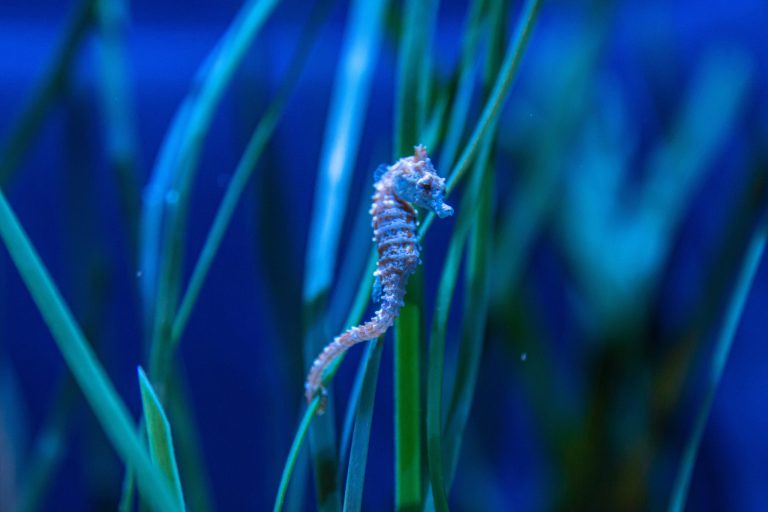
Seahorses belong to the genus Hippocampus, which comes from the Greek words for “horse” and “sea monster.” Unlike most fish, seahorses swim upright and use their prehensile tails to anchor themselves to coral, seagrass, or aquarium decorations. Their unusual body structure, horse-like heads, and mesmerizing swimming patterns make them unlike any other aquarium fish.
4 Essential Seahorse Facts Every Owner Should Know?
1. Seahorses Are Actually Fish
- Despite their unusual shape and upright posture, seahorses are true bony fish. They breathe through gills, use a swim bladder to control buoyancy, and propel themselves with small fins.
- Instead of scales, they’re covered in bony plates that give them their distinctive armored look. This unique anatomy makes them both fragile and fascinating to observe.
2. Male Seahorses Give Birth
- One of the most fascinating seahorse facts is that males are the ones who carry and give birth to the young. The female deposits her eggs into the male’s brood pouch, where he fertilizes and nurtures them until they hatch.
- Depending on the species, a male can give birth to anywhere from 5 to 1,500 babies (known as fry) in a single pregnancy.
3. They’re Slow Swimmers
- Seahorses are among the slowest swimmers in the ocean, with some species moving about 5 feet per hour. Instead of relying on speed to escape predators, they use camouflage and anchor themselves to plants or corals with their prehensile tails.
- Because of their limited swimming ability, they require seahorse-safe aquariums with moderate flow – enough movement to keep the water healthy, but not so strong that they struggle to swim.
4. Seahorses Eat Constantly
- Because seahorses lack a true stomach, food moves through their digestive system very quickly, requiring them to eat frequently throughout the day.
- Pet seahorses typically consume 30 to 50 small prey items daily.
- Their diet consists mainly of live or frozen mysis shrimp, enriched brine shrimp, and other tiny crustaceans.
Popular Pet Seahorse Species for Home Aquariums
Lined Seahorse (Hippocampus erectus)
One of the most widely kept seahorse species, the lined seahorse is native to the Western Atlantic and typically reaches 6 to 8 inches in height.
They adapt well to captivity and are often recommended for beginners because they are hardy, peaceful, and have been successfully captive bred for many generations.
Captive bred H. erectus readily accept frozen foods and adjust quickly to aquarium conditions, making them both reliable and rewarding pets.
DID YOU KNOW? Collecting wild seahorses harms natural populations – and wild caught individuals are far more challenging to keep. Wild H. erectus often struggle to transition from live prey to frozen diets and may carry parasites or have other health problems.
Always choose captive bred seahorses.
Dwarf Seahorse (Hippocampus zosterae)
Perfect for small, specialized aquarium setups, dwarf seahorses are native to the Gulf of Mexico and grow to just 1 to 2 inches.
Their tiny size makes them popular among hobbyists with limited space. However, they come with unique care requirements: dwarf seahorses do not adapt well to frozen foods and depend on a constant supply of live prey – such as copepods and mysis shrimp nauplii.
They must be fed multiple times per day to thrive.
IMPORTANT: Dwarf seahorses must be fed live prey multiple times per day to thrive.
Potbelly Seahorse (Hippocampus abdominalis)
One of the largest seahorse species kept in home aquariums, the potbelly seahorse can reach an impressive 14 inches in height.
They are hardy and relatively easy to maintain, but their size means they require large and spacious tanks with excellent water stability.
Tiger Tail Seahorse (Hippocampus comes)
Named for their eye-catching striped tails, tiger tail seahorses are medium sized, typically growing 6 to 7 inches tall.
They are known for their adaptability and generally adjust well to aquarium life, especially when sourced from reputable captive breeding programs.
Barbouri Seahorse (Hippocampus barbouri)
Barbouri seahorses (also known as Barbour’s seahorses) are recognizable by the distinctive spines and “crown-like” coronet on their heads. They typically grow 6 to 7 inches and are native to the Indo-Pacific region.
They are moderately hardy and do well in properly maintained aquariums, especially when captive bred. Barbouri seahorses often adapt to frozen foods and display beautiful color patterns ranging from tan to dark brown with lined or spotted markings.
Seahorse Care Requirements
Tank Size and Setup
Seahorses require specialized aquariums designed to support their unique behavior and feeding habits. A minimum of 30 gallons is recommended for a pair of small to medium species, while larger seahorses need 50 gallons or more.
Tank height is especially important – because seahorses swim vertically, the aquarium should be at least 18 inches tall.
- Vertical hitching posts such as artificial corals, seagrass, or decorative structures
- High quality filtration with moderate, gentle water flow
- Stable water temperatures between 70°F to 74°F for all species listed, except the potbelly seahorse, which is a cold water species and requires a cooler 65°F to 67°F
- Excellent water quality, supported by routine testing and consistent maintenance
DID YOU KNOW? Many outdated care guides still claim that seahorses need gentle water flow – but this is incorrect! Seahorse tanks should avoid dead spots where uneaten food and waste can accumulate, but you also don’t want overly strong currents that make feeding difficult.
The goal is moderate and consistent flow: enough to keep the water circulating and prevent buildup, but gentle enough that seahorses can easily catch their food and move comfortably. Too little flow leads to waste accumulation, while too much makes feeding a constant struggle.
Water Quality Parameters
Maintaining excellent water quality is crucial for pet seahorse health:
| Parameter | Recommended Level |
| SPECIFIC GRAVITY | 1.020 to 1.025 |
| pH | 8.1 to 8.4 |
| ALKALINITY | 8-12 Dkh |
| aMMONIA (nh3) | UNDETECTABLE |
| NITRITE (no2) | UNDETECTABLE |
| NITRATE (no3) | (IDEALLY UNDETECTABLE) <25 PPM |
| PHOSPHATE (PO4) | (IDEALLY UNDETECTABLE) <0.2 PPM |
| CALCIUM | 350 to 450 PPM |
| MAGNESIUM | 1250 to 1350 PPM |
| TEMPERATURE | 70°F to 74°F, except potbelly which requires 65°F to 67°F |
Feeding Your Pet Seahorse
Feeding is one of the most demanding (and sometimes challenging) parts of seahorse care. Thankfully most captive bred seahorses readily eat vitamin enriched frozen foods, which should form the basis of their diet.
Offer meals 2 to 3 times per day, introducing food slowly, as seahorses are careful, deliberate feeders.
Be sure to remove any uneaten food after about 30 minutes to maintain excellent water quality and prevent waste buildup.
Compatible Tank Mates
Seahorses are peaceful and slow moving, making them vulnerable to aggressive or competitive fish. Compatible tank mates include:
- Pipefish (close relatives of seahorses)
- Gobies
- Dartfish (Firefish)
- Cardinal fish
- Jawfish
- Dragonets
- Basslets
- Dwarf filefish
- Blennies
- Small, peaceful wrasses
Avoid fast swimming fish, aggressive species, or anything that might outcompete seahorses for food.
Health Considerations for Pet Seahorses
Common Health Issues
Seahorses can be vulnerable to several conditions, especially when water quality or diet is not ideal. Common issues include:
- Gas Bubble Disease: Air bubbles become trapped in the body or brood pouch
- Bacterial Infections: Often linked to poor or unstable water conditions
- Parasites: External parasites may irritate the skin or gills
- Nutritional Deficiencies: Caused by an imbalanced or insufficient diet
Signs of a Healthy Seahorse
Regular observation helps you identify problems early. A healthy seahorse typically shows:
- Active hitching and exploring behavior
- Good appetite and interest in feeding
- Clear eyes and smooth, blemish free skin
- Upright, stable swimming posture
- Steady, regular gill movement
Are Seahorses Right for You
Before deciding to keep seahorses, take time to consider the benefits and challenges of their care.
Pros:
- Fascinating, unique animals that are captivating to watch
- Gentle, peaceful temperament
- Intriguing and distinctive breeding behaviors
- Can learn to recognize and interact with their owners
Cons:
- Require multiple feedings each day
- Need specialized tank setups and careful maintenance
- Have limited options for compatible tank mates
- Generally higher maintenance than most aquarium fish
Conservation and Ethical Considerations
Always choose captive bred seahorses over wild caught individuals.
Wild populations are under significant pressure from habitat destruction, pollution, and overharvesting. By supporting reputable captive breeding programs, you help protect natural ecosystems while bringing home a healthier seahorse that is far more likely to thrive in an aquarium setting.
Ready to Step Into the World of Pet Seahorses?
Keeping seahorses is a uniquely rewarding yet demanding hobby that requires commitment, consistency, and careful attention to detail.
If you’re prepared to invest the necessary time and resources into providing the right habitat and meeting their specialized needs, seahorses can make extraordinary pets that captivate everyone who sees them.
Do thorough research, begin with a hardy captive bred species, and seek advice from experienced keepers to set yourself up for success with these enchanting marine creatures.