Pet Axolotl Care Guide for Beginners
Thinking about a pet axolotl? Discover how to set up the perfect tank, what axolotls eat, and how to keep them healthy. A complete care guide for new owners!
- What to Know Before Getting a Pet Axolotl
- What Is an Axolotl?
- What You Need Before Getting Your Axolotl
- Axolotl Tank Setup & Requirements
- What Do Axolotls Eat?
- Cleaning & Maintenance
- Fun Facts About Axolotls
- Do Axolotls Need a Vet?
- Pros and Cons of Owning a Pet Axolotl
- Tips for First Time Axolotl Owners
- Pet Axolotl FAQ
- Ready to Get a Pet Axolotl?
What to Know Before Getting a Pet Axolotl
If you’re looking for a unique and fascinating aquatic pet, an axolotl might be exactly what you’re looking for.
These “walking fish” (which are actually amphibians!) are cute, quirky, and relatively low maintenance—as long as you know how to care for them properly.
Let’s break down everything you need to know about axolotl care, from tank setup and diet to lifespan and essential maintenance.
What Is an Axolotl?
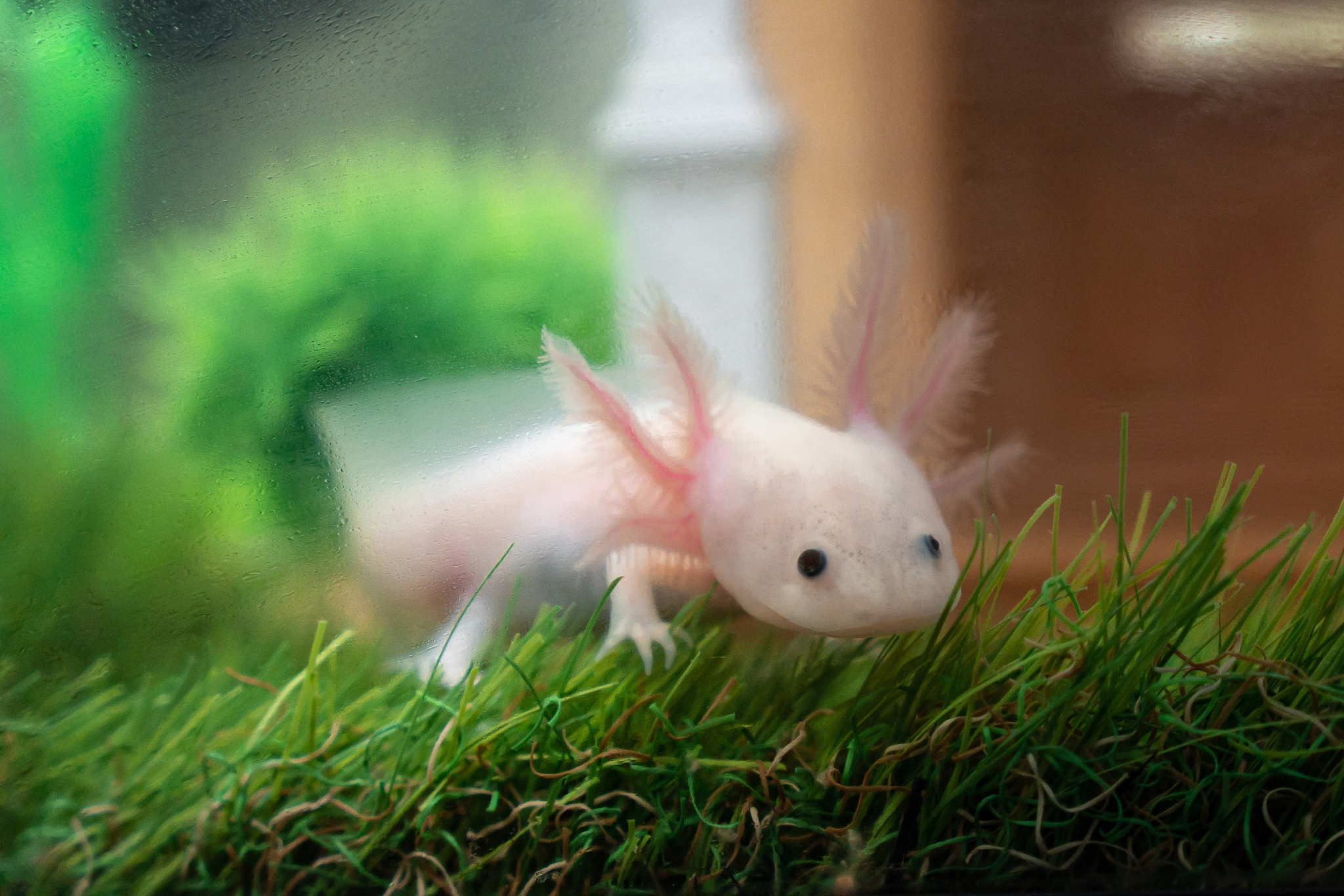
Axolotls (Ambystoma mexicanum) are fully aquatic salamanders native to the lake systems of Mexico. Unlike most amphibians, they remain in their larval stage throughout their entire lives, retaining their feathery gills and living exclusively underwater.
With their frilly external gills, permanent “smiles,” and remarkable regenerative abilities, axolotls have quickly grown in popularity within the exotic pet community.
What You Need Before Getting an Axolotl
Here’s a checklist of pet axolotl essentials to buy before bringing one home:
|
Axolotl Tank Setup
Everything You Need, At A Glance
|
| Tank | 20 gallon long tank for one axolotl, but a 30 to 40 gallon tank is a better size. |
| Filter | Low flow filter — high flow is stressful to axolotls. |
| Substrate | Bare bottom for babies, while fine sand is okay for adults. No gravel! |
| Water Conditioner | Dechlorinates tap water before it goes in the tank. |
| Test Kit | For ammonia, nitrite, nitrate, and pH levels. |
| Cooling Method | Aquarium chiller, fan, or frozen water bottles. |
| Hides & Decor | For shelter and enrichment. |
| Food | Earthworms, bloodworms, and axolotl pellets. |
Axolotl Tank Setup & Requirements
1 Water Temperature
- Ideal range: 60°F to 68°F (16°C to 20°C)
- Avoid temps above 72°F since high temps can cause stress and illness
2. Water Quality
Axolotls are highly sensitive to poor water quality, so maintaining stable, clean conditions is essential for their health.
Recommended Water Parameters:
- Ammonia: 0 ppm
- Nitrite: 0 ppm
- Nitrate: below 20 ppm
- pH: 6.5 to 8.0
Remember to always cycle your tank before introducing your axolotl, and use an aquarium test kit to regularly monitor your water levels.
3. Tank Size
- Minimum of 20 gallons for one axolotl
- Add 10 extra gallons per axolotl if housing more than one
4. Substrate
- Bare bottom tanks are the easiest to clean and the safest option for preventing impaction. Baby axolotls should always be kept in bare bottom setups.
- Fine sand is acceptable when used with adult axolotls over 6 inches long, but only if it’s extremely fine (less than 1 mm grain size).
- Avoid gravel and pebbles entirely because they can cause dangerous and sometimes fatal impaction if swallowed.
Both bare bottom and fine sand setups work well, with bare bottom offering maximum safety and fine sand providing a more natural look and better traction for adult axolotls.
What Do Axolotls Eat?
Axolotls are carnivores and thrive on a protein rich diet.
Best Pet Axolotl Foods:
- Earthworms – best option!
- Bloodworms – frozen or live
- High quality axolotl pellets (from reputable brands)
- Blackworms
- Occasional treats like soft shrimp and chopped nightcrawlers
❌ AVOID:
- Feeder fish
- Raw meat
- Any foods with hard shells or bones, since these can cause injury or digestive issues
Cleaning & Maintenance
- Do 25% to 50% water changes each week
- Remove uneaten food and waste daily
- Use a turkey baster or siphon to spot clean the bottom of the tank
Fun Facts About Axolotls
- Axolotls can regenerate limbs, spinal cord tissue, and even parts of their heart and brain.
- Unlike frogs, they never undergo metamorphosis—they remain fully aquatic their entire lives.
- Each axolotl has its own unique, quirky personality!
Do Axolotls Need a Vet?
Yes—and you’ll want to find an exotic animal vet that has experiencing treating amphibians. While they are generally hardy, axolotls can still experience health issues such as:
- Impaction from swallowing gravel or oversized food
- Fungus or skin infections
- Ammonia burns caused by poor water quality
- Heat stress
Regular observation, proper water conditions, and good husbandry can prevent most of these problems.
Pros and Cons of Owning a Pet Axolotl
|
Axolotl Pros & Cons
What To Weigh Before You Bring One Home
|
| Pros | Cons |
| Unique and fascinating | Sensitive to water quality |
| Low maintenance (once set up) | Cannot be handled much (fragile skin) |
| Long lifespan (10 to 15 years) | Need cool water (can be hard to maintain) |
| Quiet and non-aggressive | Illegal in some areas |
Tips for First Time Axolotl Owners
- Take your time with the setup—make sure to fully cycle your tank before introducing your axolotl.
- Maintain a cool and clean environment to keep your axolotl healthy.
- Provide a varied, high protein diet for optimal growth and vitality.
- Avoid tank mates, as even other axolotls may nip at each other.
Axolotls are captivating, low maintenance pets that can live over a decade with proper care. If you’re ready to commit, they’ll reward you with years of quiet companionship and unique aquatic charm.
Pet Axolotl FAQ
1. Are axolotls good pets for beginners?
Yes! Axolotls can make wonderful pets for attentive beginners. They do need a properly set up tank and consistent water care, but once their habitat is established, they’re fascinating and rewarding companions to keep.
2. How long do pet axolotls live?
Here’s a friendlier, preppy version:
With the right care, axolotls can live an impressive 10 to 15 years in captivity, making them a long term companion for dedicated owners.
3. Can axolotls live with fish?
Nope—axolotls are happiest with a tank of their own. Most fish tend to nip at their delicate gills, and axolotls may see smaller fish as a snack. For the healthiest and safest setup, it’s best to keep them solo.
4. Can I touch or hold my axolotl?
It’s best to handle your axolotl only when absolutely necessary. Their skin is super delicate, and being out of the water can be stressful for them. The less handling, the happier and healthier your little aquatic friend will be.
Ready to Get a Pet Axolotl?
If you love the idea of having your very own tiny water dragon, an axolotl might be the perfect pet for you!
Just be sure to do your research, get their habitat set up properly, and stay committed to their care. With the right preparation, you’ll have a happy, healthy axolotl to enjoy for many years to come.