Meerkat Facts Habitat, Behavior, Threats & Conservation
Meet Africa’s adorable desert sentinels! Dive into meerkat facts covering habitat, social behavior, survival tactics, threats, and how you can help conservation.
- What Exactly Is a Meerkat?
- Where Do Meerkats Live? Understanding Their Habitat
- Fascinating Meerkat Behavior: Teamwork Makes the Dream Work
- What Do Meerkats Eat? Their Diverse Diet
- Reproduction and Life Cycle
- Predators and Threats: Life Isn’t Always Easy
- Conservation Status: The Good News!
- Amazing Meerkat Adaptations
- Fun Meerkat Facts to Impress Your Friends
- Small but Mighty: The Wonder of Meerkats
If you’ve ever found yourself totally mesmerized by those impossibly cute critters standing upright in the desert like tiny sentinels, you’re definitely not alone!
Meerkats have captured hearts worldwide with their expressive faces, cooperative behavior, and absolutely charming personalities. Let’s dive into everything you need to know about these fascinating little mammals that are way more impressive than you might think.
What Exactly Is a Meerkat?
So here’s the scoop: meerkats (scientifically known as Suricata suricatta) are actually members of the mongoose family – they’re not rodents like some people assume!
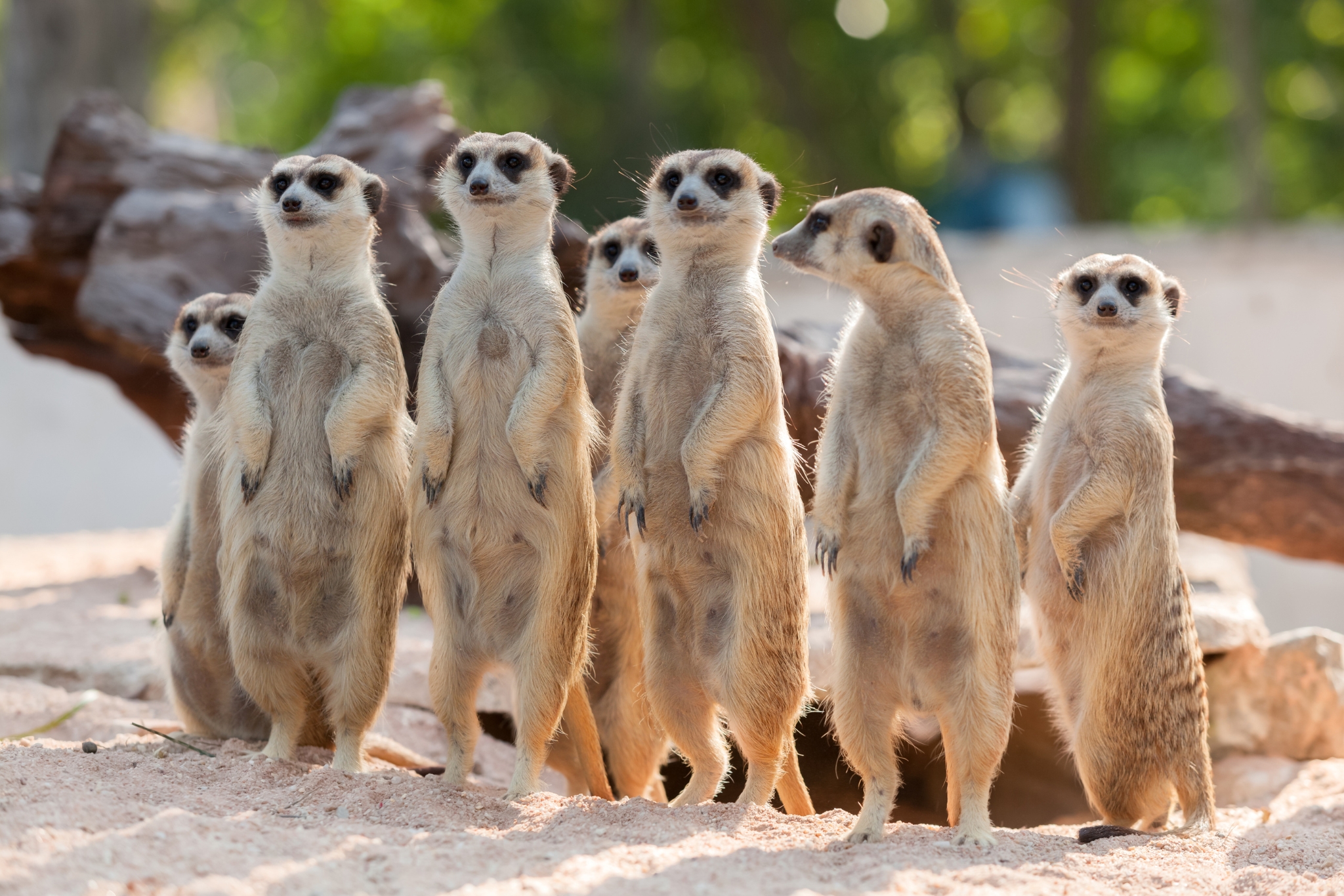
These small mammals are the ultimate team players, living in tight-knit groups across the arid regions of southern Africa. With their grizzled gray and brown fur, distinctive dark eye patches, and that signature upright posture, they’re absolutely unmistakable.
Adult meerkats are pretty petite, measuring about 10 to 14 inches in body length, with tails that add another 7 to 10 inches. They typically weigh 1.4 to 2.1 pounds, making them one of nature’s most adorable small carnivores.
Those dark patches around a meerkat’s eyes aren’t just for looks — they act like natural sunglasses, reducing sun glare in their bright desert habitat!
Where Do Meerkats Live? Understanding Their Habitat
Meerkats call the southern tip of Africa home, with populations thriving in South Africa, Botswana, Namibia, Zimbabwe, and even extending slightly into southwestern Angola.
If you’re picturing endless sand dunes, think again! While meerkats love arid environments, they’re typically found in savannas, open grasslands, and scrublands rather than true deserts.
These clever creatures prefer areas with stony, often calcareous ground that features short grasses and shrubs. You’ll find them hanging out in biomes like the famous Kalahari Desert and the Karoo, where annual rainfall stays below 600mm.
The northwestern parts of their range are particularly dry, with precipitation dropping to just 100 to 400mm per year. Despite these harsh conditions, meerkats have totally mastered the art of desert living!
Underground Living: The Burrow Life
Here’s where it gets really cool: meerkats are incredible diggers with powerful foreclaws perfect for excavating elaborate underground burrow systems.
These aren’t just simple holes in the ground – we’re talking about sophisticated tunnel networks that can extend up to 15.5 feet across with multiple levels reaching 5 feet below the surface!
A typical burrow system features multiple entrances (sometimes 15 or more), various chambers for different purposes, and even designated toilet areas. The deeper tunnels maintain a comfortable, stable temperature regardless of whether it’s scorching hot during the day or freezing cold at night. Talk about smart architecture!
Meerkat groups usually maintain several different burrow systems within their territory and rotate between them every few months.
Fascinating Meerkat Behavior Teamwork Makes the Dream Work
If there’s one thing meerkats absolutely excel at, it’s cooperation. These social butterflies live in groups called “mobs” or “gangs” that typically include 10 to 30 individuals, though groups can range from as few as 3 to as many as 50 members when food is abundant.
The Social Structure
Each mob consists of multiple family units led by a dominant breeding pair.
Here’s the thing: meerkat society has a pretty strict hierarchy, with females often calling the shots. The dominant female can be pretty fierce about maintaining her position, sometimes even preventing subordinate females from breeding or, in extreme cases, attacking their offspring.
It might sound harsh, but this structure helps ensure the survival of the group as a whole.
Sentinel Duty: The Ultimate Teamwork
One of the most iconic meerkat behaviors is sentinel duty, and honestly, it’s as adorable as it is impressive. While most of the mob forages for food, one or two members take turns standing guard.
The sentinel will find the highest point available – maybe a termite mound, a rock, or even a bush – stand upright on their hind legs (often using their tail for support), and scan the horizon for predators.
If danger approaches, the sentry sounds the alarm with a distinctive bark or whistle. What’s super fascinating is that meerkats use different calls depending on the type of threat and its distance!
They have specific vocalizations for aerial predators like eagles versus ground threats like jackals. When the alarm sounds, everyone scrambles to the nearest bolt hole – they even have special escape tunnels strategically placed throughout their foraging area.
Babysitting and Cooperative Care
Meerkat childcare is seriously next level. While the mob forages, designated babysitters (called “helpers”) stay behind to watch over newborn pups.
This duty rotates among different group members, and a babysitter will often go an entire day without eating while protecting the vulnerable youngsters.
Once pups are old enough to venture out (around three to four weeks old), helpers teach them essential survival skills like how to hunt and handle dangerous prey. They’ll even bring disabled prey items to pups so they can practice their hunting techniques safely. Helpers will also carry pups that fall behind during group movements and shield them from aerial predators by crouching over them. It truly takes a village!
Communication: The Meerkat Vocabulary
Meerkats are incredibly vocal creatures with at least 10 distinctive vocalizations for different situations. Their sophisticated communication system includes alarm barks, contentment purrs (similar to cats!), neutral contact calls, scolding clucks, threatening growls, and specific fear calls.
Females tend to be more chatty than males, using their voices frequently to coordinate group activities and maintain social bonds.
What Do Meerkats Eat? Their Diverse Diet
As carnivores, meerkats have a pretty adventurous palate! They’re primarily insectivorous, meaning insects make up the bulk of their diet.
Their favorites include beetles, caterpillars, spiders, termites, and grubs. Using their incredible sense of smell, they locate prey hidden underground, then dig it out with those powerful claws and grab it with their pointed snouts. Meerkats will also munch on small vertebrates, birds, eggs, lizards, and even plant material.
Here’s the really impressive part: they can eat venomous scorpions and some snakes without getting hurt because they’ve developed immunity to certain venoms. How cool is that?
Since water is scarce in their desert habitat, meerkats get most of their moisture from their food. They’ll also chew on tsama melons and dig up roots specifically for hydration.
Their specialized thermoregulation system and remarkably low basal metabolic rate help them survive on less food and water than most other carnivores.
Reproduction and Life Cycle
Meerkats exhibit what scientists call a monogamous mating system within each group, where the dominant male and female are usually the only pair to successfully breed. In the wild, breeding season runs from October to April (which corresponds to the warmer, wetter months when food is most plentiful).
After an 11 week gestation period, females give birth to 2 to 5 pups in the safety of their burrow. The newborns stay underground for about three weeks, protected by their babysitters. By four weeks old, pups start joining foraging expeditions, though they’ll continue being fed by helpers until they’re about 12 weeks old.
Young meerkats reach independence around 12 weeks but continue learning from their elders. In the wild, meerkats typically live 12 to 14 years, though they can reach up to 20 years in human care.
Predators and Threats Life Isn’t Always Easy
Despite their vigilance and cooperative defense strategies, meerkats face numerous natural threats in their harsh environment.
Natural Predators
From above, meerkats need to watch out for birds of prey including martial eagles, tawny eagles, hawks, and pale chanting goshawks.
On the ground, they’re hunted by jackals and various snake species that sometimes invade burrows to prey on pups.
When confronted by terrestrial predators, meerkats have some pretty fierce defense strategies. They’ll arch their backs, raise their fur (piloerection), straighten their tails, and stand together as a group to appear larger and more threatening. They’ll also hiss, growl, and spit to discourage attackers.
If caught alone, a meerkat will lie on its back, protecting its vulnerable neck while using its claws and teeth to defend itself.
Intergroup Conflict
Here’s something surprising: one of the biggest threats to meerkats actually comes from other meerkats! When different mobs encounter each other, the conflicts can be seriously aggressive.
Studies show that about 19% of meerkat deaths result from fights with other meerkat groups – the highest recorded rate of conspecific violence among mammals. These territorial battles can be brutal, often resulting in severe injuries or death.
Environmental Challenges
Life in the desert presents constant challenges.
- Drought can devastate entire populations by eliminating food sources.
- Heavy rainstorms can flood burrow systems, putting pups at risk.
- Temperature extremes force meerkats to carefully manage their daily activities.
Climate change poses emerging concerns as well, with shifting weather patterns disrupting breeding cycles, altering food availability, and changing habitat suitability.
Human Related Threats
While meerkats aren’t heavily targeted by humans, they do face some human caused challenges.
- Habitat degradation from agricultural expansion can reduce available territory.
- In some areas, domestic dogs and cats prey on meerkats.
- There’s also illegal wildlife trade, with meerkats sometimes captured for the exotic pet market – a practice that’s both harmful to wild populations and illegal in most places.
- Occasionally, conflicts arise when meerkats are perceived as agricultural pests or when rabies outbreaks occur (meerkats can carry and transmit rabies, though this is relatively rare).
Conservation Status The Good News!
Here’s the uplifting part: meerkats are currently classified as “Least Concern” on the IUCN Red List, and their population trend appears stable! Unlike many wildlife species, meerkats aren’t facing imminent threats that could dramatically reduce their numbers.
Several key factors contribute to their success:
- Meerkats are highly adaptable to tough arid environments.
- Their cooperative social structure boosts survival for the whole group.
- They occupy a wide and diverse range across southern Africa.
Population densities do vary significantly based on rainfall and predator pressure, but overall these resilient creatures are holding their own.
Conservation Efforts and How You Can Help
While meerkats aren’t currently endangered, conservation organizations continue monitoring populations and protecting habitats to ensure their long term survival. Here are some ways you can support meerkat conservation and wildlife protection in general:
- Support Habitat Conservation: Organizations working to protect southern African ecosystems help maintain healthy meerkat populations along with countless other species.
- Practice Sustainable Consumption: Look for products certified by programs like the Smithsonian’s Bird Friendly initiative, which support farmers who reduce their environmental impact through organic practices and forest friendly methods – like maintaining diverse, multi-layered shade canopies.
- Reduce, Reuse, Recycle: Cutting back on single use goods and finding creative ways to reuse products helps reduce habitat destruction globally.
- Educate Others: Share what you’ve learned about meerkats and their ecological importance! If you’re a student, consider making meerkats the subject of your next school project or starting a conservation club.
- Visit Zoos Responsibly: Many zoos maintain meerkat exhibits that support research and conservation while educating the public. Your visit and support help fund these important programs.
Amazing Meerkat Adaptations
Let’s geek out for a moment about some of the coolest physical and behavioral adaptations that make meerkats so successful:
- Eye Protection: Those dark eye patches aren’t just adorable – they genuinely reduce sun glare. Meerkats also have a special nictitating membrane (like a third eyelid) that protects their eyes from dirt and sand while digging.
- Ear Control: Meerkats can actually close their ears to keep sand out while burrowing. How neat is that?
- Temperature Regulation: The underside of a meerkat has sparse fur covering dark skin, which they use as a solar panel! They’ll lie on their backs to absorb warmth from the sun or lie stomach-down on cool rocks during the heat of the day.
- Specialized Metabolism: Meerkats have an unusually low basal metabolic rate for carnivores, helping them conserve water and survive on less food while generating less metabolic heat in their hot environment.
- Horizontal Pupils: Their long, horizontal pupils provide an exceptionally wide range of vision, perfect for spotting predators from their upright stance.
- Venom Immunity: Meerkats have developed immunity to certain scorpion and snake venoms, allowing them to tackle prey that would be dangerous or deadly to other animals of their size.
Fun Meerkat Facts to Impress Your Friends
- Young meerkats are so afraid of birds that even airplanes flying overhead will send them diving for cover!
- A meerkat group’s territory is marked with secretions from their anal glands, and they can recognize their own group’s scent.
- Meerkats spend a significant portion of their morning sunbathing and grooming each other before starting their daily activities.
- They’re diurnal, meaning they’re only active during daylight hours and sleep underground at night.
Small but Mighty The Wonder of Meerkats
Meerkats are absolutely incredible creatures that have mastered the art of survival in one of Earth’s most challenging environments. Their sophisticated social structures, cooperative behaviors, and remarkable adaptations make them fascinating subjects for both scientists and animal lovers alike.
While we can celebrate that meerkat populations are currently stable, it’s important to remain mindful of the broader environmental challenges facing all wildlife.
Climate change, habitat loss, and human expansion continue to pose potential future threats to these and countless other species.
By supporting conservation efforts, making sustainable choices, and spreading awareness about the importance of protecting wildlife and their habitats, we can help ensure that future generations get to enjoy the wonder of watching meerkats stand sentinel over the African plains.
These little desert dwellers remind us that teamwork, adaptability, and looking out for one another are universal principles for success – whether you’re a meerkat mob or a human community!
From their cooperative childcare to their sophisticated communication systems, from their immunity to venom to their ability to thrive in extreme conditions, meerkats are living proof that great things really do come in small packages.