Does My Horse Need a Blanket? Temperature Guide & Expert Tips
Understand precisely when horses require blanketing with this comprehensive guide. From the differing needs of clipped and unclipped horses to key weather considerations, it offers a thoughtful look at proper temperature guidelines—along with common blanketing missteps to avoid for a more polished approach to winter care.
- Understanding Your Horse’s Natural Thermoregulation
- The Horse Blanketing Temperature Chart: Your Quick Reference Guide
- Key Factors That Affect When Your Horse Needs a Blanket
- Signs Your Horse Is Too Cold
- Signs Your Horse Is Too Warm
- The Body-Clipped Horse: Special Blanketing Considerations
- Building Your Horse’s Blanket Wardrobe
- Regional Considerations: Blanketing Across Different Climates
- Common Horse Blanketing Mistakes to Avoid
- The Bottom Line on Horse Blanketing Temperatures
If you’ve ever stood in the barn aisle on a chilly morning, blanket in hand, wondering whether your horse actually needs it, you’re not alone.
Knowing when to blanket your horse is one of those essential equestrian skills that can feel surprisingly tricky. Too warm, and your horse overheats. Too cold, and they might be uncomfortable.
Let’s break down exactly what temperatures horses need blankets and how to make the best decision for your equine friend.
Understanding Your Horse’s Natural Thermoregulation
Before we dive into specific temperatures, it’s important to understand that horses are remarkably well-equipped to handle cold weather.
Your horse’s natural winter coat is designed to trap warm air close to the skin, creating an insulating layer that keeps them toasty even when temperatures drop. When horses are cold, tiny muscles contract to make their hair stand up (piloerection), increasing this insulating effect.
The magic happens in the 30°F to 50°F range, where most healthy horses with a full winter coat are perfectly comfortable without any additional covering. In fact, horses generate significant body heat through digestion (especially when eating hay) which is why proper nutrition is just as important as blanketing decisions.
Your Quick Reference Guide
Horse Care Guide
Does My Horse
Need a Blanket?
A quick-reference temperature guide for every coat type and condition.
No blanket for most horses
Most horses don’t need blankets unless they’re body-clipped, elderly, or have specific health conditions.
Full coats stay comfortable
Horses with full winter coats typically don’t need blankets. Body-clipped horses may need a lightweight sheet.
Unclipped horses hold their own
Unclipped horses with good body condition usually manage well. Clipped horses benefit from a medium blanket (200–300g).
Wind & precipitation change everything
Many owners start blanketing full-coated horses here, especially with wind or rain. Clipped horses need medium to heavy blankets (300–400g).
Most horses need coverage
Most horses benefit from at least a medium weight blanket. Clipped horses need heavy blankets (400g+).
Heavy blankets for all
Heavy blankets are recommended for most horses. Account for wind chill and precipitation when choosing weight.
Key Factors That Affect When Your Horse Needs a Blanket
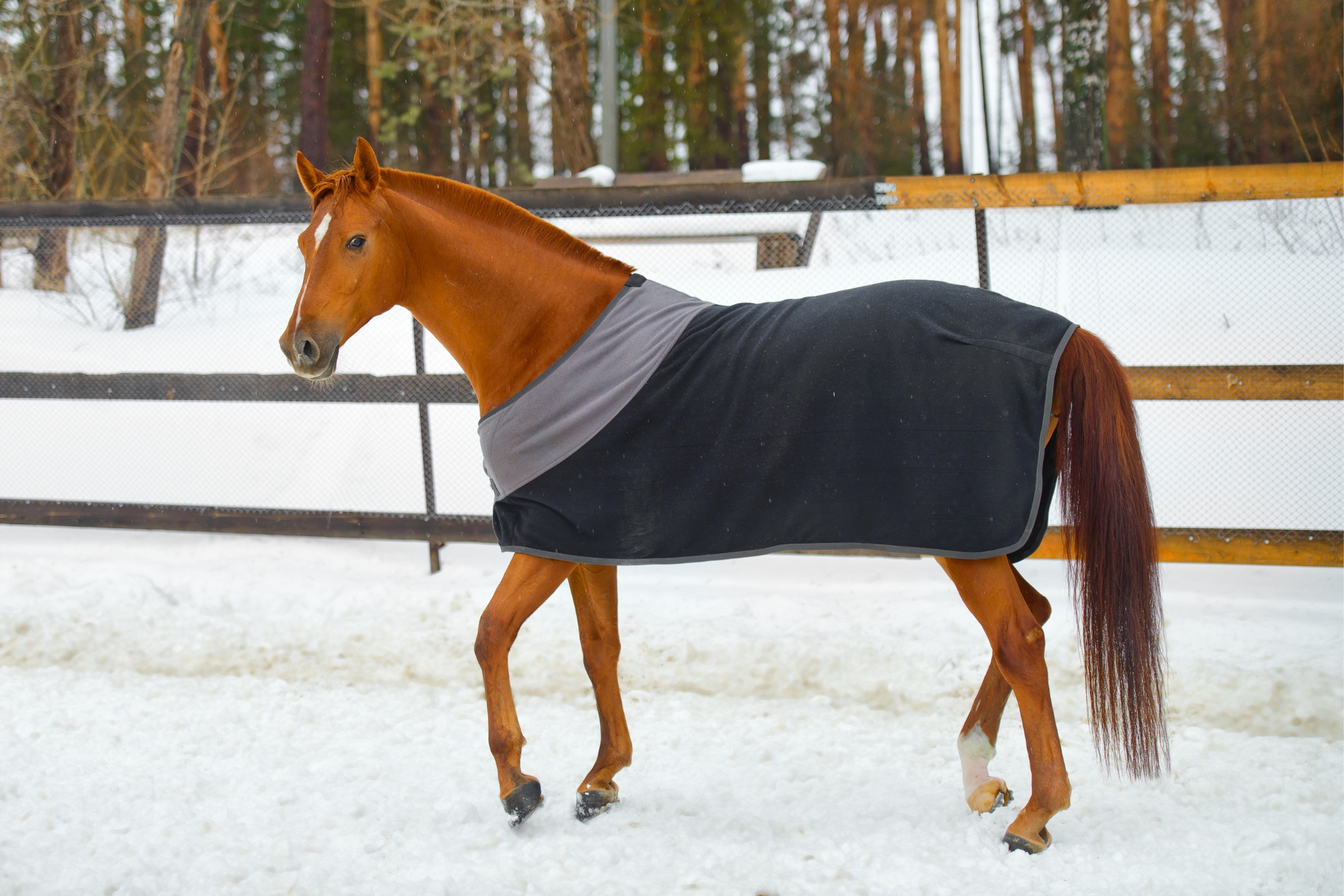
Body Condition & Age
A horse’s body condition plays a huge role in their cold tolerance. Horses with adequate fat stores are better insulated naturally, while thin horses feel the cold more acutely. Senior horses often have more difficulty maintaining body temperature and may need blankets at higher temperatures than their younger pasture mates.
Hair Coat Status
This is the big one. A body-clipped horse has completely different blanketing needs than an unclipped horse. If you’ve clipped your horse for winter riding, you’ve essentially removed their natural insulation system, making them dependent on blankets for warmth. Even a trace clip requires adjusting your blanketing strategy.
Wind Chill & Precipitation
The “feels like” temperature matters just as much as the actual temperature. A dry 25°F day with no wind is far more comfortable than a wet and windy 35°F day. Wind can penetrate even the fluffiest winter coat, and wet hair loses its insulating properties entirely. Rain, sleet, and snow significantly impact when your horse needs protection.
Shelter Availability
Horses with access to a run-in shed or barn can escape harsh weather conditions, reducing their need for blankets. Those living in open pastures without natural windbreaks or man-made shelter will need blankets at higher temperatures.
Acclimation & Breed
Horses acclimated to cold climates develop thicker winter coats and handle temperature drops better than horses suddenly exposed to cold weather. Certain breeds like Icelandic horses, Gypsy Vanners, and Norwegian Fjords have evolved for extreme cold and need far less protection than Thoroughbreds or Arabians.
Signs Your Horse Is Too Cold
Even with temperature guidelines, it’s essential to know the signs that your horse is uncomfortable. Check for these indicators:
- Shivering (the most obvious sign)
- Cold ears, legs, or body
- Hunched posture with tail tucked
- Seeking shelter persistently
- Weight loss despite adequate feed
- Decreased activity level
Signs Your Horse Is Too Warm
Over blanketing is just as problematic as under blanketing. Watch for these red flags:
- Sweating under the blanket
- Trying to remove the blanket
- Standing away from other horses
- Appearing lethargic or uncomfortable
- Developing skin issues like rain rot under the blanket
The Body-Clipped Horse Special Blanketing Considerations
Body-clipped horses are in an entirely different category when it comes to blanketing temperatures. Here’s a more specific guide:
- Full Body Slip – Start blanketing around 50°F to 60°F and adjust up as temperatures drop. You’ll likely need multiple blankets in different weights
- Hunter Clip or Blanket Clip – Begin light blanketing around 45°F to 50°F
- Trace Clip – Start with sheets around 40°F to 45°F
Remember that clipped horses may need to wear blankets well into spring, as their summer coats take time to grow back.
Building Your Horse’s Blanket Wardrobe
Just like we layer our own clothing, horses often benefit from a layering system. A well-stocked blanket wardrobe might include:
- Lightweight Sheet (0-100 grams): For cool days, body-clipped horses, or rain protection
- Medium Weight Blanket (200-300 grams): For moderately cold weather
- Heavy Weight Blanket (300-400+ grams): For the coldest days
- Waterproof Turnout Blankets: Essential for horses living outdoors
- Stable Blankets: For horses kept primarily indoors
Regional Considerations Blanketing Across Different Climates
Your location dramatically impacts your blanketing strategy. Horse owners in Texas have different needs than those in Minnesota or Maine.
- Southern Climates: Blanketing is rarely necessary except for clipped horses or during unusual cold snaps. Focus on rain sheets rather than heavy blankets.
- Moderate Climates: You’ll likely use the full range of blanketing options throughout winter, with particular attention to fluctuating temperatures.
- Northern Climates: Heavy blankets are essential, and most horses will wear them for extended periods. Invest in quality waterproof options.
Common Horse Blanketing Mistakes to Avoid
Even experienced horse owners sometimes make these blanketing errors:
Horse Care · Common Mistakes
5 Blanketing Mistakes
Most Horse Owners Make
Over-Blanketing
The most common mistake. Many horses are far more comfortable in cold weather than we give them credit for — a horse sweating under an unnecessary blanket is at real risk of chills and skin issues.
Leaving Blankets On Too Long
Check blankets daily and adjust as temperatures change. Horses can overheat surprisingly quickly, and what was appropriate at 6am may be far too warm by midday.
Poor Blanket Fit
A blanket that rubs, shifts, or doesn’t cover adequately can cause more problems than it solves — including pressure sores, hair loss, and restricted movement.
Forgetting About Precipitation
A heavy wet blanket is worse than no blanket at all. Always use waterproof outer layers and check that your blanket’s denier and waterproofing rating suits your climate.
Not Checking Underneath
Always inspect skin and coat condition under blankets regularly. Issues like rubs, rain rot, and weight loss can hide beneath layers and go unnoticed for weeks.
The Bottom Line on Horse Blanketing Temperatures
While the general rule of thumb suggests that horses need blankets below 30°F (with full coats) or below 50°F (when clipped), the real answer is always “it depends.”
Your horse’s individual needs, body condition, coat status, access to shelter, and weather conditions all factor into the equation.
The best approach? Get to know your horse’s individual needs, check them regularly (at least twice daily in winter), and adjust accordingly.
Feel their ears, neck, and body under the blanket. Watch their behavior. A horse who’s comfortable will act normally, maintain weight, and show no signs of being too hot or too cold.
When in doubt, remember that horses are remarkably hardy animals who’ve survived for thousands of years in diverse climates. Your unclipped horse in good body condition with access to adequate food and shelter can likely handle much more cold than you might think. Meanwhile, your clipped show horse definitely needs that extra layer when temperatures drop.
The blanket question isn’t about perfect temperature formulas but about being an observant and responsive horse owner who makes decisions based on your individual horse’s needs.