Free Contact vs. Protected Contact in Zoos What’s the Difference and Why It Matters
Curious how zoos actually interact with their animals? Discover the key differences between free contact and protected contact — and how each approach shapes animal welfare, training outcomes, and keeper safety.
- What Is Free Contact in Zoos?
- What Is Protected Contact in Zoos?
- Key Differences: Free Contact vs. Protected Contact
- The History Behind the Shift: Why Zoos Moved Away from Free Contact
- Advantages of Protected Contact
- Advantages of Free Contact (and Why Some Still Defend It)
- The Role of Positive Reinforcement in Modern Zoo Management
- What Does This Mean for Zoo Visitors?
- Frequently Asked Questions About Zoos
- A Smarter, Safer, More Ethical Approach
When you visit a zoo and see a keeper standing beside an elephant or working near a big cat, it looks seamless, almost effortless. But have you ever stopped to wonder how that relationship actually works?
Behind the scenes, zoos operate under one of two core animal management philosophies: free contact or protected contact.
These approaches define how keepers interact with animals every single day—and the difference between them has fueled one of the most significant debates in modern zoo management.
Setting personal opinions aside, is one management style truly better than the other?
Let’s break down what each method really means, explore the pros and cons, and examine why the zoo industry has shifted so dramatically over the past few decades.
What Is Free Contact in Zoos?
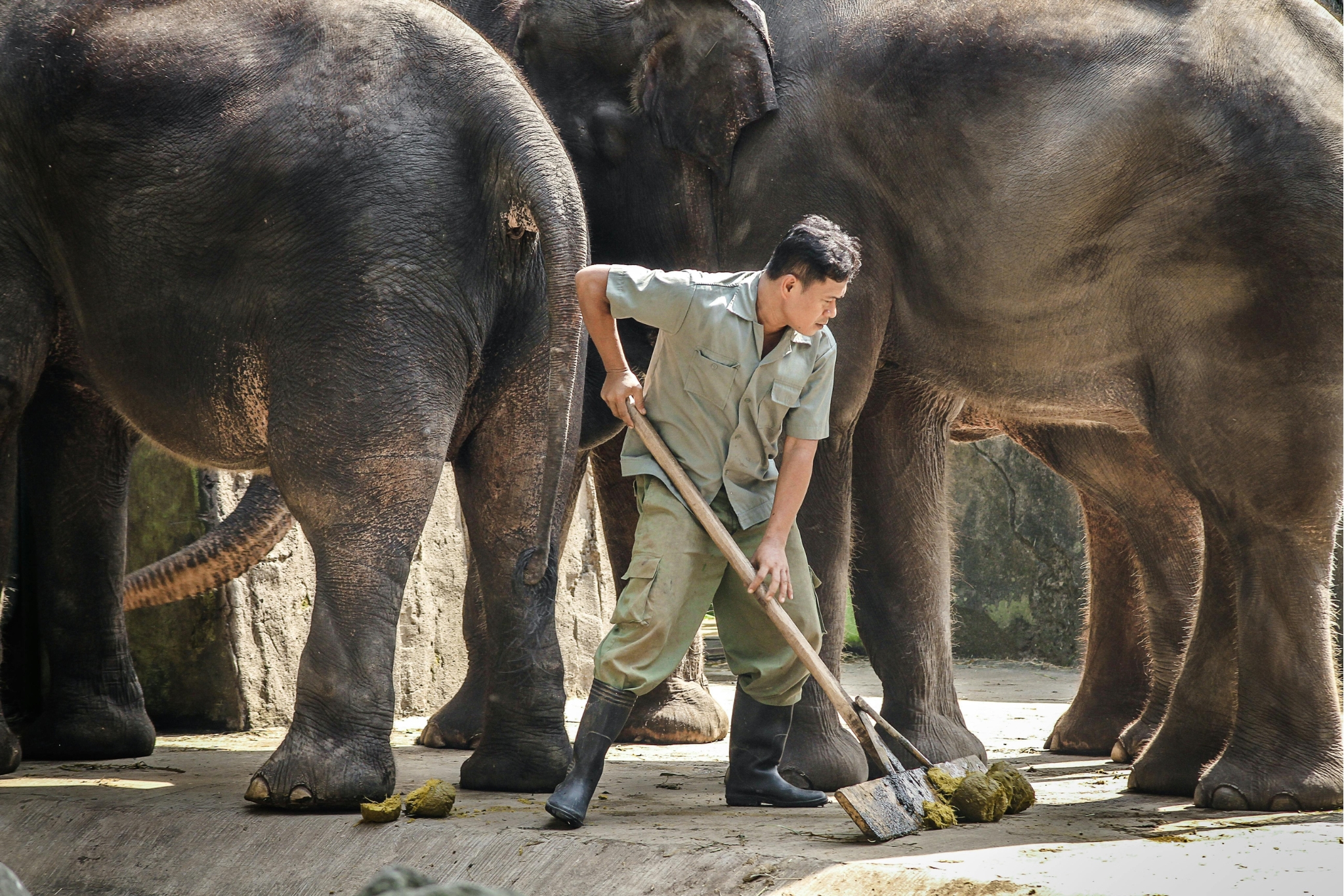
Free contact (also called direct contact) is a traditional animal management system in which keepers share the same unbarricaded space as the animals in their care.
There are no physical barriers between the human and the animal during routine husbandry tasks such as feeding, cleaning, medical exams, or training.
Historically, many traditional free-contact systems relied on dominance to manage and control animals. Keepers established firm rules and maintained full authority, with animals expected to comply with commands and tolerate human presence (sometimes through assertive handling techniques). Entering an animal’s space often carried the expectation of immediate obedience.
Over the years, however, many progressive facilities have shifted toward free contact systems grounded in positive reinforcement, emphasizing cooperation, trust, and voluntary participation in interactions and husbandry.
Free contact was historically the standard across zoos worldwide, especially for large animals. Though now declining, it remains present in some traditional facilities.
Today, free contact with potentially dangerous animals in the United States has become increasingly rare (particularly in accredited facilities). However, it still persists in certain regions and in some privately owned zoos or animal parks.
What Is Protected Contact in Zoos?
Protected contact is a modern animal management approach in which a physical barrier always remains between the keeper and the animal during interactions.
This barrier (typically a fence, mesh wall, or reinforced gate) creating a consistent layer of safety while still allowing meaningful keeper–animal engagement.
Within this system, animals are typically trained using positive reinforcement, receiving rewards such as food, praise, or enrichment for desired behaviors. Through training, animals can voluntarily present body parts for health checks, step onto a scale, accept injections, or shift between spaces.
The defining difference is that keepers never need to physically dominate or restrain the animal. Instead, cooperation is encouraged through training, while the barrier provides built-in safety for both the animal and the keeper.
Protected contact has become the standard at most accredited zoos and aquariums worldwide, particularly for the following animals.
Leading accrediting bodies such as the Association of Zoos and Aquariums (AZA) and the European Association of Zoos and Aquaria (EAZA) now require or strongly recommend protected contact for elephants and other high risk species at their member institutions.
Free Contact vs. Protected Contact
| Feature | Free Contact | Protected Contact |
|---|---|---|
| Physical barrier | None | Always present |
| Training method | Oftentimes Dominance-based | Positive reinforcement |
| Keeper safety | Higher risk | Much lower risk |
| Animal agency | Sometimes Limited | Greater voluntary participation |
| Keeper-animal relationship | Usually Authority-based | Cooperative |
| Industry trend | Declining | Rapidly growing |
Why Zoos Moved Away from Free Contact
The shift from free contact to protected contact didn’t happen overnight. It was driven largely by tragedy.
For decades, elephant management in zoos relied on free contact—keepers armed with bull hooks (ankuses) would work directly alongside elephants, establishing dominance through physical correction. While many keeper-elephant relationships appeared close and affectionate, the risks were always present.
Between the 1990s and 2010s, a series of fatal and near fatal incidents involving zoo elephants prompted facilities and accrediting bodies to seriously re-examine the free contact model.
Elephants (even those raised in captivity and seemingly bonded to their keepers) could become unpredictable, especially bulls during musth (a hormonal surge) or cows who felt their calves were threatened.
The numbers were sobering. Elephants have been responsible for more zoo keeper fatalities than almost any other species.
As the zoo community grappled with these tragic losses, the focus shifted from individual skill to structural safety. That change in perspective led to meaningful reform—driving a broad, industry-wide transition toward protected contact, now widely recognized as the gold standard for elephant management at accredited institutions.
Advantages of Protected Contact
Advantages of Free Contact (and Why Some Still Defend It)
While the broader industry has shifted toward protected contact, some practitioners and facilities still argue for free contact in specific circumstances.
The Role of Positive Reinforcement in Modern Zoo Management
Whether a facility uses free contact or protected contact, positive reinforcement training has become central to high quality animal care. However, it is in the protected contact model where positive reinforcement truly flourishes.
Rather than training animals to comply out of fear or submission, positive reinforcement trains animals to associate specific behaviors with rewards—creating a cooperative relationship built on trust and mutual benefit. Animals trained this way are often more calm, more behaviorally enriched, and more willing to engage with keepers.
This approach also has significant veterinary benefits. An elephant that has been trained to voluntarily present its foot for inspection, or a rhinoceros that has been conditioned to stand still for injections, requires far less sedation over its lifetime—reducing health risks and veterinary costs.
What Does This Mean for Zoo Visitors?
If you’re visiting an accredited zoo today, you’re likely watching protected contact with potentially dangerous animals in action—even if you don’t know it.
That keeper working near the elephant enclosure, offering reinforcement through the mesh and guiding the animal through movements? That’s protected contact.
What you’re less likely to see at a well-accredited facility is a keeper inside an enclosure with a large, potentially dangerous animal without any structural barrier. If you do see that at a roadside zoo or tourist attraction, it may be worth asking questions.
Understanding the difference between free contact and protected contact gives zoo visitors a useful lens for evaluating the animal welfare standards of the facilities they visit.
Frequently Asked Questions About Zoos
Is free contact banned at all zoos?
No—free contact is not universally banned, but it is increasingly prohibited or discouraged at accredited facilities, particularly for elephants and other high risk species. Many AZA and EAZA accredited zoos have fully transitioned to protected contact for large and potentially dangerous animals.
Do animals in protected contact have less enriching lives?
Not at all. In fact, many animal welfare experts argue the opposite—that protected contact, paired with positive reinforcement training, provides animals with more agency, more cognitive engagement, and less stress than traditional free contact approaches.
Can zoos ever touch animals in protected contact?
Some protected contact programs include tactile contact through mesh—an animal voluntarily pressing against the barrier while a keeper touches them. This is considered acceptable because it remains voluntary and structurally safe.
Are all zoo species managed under protected contact?
No—protected contact is primarily applied to large potentially dangerous animals. Many smaller species are managed through other frameworks. The term is most commonly discussed in relation to elephants, large cats, great apes, and other species that pose significant risk to keepers.
A Smarter, Safer, More Ethical Approach
The shift from free contact to protected contact represents one of the most meaningful evolutions in zoo management over the past 30 years.
Driven by keeper safety concerns, a growing understanding of animal welfare, and the rise of positive reinforcement training, protected contact with potentially dangerous species has become the gold standard at leading institutions worldwide.
For zoo visitors, animal welfare advocates, and anyone interested in the science of human-animal relationships, understanding this distinction is essential. The best modern zoos aren’t just housing animals—they’re building cooperative, low stress relationships with them, one voluntary behavior at a time.