6 Reasons the Ocelot Is Disappearing And 8 Ways You Can Help Stop It
Discover the ocelot—a stunning spotted wild cat fighting for survival in the United States. Learn about the threats it faces, the latest conservation efforts, and the simple steps you can take to help protect this endangered species.
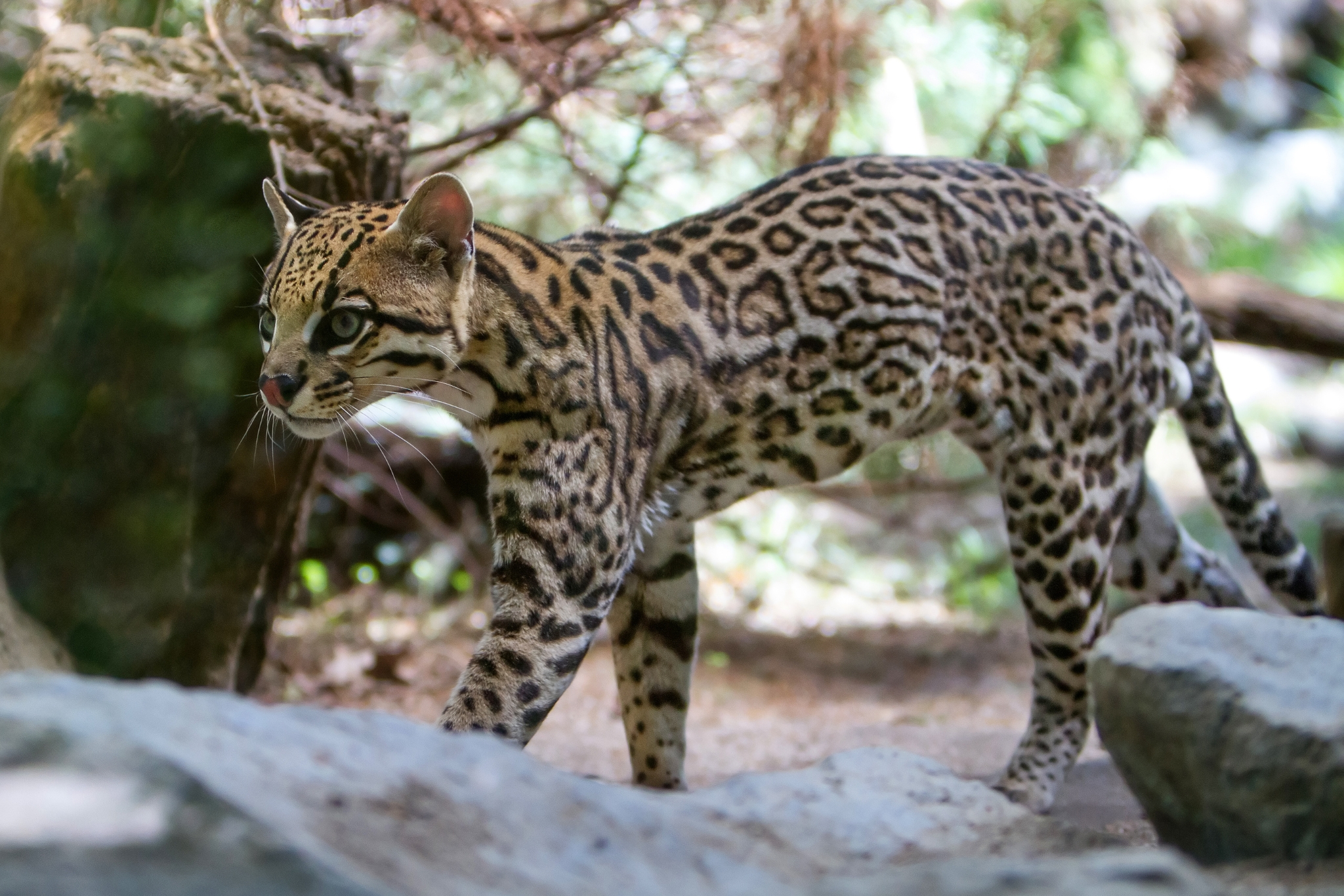
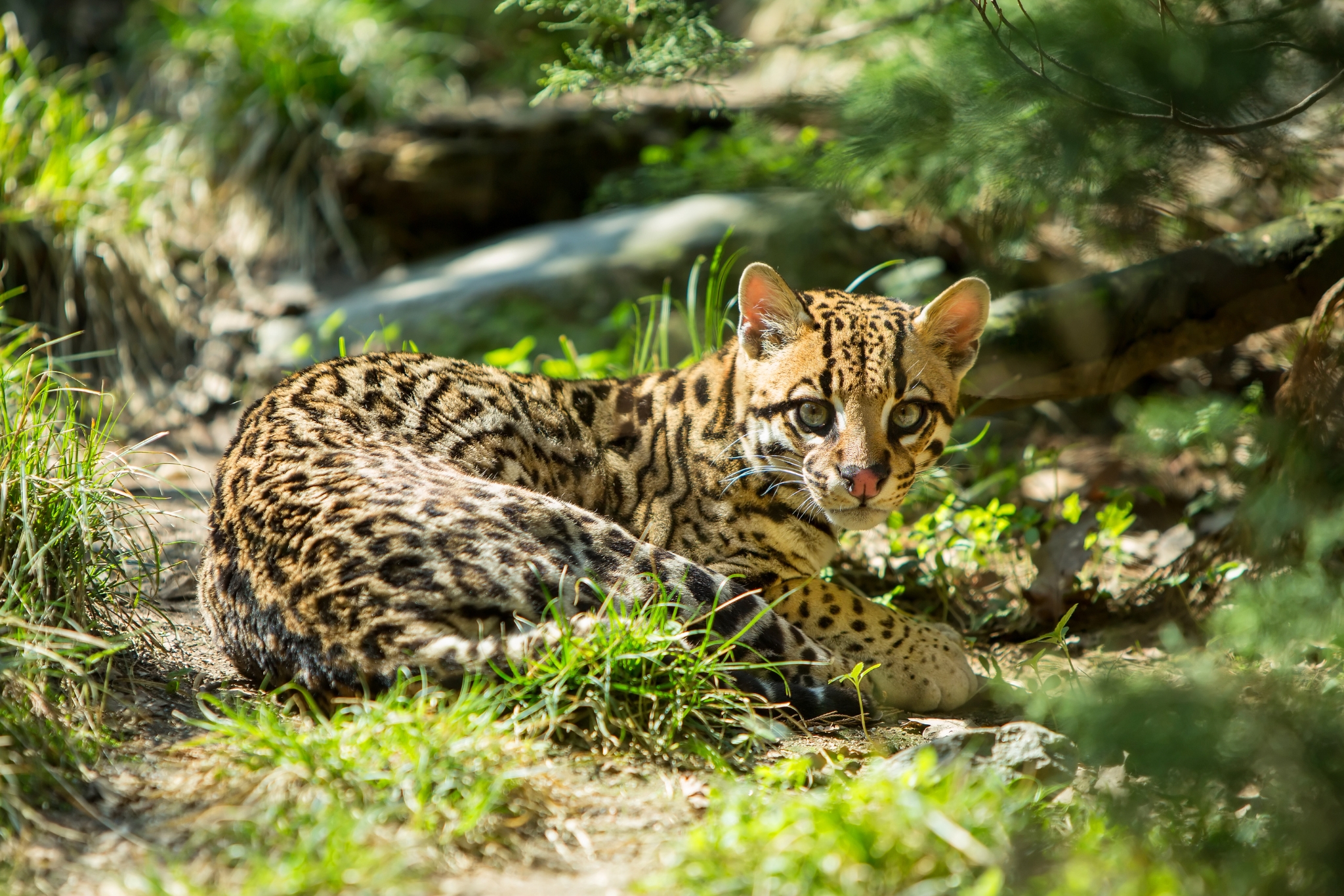
Somewhere in the tangled thornscrub of South Texas, a creature the size of a large house cat slips through the darkness. Its coat – a mosaic of black-rimmed rosettes, blotches, and streaks on tawny gold – is arguably the most beautiful fur pattern in the Western Hemisphere. Its eyes, wide and luminous, scan the brush for prey.
This is the ocelot (Leopardus pardalis): one of the Americas’ most breathtaking wild cats, and one of the most imperiled.
Once ranging from the American Southwest all the way to northern Argentina, the ocelot has been pushed to the brink by centuries of hunting, habitat destruction, and the relentless march of roads and development.
In the United States today, fewer than 100 ocelots remain in the wild – and they need our help.
We’ll introduce you to the ocelot, break down the threats it faces, share the latest conservation news, and give you a concrete list of ways you can make a difference.
Beautiful Wild Cat
Getting to Know the Wildcat Next Door
A Coat Like No Other
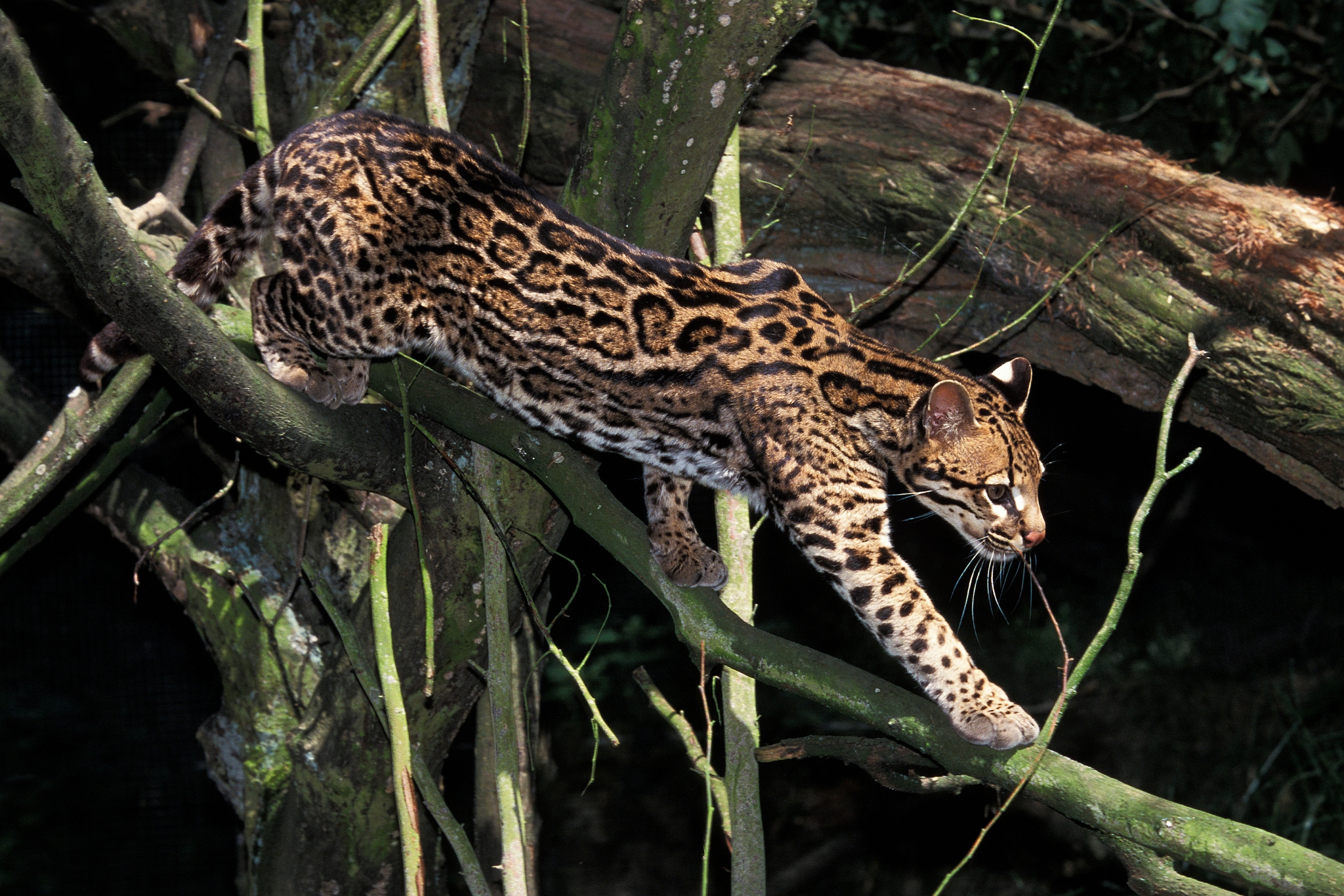
The ocelot is a medium-sized wild felid weighing between 16 and 35 pounds, measuring up to 3.5 feet in length. Despite being compact, it is a formidable predator — an excellent climber, leaper, and swimmer with reflexes tuned by millions of years of evolution.
Ocelots are nocturnal, spending their days hidden in heavy brush or draped over a tree branch, then emerging after sunset to hunt. They are solitary and highly territorial, with males patrolling ranges of up to 30 square kilometres.
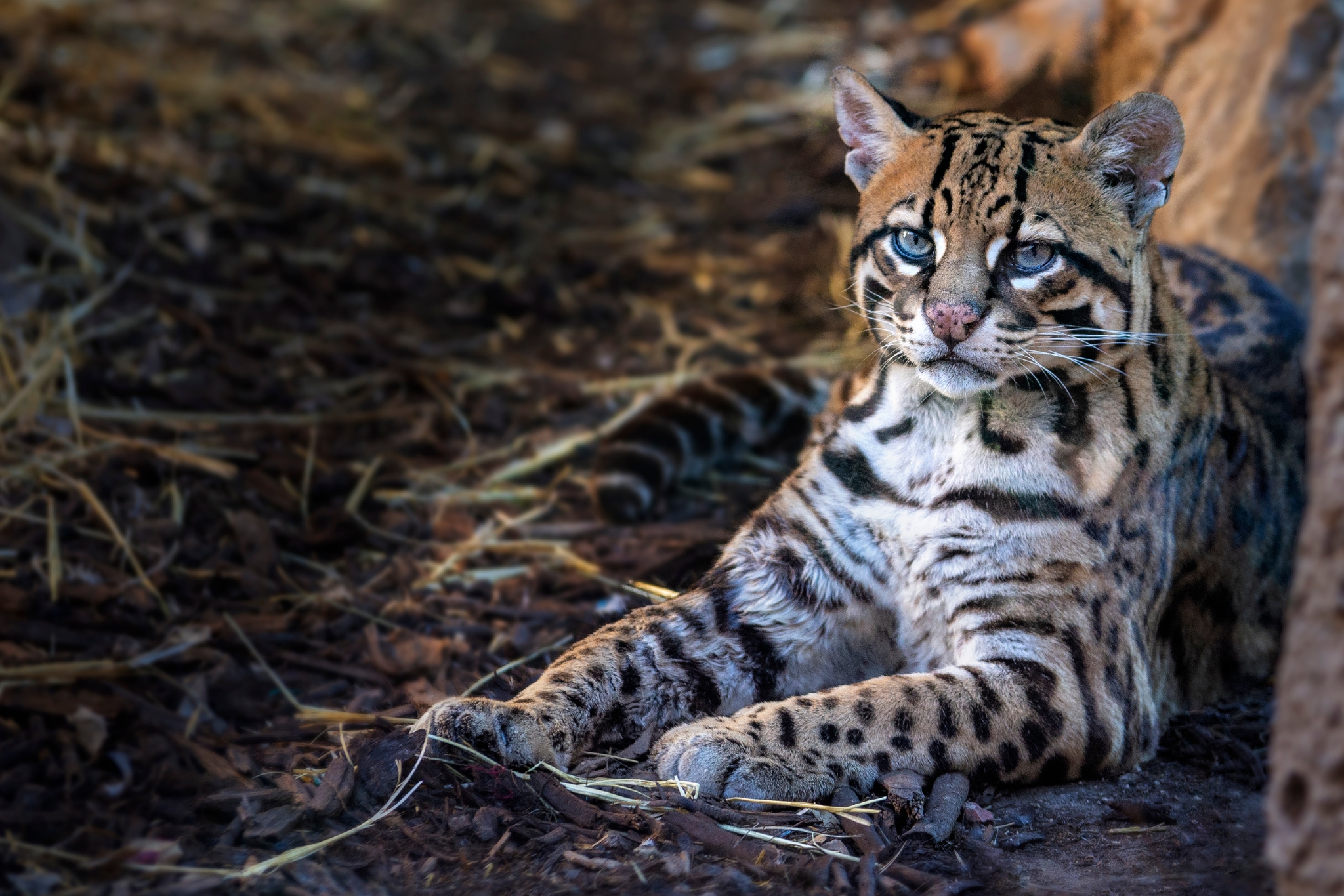
Its most striking feature is its coat: a complex, chain-like pattern of rosettes, spots, and streaks that acts as natural camouflage in dense vegetation. No two ocelots share the exact same markings, making each individual as unique as a fingerprint.
They prey on small mammals, birds, reptiles, and amphibians — playing a vital role as mesopredators that keep ecosystems in balance.
Ocelot kittens are born with blue eyes that gradually shift to golden brown around three months of age — a transition as magical as the cats themselves.
Masters of Dense Cover
Ocelots are remarkably adaptable, inhabiting tropical rainforests in Central and South America, coastal mangroves, swampy savannas, and the dense Tamaulipan thornscrub of southern Texas. What they all have in common is dense vegetation — ocelots depend on thick cover for hunting, denning, and raising young.
Historically, ocelots roamed throughout Texas, Arkansas, Louisiana, and southeastern Arizona. Today in the United States, their stronghold has shrunk to a narrow strip of South Texas near the Mexican border, with occasional dispersing males sighted in southern Arizona.
Why Is This Wild Cat Endangered?
The ocelot’s story reflects a pattern often seen in conservation: a striking animal once heavily targeted by humans and later pressured by the impacts of expanding development.
But there is still reason for hope – by understanding the specific threats it faces, conservationists and communities can take meaningful steps to protect and restore its population.
Why the Ocelot Is
Disappearing From America
Habitat Loss & Fragmentation
Farmers and developers have cleared approximately 95 percent of the thornscrub habitat in South Texas — the ocelot’s last U.S. stronghold. From 1991 to 2000 alone, roughly 113,000 acres of suitable habitat were destroyed. What remains is often fragmented into small, disconnected pockets of vegetation that cannot support healthy populations, leading to inbreeding, starvation, and local extinction. Industrial development — including liquefied natural gas facilities and proposed spaceports — continues to threaten the remaining patches of native thornscrub.
Road Deaths
Roads are among the ocelot’s most lethal modern enemies. As young ocelots disperse from crowded core territories, they must cross open roads — and they often don’t make it. Vehicle strikes are one of the leading causes of ocelot death in the U.S., compounded by the fact these cats are nocturnal and nearly invisible to drivers. This threat became tragically visible in 2021, when DNA analysis revealed a road-killed male in Hidalgo County, Texas may have belonged to a previously unknown population — one that may have been lost before scientists even knew it existed.
The Historic Fur Trade
Before modern protections, ocelots were slaughtered on an almost incomprehensible scale. In the 1970s, ocelot skins were among the most sought-after luxury furs in the United States. The commercial trade was eventually banned, and in 1989 the ocelot was added to Appendix I of CITES. But the population never fully recovered — and illegal hunting for skins continues in parts of the ocelot’s range today.
The Pet Trade
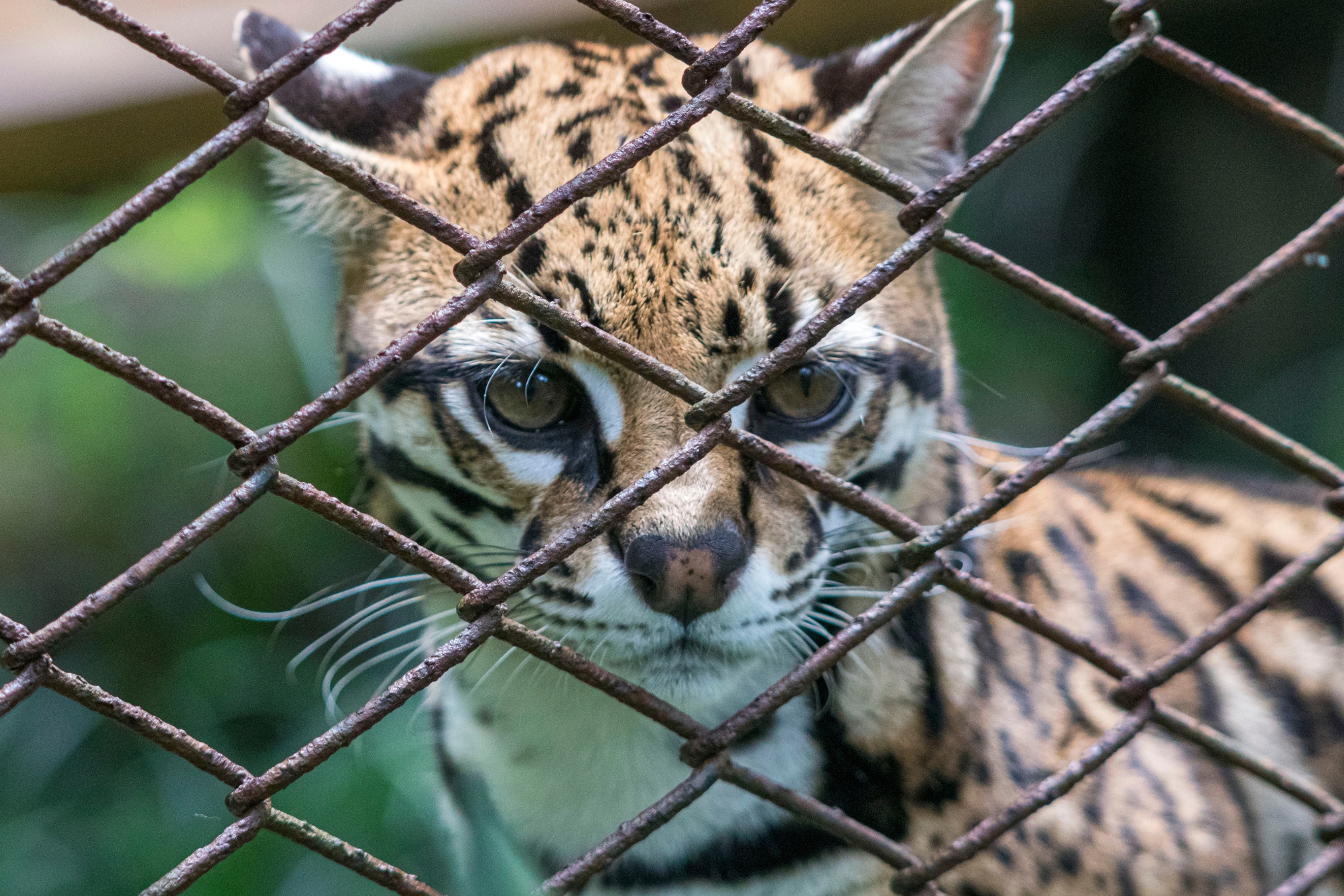
The ocelot’s beauty has long made it a target. Traffickers typically capture kittens by killing their mothers, then sell the young cats to tourists or collectors. While legally protected in most countries, enforcement is inconsistent and the trade persists. Despite pop-culture associations — Salvador Dalí famously kept an ocelot named Babou — ocelots are not domesticated animals. They are wild, territorial, and capable of inflicting serious injury on humans.
Border Infrastructure
For ocelots on the U.S.-Mexico border, proposed and existing border barriers pose a severe genetic threat. The ocelot population in South Texas depends on exchange with Mexican populations to maintain diversity. A physical barrier that severs this connection could accelerate inbreeding and hasten local extinction.
Inbreeding & Low Genetic Diversity
With fewer than 100 individuals remaining in the U.S. — split between two small, largely isolated populations — ocelots in Texas face severe inbreeding. Low genetic diversity weakens immune systems, reduces reproductive success, and makes populations fragile in the face of disease or environmental change. Restoring connectivity between U.S. and Mexican populations is now considered critical to the species’ survival.
Federally listed as Endangered since 1982 — yet its numbers have barely recovered in over four decades.
Conservation Breakthroughs in 2024 & 2025
Despite the daunting challenges, conservation scientists, government agencies, nonprofits, and private landowners are fighting back – and there are genuine reasons for optimism!
Fighting Back for
the Ocelot
A $20 Million Breeding Facility
In 2024, partners broke ground on a landmark conservation facility at the Caesar Kleberg Wildlife Research Center at Texas A&M University-Kingsville — the first facility in the nation dedicated solely to ocelots for breeding. It is designed to let young cats develop natural behaviours so they can be successfully reintroduced into the wild.
The Safe Harbor Agreement
In 2024, the U.S. Fish and Wildlife Service approved a Programmatic Safe Harbor Agreement with the East Foundation, allowing private ranchers in certain South Texas counties to permit reintroduced ocelots to use their land without triggering additional regulatory burdens. This model could expand significantly if successful — opening vast tracts of private ranchland to recovery efforts.
Wildlife Corridor Work
Organisations including The Nature Conservancy are actively creating conservation pathways in South Texas — linking protected and working lands to give ocelots room to roam, recover, and exchange genes across the border with Mexican populations. These corridors are considered essential to preventing the genetic collapse of the U.S. population.
The ocelot’s survival in the United States depends on breeding, safe passage, and the willingness of private landowners to share their land.
How You Can Help the Ocelot
You don’t have to live in South Texas to make a difference. Here are concrete, meaningful actions you can take right now.
How You Can Help
Save the Ocelot
Donate to Conservation Organizations
Support groups actively working to protect ocelots.
Speak Up for Habitat Protection
Contact your elected representatives and urge them to protect native thornscrub habitat from industrial development. Submit public comments opposing projects that would destroy or fragment ocelot habitat.
Drive Carefully in Ocelot Country
If you travel through South Texas or the Rio Grande Valley, slow down at night. Ocelots are nocturnal and often invisible until they are directly in headlights.
Support Poison-Free Rodent Control
Ocelots can be unintentionally poisoned by rodenticides when they consume poisoned prey. Switch to non-toxic methods like snap traps and encourage your community to do the same.
Choose Lead-Free Ammunition
Hunters in South Texas can help by using non-toxic, lead-free ammunition. Ocelots can be poisoned by ingesting lead fragments in hunter-left gut piles.
Volunteer for Habitat Restoration
Join native thornscrub planting events in South Texas. Even a single day contributes to the patchwork of cover that ocelots depend on for hunting, denning, and raising young.
Spread Awareness
Share what you know. The more people understand this species — its beauty, its ecological role, and its precarious status — the greater the political will to protect it.
Advocate for Wildlife-Friendly Border Policy
Support border infrastructure policies that include wildlife corridors and passages to preserve the genetic connection between U.S. and Mexican ocelot populations — a connection that is critical to the long-term survival of the species.
The ocelot does not need your pity. It needs your action. Every voice raised, every dollar donated, every road driven slowly at night is a choice to keep this cat in the world.
The Ocelot’s Future Is Not Yet Written
The ocelot is more than a beautiful animal. It is an indicator of ecosystem health, a keystone predator of the thornscrub and rainforest, and a symbol of what we stand to lose if we do not act.
In the United States, the species teeters on the edge – fewer than 100 animals clinging to a narrow strip of South Texas, hemmed in by roads, development, and political boundaries.
But the ocelot is resilient. With the right support – from dedicated scientists, from visionary landowners, from conservation organizations, and from ordinary people who care – this spotted wild cat can be brought back from the brink.
The next chapter of the ocelot’s story is being written right now. Make sure your name is in it.