Do Mountain Lions Attack Humans? How to Share the Trail With America’s Most Elusive Predator
Mountain lion attacks are rare — but habitat loss isn’t. Learn the truth about cougar behavior and why protecting them matters more than fearing them.
- What Is a Mountain Lion?
- Do Mountain Lions Actually Attack Humans?
- When Are Mountain Lion Attacks Most Likely?
- Warning Signs a Mountain Lion Is Near
- What to Do If You Encounter a Mountain Lion
- How to Reduce Your Risk Before You Hit the Trail
- Mountain Lions and Human Encroachment: A Growing Issue
- Mountain Lions vs. Other Predator Risks: Keeping It in Perspective
- Frequently Asked Questions about Cougar Attacks
- Final Thoughts on Puma Attacks
You’re hiking a stunning trail, the sun is dipping low, and something stirs in the brush behind you. Instantly, your mind jumps to one animal… the mountain lion.
Also called cougars, pumas, and panthers, these apex predators roam millions of acres of North American wilderness, sharing space with hikers, trail runners, and campers.
Asking “Do mountain lions attack humans?” isn’t paranoia – it’s practical.
The short answer: yes, but very rarely. The full picture requires understanding when and why encounters happen – and, most importantly, how to stay safe.
This guide walks you through the facts, statistics, warning signs, and survival strategies – everything you need to make smart, informed choices on your next outdoor adventure.
Greatest Apex Predator
What Is a Mountain Lion?
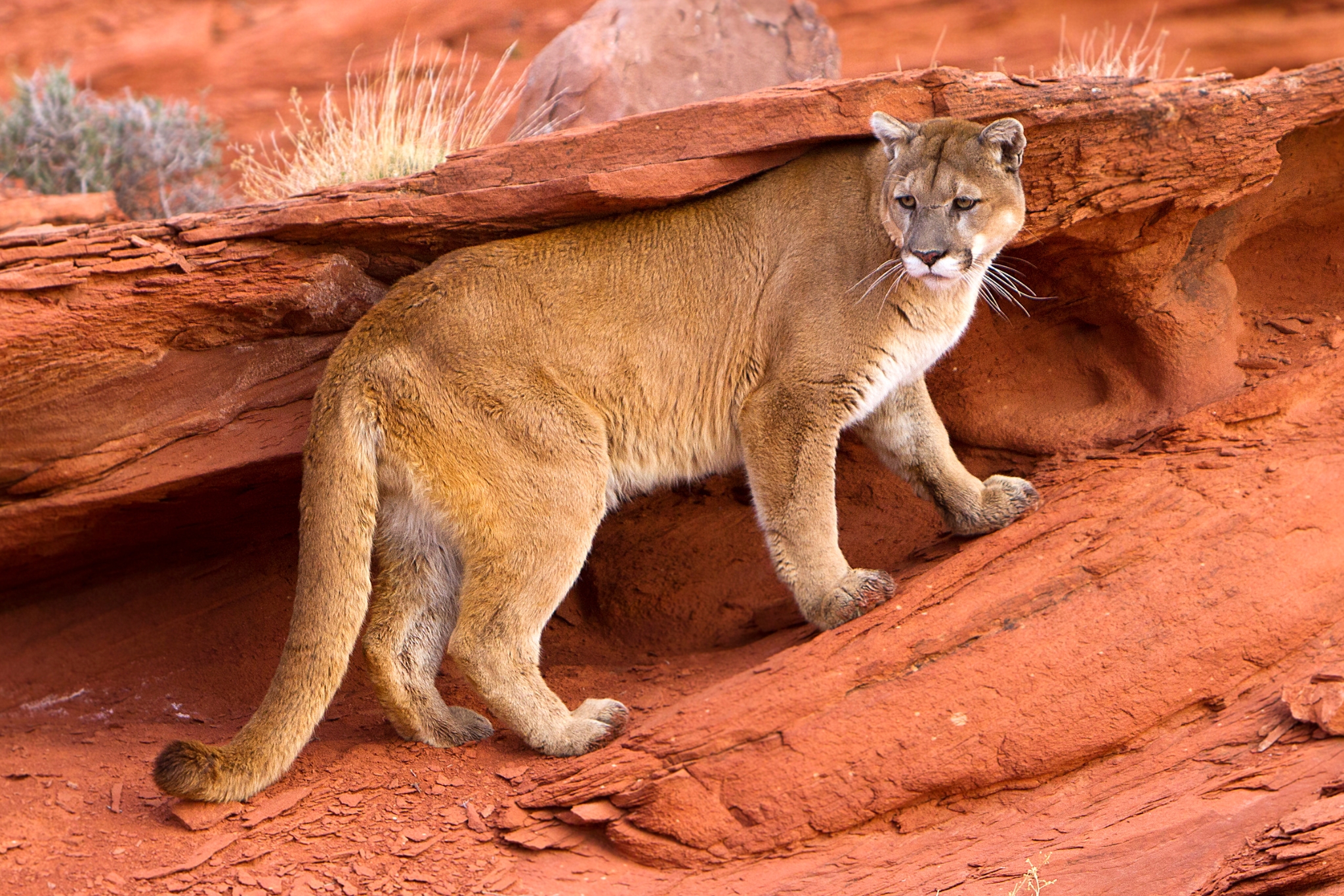
The mountain lion (Puma concolor) is North America’s largest wild cat and one of the most wide-ranging terrestrial mammals in the Western Hemisphere. Adult mountain lions typically weigh between 80 and 220 pounds, with males noticeably larger than females.
These cats thrive across an impressive variety of habitats – from coastal forests and desert canyons to rugged, high-altitude mountain ranges.
Their range stretches from the Yukon in Canada all the way to the southern tip of South America, with the densest populations in the western United States, especially in California, Colorado, Utah, Oregon, and Washington.
Mountain lions are solitary and crepuscular hunters, most active at dawn and dusk, quietly patrolling their territories in search of prey.
Mountain lions are supremely stealthy. Most people who live in mountain lion territory will never see one in the wild — despite sharing the same landscape for years.
Do Mountain Lions Actually Attack Humans?
Yes – but the risk is extremely low.
Mountain lion attacks on humans are rare, and fatal encounters are even rarer. Over the past century, wildlife researchers have confirmed fewer than 30 fatal mountain lion attacks across the United States and Canada. To put that in perspective, you’re statistically more likely to be struck by lightning, bitten fatally by a domestic dog, or injured by a vending machine than killed by a mountain lion.
Non-fatal attacks do happen with some regularity, and data suggest a modest increase in recent decades. This is likely tied to a mix of growing mountain lion populations in certain regions, expanding human development into their habitats, and more people spending time outdoors.
California’s Department of Fish and Wildlife, which monitors cougar encounters closely, has identified clear patterns: attacks tend to cluster in specific areas, during certain seasons, and under particular circumstances.
In other words, while the overall risk is low, it isn’t uniform – understanding the factors that influence encounters is key to staying safe.
When Are Mountain Lion Attacks Most Likely?
Mountain lions don’t attack humans randomly. Attacks tend to cluster around specific conditions:
What Raises Your Risk
Time of Day
Attacks are far more common at dawn, dusk, and nighttime — the periods when mountain lions are naturally most active and when low light gives them a predatory advantage.
Season
Late spring and early summer see a spike in attack risk. Juvenile mountain lions recently dispersed from their mothers are establishing new territories — young, inexperienced cats more likely to make reckless decisions, including approaching humans.
Solo Hiking & Running
A disproportionate number of attacks involve people who are alone, and a notable share involve trail runners. The movement of a solo runner closely mimics the flight behaviour of prey — which can trigger a predatory response.
Children & Small Adults
Mountain lions instinctively target prey that appears vulnerable. Children face a higher relative risk — they are smaller and move less predictably. Many documented attacks involved children who had wandered slightly ahead of or behind a group.
Dusk in Known Habitat
Hiking through dense brush or canyon terrain during low-light hours in known mountain lion territory is the highest-risk scenario for human encounters.
Warning Signs a Mountain Lion Is Near
Mountain lions are masters of concealment. By the time you see one, it has almost certainly been watching you. But there are signs to look for:
Signs a Mountain Lion May Be Near
Tracks
Mountain lion paw prints are large and round — typically 3 to 4 inches in diameter — and almost always lack claw marks, as cats retract their claws when walking. Fresh, large cat prints on a trail warrant immediate alertness.
Scrapes & Caches
Mountain lions create scrape mounds of dirt, leaves, and debris to mark territory. They also cache large prey kills by burying or covering them. If you find a partially buried deer carcass, leave the area immediately — the lion is almost certainly nearby and may defend its meal.
Deer Behaviour
Deer acting unusually skittish or moving erratically in the middle of the day can indicate a predator is active in the area. Trust the prey animals — they often know before you do.
Unusual Silence
When a mountain lion is actively hunting, other wildlife often goes quiet. If the forest suddenly feels unnervingly still — birdsong stops, squirrels vanish — pay close attention to your surroundings.
Direct Sighting
If you see a mountain lion watching you from a distance, do not assume it will leave on its own. Take it seriously. Begin backing away calmly while maintaining eye contact and follow the safety guidelines below.
What to Do If You Encounter a Mountain Lion
This is where most people get it wrong. The instinct to run is nearly universal – and it’s nearly the worst thing you can do.
What To Do — And What Not To
Do Not Run
Running activates a mountain lion’s predatory instinct. You cannot outrun a cougar — they can reach 50 miles per hour in short bursts. Fleeing signals that you are prey.
Make Yourself Large
Stand tall. Open your jacket. Raise your arms above your head. The goal is to appear as large and imposing as possible.
Maintain Eye Contact
Do not look away. Mountain lions prefer ambush attacks from behind. Keeping eye contact signals that you are aware of the animal and are not an easy target.
Speak Firmly & Loudly
Use a low, authoritative voice. Do not scream or make high-pitched sounds. Talk to the lion calmly but assertively.
Pick Up Children Immediately
Do not let children run. Lift them without bending down if at all possible — or crouch to lift them while keeping your eyes on the lion at all times.
Back Away Slowly
Create distance without turning your back. Move slowly and deliberately. Do not crouch, kneel, or make yourself smaller.
Fight Back — Aggressively
This is critical. Mountain lions are not grizzly bears — do not play dead. If a mountain lion attacks, fight back with everything you have. Strike the animal in the nose, eyes, and throat. Use rocks, sticks, trekking poles, pepper spray, or your fists. People have successfully driven off attacking mountain lions by fighting back aggressively. Your goal is to convince the animal that you are not worth the effort.
How to Reduce Your Risk Before You Hit the Trail
Prevention is the most effective strategy. Here’s what wildlife experts consistently recommend:
How to Reduce Your Risk
Hike in Groups
Groups of two or more are significantly less likely to be targeted. Mountain lions rely on stealth and vulnerability — a group of alert adults is rarely an attractive target.
Make Noise on the Trail
Talk, clap, or use a whistle — particularly in areas with dense vegetation, near water sources, or when visibility is low. Lions avoid confrontation with aware, noisy humans.
Supervise Children Closely
Keep children within arm’s reach in cougar country, especially near dusk or dawn. Never let them run ahead on the trail.
Keep Pets on a Leash
Dogs are a significant attractant for mountain lions. A dog running off-trail can provoke a lion and then lead it back directly to you.
Carry Deterrents
Bear spray (which works on mountain lions too) and a sturdy trekking pole are practical additions to your pack in high-risk areas.
Know the Terrain
Before hiking, check with local wildlife agencies for recent sightings. California, Colorado, and Washington agencies regularly update public incident maps.
Avoid Hiking Alone at Dusk & Dawn
If you must be on the trail during these hours, stay especially alert and move in groups. These windows carry the highest encounter risk in known mountain lion territory.
Mountain Lions and Human Encroachment
One reason mountain lion encounters have become more common is not that the cats have become more aggressive – it’s that the line between wild habitat and human development has blurred dramatically.
As suburban sprawl pushes deeper into mountain lion territory across the American West, cougars increasingly move through neighborhoods, golf courses, suburban open spaces, and school campuses( especially at night). Reports of mountain lions in backyards, on porches, and near playgrounds are no longer unusual in foothills communities from California to Colorado.
This encroachment cuts both ways. It exposes more people to potential encounters, but it also puts mountain lions at greater risk from vehicle strikes, illegal poaching, and lethal removal orders when a lion is deemed a public safety threat.
Conservation groups and wildlife agencies are increasingly focused on building wildlife corridors – stretches of protected land that allow mountain lions to move between habitat areas without crossing through dense human development.
Mountain Lions vs. Other Predator Risks
When evaluating the risk of mountain lion attacks, context matters enormously.
In the United States, on average, 1 to 3 people die per year from mountain lion attacks across all of North America – and many years see zero fatalities. Compare this to roughly 40 to 50 deaths per year from lightning strikes, 30 to 50 deaths per year from domestic dog attacks, and more than 130 deaths annually from deer-vehicle collisions.
This doesn’t mean mountain lion risk is zero or that it should be dismissed – especially for specific high-risk groups like solo trail runners, children, and small adults in known lion habitat. But it does mean that rational, evidence-based precautions should replace fear-driven avoidance of the outdoors.
The wilderness is worth the risk, provided you go prepared.
Frequently Asked Questions about Cougar Attacks
Are mountain lion attacks increasing?
Non-fatal attacks and close encounters have increased over recent decades, likely due to growing cougar populations in some states, increased outdoor recreation, and human development moving into wild habitat. Fatal attacks remain extremely rare.
What states have the most mountain lion attacks?
California has the highest number of documented mountain lion incidents, followed by Colorado and Washington. These states also have the largest human populations living in and near mountain lion habitat.
Can mountain lions attack in groups?
Mountain lions are solitary animals and do not attack prey as a group. Most documented attacks involve a single cougar, a lone individual, a child, or a person who was separated from their group.
Do mountain lions stalk humans?
Mountain lions may follow hikers out of curiosity – this behavior has been documented and filmed. However, following does not always precede an attack. If you suspect you are being followed, stop, turn around, and make yourself large while backing away.
Is pepper spray effective against mountain lions?
Yes – Bear spray, which contains a high concentration of capsaicin, has been shown to be effective as a deterrent against mountain lions when deployed correctly at close range.
Final Thoughts on Puma Attacks
Mountain lions do attack humans – but doing so is far outside their normal behavior.
These animals have evolved to hunt deer, not people, and they generally want nothing to do with us. The incidents that do occur almost always involve specific, avoidable risk factors: children running ahead, solo hikers at dusk, trail runners in dense vegetation, people surprising a lion near its kill.
The wilderness belongs to these animals as much as it does to us. Understanding mountain lion behavior, respecting their habitat, and following practical safety protocols is all that most outdoor enthusiasts will ever need.
Go prepared, go in groups, make noise, and know what to do if you come face to face with one of North America’s most magnificent predators.
The mountain is still worth climbing. You just need to know the rules.