Can You Train a Horse to Collect Without a Bridle? Yes — Here’s How
Can a horse collect without a bridle? Absolutely. Here’s how to build the strength, trust, and responsiveness that make tack-free collection possible.
- What Collection Really Means
- Building the Foundation: What Your Horse Needs First
- Develop Impulsion Through Groundwork
- Teach Half-Halts Through Energy and Body Language
- Introduce the Shoulder-In on the Ground
- Liberty Work and Mirroring
- Long-Lining for Topline Development
- Reinforce Self-Carriage
- Riding Without a Bridle
- Common Mistakes to Avoid
- Final Thoughts on Teaching Your Horse to Collect
Collection is one of the most sought after skills in horsemanship—the moment a horse shifts its weight back, engages their hindquarters, and begins to move with lightness, balance, and true self carriage. What many riders don’t realize is that real collection comes from the horse’s own understanding and strength, not from pressure from a bit or tight nosebands.
In fact, developing collection without a bridle isn’t just possible—it can actually create a deeper, more authentic kind of engagement than tack dependent training methods often allow.
This guide walks you through how to build that foundation through clear communication, body language, and thoughtful groundwork, so collection becomes something your horse offers willingly from the inside out.
What Collection Really Means
Before getting into training methods, it’s important to understand what you’re actually training. Collection isn’t just about head position—it’s a full-body effort.
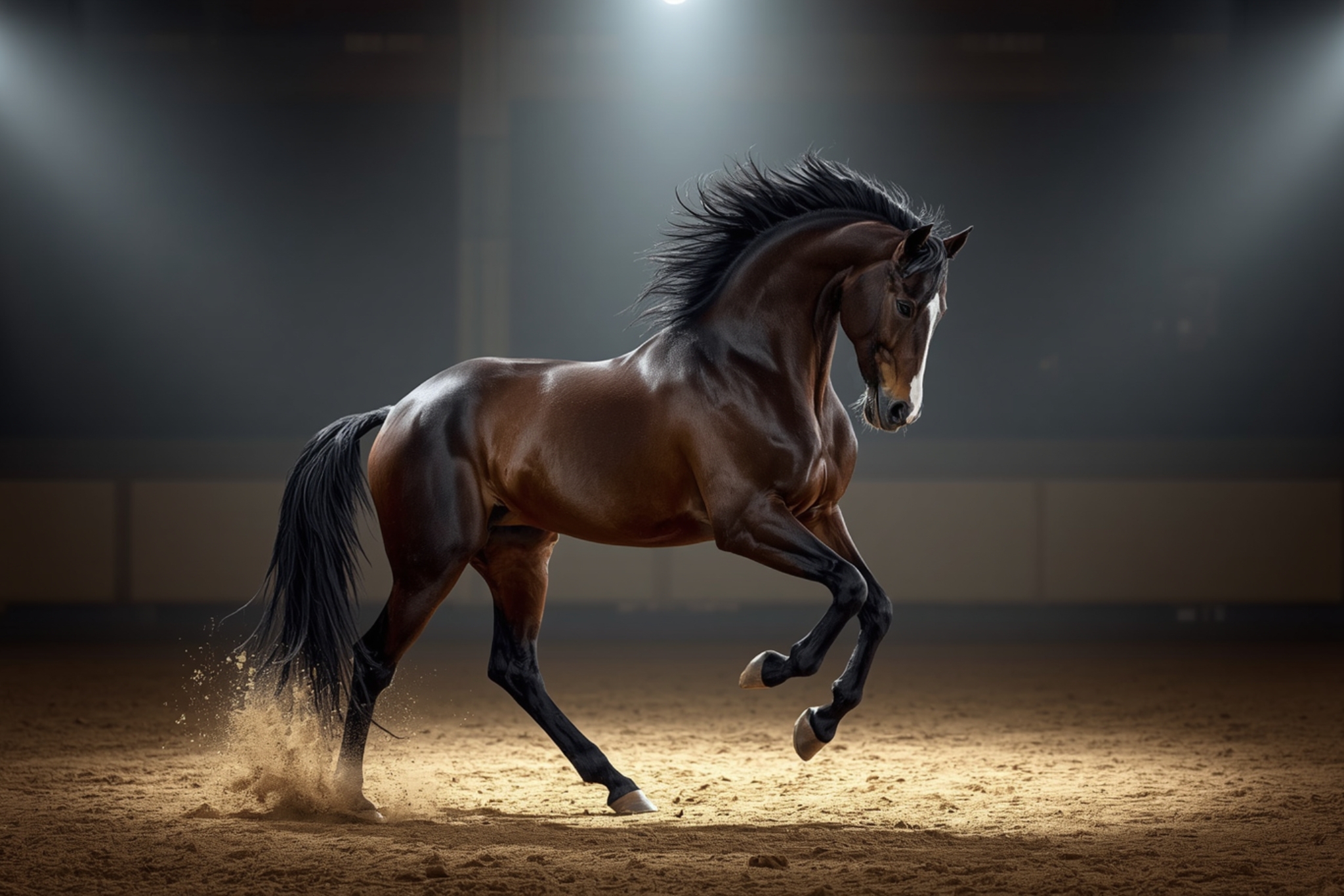
In true collection, the horse engages their abdominal muscles, lifts and rounds its topline, steps deeper underneath its body with the hind legs, and shifts more weight onto the hindquarters. The result is a horse that feels lighter in front, more balanced, and more responsive, with energy that can be produced and controlled on demand.
When a horse looks “collected” only because of bit pressure or training gadgets, that’s false collection—where the frame may look correct, but the horse isn’t truly balanced or carrying itself.
By contrast, tack-free collection focuses on developing the horse’s strength and understanding so it can genuinely self carry, rather than being forced and positioned into it.
Building the Foundation What Your Horse Needs First
Training tack-free collection is an advanced goal, but the foundation is built entirely on solid basics. Before you even begin, your horse should already be comfortable with a few key foundations:
Yielding to Pressure and Body Language
Your horse needs to understand that your posture, energy, and position all communicate clear requests. This becomes the “language” everything else is built on.
Consistent Groundwork
Lunging, long-lining, and liberty work help develop rhythm, balance, and responsiveness, while also strengthening your horse’s awareness of your cues—even at a distance.
Trust and Relaxation
A tense horse simply can’t collect. Tension locks the back, blocks the topline, and prevents proper engagement of the hindquarters. A calm, mentally relaxed horse is essential before anything more advanced can happen.
Body Awareness
Collection is physically demanding. Your horse must gradually develop the strength to carry itself correctly, especially through the hindquarters and lower back. Unfit, underdeveloped, and young horses should never be rushed into it—this foundation takes time to build properly.
1. Develop Impulsion Through Groundwork
Collection without impulsion is just a slow, heavy horse. For true collection to develop, there has to be energy coming from behind first—only then can it be guided, balanced, and refined.
A good place to start is on a lunge line or in a round pen. Ask for forward, active trot work and look for a horse that swings through its back, maintains rhythm, and tracks up (where the hind hoof lands in or slightly beyond the footprint of the front hoof).
Your body, voice, and lunge whip should be used as subtle signals—not to drive or chase, but to encourage and invite forward energy.
As your horse starts to engage more correctly, watch for small but important changes: their back begins to swing, and the neck naturally softens and lowers as the horse searches for its own balance. When you see that moment, reward it right away by softening your energy, using a calm voice, or allowing a brief pause to let your horse settle into that feeling.
2. Teach Half-Halts Through Energy and Body Language
The half-halt is the cornerstone of collection. In ridden work, it’s typically a subtle combination of hand and leg aid, but in tack-free and liberty training, it becomes something much more refined—it’s communicated entirely through your body.
To ask for a half-halt from the ground, start by changing yourself first. Briefly soften your breath, lower your shoulders, and slow your own steps a little. The goal is to invite your horse to mirror that shift in energy and tempo.
Consistency is key, along with clear reinforcement. Use a marker—like a click, a consistent word such as “easy,” or a bridge signal—so your horse can clearly connect the change in energy to the reward.
Over time, this cue teaches your horse to rebalance, slightly sit back, and prepare for collection. Think of it as the natural pause in the conversation—a quiet punctuation mark that organizes and refines the movement.
3. Introduce the Shoulder-In on the Ground
Shoulder-in is one of the most effective classical exercises for building collection, and it can absolutely be introduced from the ground without tack.
Start by walking alongside your horse at the shoulder. With light guidance from your hand or a lunge whip on their shoulder, ask the forehand to move slightly off the line of travel—just enough to come in from the track—while the hindquarters continue straight. The horse’s body should form a gentle bend, with the inside hind leg stepping deeper underneath the body, toward the track of the outside front leg.
This movement is especially valuable because it directly develops suppleness, balance, and engagement of the inside hind leg—the true engine behind collection.
Work both directions, and keep it simple—a few correct steps are more effective than long repetitions.
Release, reward, and reset often—because in this kind of training, quality always matters more than quantity.
4. Liberty Work and Mirroring
Liberty training—working with a horse completely loose, without a lead or lunge line—is one of the most powerful ways to develop true collection. When a horse chooses to stay with you and respond to subtle body cues, you’re building genuine attention, trust, and responsiveness.
Start in a safe enclosed space like a round pen. Communication is built through approach and retreat: ask the horse to move forward, change direction, or halt using only your body position. Standing slightly in front of the shoulder helps signal a slowdown or stop, while stepping behind the drive line (around the girth area) encourages forward movement.
Once those basics are established, begin layering in transitions—walk to trot, trot to walk, walk to halt, and even halt to rein-back. Each smooth transition asks the horse to momentarily rebalance and shift weight toward the hindquarters, which lays the groundwork for collection.
As your horse becomes more fluent, you can start refining the energy further. By increasing your own focus and then softening into a body-based half-halt, you may begin to see more lifted, collected steps appear naturally. In many cases, your horse starts to mirror an engaged, upright handler—offering moments of expressive, balanced movement without any physical restraints.
5. Long-Lining for Topline Development
Long-lining—using two long lines attached to a surcingle, or simply positioned around the horse’s body—allows you to work from behind in a way that closely mirrors ridden work, without any bit pressure or rider weight.
The goal is to encourage your horse to move forward into a soft, elastic connection through the lines. From there, you can introduce changes of direction, serpentines, transitions, and basic lateral work. As the horse responds, it begins to step more actively from behind, lift through the topline, and find better balance on the circle.
This phase acts as a crucial bridge between groundwork and ridden collection. Many horses find long-lining especially clear and educational, since the communication comes from behind—an area they naturally understand—while removing the added complexity of a rider’s seat and weight.
6. Reinforce Self-Carriage
True collection means the horse can maintain its own balance without constant reminders. To develop that kind of self carriage, it’s important to avoid the urge to either hold the horse together or continuously drive it forward.
Instead, ask for just a few collected steps, then soften completely and allow your horse to try maintaining that quality on its own. If the balance falls apart, simply reorganize and ask again—calmly and without tension. Even a couple of correct, self supported strides should be acknowledged and rewarded.
Over time, this approach builds both strength and understanding. Week by week, your horse will begin to offer collection more willingly and hold it for longer periods.
Keep in mind that improvement comes gradually—since muscle memory develops alongside the physical strength they need to carry themselves with ease and balance.
7. Riding Without a Bridle
Once all of the groundwork is solid, you can transition to riding in a simple setup like a bareback pad or light saddle, using only a neck ring or your natural aids—seat, legs, and body position.
At this stage, your horse should already understand your weight shifts, energy changes, and half-halt signal, so riding without a bridle simply asks them to apply that same knowledge under saddle.
Start at the walk. Focus on clear transitions and gentle lateral work using only your seat bones, leg position, and energy. From there, progress gradually into trot, asking for brief moments of collection followed by full release, allowing your horse to stretch and move forward in a relaxed frame before rebalancing again.
With thoughtful preparation, many horses will begin to offer collected work willingly and expressively—even without a bridle—often showing a level of softness and freedom that reflects true understanding rather than restraint.
Common Mistakes to Avoid
- Rushing the process is one of the most common mistakes. True collection is a gymnastic skill that develops slowly over time—most horses need years to build the strength, suppleness, and coordination required.
- Another frequent pitfall is confusing head position with true collection. A horse that simply tucks its nose without engaging from behind isn’t actually collecting—it’s responding to pressure. Always look at the hind legs and overall body engagement, not just the frame in front.
- Overworking your horse is also counterproductive. Long, repetitive sessions tend to create tension and boredom rather than improvement. Keep liberty and groundwork sessions short—around 20 to 30 minutes—and always aim to finish on a positive, relaxed note.
- Skipping foundational trust work can undermine everything that follows. If your horse isn’t genuinely relaxed, connected, and mentally with you, no amount of technical work will produce authentic collection.
Final Thoughts on Teaching Your Horse to Collect
Training a horse to collect without a bridle is ultimately a journey that reveals the true depth of your communication and your horse’s understanding.
It removes the reliance on mechanical shortcuts and replaces them with clarity, timing, and genuine connection. When a horse is able to collect in liberty—without tack or physical restraint—it’s doing so because it has developed the strength, awareness, and willingness to offer it freely.
The result is about more than just a collected frame. It’s a horse that actively chooses to engage with you, offering its best movement as an expression of trust and partnership. And that kind of harmony can’t be manufactured by equipment—it has to be built, step by step, through thoughtful, patient training.