This post contains affiliate links. If you make a purchase through one of these links, we may earn a small commission at no extra cost to you.
Beet Pulp for Horses Benefits, Feeding Tips & Everything You Need to Know
Learn how to safely feed beet pulp to horses to support healthy weight gain and improved digestion. This guide covers proper soaking methods, recommended feeding amounts, and the key benefits of adding beet pulp to your horse’s diet.
- What Is Beet Pulp?
- The Benefits of Feeding Beet Pulp to Horses
- Our Top Beet Pulp Picks
- Beet Pulp Nutrition Facts
- How to Feed Beet Pulp to Horses
- Molassed vs. Unmolassed Beet Pulp
- Frequently Asked Questions
- Which Horses Benefit Most from Beet Pulp?
- Potential Considerations
- The Bottom Line on Feeding Beet Pulp to Your Horse
If you’ve spent any time around a barn, chances are you’ve heard fellow equestrians chatting about beet pulp. And honestly… they’re onto something.
This humble feed has become a true staple in the horse world, and once you understand why, you may find yourself adding it to your feeding program too.
What Is Beet Pulp?
Beet pulp is the fibrous material left over after sugar beets are processed for sugar production.
Think of it as the by-product that actually turned out to be the hero! It’s available in shredded or pelleted forms and can be purchased with or without added molasses.
What makes beet pulp stand out is its highly digestible fiber content. While it’s not a complete feed on its own, it’s an incredibly versatile supplement that can support a wide range of nutritional needs.
The Benefits of Feeding Beet Pulp to Horses
Beet pulp is one of those ingredients that can do a lot more than simply add calories. It’s rich in digestible fiber, easy to customize depending on your horse’s needs, and can be especially useful for horses that struggle to maintain weight.
Here are some of the biggest reasons owners add beet pulp to their horse’s diet:
1. Supports Healthy Weight Gain
If you’re trying to add weight to a hard keeper or senior horse, beet pulp can be a game changer. It’s calorie dense without being overly rich, and helps to promote steady healthy weight gain. Best of all it provides calories without causing the excitability sometimes associated with high grain diets.
2. Promotes Digestive Health
Beet pulp is rich in fermentable fiber, which supports healthy hindgut function and may help reduce the risk of digestive issues like colic or ulcers. It ferments slowly in the cecum and colon, producing beneficial fatty acids that nourish the gut lining. When soaked, it also adds valuable moisture to the diet – always a plus for digestive health!
3. Provides Steady, Long Lasting Energy
Unlike simple carbohydrates that cause quick energy spikes and crashes, beet pulp offers slow release energy through fiber fermentation. This makes it an excellent choice for performance horses that need consistent fuel without the “hot” behavior associated with high starch feeds.
4. Ideal for Senior Horses
Older horses often struggle with dental issues and maintaining weight. Soaked beet pulp creates an easy to chew mash that’s gentle on aging teeth while still delivering meaningful nutrition. It’s basically comfort food that’s actually good for them!
5. Low in Sugar and Starch
Unmolassed beet pulp is naturally low in sugar and starch, making it a smart option for horses with metabolic concerns such as insulin resistance, Cushing’s disease, or a history of laminitis. It supports calorie intake without significantly impacting blood sugar levels.
Our Top Beet Pulp Picks
Low sugar beet pulp gives you the same digestible fiber and weight building power as traditional beet pulp, without the molasses driven sugar spike—a smarter choice for energetic horses, easy keepers, metabolic horses, or anyone managing their horse’s insulin resistance day to day.
Here are our top picks:
Unbeetable Feeds – Low Sugar Beet Pulp Pellets
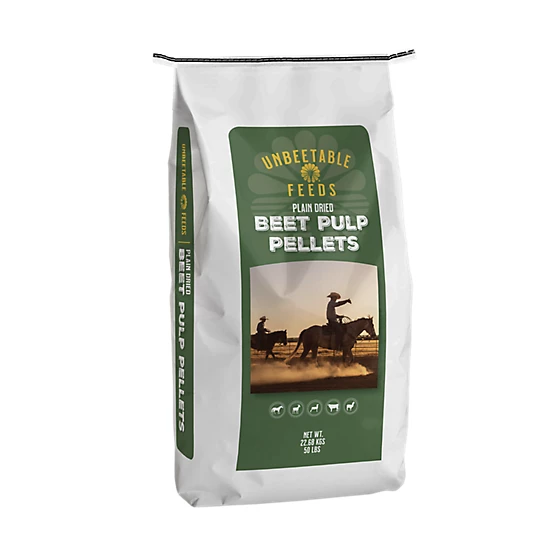
Beet pulp pellets are a great choice when you’re feeding several horses or simply don’t have much room for feed storage. They’re more compact than beet pulp shreds, so you can store more without taking up as much space.
They do take a little longer to soak, but once they’re ready, you get a dense easy to handle feed that works well for bulk feeding.
And you still get the same low sugar formula, making these pellets a practical option for horses that need extra fiber and calories without adding a lot of sugar and starch to their diet.
Unbeetable Feeds – Low Sugar Beet Pulp Shreds
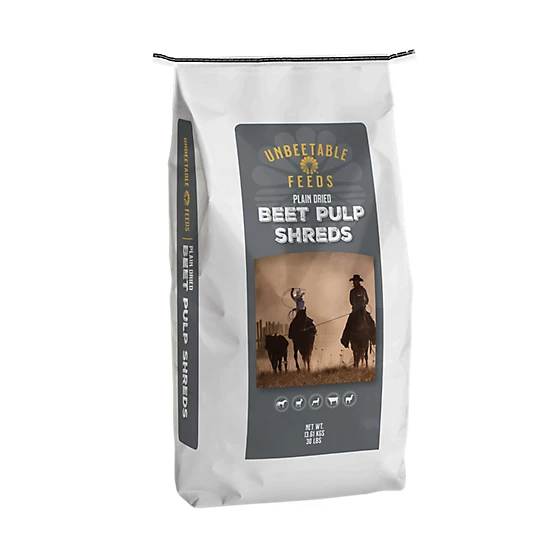
Beet pulp shreds soak faster and typically soften more completely than pellets, making them a good option for senior horses, horses with dental problems, or those just getting started with beet pulp.
Once soaked into a mash, they’re also an easy way to mix with supplements or medications that a picky eater might otherwise refuse.
And because this is an unmolassed option, you get all the benefits without the added sugar found in standard beet pulp shreds.
Beet Pulp Nutrition Facts
Let’s talk numbers! Here’s what makes beet pulp nutritionally impressive:
- Digestible Energy: comparable to oats
- Crude Protein: 8% to 10%
- Crude Fiber: 18% to 22%
- Sugar Content: 6% to 10% (unmolassed) and 15 to 20% (molassed)
- Calcium to Phosphorus Ratio: high in calcium, which can be beneficial but requires balanced feeding
The digestibility of beet pulp fiber is around 80%, which is significantly higher than most hay. This means your horse can actually extract and use most of the nutrients present.
How to Feed Beet Pulp to Horses
Beet pulp is pretty simple to feed once you know the basics, but there are a few important steps to get right. From soaking it properly to figuring out how much your horse actually needs, here’s what to know before adding it to the feed bucket:
1. Soaking Is A Must
This part is non-negotiable! Always soak beet pulp before feeding.
Dry beet pulp can expand in your horse’s digestive system and potentially cause choke or impaction.
Soaking Guidelines:
- Shredded Beet Pulp: cover with 2 to 4 times the volume of water, soak for 30 minutes to 2 hours
- Pelleted Beet Pulp: cover with 3 to 4 times the volume of water, soak for 2 to 4 hours or overnight
- Use cold water in summer and warm water in winter for quicker soaking and a more comfortable meal.
- Beet pulp should be fully softened and fluffy before feeding, with no hard pieces left behind.
2. How Much Should You Feed?
Start slow and increase gradually over 1 to 2 weeks to allow your horse’s digestive system to adjust. A good starting point is 1 to 2 cups of dry beet pulp per day.
General Feeding Ranges (Dry Weight Before Soaking):
- Maintenance: 1 to 4 pounds dry weight per day
- Weight Gain: 4 to 8 pounds dry weight per day
- Senior Horses: 2 to 6 pounds dry weight per day
Remember, these amounts refer to the dry product before soaking. After soaking, it will expand to roughly 3 to 4 times its original volume.
3. Feeding Tips
Beet pulp can be mixed with your horse’s regular grain or fed on its own. Many horses love it, especially when it is served warm in colder weather.
It’s also a great base for adding supplements, medications, or a splash of oil for extra calories.
If your horse is picky, try mixing in a small amount of their favorite grain, a drizzle of molasses, or even a bit of apple juice to boost appeal.
Molassed vs. Unmolassed Beet Pulp
- Molassed beet pulp has molasses added for sweetness and extra calories. It can be a good choice for underweight horses without metabolic concerns.
- Unmolassed (plain) beet pulp is better suited for those with insulin resistance, Cushing’s disease, laminitis risk, or those on low sugar diets. Many horses still find it plenty tasty, especially when properly soaked!
Frequently Asked Questions
1. Can beet pulp cause horses to choke?
Only if it’s fed dry—but when beet pulp is properly soaked, the risk of choke is effectively eliminated.
2. Will beet pulp make my horse “hot”?
Nope! Unlike high starch grains, beet pulp provides “cool” slow release energy and does not typically cause excitability or behavior changes.
3. Can beet pulp be fed every day?
Absolutely! Many horses are fed beet pulp as part of their regular feeding program long term with excellent results.
4. Is beet pulp a complete feed?
Not quite—while it does offer valuable nutrition, beet pulp should be fed alongside quality forage and, if needed, other feeds to meet all of your horse’s dietary requirements. Think of it as a supplement, not a replacement for hay or a balanced ration.
5. Do I need to add supplements?
Beet pulp is low in certain vitamins and minerals, particularly vitamin A and selenium. These nutrients should be supplied through hay, pasture, or a ration balancer as part of a well rounded feeding program.
Which Horses Benefit Most from Beet Pulp?
Beet pulp is an excellent choice for:
- Hard keepers who need extra calories
- Senior horses with dental issues
- Performance horses needing sustained energy
- Horses recovering from illness or injury
- Metabolic horses when fed unmolassed beet pulp
- Horses on restricted hay diets
- Any horse who could benefit from additional digestible fiber
Potential Considerations
While beet pulp is generally very safe, a few factors are worth keeping in mind:
- Calcium to Phosphorus Balance: Beet pulp is naturally high in calcium. If you’re feeding large amounts, you may want to add a phosphorus supplement or feed alongside alfalfa pellets to balance things out. Remember to talk with your equine vet to see if your horse would benefit from this.
- Storage: Once soaked, beet pulp should be fed within 24 hours (sooner in warm weather) as it can ferment or grow mold. And don’t forget to store dry beet pulp in a cool dry place in tightly sealed containers.
The Bottom Line on Feeding Beet Pulp to Your Horse
Beet pulp has earned a strong reputation in the equine nutrition world. It’s safe, highly digestible, effective, versatile, and most horses think it’s delicious!
Whether you’re trying to add weight to your Thoroughbred, supporting your senior horse’s digestion, or providing safe calories to your metabolic mare, beet pulp is a valuable addition to many feeding programs.
Just remember the golden rule: always soak before feeding! With that simple step, you’re giving your horse a nutritious, digestible, and beneficial addition to their diet.