
11 Things I Wish I Knew Before Getting a Pet Chameleon
Before you buy a chameleon, read this. From costly setups to hidden health risks, here’s what most guides leave out.
- Chameleons Are Not “Hands-On” Pets
- Their Enclosures Are Nothing Like a Standard Terrarium
- Lighting Is Complex (And Critical)
- Hydration Is a Puzzle You’ll Constantly Be Solving
- Feeding Them Is a Full Hobby Within a Hobby
- Chameleons Hide Illness Until It’s Almost Too Late
- Veterinary Care Is Expensive and Specialized
- The Species You Choose Matters Enormously
- Live Plants Are Basically Required
- The Financial Commitment Is Ongoing
- Their Lifespans Are Shorter Than You Think
- So, Should You Get a Chameleon?
If you’ve ever seen a chameleon at a reptile expo or watched one slowly shift color in a video, you’ll understand the appeal. They look like living artwork—striking, otherworldly, and completely captivating.
But here’s the truth most first time owners don’t realize: chameleons are among the most demanding reptiles you can keep. They are not beginner-friendly pets, and they are far from low maintenance. In reality, they require precise husbandry, careful monitoring, and a level of consistency that can surprise even experienced keepers.
If you’re thinking about bringing one home, it’s worth understanding exactly what you’re committing to before you do.
1. Chameleons Are Not “Hands-On” Pets
Let’s start with one of the hardest truths to accept. If you’re looking for a reptile you can handle regularly, bond with physically, or casually show off to friends, a chameleon is not the right choice.
Most chameleons are highly sensitive to handling and become stressed by frequent interaction. Even their color changes—often seen as a novelty—are actually a primary form of communication. Darker or muted colors can indicate stress, fear, or illness, not just a “mood.”
While a few individuals may tolerate brief, occasional handling, tolerance is really the key word. With chameleons, you are primarily an observer, not a hands-on companion. Accepting that early makes for a far more realistic and successful experience as a keeper
2. Their Enclosures Are Nothing Like a Standard Terrarium
Forget the glass tanks you often see in pet stores. Chameleons require screen or mesh enclosures with plenty of vertical space—they are arboreal animals that naturally live in trees.
Good airflow is essential. Stagnant air can quickly lead to respiratory infections, which are one of the most common health issues in captive chameleons. Proper cross-ventilation isn’t optional—it’s a basic requirement for their wellbeing.
For reference, a juvenile veiled chameleon needs at least a 2x2x4 ft enclosure, with larger space required as they grow. On top of that, the setup itself—enclosure, UVB and heat lighting, misting or drip systems, live plants, and climbing branches—can easily cost between $400 and $800+ before you even purchase the animal.
3. Lighting Is Complex (And Critical)
Chameleons are diurnal reptiles that originate from environments with strong, unfiltered sunlight. Replicating those conditions indoors is essential—and more complex than many new keepers realize.
They require proper UVB lighting, positioned at the correct distance. If it’s too far away, the benefits are essentially lost—but if they’re too close, then it can cause damage.
A basking bulb is also needed to create a proper thermal gradient, allowing the chameleon to regulate its body temperature naturally.
On top of that, they depend on a consistent 12 hour light cycle to maintain a healthy circadian rhythm, along with regular bulb replacement, since UVB output weakens long before a bulb appears to fail.
Using the wrong lighting setup, positioning it incorrectly, or failing to replace bulbs can have serious consequences—including metabolic bone disease, a painful and unfortunately still common condition in improperly kept chameleons.
4. Hydration Is a Puzzle You’ll Constantly Be Solving
Chameleons don’t drink from standing water. In the wild, they lap up droplets from leaves after rainfall. In captivity, that means you must replicate this behavior with a drip system, misting system, or ideally both, running multiple times per day.
Hydration management is delicate. Under-hydration can lead to serious kidney issues, while over-misting without proper ventilation or drainage can contribute to respiratory infections. It’s a daily balance that requires consistency and attention.
For most keepers, automatic misting systems are considered essential, especially if you have a busy schedule. Relying on manual misting alone is often not enough to maintain proper hydration long term—and it can quickly become unsustainable in practice.
5. Feeding Them Is a Full Hobby Within a Hobby
Chameleon are insectivores, and variety is essential to their health. A diet made up of only crickets can quickly lead to nutritional deficiencies, so a proper feeder rotation is important.
Common feeder insects include:
- Crickets
- Dubia roaches
- Black soldier fly larvae, hornworms, and silkworms
- Superworms (offered sparingly)
- Waxworms (as occasional treats only)
Just as important as variety is preparation. Every feeder insect should be gut-loaded, meaning it is fed a nutritious diet for 24 to 48 hours before being offered to your chameleon.
On top of that, insects must be supplemented with calcium and vitamins. The balance matters: too little supplementation can lead to metabolic bone disease, while too much vitamin A or D3 can cause toxicity. The margin for error is surprisingly small.
And yes—this also means keeping live insects in your home on a continual basis. It’s one of the less glamorous realities of chameleon care, but an unavoidable part of doing it properly.
6. Chameleons Hide Illness Until It’s Almost Too Late
This is the part of chameleon care that often surprises people the most—and honestly, the hardest to accept. Chameleons are prey animals that are hardwired to hide signs of weakness. By the time illness is obvious, they are often already critically unwell and may have been declining for some time.
Visible symptoms like sunken eyes, staying low in the enclosure, refusing food, or dramatic color changes are typically late stage warning signs rather than early ones.
Because of this, keepers need to learn the subtle shifts that come much earlier, such as:
- Slightly reduced activity compared to normal
- Less alert eye movement or slower tracking of motion
- A weaker grip when moving through branches
- A slightly duller or “off” version of their usual coloration
Recognizing these changes requires daily observation and, most importantly, knowing your individual chameleon’s normal behavior very well.
It also means preparation is non-negotiable. A reptile-experienced veterinarian should be identified before your pet chameleon ever comes home. Trying to search for emergency care while an animal is in crisis is one of the most difficult situations a keeper can face.
7. Veterinary Care Is Expensive and Specialized
Not every veterinarian treats reptiles—and even among exotic vets, not all have extensive chameleon experience. In most cases, you’ll need an exotic animal specialist, and their pricing reflects that level of expertise.
Routine care isn’t always inexpensive either. A basic wellness exam can range from $80 to $150+, and costs can increase quickly once you factor in diagnostics like fecals, bloodwork, or treatments if something is wrong.
Female chameleons also come with an added layer of responsibility. Even without a male present, they can develop infertile egg clutches, a condition that can sometimes lead to dystocia (egg-binding). This is a serious, potentially life threatening emergency that may require medical intervention or even surgery.
If you’re considering a female chameleon, it’s important to understand and plan for this risk from the very beginning.
8. The Species You Choose Matters Enormously
“Chameleon” isn’t a single type of animal—it’s a large group. There are hundreds of different species, and they vary dramatically in terms of care needs, temperament, size, and suitability for captivity.
What works for one species may be completely inappropriate for another, which is why understanding exactly which chameleon you’re dealing with is essential before considering ownership.
Here are some of the most commonly kept chameleon species in captivity, along with what you should realistically expect from each:
Veiled chameleons (Chamaeleo calyptratus)
The most widely available species. They tend to be hardier than many others, but they can be quite defensive and are known to bite. Often considered a “starter” chameleon—though still far from easy.
Panther chameleons (Furcifer pardalis)
Famous for their vibrant coloration and more generally docile temperament. However, they are significantly more expensive, often ranging from $200 to $500+, and they still require highly specific care.
Jackson’s chameleons (Trioceros jacksonii)
A unique species that requires cooler temperatures than most chameleons. This makes them challenging to keep in hot climates without reliable cooling or air conditioning.
Pygmy chameleons
Small and fascinating, but also highly sensitive. They require very specific environmental conditions and are generally considered more difficult to keep successfully long term.
For first time keepers, veiled and panther chameleons are most often recommended—but it’s important to understand that in the chameleon world, “beginner-friendly” is relative. Even these species still demand advanced levels of care and consistency.
9. Live Plants Are Basically Required
Unlike many reptile setups where artificial decor is enough, chameleons do best in enclosures filled with live plants.
These plants do more than decorate the space—they help maintain humidity, create a sense of security, provide surfaces for water droplets to collect, and overall make the enclosure more natural and enriching.
Popular choices include pothos, ficus, umbrella plants, and hibiscus. However, it’s essential to ensure every plant used is non-toxic to chameleons, and that the soil is properly covered or replaced with a safe alternative. This helps prevent accidental ingestion of substrate, which can lead to impaction and serious health issues.
10. The Financial Commitment Is Ongoing
Let’s put real numbers on this so there are no surprises:
- Initial setup: $400 to $900+
- The chameleon itself: $75 to $500+ depending on species and morph
- Monthly feeders and supplements: $30 to $60+
- Electricity (lighting and misting): $15 to $30+/month
- Annual vet visits: $100 to $200+
- Replacement bulbs every 6 months: $30 to $60+
You’re looking at $800 to $1,500+ in year one, and $500 to $800+ annually thereafter in normal circumstances. An illness or emergency can multiply those costs overnight.
11. Their Lifespans Are Shorter Than You Think
Veiled chameleons typically live around 5 to 8 years with excellent care, and often live less in suboptimal conditions. Panther chameleons have a similar lifespan range. Females, in particular, may have shorter lifespans due to the physical demands of egg production.
This isn’t meant to discourage ownership, but to set realistic expectations. A chameleon is a long term responsibility for an animal whose lifespan is measured in single digits.
Consistent, high quality care matters every single day—because even a year of poor husbandry can have a lasting impact on their overall health and longevity.
So, Should You Get a Chameleon?
If you’ve read all of this and find yourself more interested rather than less, you might actually be the right kind of person for a chameleon.
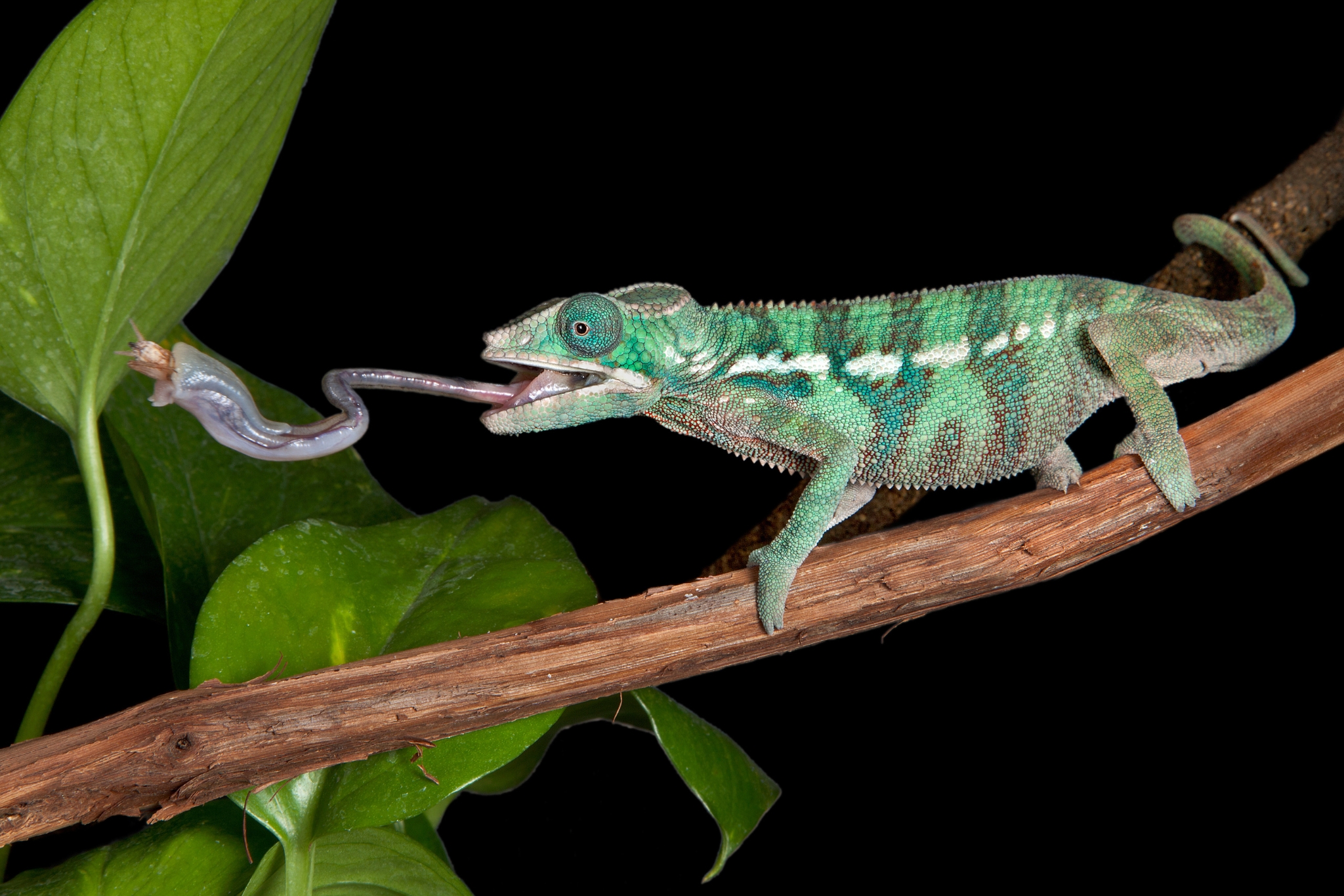
Chameleons reward patience, attention to detail, and genuine curiosity. When their environment is properly set up, watching them hunt with striking precision, shift into unexpected colors, or simply settle into a perfectly balanced basking routine can be incredibly rewarding in a way few pets can match.
But they require the work to be done first. That means researching thoroughly and learning from experienced keepers before you ever bring one home. It also means fully setting up and testing your enclosure in advance, and securing an exotic veterinarian before day one.
A chameleon depends entirely on you being prepared before it arrives. If you get it right, you’re not just keeping a pet—you’re taking responsibility for one of the most remarkable reptiles in the world.