How to Choose the Best Chicken Coop Everything You Need to Know Before You Buy
Stop guessing and start nesting — here’s exactly how to choose the best chicken coop for your flock, from size and safety to style and more.
- Why Your Chicken Coop Choice Matters More Than You Think
- Step 1: Know Your Flock Size (and Plan for More)
- Step 2: Prioritize Ventilation — It’s Everything
- Step 3: Predator Protection Is Non-Negotiable
- Step 4: Think About Ease of Cleaning
- Step 5: Roosting Bars and Nesting Boxes — Get the Details Right
- Step 6: Consider Your Climate
- Step 7: Buy vs. Build — What’s Right for You?
- Step 8: Don’t Forget the Run
- Quick Coop Shopping Checklist
- The Bottom Line
So you’ve decided to join the backyard chicken club—welcome! Whether you’re dreaming of fresh eggs every morning or just want a charming little flock of feathered companions, choosing the right chicken coop is one of the most important decisions you’ll make as a flock owner.
Let’s walk through everything you need to know to find the perfect chicken coop for your flock.
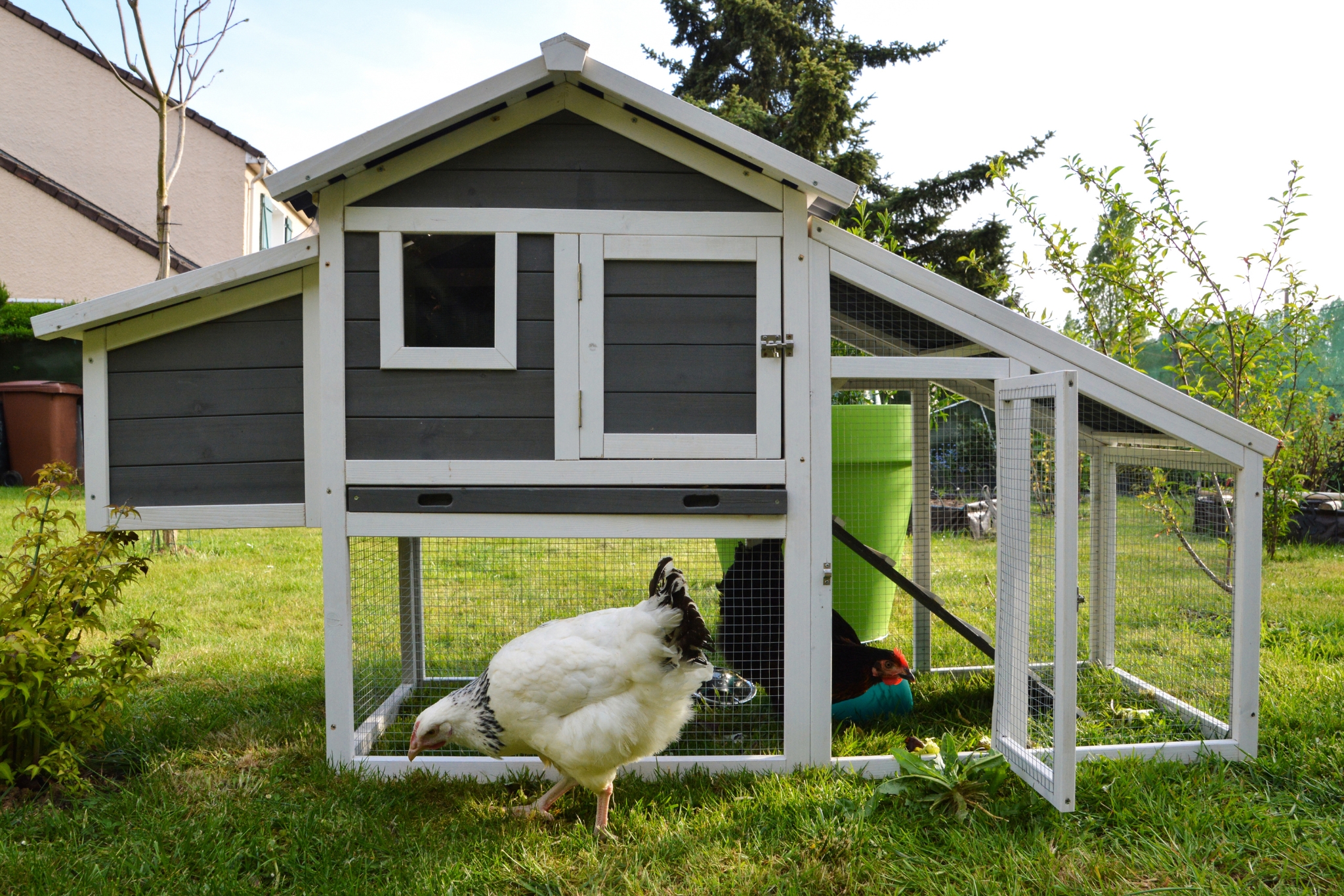
Why Your Chicken Coop Choice Matters More Than You Think
A chicken coop isn’t just a cute backyard accessory—it’s your hens’ home, their safe haven, and their everyday shelter.
The right coop helps keep your flock healthy, comfortable, and protected from predators. The wrong setup, on the other hand, can lead to stress, illness, pest issues, and a lot more maintenance than you bargained for.
Once you understand the key factors to look for, choosing a coop becomes much more intuitive and manageable.
Step 1: Know Your Flock Size (and Plan for More)
This is the golden rule of coop shopping: always size up.
A common beginner mistake is buying a coop labeled for 6 chickens and then filling it to that exact limit. In reality, manufacturer estimates tend to be on the optimistic side, so it’s better to plan with more realistic space requirements.
A helpful guideline is:
Inside the Coop
Aim for at least 4 square feet per standard sized hen (and closer to 10 square feet per larger breeds like Orpingtons or Jersey Giants).
Inside the Run
Aim for at least 10 square feet per hen, with more space if your flock won’t be free ranging around your yard.
Step 2: Prioritize Ventilation It’s Everything
If there’s one feature that separates a good chicken coop from a great one, it’s ventilation.
Chickens naturally produce moisture and ammonia through their breath and droppings. Without proper airflow, that buildup can create damp conditions, unpleasant odors, and even respiratory issues over time.
In colder weather, poor ventilation can also contribute to frostbite if moisture is trapped inside the coop.
|
Step 3: Predator Protection Is Non-Negotiable
Chickens have a long list of natural predators, including foxes, raccoons, hawks, weasels, dogs, opossums, rats, and more. When evaluating any coop, it helps to think like a predator and ask yourself: How would I get in if I really tried?
Here’s what to look for:
|
Step 4: Think About Ease of Cleaning
Let’s be real: cleaning the coop is one of the least glamorous parts of chicken keeping—but it’s also one of the most important.
A coop that’s difficult to clean often doesn’t get cleaned as thoroughly or as frequently as it should, which can quickly lead to health and hygiene issues for your flock
When evaluating a coop, consider:
- Can you access the entire space easily? Being able to stand inside or comfortably reach every corner makes a huge difference.
- Is there a removable dropping board or tray under the roosts? This is especially helpful since most waste accumulates where chickens sleep.
- Do the doors open wide enough? You should be able to bring in tools like a rake or shovel without struggling.
- Is the flooring easy to clean? Smooth, durable surfaces are much easier to maintain over time.
A walk-in coop is often considered the gold standard for ease of cleaning. Otherwise, look for designs with large access doors or hinged panels that make routine maintenance as simple as possible.
Step 5: Roosting Bars and Nesting Boxes Get the Details Right
Chickens have very specific instincts when it comes to where they sleep and lay eggs, and designing your coop with those preferences in mind makes a big difference in comfort and cleanliness.
Roosting Bars
- Chickens sleep on roosts, not on the floor. Make sure your coop has at least 8 to 10 inches of roosting bar space per hen.
- The roost should be the highest point in the coop, since chickens instinctively seek the highest available perch at night.
- Roosting bars should be flat or slightly rounded and about 2 inches wide—wide enough for hens to comfortably rest their feet flat, which also helps reduce the risk of frostbite in colder weather.
Nesting Boxes
- Plan for one nesting box per 3 to 4 hens—they are perfectly happy to share, and it’s totally fine.
- Nesting boxes should be positioned slightly lower than the roosts to discourage chickens from sleeping in them, which helps keep eggs cleaner.
- Each box should be roughly 12×12 inches for standard breeds.
- Chickens prefer dark, quiet, and private spaces for laying eggs, so adding curtains or partially covered boxes can encourage more consistent use.
Step 6: Consider Your Climate
A coop that works perfectly in mild Southern California might be completely unsuitable for a Minnesota winter—or a humid Florida summer. Climate should be one of the first things you consider before making a purchase.
|
Step 7: Buy vs. Build What’s Right for You?
One of the biggest decisions you’ll face is whether to buy a pre-made coop or build your own—and both options can work beautifully depending on your needs, budget, and skill level.
Pre-Made Coops
Commercially available coops are great if you want to get your flock set up quickly or prefer a more plug and play solution. They come in a wide range of styles and price points, making them accessible for many beginners.
Just be sure to apply the “size up” rule and check materials carefully—especially with replacing chicken wire with hardware cloth when needed.
Build Your Own
Building your own gives you full control over design, space, and materials. You can tailor the layout to your exact setup, often achieve better long term durability, and sometimes save money, especially with larger builds.
Upcycled coops
Upcycled coops—like converting a shed, playhouse, or other existing structure—is another popular option. They often provide generous space at a lower cost, and there’s a unique satisfaction in transforming something old into a functional, comfortable home for your flock.
Step 8: Don’t Forget the Run
The coop and the run work as a package, and both are essential for keeping your flock safe and comfortable. Even if your chickens have free range during the day, they still need a secure outdoor space for times when you can’t supervise them.
A well-designed run should be:
- Large enough to allow natural movement and activity (aim for at least 10 square feet per hen as a minimum)
- Covered to protect against aerial predators like hawks, as well as climbing threats
- Secure at the bottom to prevent digging predators from getting underneath
- Easy to enrich with features like perches, dust bathing areas, and hanging treats
Quick Coop Shopping Checklist
Before you commit to any coop, run through this checklist to make sure it meets your flock’s needs now and in the future:
- Sized for your current flock plus room to grow
- Proper ventilation near the roofline
- Hardware cloth (not chicken wire) on all openings
- Two-step, predator resistant latches
- Easy clean-out access for regular maintenance
- Adequate roosting space (8 to 10 inches per hen)
- Correct number of nesting boxes
- Designed for your local climate conditions
- Covered run with protection against digging predators
The Bottom Line
The best chicken coop is the one that keeps your flock safe, healthy, and comfortable while fitting smoothly into your daily routine.
It doesn’t have to be the fanciest setup on the block—although a charming coop can absolutely bring a little joy to your backyard. What matters most is that it’s the right size, well-ventilated, predator-proof, and easy enough to maintain consistently.
Take your time, do your research, and don’t hesitate to invest a bit more upfront for quality. A well-built coop pays you back over time with healthier hens, easier upkeep, and plenty of fresh eggs, personality, and entertainment
Happy coop hunting! 🐔