Crocodile Skink Humidity Requirements (And How to Get Them Right)
Crocodile skinks need high humidity to thrive. Learn how to measure humidity correctly, misting schedules, substrate tips, and mistakes to avoid that cause stuck sheds.
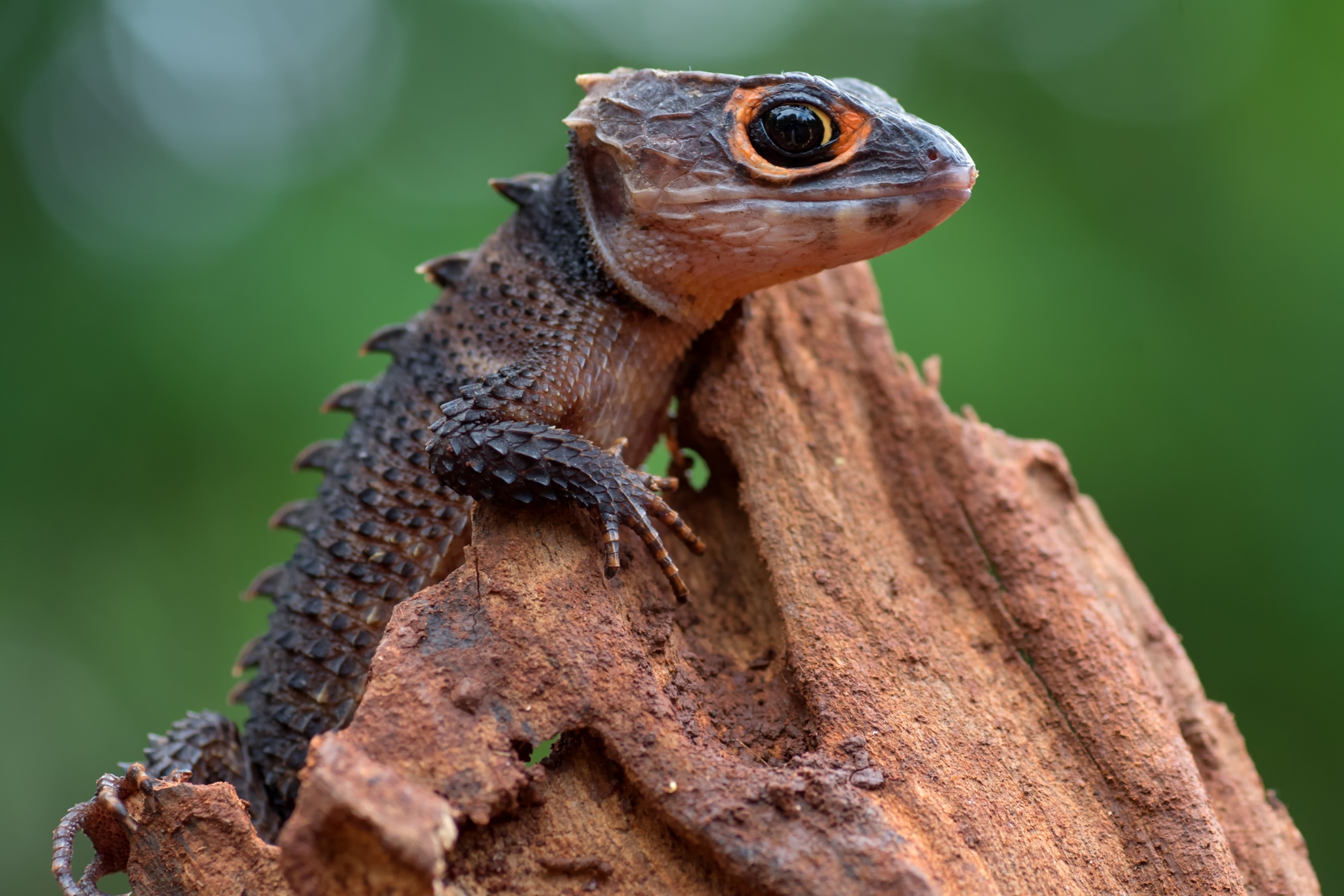
If you’ve brought home a crocodile skink—or you’re thinking about getting one of these tiny red eyed dinosaur looking lizards—there’s one thing you really don’t want to overlook… and that’s humidity.
More than temperature, diet, or even the fancy equipment in your setup, humidity plays a huge role in keeping these little guys healthy. Crocodile skinks come from the humid forests of New Guinea, so they’re naturally adapted to a damp rainforest-like environment.
If the humidity is too low, you can run into problems like stuck sheds, dehydration, and a stressed out skink. But get it right, and you’ll be giving your little buddy a little slice of the rainforest right in your living room.
So, what does “the right humidity” actually look like? Let’s break it down and go over exactly how to create the kind of humid environment your crocodile skink will thrive in.
Why Humidity Matters So Much for Crocodile Skinks
Crocodile skinks (genus Tribolonotus) are native to the humid lowland and montane forests of Papua New Guinea and the surrounding islands. In the wild, they spend most of their time tucked beneath rotting logs, leaf litter, and mossy debris along stream beds—places that stay damp, and sometimes downright soggy, throughout the year.
Their natural environment tells us a lot about what they need in captivity—simply put, crocodile skinks are simply built for moisture. Their skin, shedding process, and even respiratory system are all adapted to living in a humid microclimate.
Put one of these little lizards in a dry enclosure, and you’re basically asking its body to deal with conditions it was never designed for. Your goal should be to recreate that naturally damp rainforest-like environment as closely as possible.
What Humidity Level Do Crocodile Skinks Actually Need?
You’ll see some variation in humidity recommendations depending on the source, but most experts agree that crocodile skinks do best with around 70% to 90% humidity. It’s generally better to stay toward the higher end of that range, with 80% or above being a good target.
You can also aim for 85% to 100% humidity inside hides and other small microclimates. This gives your skink access to the extra damp conditions it would naturally seek out in the wild. After all, crocodile skinks spend much of their time tucked away in cool, damp, sheltered spots rather than sitting out in the open.
“HUMID ENOUGH”
How to Measure Humidity Correctly
A lot of humidity issues aren’t actually humidity issues at all—they’re measurement issues. If you’re relying on the cheap analog dial hygrometer that came stuck to the side of a starter kit, there’s a good chance the reading isn’t very accurate.
Here’s what works better:
- Use a digital hygrometer. Ideally, choose one with a wired probe so you can place it exactly where you want to measure humidity.
- Place the probe carefully. The middle of the enclosure is usually a good spot. Avoid putting it right next to the water dish or directly under a heat source, since those locations can give you misleading readings.
- Check more than one spot if possible. Humidity in the general enclosure can be quite different from the humidity inside a hide, and both are important for your skink.
- Double check your hygrometer if readings seem strange. If the humidity is jumping all over the place (or the number never seems to change no matter what you do) check the hygrometer’s calibration before assuming there’s a problem with your setup.
TIP
How to Raise and Maintain Humidity
There’s no single trick to keeping a crocodile skink’s enclosure perfectly humid. Instead, it’s about having several things working together to create a consistently damp environment.
- Start with the substrate. A moisture retentive substrate (such as coco fiber, sphagnum moss, cypress mulch, or a bioactive mix of several materials) will hold humidity much better than dry reptile bark or sand. And the depth matters too—a few inches gives your skink room to burrow while also helping prevent the humidity from fluctuating too quickly.
- Misting helps keep everything topped up. Most keepers mist once or twice a day, usually in the morning and again in the evening if humidity has started to drop. Misting raises the moisture level in the enclosure and can also give your skink an opportunity to drink. Like many reptiles, crocodile skinks may happily drink water droplets from leaves and other surfaces rather than relying solely on a water dish.
- A large water dish can help too. Crocodile skinks may soak, especially when they’re preparing to shed, so a wide shallow dish is useful for more than just drinking. As water slowly evaporates, it also adds a little extra moisture to the enclosure between mistings.
- Don’t forget about ventilation. It might seem like sealing the enclosure as tightly as possible would be the best way to hold in humidity, but stagnant air can encourage mold and bacterial growth. You want a balance—enough ventilation to keep fresh air moving, but enough coverage to prevent moisture from escaping too quickly. A partially covered screen top can work well without turning the enclosure into a completely sealed box.
- And if humidity still won’t cooperate, consider a fogger. If you’re misting regularly but the humidity keeps dropping out of range (especially overnight) a small reptile fogger or cool mist humidifier on a timer can help maintain moisture levels. That way you don’t have to wake up at 2AM and start spraying your lizard’s enclosure with a water bottle.
Common Humidity Mistakes to Avoid
A few mistakes tend to come up again and again with new crocodile skink keepers. Here are some of the big ones to watch out for:
- Misting only once and calling it a day. Humidity from a single misting can disappear within an hour or two, especially if you live in a dry climate or have a well ventilated enclosure. The key is consistency, not one huge spray session.
- Ignoring the hide microclimate. Your hygrometer might show a perfectly good humidity level while the inside of your skink’s hides is completely dry. Since crocodile skinks spend so much of their time tucked away, the conditions inside those hides can be just as important—if not more important—than the humidity in the open part of their enclosure.
- Going too far and turning the enclosure into a swamp. Higher humidity isn’t automatically better if you sacrifice airflow to achieve it. A constantly waterlogged substrate with little ventilation can encourage mold, bacterial growth, and create a different set of problems.
- Forgetting that humidity and temperature work together. Temperature changes can affect how moisture behaves in the air, which means adjusting your heating setup can also change your humidity readings—even if you haven’t changed your misting routine at all.
Signs Your Humidity Is Off
Your skink will often give you clues that something isn’t quite right before your hygrometer does… if you know what to look for.
- If it’s too dry, you may notice retained shed, especially around the toes or the tip of the tail, where old skin can be particularly stubborn. Your skink may also start spending more time soaking in its water dish, almost as if it’s trying to make up for the lack of moisture on its own.
- If it’s too wet or poorly ventilated, you might start seeing mold or fungal growth on the substrate or decor. A constantly damp musty smell can also be a warning sign, as can skin problems caused by prolonged contact with waterlogged substrate.
AND CALL IT GOOD
The Bottom Line
Crocodile skink humidity isn’t really a “set it and forget it” thing. It’s an ongoing balance between your substrate, misting routine, water access, and ventilation, with all of them working together to recreate the cool, damp, shaded environment these lizards naturally call home.
Aim for 70% to 90% ambient humidity, give your skink access to even more humid hides and microclimates, and use a reliable digital hygrometer so you know what’s actually happening inside the enclosure. From there, pay attention to your skink too. Their shedding, behavior, and overall activity can give you valuable clues about whether your setup is working.
When you get the humidity right, crocodile skinks can be surprisingly easygoing pets. They’re quiet, fascinating little reptiles, and once they settle in and feel comfortable, you might even catch them popping out from under their favorite piece of cork bark to see what’s going on.