Can Dogs and Horses Live Together Safely? Here’s 10 Things You Need to Know
Discover how to create a safe, harmonious environment for your horse and dog—including the warning signs most owners miss.
- Understanding the Natural Dynamic Between Horses and Dogs
- Introduce Them Slowly and on Neutral Ground
- Train Your Dog Thoroughly Before Any Off-Leash Time
- Never Allow Dogs to Chase Horses — Ever
- Supervise All Interactions — Especially Early On
- Teach Horses to Be Comfortable Around Dogs
- Watch for These Warning Signs
- Be Careful Around Feed and High-Stress Situations
- Keep Up With Parasite Control for Both Animals
- Design Your Property With Both Animals in Mind
- Have an Emergency Plan
- The Barnyard Bond
Few sights are more heartwarming than a dog trotting happily alongside a horse—but that picture-perfect moment doesn’t happen by accident. Building a safe relationship between the two takes thoughtful introduction and ongoing management.
Horses and dogs can coexist beautifully, but their differences in size, instincts, and communication styles create real risks if things go wrong. Whether you’re an experienced equestrian with a seasoned farm dog or a first-time horse owner introducing a canine companion, these safety tips will help keep both animals safe and set the foundation for a positive relationship.
Understanding the Natural Dynamic Between Horses and Dogs
Before getting into safety protocols, it’s important to understand how horses and dogs naturally see each other.
Horses are prey animals. Their instincts are wired to react to sudden, fast, or unpredictable movement—exactly the kind of behavior an excited dog can display. A horse that hasn’t been properly introduced to dogs may spook, kick, or bolt, creating danger for everyone involved.
Dogs, on the other hand, are natural predators. Even the most well-mannered dog still has some level of prey drive, and a moving or reactive horse can trigger that instinct instantly. A dog that chases a horse—even in play—can put itself at serious risk of injury from a kick.
Recognizing this dynamic is the foundation for every safe and successful horse–dog relationship.
1. Introduce Them Slowly and on Neutral Ground
The first introduction sets the tone for everything that follows, and it’s one step you don’t want to rush.
Begin with your dog on a leash and the horse safely in a paddock or behind a fence. Let them observe each other from a distance, giving the horse the choice to approach if it feels comfortable—never force the interaction. Pay close attention to the horse’s body language: pinned ears, a raised head, wide eyes, or tension all indicate stress.
Repeat these calm, controlled introductions over several days—or even weeks—before considering any off-leash time. The goal isn’t just tolerance, but true neutrality, where both animals are relaxed and unbothered by each other’s presence.
2. Train Your Dog Thoroughly Before Any Off-Leash Time
Your dog’s obedience could quite literally save its life around horses. At minimum, your dog should reliably respond to the following commands before spending unsupervised time near horses:
- Recall (come): Your dog must return to you immediately, every single time—even with distractions.
- Stay and leave it: Critical for preventing chasing or approaching a nervous or reactive horse.
- Heel: Helps keeps your dog controlled and close when moving through a barn or around horses.
Pro Tip
Training & Supervision
No matter how well-trained your dog is, never assume it will make the right decision in every situation. Excitement, a sudden noise, or the smell of food can override even solid training in a split second — always supervise interactions and be ready to step in if necessary.
3. Never Allow Dogs to Chase Horses — Ever
This rule is non-negotiable: NO chasing, ever.
Even if it looks playful, chasing reinforces dangerous behavior and can escalate quickly. A horse that feels pursued may panic, increasing the risk of injury from fences, uneven footing, or collisions with other horses. At the same time, a dog that gets too close to a fleeing or cornered horse is in real danger—a single kick can be fatal.
If your dog has a strong prey drive or any history of chasing, it’s worth seriously reconsidering off-leash freedom around horses. In many cases, management tools like long lines, secure fencing, or designated dog-free areas are the safest and most responsible approach.
4. Supervise All Interactions — Especially Early On
Even after months of calm, uneventful coexistence, it’s important not to assume the relationship is completely foolproof. A new horse, a mare in season, a sudden spook, or even a change in your dog’s behavior can shift the dynamic quickly.
Supervision should always be the default—especially in open areas where horses can run and dogs have space to chase. If you can’t actively supervise, separation is the safer choice. A secure barrier—whether that’s a stall, fenced yard, or kennel—is a small inconvenience compared to the risk of a preventable accident.
5. Teach Horses to Be Comfortable Around Dogs
Desensitization goes both ways. Horses that are thoughtfully introduced to dogs in a calm, controlled setting are far safer than those encountering them unpredictably.
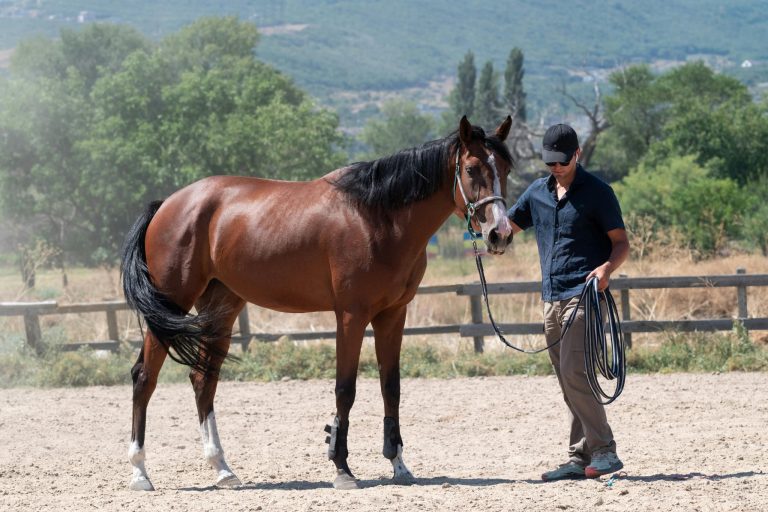
Start with groundwork, gradually exposing your horse to a calm, leashed dog at a comfortable distance. As the horse relaxes, you can slowly decrease that distance over time. Reward calm behavior with praise or treats to reinforce a positive association.
Many horses will learn to accept and even ignore a familiar, well-behaved dog—but not all horses will. Some horses remain uncomfortable around dogs, and that limit should be respected rather than pushed.
6. Watch for These Warning Signs
Both animals will give clear warning signs before a situation escalates. Learning to read those signals is one of the most important safety skills you can develop.
Warning Signs to Watch For
In Horses
Signs of stress or aggression
- Ears pinned flat against the head
- Stomping, kicking out, or pawing
- A raised, tense neck and wide, white-rimmed eyes
- Circling, moving off quickly, or pressing against a fence
In Dogs
Signs of stress or prey drive
- Stiff posture, intense staring, or a low stalking crouch
- Raised hackles along the spine
- Growling, barking, or lunging toward the horse
- Ignoring recall commands
If you notice any of these behaviors, calmly remove the dog from the situation before things escalate. Acting early is the key to preventing accidents.
7. Be Careful Around Feed and High-Stress Situations
Feeding time and other high-stress moments come with added risk. Some horses can become territorial or reactive around food, and a dog underfoot during feeding can easily be kicked or stepped on. Keeping dogs well clear during meals is a simple but important precaution.
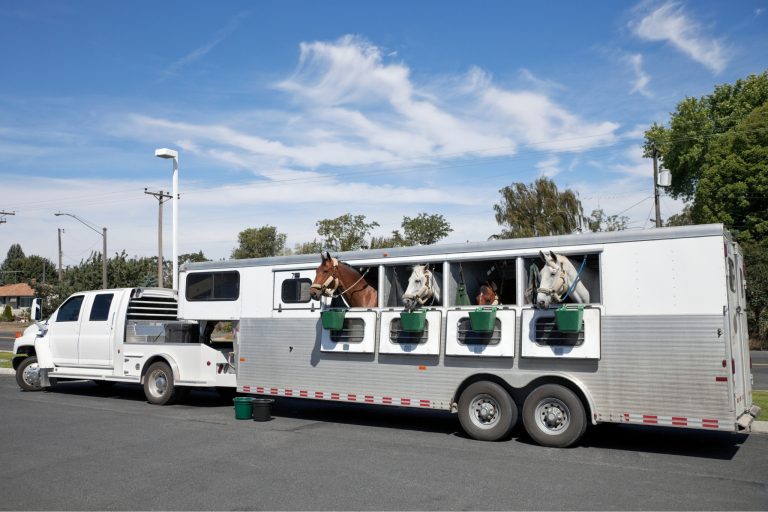
The same applies during stressful events like farrier visits, veterinary care, or trailer loading. Horses may be more sensitive and reactive in these situations, so it’s best to keep dogs securely contained—not just for their safety, but also for the safety of anyone working around the horse.
8. Keep Up With Parasite Control for Both Animals
One health risk that’s easy to overlook is parasite transmission between horses and dogs. Dogs that spend time in pastures are frequently exposed to horse manure, which can carry parasites that are harmful to them. In turn, dogs can introduce their own parasites into the horse’s environment.
Work with your veterinarian to maintain consistent deworming and parasite prevention programs for both animals. Regularly removing manure from pastures also helps reduce risk. And while it’s common (and unpleasant), it’s important to discourage dogs from sniffing, rooting through, or eating horse droppings.
9. Design Your Property With Both Animals in Mind
A well-planned property layout can dramatically reduce risks for both horses and dogs. Here are some practical steps:
- Double-gated paddock entries: Prevents dogs from dashing into pastures when a gate opens.
- Interior electric fencing: Keeps dogs at a safe distance from horses while allowing freedom elsewhere.
- Designated dog areas: A secure kennel or dog run gives your dog a safe space away from equine traffic.
- Safe barn design: Wide aisles and the ability to cross-tie horses away from roaming dogs help prevent accidents inside the barn.
10. Have an Emergency Plan
Despite every precaution, accidents can still occur. Plan ahead for emergencies involving either animal: a dog kicked by a horse, a spooked horse entangling a dog, or injuries to both. Keep your veterinarian’s contact information and the nearest equine emergency clinic’s number within easy reach.
A well-stocked barn first-aid kit—along with knowledge of basic wound care, pressure application, and shock assessment—can be lifesaving while professional help is on the way.
The Barnyard Bond
Horses and dogs can form genuinely beautiful bonds—the kind where a dog naps peacefully in a horse’s stall, and the horse perks up at the sight of its canine friend. Achieving this harmony, however, requires consistent training, careful introductions, and vigilant supervision.
Investing time in managing the relationship safely doesn’t just prevent accidents—it fosters a calm, cooperative environment where both animals can thrive. By respecting each species’ instincts and setting clear boundaries, you can help horses and dogs become the best of barnyard friends.