Are Zoo Animals Becoming Domesticated? What Science Reveals
Scientific research reveals zoo animals are experiencing domestication effects. Explore the evidence, conservation implications, and how modern zoos are responding.
- What Does Domestication Actually Mean?
- The Unintentional Selection Process in Zoos
- How Zoos Inadvertently Select for Certain Traits
- Evidence of Domestication-Like Changes in Zoo Animals
- The Conservation Paradox
- What Zoos Are Doing Differently
- Species Most at Risk
- The Role of Zoo Size and Management
- Future Directions in Zoo Management
- The Philosophical Question: What Are We Actually Conserving?
- What This Means for the Future of Zoos
- A Complex Balance
The question of whether zoo animals are becoming domesticated has sparked intense debate among conservation biologists, animal behaviorists, and zoo professionals worldwide.
As zoos evolve from simple menageries to sophisticated conservation centers, the animals within them are changing in ways that weren’t anticipated when these institutions first began.
Understanding this phenomenon is crucial for both wildlife conservation efforts and the future of captive animal populations.
What Does Domestication Actually Mean?
Before exploring how zoo animals are becoming domesticated, it’s essential to understand what domestication truly involves. Domestication is a multi-generational process where animals develop genetic and behavioral changes through selective breeding and adaptation to human controlled environments.
Key characteristics of domestication include:
- Genetic changes that affect behavior, appearance, and physiology
- Reduced fear response to humans and novel stimuli
- Altered reproductive patterns compared to wild populations
- Physical changes such as size differences, coat color variations, or altered bone structure
- Behavioral modifications including increased tolerance of confinement and human interaction
Domestication occurs over multiple generations, though the famous fox domestication experiment in Russia showed that significant behavioral changes can occur within just a few dozen generations when selection pressure is strong enough.
The Unintentional Selection Process in Zoos
Modern zoos don’t intentionally breed animals for domestication. However, the very structure of captive breeding programs creates selection pressures that can lead to domestication-like changes.
An intriguing phenomenon known as “domestication syndrome” can still occur in captive populations, even when zoo professionals carefully work to preserve genetic diversity and wild-type behaviors.
Another commonly observed phenomenon, known as “relaxed selection”, refers to the weakening or removal of natural selection pressures (such as predation or competition for resources) which can lead to the gradual reduction of certain traits over generations.
This process may result in the loss of behaviors or physical adaptations essential for survival in the wild, potentially creating challenges for animals that are later reintroduced into natural environments.
How Zoos Inadvertently Select for Certain Traits
Several factors contribute to unintentional selection in zoo environments:
1. Breeding the animals that breed successfully.
Zoos naturally select animals that reproduce well in captivity. Animals that are calmer around humans, less stressed by confinement, and more adaptable to captive conditions are more likely to breed successfully. Over generations, these traits become more common in the population.
2. Survival of the adaptable.
Animals that cope poorly with captivity may experience chronic stress, leading to health problems or reproductive failure. Those that thrive pass on their more adaptable genetics to the next generation.
3. Limited mate choice.
Unlike wild populations where animals can select mates across large territories, zoo animals have restricted breeding options. This can lead to breeding between related individuals, potentially concentrating certain genetic traits.
4. Reduced predation pressure.
Without natural predators, zoo animals don’t face the same survival pressures as their wild counterparts. Traits that would be disadvantageous in the wild, such as bold behavior or reduced vigilance, may not only survive but become more common in zoo populations.
Evidence of Domestication-Like Changes in Zoo Animals
Research has documented numerous changes in zoo animal populations that mirror domestication processes observed in traditional domestic animals.
Behavioral Changes
Studies have shown that captive bred animals often display markedly different behaviors from their wild relatives. These changes can appear surprisingly quickly, sometimes within just a few generations.
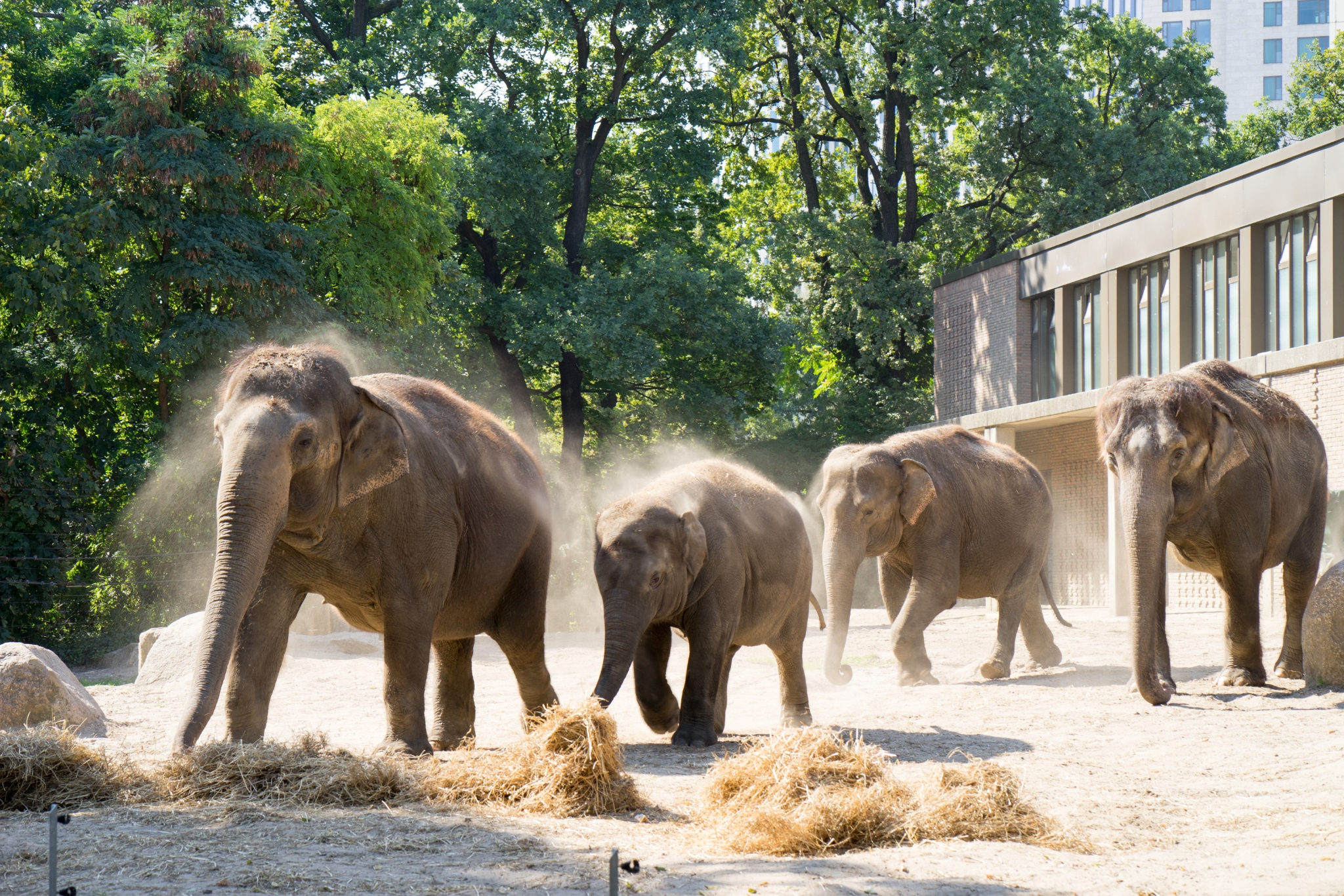
Captive bred wolves and other wild canids tend to show reduced fear of humans and increased playfulness extending into adulthood. Similarly, many zoo bred big cats display more docile temperaments compared to wild caught ancestors. Research on captive elephants has revealed altered social structures and communication patterns that differ from wild herds.
Perhaps most concerning for conservationists, many zoo bred animals show diminished anti-predator responses.
When animals bred in zoos are prepared for reintroduction, they often require extensive training to recognize and respond appropriately to predators, something their wild counterparts learn naturally.
Physical Changes
The physical alterations observed in some zoo populations echo the changes seen in domesticated species throughout history.
These modifications, collectively known as “domestication syndrome,” include changes in coloration, body proportions, and skull morphology.
- Some captive populations have developed coat color variations not found in wild populations, including patches of white fur or unusual color patterns.
- Researchers have documented subtle changes in skull shape and jaw structure in some long term captive populations.
- Body size changes have been observed in multiple species, with some populations becoming smaller or larger than wild counterparts depending on diet, activity levels, and breeding patterns.
- Reproductive changes are also common, with some species breeding year round in captivity rather than seasonally as they would in the wild.
Genetic Evidence
Modern genetic analysis has provided concrete evidence of genetic drift and adaptation in zoo populations.
Studies comparing wild and captive populations of the same species have revealed genetic differences accumulating over just a few generations.
Research on captive salmon populations showed genetic changes within five generations that affected survival rates when fish were released into the wild. Similar patterns have been documented in captive breeding programs for endangered species, raising important questions about how well zoo bred animals retain the genetic toolkit needed for wild survival.
The Conservation Paradox
This potential domestication creates a significant paradox for conservation efforts. Zoos play a crucial role in preventing extinctions through captive breeding programs, serving as genetic reservoirs for critically endangered species.
However, if these animals are becoming fundamentally different from their wild ancestors, it complicates reintroduction efforts and raises philosophical questions about what exactly is being conserved.
Challenges for Reintroduction Programs
When animals bred in captivity are released into the wild, their domestication-like traits can become serious liabilities.
- Animals lacking appropriate fear responses may approach humans or fail to recognize predators.
- Those with altered foraging behaviors may struggle to find food efficiently.
- Changes in social behavior can make it difficult for released animals to integrate with existing wild populations or form functional social groups.
Animal reintroduction success rates vary widely, but many programs report high mortality in the first year after release. While multiple factors contribute to this, behavioral and genetic changes from captivity undoubtedly play a role.
The Arabian Oryx Success Story
Despite these challenges, some reintroduction programs have achieved remarkable success. The Arabian oryx, extinct in the wild by 1972, was successfully reintroduced to protected areas in Oman and other Middle Eastern countries using zoo bred animals. This program succeeded partly because conservationists recognized the potential issues with captive breeding and implemented strategies to maintain wild-type behaviors, including housing animals in large naturalistic enclosures and minimizing human contact.
What Zoos Are Doing Differently
Modern zoo management has evolved significantly in response to concerns about domestication. Forward thinking institutions are implementing various strategies to minimize unwanted genetic and behavioral changes in their populations.
Environmental Enrichment
Zoos now provide extensive environmental enrichment designed to encourage natural behaviors. This includes puzzle feeders that require animals to work for their food, mimicking the challenges of hunting or foraging.
Complex habitats with hiding spots, climbing structures, and varied terrain allow animals to express natural movement patterns.
Social groupings are also carefully structured to mirror wild populations as closely as possible.
Genetic Management
Sophisticated genetic management programs help maintain diversity and minimize inbreeding.
The Species Survival Plan (SSP) managed by the Association of Zoos and Aquariums (AZA) in North America and the EAZA Ex-situ Programme run by the European Association of Zoos and Aquaria (EAZA) use detailed genetic databases to plan breeding recommendations across multiple institutions.
These programs aim to maintain genetic diversity equivalent to a certain effective population size, typically targeting 90% of genetic diversity maintained for 100 years.
Behavioral Training for Reintroduction
For animals intended for eventual release, specialized training programs prepare these animals to survive in the wild.
These programs teach predator avoidance through simulated encounters, provide opportunities to practice foraging on natural food items, and minimize human contact during critical developmental periods.
Some facilities also employ “soft release” techniques, housing animals in large semi-wild enclosures prior to full release to help them gradually adjust to their natural environment.
Species Most at Risk
Not all zoo animals face equal risks of domestication. Certain species characteristics make some animals more susceptible to captivity induced changes.
Fast Breeding Species
Animals with short generation times and rapid reproductive rates can accumulate genetic changes more quickly.
Behaviorally Flexible Species
Ironically, the most intelligent and adaptable species may be most prone to behavioral changes in captivity. Primates, elephants, and cetaceans show remarkable ability to adapt to captive conditions, but this flexibility can lead to significant behavioral divergence from wild populations.
Species with Long Captive Histories
Animals that have been in zoos for many generations face greater risks than recently captured or first generation captive bred individuals. Some zoo populations represent dozens of generations in captivity, with no wild genetic input for half a century or more.
The Role of Zoo Size and Management
The degree of domestication-like changes varies significantly based on how zoos are managed and the resources available to them.
Large Naturalistic Enclosures vs. Traditional Exhibits
Research indicates that animals housed in large naturalistic enclosures that closely mimic wild habitats show fewer behavioral changes than those in smaller more artificial environments.
Sanctuaries and safari-style parks that provide extensive space and minimize human contact typically produce animals more similar to wild populations.
Accreditation Standards
Accredited zoos following standards set by organizations like the Association of Zoos and Aquariums (AZA) generally implement more sophisticated management practices that help mitigate domestication effects. These high level standards address everything from enclosure design to breeding management and veterinary care.
Future Directions in Zoo Management
As understanding of captivity induced changes grows, zoo professionals are exploring innovative approaches to maintaining wild-type populations.
Genetic Rescue Through Technology
Emerging technologies like gene banking, where genetic material is cryopreserved for future use, may help maintain genetic diversity without requiring continuous captive breeding. Some researchers are even exploring the potential for gene editing to correct for genetic drift in captive animal populations, though this remains controversial and is not currently practiced.
Hybrid Models of Conservation
Some conservationists advocate for hybrid approaches that combine traditional zoos with large protected semi-wild areas. These models aim to maintain larger populations with more natural selection pressures while still providing protection from major threats like poaching or habitat loss.
Wild Gene Flow
Where possible, occasionally introducing genetic material from wild populations into captive breeding programs can help counteract genetic drift. However, this approach requires viable wild populations still exist, making it impossible for species already extinct in the wild.
The Philosophical Question What Are We Actually Conserving?
Beyond the practical challenges, the domestication of zoo animals raises profound questions about conservation goals. If the animals in zoos become fundamentally different from their wild ancestors, are we truly conserving the species, or creating something new?
Some philosophers and conservation biologists argue that maintaining a species’ genetic diversity and preventing extinction (even if the animals change somewhat) is preferable to losing them entirely.
Others contend that conservation should aim to preserve not just species as taxonomic units, but the ecological relationships, behaviors, and evolutionary processes that define them in their natural contexts.
This debate becomes particularly acute for species that exist only in captivity, like the scimitar horned oryx or certain subspecies of the Przewalski’s horse. These animals serve as insurance against complete extinction, but after generations in captivity, how much do they resemble the animals that once roamed freely?
What This Means for the Future of Zoos
The evidence that zoo animals are undergoing domestication-like changes doesn’t necessarily mean zoos should be abandoned as conservation tools.
Rather, it highlights the need for careful evidence based management strategies that acknowledge and actively work to minimize these effects.
Modern zoos are increasingly seeing their role not as permanent homes for wildlife, but as temporary guardians working toward a future where species can thrive in protected wild habitats.
A Complex Balance
Zoo animals are indeed experiencing changes that resemble domestication, driven by the unique selection pressures of captive environments.
This phenomenon represents a significant challenge for conservation biology and demands ongoing attention and adaptive management.
The question isn’t whether we should maintain zoo populations – for many species, captive breeding represents their only hope for survival.
Instead, the challenge is how to manage these populations intelligently, acknowledging the risks of captivity while maximizing the possibility that these animals, or their descendants, may one day return to the wild.
The gradual domestication of zoo animals underscores that conservation is an active, evolving process – one that requires vigilance, flexibility, and humility about the limits of maintaining wild nature in controlled environments.
It pushes us to examine what conservation truly means and reminds us that saving a species involves more than just keeping it alive – it requires keeping them wild.