How to Create a Foraging Schedule for Your Parrot (And Why It’s a Game Changer)
Your parrot should be working for their food — not waiting by a bowl. Learn how to build a foraging schedule that fights boredom and unwanted behaviors like plucking.
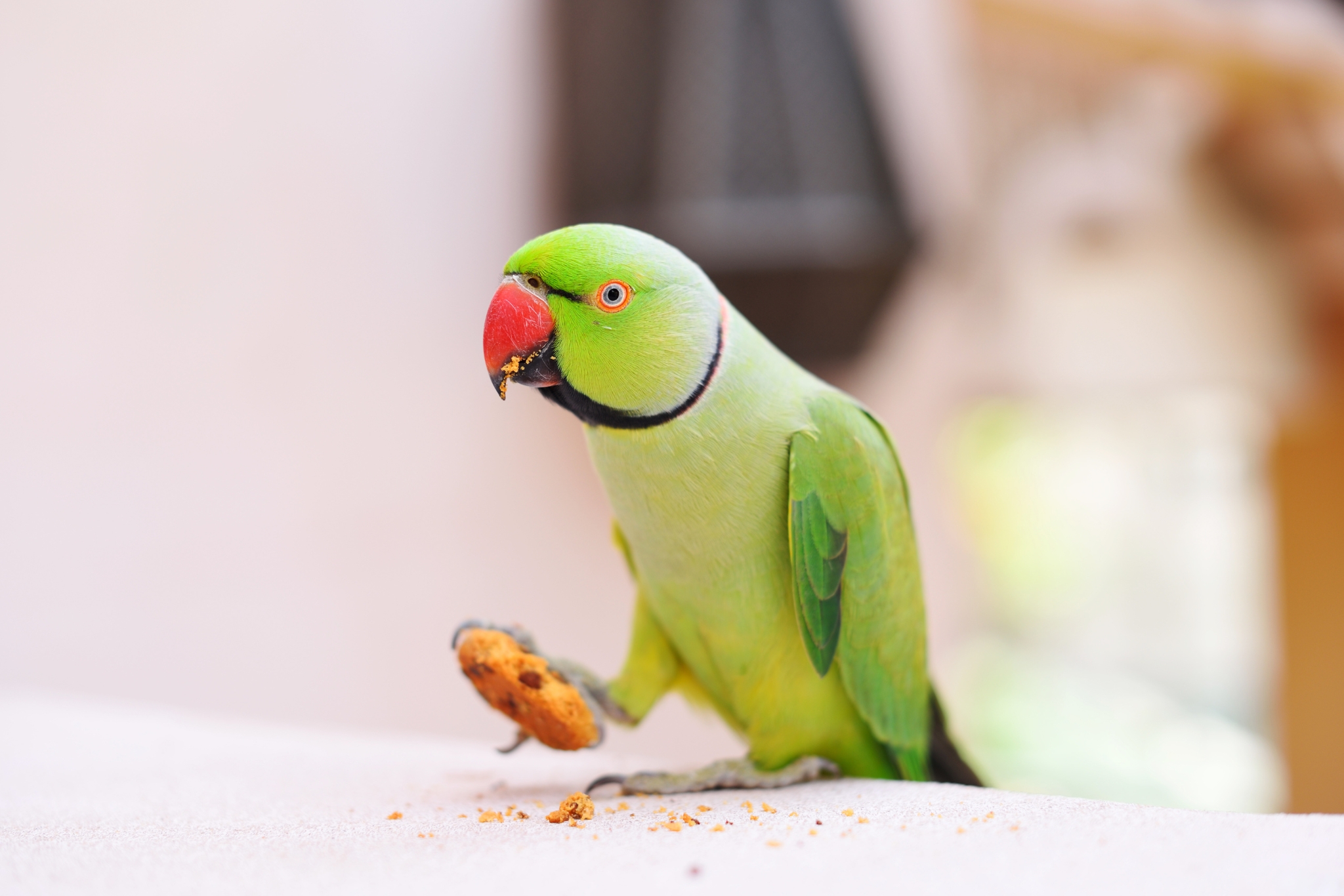
If your parrot’s biggest daily adventure is staring at their food bowl and waiting for it to magically refill, it might be time to shake things up.
In the wild, parrots spend a huge portion of their day searching for food, cracking open seeds, pulling apart plants, exploring their surroundings, and working for every single bite. For wild parrots, finding food isn’t just something they do when they’re hungry—it’s a major part of their daily routine and basically a full-time job.
Now compare that to a pet parrot who can finish an entire bowl of food in just a few minutes. Suddenly, the natural challenge and problem solving that would fill their day disappears. And when a parrot’s daily routine doesn’t include enough mental stimulation, that extra energy and curiosity still need somewhere to go.
A foraging routine helps fill that gap by transforming your parrot’s mealtime into an enriching activity. Instead of simply walking over to a bowl and eating, your parrot gets to search, explore, and problem solve—bringing more of their natural instincts into their everyday routine.
Why Foraging Matters More Than You Think
Foraging isn’t just a fun enrichment activity—it’s one of the best ways you can support your parrot’s natural instincts and mental well-being.
Your parrot is wired to explore, problem solve, and stay engaged, so giving them daily opportunities to use their brains is an important part of keeping them happy and healthy.
Without enough stimulation, that extra energy can show up as:
- Feather destructive behaviors — like plucking or excessive chewing
- Excessive vocalization — when boredom turns into “I need something to do!” energy
- Repetitive behaviors — such as pacing or other restless habits
- Weight gain — since a parrot that simply eats from a bowl isn’t getting the same movement and activity as one that works for its food
A consistent foraging routine brings back that natural “search and discover” experience, helps keep your parrot physically active, and adds a little more excitement to their everyday life. It also gives you the chance to watch them do what they do best—explore, investigate, and use that brilliant little brain.
Step 1 Audit Your Bird’s Current Routine
Before creating a whole new setup, start by paying attention to your parrot’s current routine. A little observation goes a long way. Ask yourself:
- How long does it currently take your parrot to finish their daily food?
- What toys or enrichment do they already have, and which ones actually keep their attention?
- When are they most active, curious, and motivated by food?
Getting to know your parrot’s habits makes it easier to create a foraging routine that fits their personality, keeps them engaged, and make it feel like a natural part of their daily life.
Step 2 Build a Foraging Toy “Wardrobe”
Think of foraging toys like a capsule closet—you want a little variety, but not so much that it becomes overwhelming. A good rotation gives your parrot different ways to explore, problem solve, and stay interested without making playtime feel repetitive.
Aim to include a mix of difficulty levels:
- Easy level toys like foraging boxes with treats peeking out or paper cups with food tucked inside
- Medium level toys such as wooden puzzle boxes, foraging wheels, and woven palm leaf balls filled with pellets
- Hard level toys including multi-step puzzle feeders, lockable foraging boxes, or toys that require unscrewing, unwrapping, or extra problem solving
Rotate your parrot’s toys every few days to keep their curiosity going. A favorite toy that’s been out of sight for a little while can feel completely new and exciting when it comes back into the rotation.
Step 3 Map Out an Actual Daily Schedule
Here’s a simple framework you can adjust based on your parrot’s species, age, personality, and confidence level with foraging:
Morning (7AM to 9AM)
Start the day with the biggest foraging opportunity. Instead of serving breakfast in a bowl, offer it through 1 to 2 foraging toys. Mornings are a great time for this since your parrot is naturally hungry, alert, and ready to explore.
Midday (11AM to 1 PM)
Add a little variety with smaller foraging activities. Try hiding fresh vegetables or healthy treats around your bird’s cage or play stand—like inside foraging baskets, wrapped in paper, or tucked into safe spaces your bird can investigate.
Afternoon (3PM to 4PM)
Bring out a more challenging puzzle toy with a higher value reward. This is also a great time for supervised out of cage foraging, like exploring a foraging tree, play gym, or bird-safe activity area.
Evening (5PM to 6PM)
Keep things calm with an easier activity before bedtime. Simple shredding toys, paper searches, or low effort puzzles let your parrot enjoy one last enrichment moment without creating too much excitement.
The exact time you offer enrichment doesn’t need to be perfect—the biggest difference comes from building a consistent routine. Parrots thrive on familiarity, and a predictable schedule helps them feel comfortable while still giving them the daily enrichment and mental stimulation they need.
Step 4 Match Difficulty to Your Bird’s Skill Level
This is the part that trips up a lot of people. It’s easy to get excited and jump straight to the most impressive, complicated puzzle toy, but giving a beginner a triple locked challenge can leave your parrot feeling overwhelmed, frustrated, and ready to walk away from the game altogether.
It’s better to start simple—really simple.
Begin with easy wins, like treats placed in an open container or gently covered with a piece of paper. This “easy start” helps your parrot understand the idea of foraging without feeling overwhelmed.
As your bird builds confidence and start enjoying the process, slowly increase the challenge. The goal is to create a fun puzzle to solve, not a frustrating task they want to avoid.
You’ll know your parrot is ready for the next level when they’re solving their current toy quickly and seem excited rather than frustrated by the challenge.
Step 5 Change Foraging Locations, Not Just Toys
Variety isn’t just about having different toys—it’s also about changing up where the adventure happens. Rotating foraging opportunities through different spaces keeps things feeling fresh and encourages your parrot to explore.
Try offering foraging activities in places like:
- Inside the cage — turning their everyday space into an opportunity to search and discover
- On a play stand or gym — adding movement and exploration to their routine
- During supervised time on a foraging tree — creating a bigger challenge with more room to investigate
- In a designated explore zone — using bird-safe plants, textures, and surfaces to create a fun discovery area
Changing the environment can make familiar toys and treats feel like a brand new experience. It keeps your parrot’s world feeling interesting and ever changing instead of predictable, which is especially important for such intelligent, curious birds who thrive on exploration and discovery.
A Few Pro Tips
A few little things can make the transition into foraging much smoother:
1. Don’t make foraging the only way your parrot can access food right away.
New foragers may need a small backup bowl while they learn the process, so they can build confidence without the risk of going hungry.
2. Use high value treats strategically.
Nuts and dried fruit can be amazing “jackpot” rewards for more challenging puzzles, but they should stay a small part of the overall diet.
3. Pay attention to body language.
Frustration may look like throwing toys, ignoring the puzzle, or becoming upset with the object. True engagement looks like curiosity, investigation, and a willingness to keep trying—even if it takes a little time.
4. Keep track of what your parrot enjoys.
A simple note of which toys they solve quickly, which ones they love, and which ones they lose interest in can make future toy rotations so much easier.
Remember, the goal isn’t to turn foraging into a challenge your parrot has to “pass.” It’s about creating a fun and natural activity that encourages curiosity, builds confidence, and gives them something exciting to look forward to each day.
The Bottom Line
A foraging schedule isn’t about making your parrot “earn” their food—it’s about giving them the mental stimulation and natural behaviors their intelligent little brains are designed for.
Instead of simply eating and moving on, your parrot gets the chance to explore, problem solve, and stay engaged throughout the day.
Once you build the routine, you may notice a more confident, focused, and content bird who seems more connected to their environment.
Start simple, stay consistent, and watch your bird discover the joy of being a curious little forager.