10 Axolotl Care Tips That Actually Make a Difference
Serious about your axolotl’s health? These expert axolotl care tips cover everything from gill health to water quality.
- Master the Temperature Sweet Spot (and Don’t Mess Around With It)
- Cycle Your Tank Before Your Axolotl Ever Touches the Water
- Choose the Right Substrate — or Go Bare Bottom
- Understand Their Feeding Quirks
- Don’t Underestimate the Water Quality
- Give Them Somewhere to Hide — It’s Not Optional
- Know What Healthy Gills Actually Look Like
- Never House Axolotls With Fish (Yes, Even Supposedly Peaceful Ones)
- Understand That Refrigeration Is a Legitimate Medical Treatment
- Find a Vet Before You Need One
- Happy Axolotl, Happy Life
Whether you’ve been caring for axolotls for years or you’ve just recently fallen down the adorable salamander rabbit hole, there’s always something new to learn when it comes to keeping them happy and thriving.
Axolotls might look low maintenance on the surface, but dialing in their care makes a real difference in their health, growth, and longevity.
These expert level care tips are here to help you refine your setup, avoid common mistakes, and confidently upgrade your axolotl care routine. Let’s get into it!
1. Master the Temperature Sweet Spot (and Don’t Mess Around With It)
Axolotl temperature care is not something to guess your way through.
These cool water animals thrive in temperatures between 60°F to 68°F (16°C to 20°C), and anything consistently above 74°F can quickly become dangerous.
Heat stress is one of the most common and preventable causes of illness and death in captive axolotls, especially during warmer months when temperatures can creep up fast.
Clip-on fans that move air across the water surface can help in a pinch, but long term success really comes down to proper cooling equipment.
Most experienced keepers end up investing in a chiller and don’t look back. In warm climates especially, an aquarium chiller isn’t a luxury—it’s an essential part of responsible care.
2. Cycle Your Tank Before Your Axolotl Ever Touches the Water
This step is a big one, and skipping it is the number one rookie mistake.
Axolotls produce a surprising amount of ammonia for their size, and in an uncycled tank, toxic levels can build up very quickly.
Before your axolotl moves in, your tank needs to complete a full nitrogen cycle. That means establishing a healthy colony of beneficial bacteria that converts ammonia into nitrite, and then nitrite into nitrate.
On average, this process usually takes about 4 to 6 weeks, and your tank is fully cycled when both ammonia and nitrite consistently are zero, and nitrate begins to rise.
Only then is it truly ready for an axolotl.
3. Choose the Right Substrate or Go Bare Bottom
Fine sand is the gold standard substrate for axolotls, and for some very important reasons.
Axolotls are little opportunistic “vacuum cleaners” and will try to ingest anything that looks even remotely like food—including the substrate that’s in the tank.
Loose gravel and decorative stones, on the other hand, are genuinely risky because they can cause gut impaction, which is often serious, expensive to treat, and potentially fatal.
If you choose sand instead, stick with a very fine grain option (aragonite or play sand both work well) and keep the layer shallow.
That said, many experienced keepers actually prefer bare bottom tanks since they’re easier to clean and completely remove the risk of impaction. It’s not always the most decorative look, but your axolotl won’t mind either way.
4. Understand Their Feeding Quirks
Axolotls have poor eyesight and mainly hunt by sensing movement in the water, so feeding them can be a fun experience.
- Earthworms (nightcrawlers) are widely considered the best staple food—they’re nutritionally complete, easy to find, and axolotls tend to love them.
- High quality sinking pellets formulated for axolotls or large carnivorous fish can also be a great addition.
- It’s best to avoid relying on freeze dried foods as a staple since they’re less nutritious and can sometimes cause bloating.
- As a general guide, feed juveniles daily and adults every 2 to 3 days, since overfeeding can quickly lead to poor water quality.
- Always remove uneaten food within about an hour to prevent ammonia spikesd
- If you want to keep things tidy (and your fingers safe), feeding with tongs is the way to go—axolotls can be surprisingly enthusiastic eaters
5. Don’t Underestimate the Water Quality
Even in a fully cycled tank, the water quality can change faster than you might expect.
Axolotls are especially sensitive to ammonia and nitrite, and even small spikes can lead to stress, lethargy, and gill damage.
To help you stay on top of water quality, a reliable liquid test kit is a must-have. Aim to test your water at least once a week, and even more often if you notice any behavioral changes or after adding a new animal.
Regular partial water changes (around 20% to 30% weekly) are also important, even when everything looks stable, since nitrates can gradually build up over time and affect axolotls.
And always remember to dechlorinate any tap water before adding it to the tank!
6. Give Them Somewhere to Hide It’s Not Optional
Axolotls aren’t exactly the social butterflies of the aquatic world, and as ambush predators, they feel most secure when they have places to retreat and hide.
Without proper hiding spots, they can become chronically stressed, which weakens the immune system and makes them more vulnerable to illness.
Simple options like cave style decorations, PVC pipes, or smooth ceramic hides all work well.
Avoid anything with sharp edges, small openings that could snag gills, or painted decorations that may leach chemicals.
A good rule of thumb is to provide at least 2 hides per axolotl—one on each side of the tank so they can choose based on how they’re feeling (and yes, they definitely have preferences).
7. Know What Healthy Gills Actually Look Like
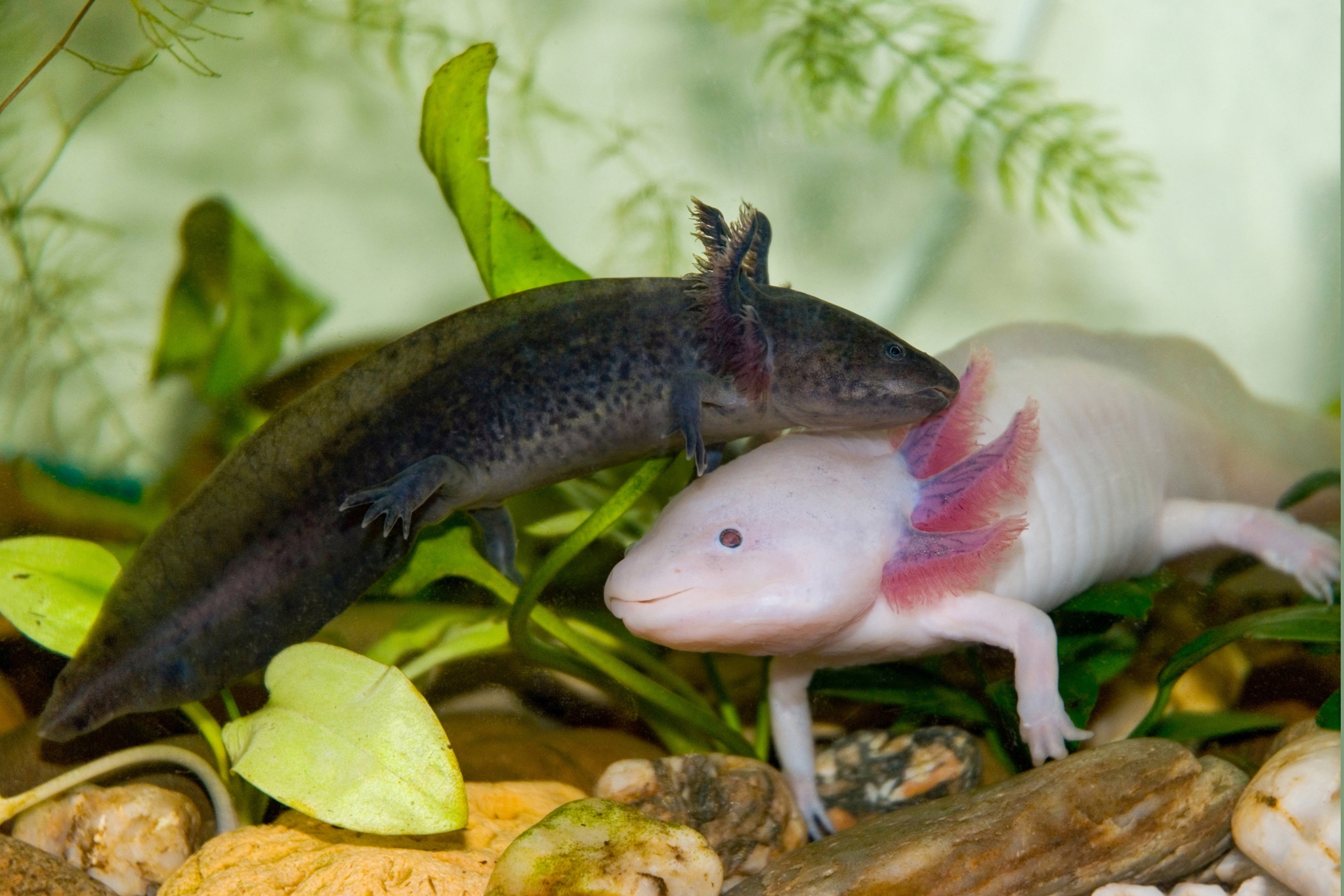
The gills are one of the best health indicators in axolotls—think of them as a living “mood ring” for overall wellbeing. Healthy gills should look full, fluffy, and gently fanned outward.
When gills start curling forward, it can be a sign of stress or declining water quality.
If they begin to look thin, wispy, or noticeably reduced, that’s a red flag that something may be wrong with either their environment or the axolotl’s health.
On the other hand, gills that are often angled forward toward food or the glass usually just mean curiosity and interest—that’s totally normal behavior and there’s no need to be concerned.
It’s also a great idea to take regular photos of your axolotl’s gills so you have a baseline to compare against if anything changes over time.
8. Never House Axolotls With Fish (Yes, Even Supposedly Peaceful Ones)
This is one of those tips experienced keepers repeat often because new owners tend to learn it the hard way: virtually no fish makes a safe tankmate for axolotls.
Fish usually nip at axolotl gills, and even “peaceful” community species can do this instinctively. That damage to your axolotl’s body can become infected, and repeated stress can take a real toll on your axolotl’s health over time.
On the flip side, axolotls will also try to eat any fish small enough to fit in their mouth—which includes more species than most people expect.
If you want more than one axolotl, they can be housed together as long as they are similar in size.
Just be extra cautious during feeding time, since hunger can lead to accidental (or not so accidental) nipping at limbs.
9. Understand That Refrigeration Is a Legitimate Medical Treatment
One of the more unique aspects of axolotl care is something called “fridging”—a method where a sick axolotl is temporarily kept in a container of clean, dechlorinated water in the refrigerator at around 40°F to 50°F.
This is sometimes used as a supportive measure for minor fungal infections, constipation, or general immune stress.
The cooler temperature slows their metabolism, giving their body a better chance to recover and mimics the colder seasonal waters they would experience in the wild.
It’s important to note that this is not a replacement for veterinary care, but it can be a helpful tool in specific situations.
10. Find a Vet Before You Need One
Axolotls are considered exotic pets, which means your typical neighborhood vet likely won’t have the experience needed to treat them.
One of the most overlooked but important parts of axolotl care is finding an experienced exotic animal or aquatic veterinarian before you actually need one.
Take the time to search for herp or exotic vets in your area and even make a quick introductory call to confirm they’re comfortable treating axolotls.
Conditions like impaction, prolapse, or serious infections require proper veterinary care, and trying to find help during an emergency can be both stressful and time consuming.
Happy Axolotl, Happy Life
Axolotls are endlessly fascinating pets, and once you get their care dialed in, they’re incredibly rewarding to keep.
There’s definitely a learning curve, but it’s absolutely worth it—and every detail you get right is an investment in your axolotl’s health and happiness.
Follow the basics, stay consistent, and you’ll be rewarded with a thriving little water dragon and that iconic goofy smile for years to come.