The Good, Bad, and Ugly Truth About Owning a Hyacinth Macaw
They’re the most breathtaking parrots on the planet — but are they really the right bird for you? Here’s the honest, unfiltered guide to life with the world’s largest flying parrot.
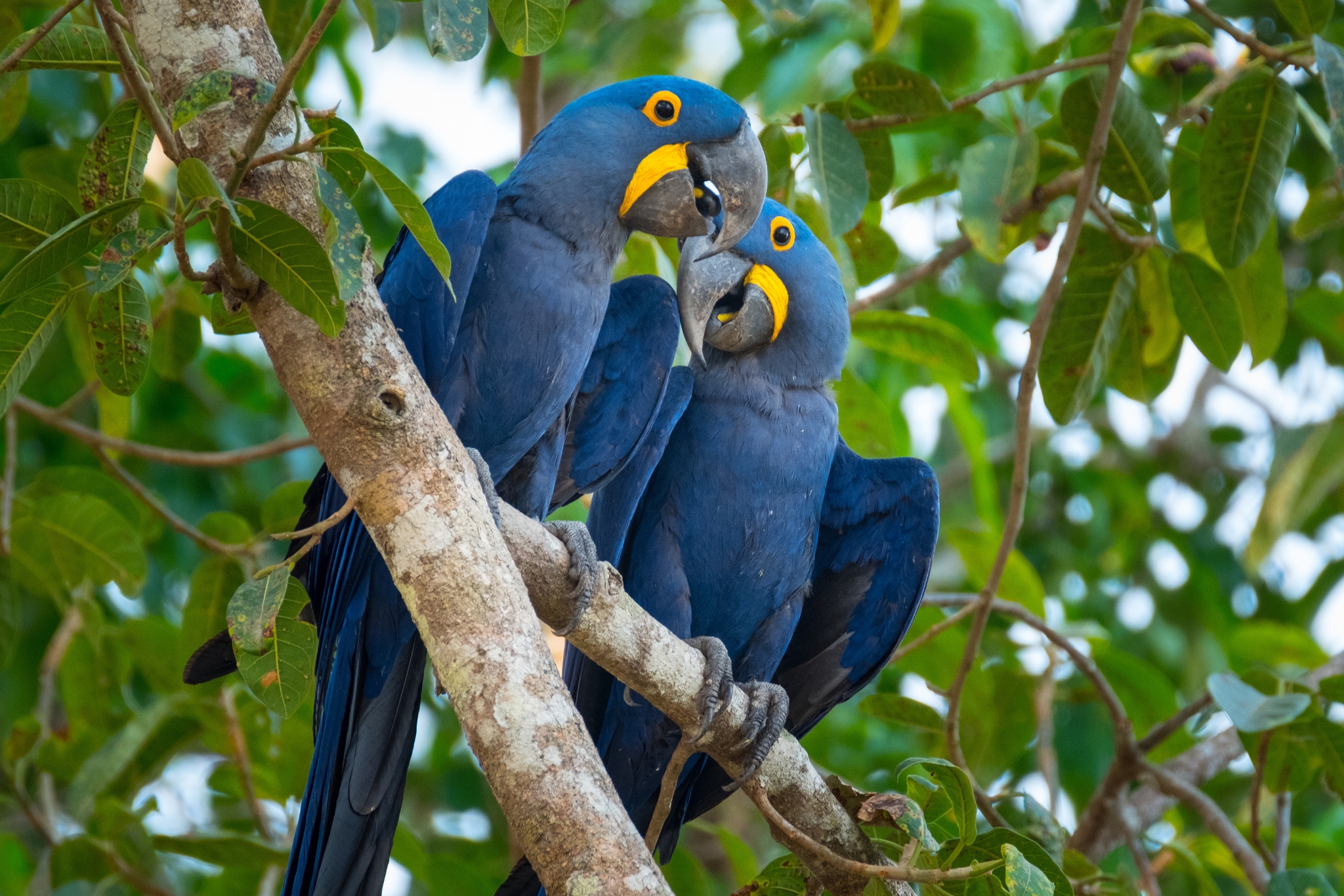
If you’ve ever met the gaze of a hyacinth macaw, the appeal is immediate and unmistakable. The saturated cobalt plumage, the vivid yellow eye-ring, the sheer scale of a bird that can approach near 4 feet from beak to tail—it is a presence that commands attention. It’s no surprise that the hyacinth macaw is considered among the most sought-after of exotic birds.
But behind the beauty and desire lies a far more complex reality—one that many prospective owners only come to understand over time.
This is not a cautionary tale for its own sake, but a considered, complete perspective: the rewards, the challenges, and the less-discussed realities. A bird of this caliber deserves nothing less than an owner who is fully informed.
Parrot
The Good Why Hyacinth Macaws Are Truly Extraordinary
They Bond Deeply and Love Fiercely
Hyacinth macaws have earned the nickname “gentle giants” for good reason. Towering as the largest parrot species in the world by length, they combine impressive size with an unusually affectionate temperament. Well-socialized hyacinths actively seek human interaction—pressing their massive heads against your cheek, nuzzling hair, and insisting on being held with a persistence that is simultaneously endearing and exhausting.
Unlike some large parrots, which can be unpredictable or prone to nipping, hyacinths raised with care and proper socialization are typically gentle. They form deep, enduring bonds with their primary caregivers—relationships that are emotionally rich, reciprocal, and complex. Owners often describe their hyacinths not merely as pets, but as family members, each with a distinct personality, preferences, and moods.
Intelligence That Will Consistently Surprise You
Hyacinth macaws are exceptionally intelligent—even by the already impressive standards of the parrot family. They problem-solve, they remember, and they read human emotional states with an accuracy that is sometimes startling. Owners often notice their birds adjusting behavior based on mood: softening when someone is upset or becoming playful when energy in the room rises.
Their cognitive abilities extend to language and mechanics as well. Hyacinths can acquire a substantial vocabulary, mimic tones and inflections, and manipulate latches, locks, and other containment systems with a precision that rivals many primates. This intelligence is a defining gift—but, as we’ll explore, it also makes them one of the most challenging parrots to care for responsibly
They Are Genuinely Beautiful
The hyacinth’s coloring—a saturated, deep cobalt blue that shifts in different light—isn’t just beautiful; it’s scientifically remarkable. Researchers have studied the structural coloration of macaw feathers with the same curiosity applied to peacock plumage. The bright yellow accents at the base of the lower mandible and around the eyes create a striking contrast that can make even seasoned birders pause in awe.
In person, they’re even more impressive than any photograph can convey. Their sheer scale—up to 3.3 feet long with a wingspan nearing 4 feet—commands attention, giving them a presence that photographs rarely capture.
Longevity Means a Real Relationship
Hyacinth macaws commonly live 50 to 60 years in captivity, with some individuals reaching 80. This is not a pet you’ll say goodbye to in a decade. For the committed owner, that longevity is a remarkable gift: the bond you form is a decades-long companionship, closer in emotional depth to a human friendship than typical pet ownership.
Their lifespan also means that your macaw will witness the defining moments of your life—career changes, children growing up, the losses and celebrations that mark a human lifetime.
The Bad What You Need to Know Before You Commit
The Cost Is Staggering
Let’s start with the number that ends most people’s hyacinth macaw aspirations immediately… the purchase price.
A hand-raised, properly socialized hyacinth macaw from a reputable breeder in the United States typically costs between $10,000 and $20,000.
And that’s only the beginning. The ongoing costs are substantial and unavoidable:
- Housing: These birds need space to stretch, flap, and exercise. Minimum enclosure dimensions recommended by avian specialists start at 6 ft × 6 ft × 6 ft, and that’s just for indoor housing. Purpose-built stainless steel enclosures of this size can run $2,000 to $5,000 or more. Standard parrot cages from pet stores simply won’t do.
- Enrichment: Hyacinths have the strongest beak of any parrot, capable of cracking macadamia nuts effortlessly—and they’ll destroy toys at a startling rate. Attentive owners often budget $100 to $300+ per month just for toys and enrichment.
- Veterinary Care: You’ll need an avian specialist, not a general practitioner. Routine exams, bloodwork, emergencies, and the surprises that come with a long-lived exotic bird quickly add up. Many owners recommend a dedicated emergency fund of several thousand dollars.
- Diet: Hyacinths rely heavily on palm nuts in the wild, but captive diets must balance natural needs with practicality: quality pellets, fresh fruits and vegetables, appropriate nuts, and careful attention to variety and nutrition.
Owning a hyacinth macaw is a decades-long financial and emotional commitment—anyone considering one needs to face the numbers honestly before bringing one home.
The Space and Noise Requirements Are Extreme
Hyacinth macaws are not apartment birds—or small-house birds, for that matter. They demand dedicated, spacious living areas and an owner whose lifestyle can accommodate a creature capable of producing noise that’s almost impossible to convey without firsthand experience.
Their calls—originally meant to communicate across vast Brazilian habitats—are extraordinarily loud, reaching decibel levels comparable to a small aircraft at close range. They vocalize frequently, joyfully, and without concern for your conference calls, sleeping neighbors, or sanity. For anyone in an apartment, condo, or closely spaced neighborhood, a hyacinth macaw and a lease agreement are a nightmare waiting to happen.
Noise isn’t the only consideration. Their destructive power extends well beyond toys: furniture, baseboards, window frames, books, electronics—anything within reach is fair game. Free time outside the cage is essential for their physical and psychological health, but it must be closely supervised in a heavily bird-proofed environment. Living with a hyacinth macaw requires planning, vigilance, and a readiness to embrace the chaos they bring.
They Require More Time Than Most People Have
A hyacinth macaw cannot be a background pet. These are profoundly social animals—in the wild, they spend their days in bonded pairs and family flocks. In captivity, you become their flock, and their need for attention and interaction is immense and non-negotiable.
Neglecting this need isn’t a minor inconvenience—it can lead to serious psychological and behavioral problems such as feather plucking, constant screaming, aggression, and depression. These behaviors are clear indicators of distress in an intelligent, socially dependent animal.
A hyacinth macaw requires daily hands-on interaction, mental stimulation, and active engagement. If your lifestyle includes long work hours, frequent travel, or other constraints that limit your availability, this bird will struggle to thrive in your care.
The Ugly The Truths the Parrot Community Doesn’t Always Say Out Loud
The Wild Population Is in Crisis, and the Pet Trade Is Part of the Problem
This is the conversation that makes some in the avian community uncomfortable, but it must be part of any honest hyacinth macaw discussion.
Hyacinth macaws are listed as Vulnerable on the IUCN Red List, with wild populations in the Pantanal, Cerrado, and eastern Amazon of Brazil under ongoing pressure from habitat loss and, historically, the exotic pet trade. While the international commercial trade in wild-caught hyacinths has been heavily restricted under CITES since 1987, decades of collection have left a lasting impact. Today, Brazilian law strictly prohibits the capture or sale of wild hyacinths, and the birds sold legally in the United States are captive-bred.
That said, the situation remains ethically complex. High demand creates financial incentives that, in some cases, have been linked to illegal poaching operations in Brazil. Purchasing a hyacinth macaw means participating in a market with serious ethical dimensions.
Prospective owners have a responsibility to research breeders thoroughly, confirm that birds are legally captive-bred, and understand how their money affects the species’ survival..
Rehoming Rates Are Quietly Devastating
The hyacinth macaw community rarely advertises this openly, but experienced avian rescues and sanctuaries will tell you bluntly: a significant number of hyacinth macaws are surrendered by overwhelmed owners within the first few years. The reality is simple—cost, noise, destructiveness, time demands, and the profound emotional bond these birds form often overwhelm even the most well-meaning owners who entered the experience unprepared.
These surrendered birds often suffer deeply. A hyacinth that has bonded tightly with a human and then lost that connection exhibits behaviors strikingly similar to grief, with physiological and psychological consequences. Rehoming can be traumatic, and some birds never fully recover.
The hard truth is that every hyacinth macaw in a sanctuary or rescue exists because a human made a choice they weren’t fully equipped to handle. The impulse to own such a spectacular bird is understandable—but the decision must match the magnitude of the commitment.
Their Lifespan Outlives Most Human Plans
50 to 60 years. Let that sink in. A hyacinth macaw acquired when you’re 35 could still be alive—and still deeply bonded to humans—when you’re in your 80s or 90s. If you have children, the bird may become their responsibility, and if not, it becomes a pressing estate planning issue.
This is not hypothetical. Avian sanctuaries nationwide care for macaws whose owners have died, fallen ill, or aged into circumstances where they can no longer provide proper care. Responsible ownership demands more than affection—it requires a long-term plan that accounts for the full lifespan of the bird, including what happens if something happens to you.
Should You Get a Hyacinth Macaw?
There are people for whom a hyacinth macaw is genuinely the right companion—people with significant space, substantial financial resources, flexible schedules, experience with large parrots, tolerance for noise and destruction, and a deep, realistic understanding of what a 50 year commitment actually looks like.
But that profile describes only a small fraction of the people who fall in love with these birds after seeing a photo or video.
The responsible question is not, “Do I want one?” — it is, “Can I truly provide everything this bird needs, for its entire life, without compromise?”
If the answer is yes, the hyacinth macaw may become the most remarkable companion you’ll ever have. If the answer is anything less certain, the kindest choice—for both you and the species—is to admire them from afar, support conservation efforts in the Pantanal, and let these incredible birds thrive in the wild.