How to Choose the Right Hay for Your Camel
Not sure what hay to feed your camel? Compare grass hay, alfalfa, Bermuda, and more, plus how much to feed, what to avoid, and how to read your camel’s hump.
- The Short Answer
- Why Camel Digestion Matters for Hay Choice
- Best Hay Types for Camels
- How Much Hay Does a Camel Eat?
- Your Camel’s Hump Is a Built-In Body Condition Gauge
- What to Look for When Buying Hay
- Do Camels Need More Than Hay?
- How to Switch Your Camel to a New Type of Hay
- Storing Hay Properly
- Common Camel Hay Mistakes to Avoid
- Frequently Asked Questions
- The Bottom Line
If you’ve just welcomed a camel to your property, are thinking about getting one, or already have one, you’ve probably noticed that camel specific feed isn’t exactly lining the shelves at your local feed store. Luckily, camels are pretty efficient eaters, and finding the right hay doesn’t have to be complicated.
Here’s a look at what to feed your camel, how much they need, and the things to watch for along the way.
The Short Answer
For most healthy adult camels, good quality grass hay should be the foundation of the diet. Timothy, orchard grass, Bermuda grass, or a mixed grass hay can all be good options.
Alfalfa can be useful for growing, pregnant, lactating, or hard working camels, but it’s usually not the best everyday choice for an average adult because it’s richer and can contribute to weight gain.
Whatever type of hay you choose, make sure it’s clean, dry, and free from mold and excessive dust. Good quality forage goes a long way toward keeping your camel healthy.
Why Camel Digestion Matters for Hay Choice
Camels are pseudoruminants, which means they chew cud much like cattle and sheep, but their digestive system has three stomach compartments instead of four. They’re built to get nutrients from coarse, fibrous forage, which is why they can thrive on sparse vegetation in the wild.
That’s important to keep in mind when choosing hay.
- Fiber comes first: Long stem forage helps keep their digestive system working properly and supports the natural cud chewing process.
- Richer isn’t necessarily better: Camels are adapted to relatively low input diets, so overly rich feed can cause problems such as weight gain, loose manure, and digestive upset without providing much benefit.
Best Hay Types for Camels
There are several types of hay that can work well for camels, but the best choice depends on your camel’s age, body condition, and workload.
Grass Hay (The Best Everyday Choice)
For most adult camels, grass hay is a great place to start. It provides plenty of fiber without being overly rich in calories or protein, making it less likely to contribute to weight problems.
Some good options include:
- Timothy: A classic choice that’s widely available and generally well accepted.
- Orchard grass: Soft, palatable, and easy to mix with other types of grass hay.
- Bermuda grass: A popular option in warmer climates and often an economical choice. Look for leafy, fine stemmed hay rather than coarse, overly mature hay.
- Mixed grass hay: A mix can add variety and provide a broader range of nutrients.
- Teff: A fine textured grass hay that can work well for camels that tend to gain weight easily.
Alfalfa (Use It Strategically)
Alfalfa is higher in protein and calcium, which can make it useful when your camel has greater nutritional needs.
It may be a good addition for:
- Growing calves and young camels
- Females in late pregnancy or nursing
- Thin or recovering camels
- Camels doing regular work or heavier workloads
For an easy keeping adult camel, feeding a large amount of alfalfa may add more calories than necessary. A common approach is to use mostly grass hay and add a smaller amount of alfalfa or an alfalfa grass mix when needed.
Straw (Helpful, but Not a Main Choice)
Wheat or barley straw is low in nutrients but high in fiber. In moderation, it can be useful for overweight camels or those that need more forage to chew without adding a lot of extra calories—but it shouldn’t replace good quality hay as the main part of the diet.
Oat Hay and Sudan Grass (Use a Little More Caution)
Oat hay can be a tasty palatable option, but under certain growing conditions it can accumulate nitrates. Sudan grass and sorghum type forages come with additional concerns, including nitrates and prussic acid, particularly when the plants are young or have been exposed to frost.
If you’re considering any of these for your camel, it’s a good idea to have the hay tested and talk with your veterinarian or a qualified livestock nutritionist before feeding it.
How Much Hay Does a Camel Eat?
As a general starting point, adult camels typically eat around 1.5 to 2.5 percent of their body weight in dry matter each day, but the right amount can vary depending on your camel’s size, activity level, season, and life stage.
For example, a 1,000 pound camel would need roughly 15 to 25 pounds of hay per day. Since dromedary and Bactrian camels can vary quite a bit in size, use this as a starting point rather than a strict rule.
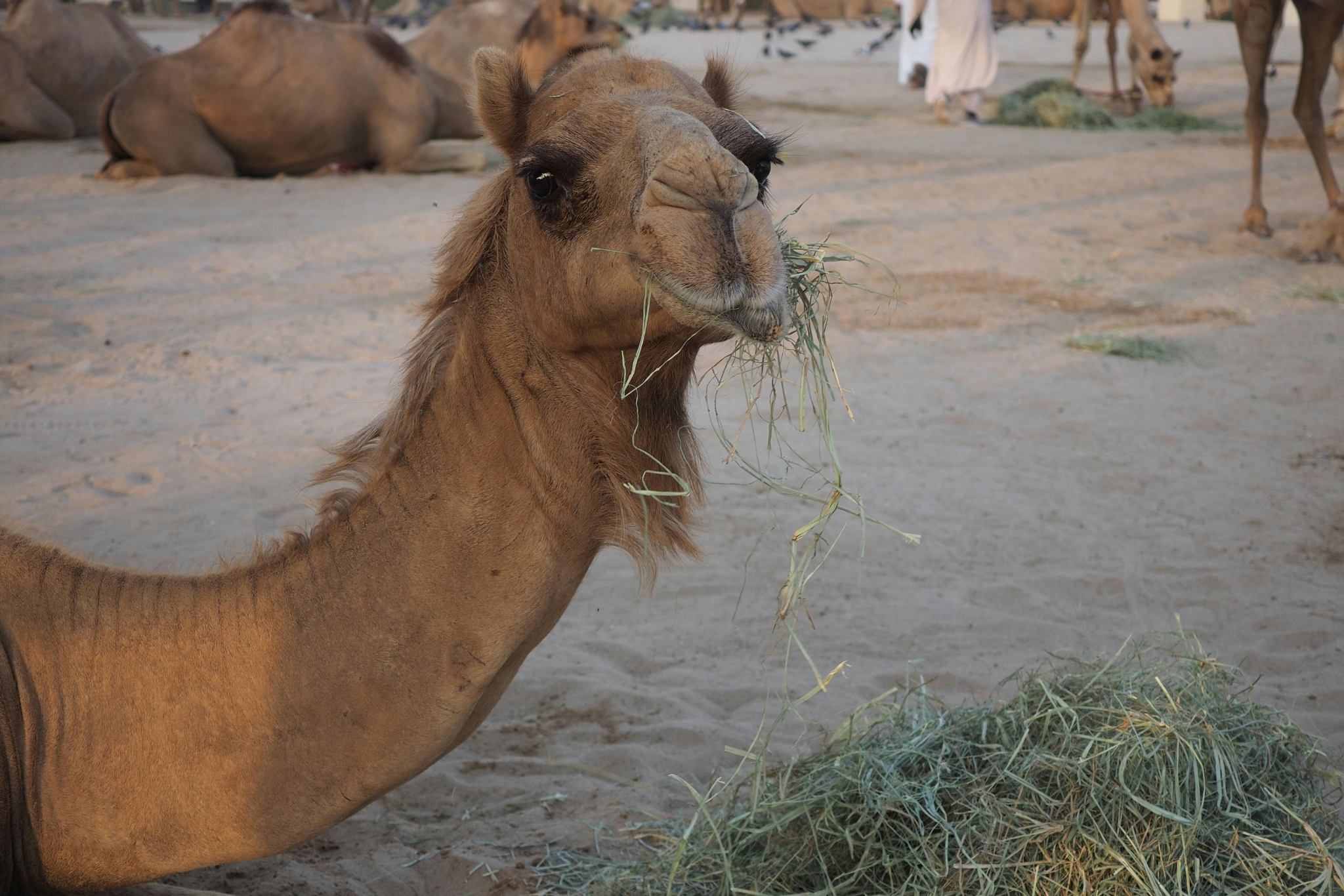
Whenever possible, offer hay free choice or divide the daily amount into several feedings instead of giving one large meal. Camels do better when they’re given steady access to forage throughout the day.
Your Camel’s Hump Is a Built-In Body Condition Gauge
One of the handy things about camels is that their hump can give you useful clues about their overall condition. Their hump stores fat, and changes in its shape can help you keep an eye on whether your camel is carrying too much or too little.
- Firm and upright: This generally suggests your camel is in good condition.
- Large and rounded: Your camel may be carrying extra weight, which could be a sign to take a closer look at the amount of richer feed in the diet.
- Soft, drooping, or leaning to one side: This can indicate that your camel’s fat reserves are being depleted. Take a closer look at the diet and consider checking in with your vet.
Camel owners should get in the habit of checking their camel regularly and adjusting the type or amount of hay as needed rather than waiting for a major change in body condition.
What to Look for When Buying Hay
When it comes to hay, quality matters way more than the name on the bale. Before you buy, take a few minutes to look, smell, and check the hay for a few key things.
- Smell: Good hay should smell fresh and sweet. If it smells musty, sour, or fermented, leave it behind.
- Color: Green to golden hay is generally a good sign. Very brown or heavily bleached hay may be old or have been damaged by weather.
- Dust and mold: If opening the bale creates a cloud of dust, it’s best to skip it. Moldy or excessively dusty hay can cause respiratory and digestive problems.
- Foreign material: Check for weeds, sticks, wire, trash, or anything else that shouldn’t be in the bale.
- Maturity: Very coarse stemmy hay is generally less digestible, while leafy hay tends to be more palatable and easier to eat.
If you’re buying hay in bulk, consider getting a hay analysis. A lab can test the hay for things like protein, fiber, and minerals, giving you a much clearer picture of what you’re feeding and making it easier to balance your camel’s overall diet.
Do Camels Need More Than Hay?
Hay should make up the foundation of your camel’s diet, but a few extras can help round things out depending on your camel’s individual needs.
- Salt and minerals: Camels need access to salt and the right balance of minerals. Since the mineral content of hay can vary depending on where it’s grown, it’s worth talking with your vet about whether a mineral supplement would be appropriate.
- Concentrates: A small amount of pellets or a balanced feed can be useful for growing, pregnant, nursing, or hard working camels that have higher nutritional needs. But most easy keeping adult camels don’t need much (if any) concentrate.
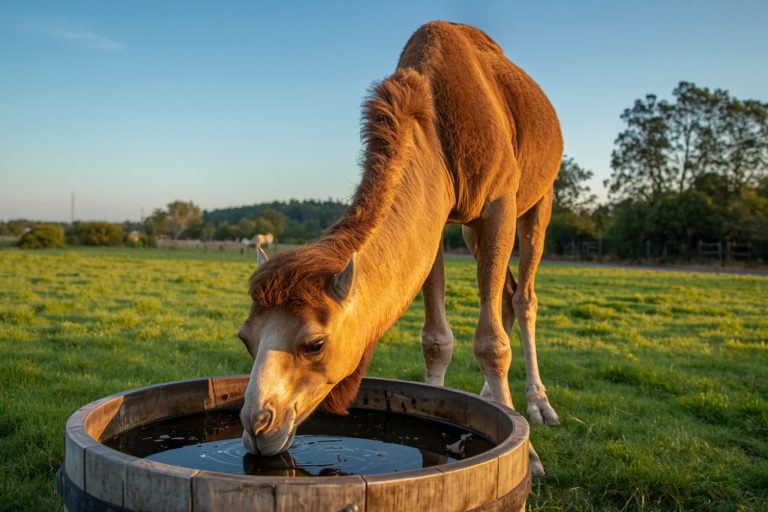
- Fresh water: Camels may be well adapted to dry conditions, but that doesn’t mean they should have limited access to water. Keep clean fresh water available at all times, especially when your camel is eating a hay heavy diet.
How to Switch Your Camel to a New Type of Hay
Camels’ digestive systems don’t handle sudden diet changes particularly well. If you’re switching to a new type of hay, it’s best to take your time and make the transition gradually.
- Start by mixing a small amount of the new hay with the hay your camel is already eating.
- Slowly increase the amount of new hay over about 7 to 14 days.
- Keep an eye on your camel’s appetite and manure consistency throughout the transition.
Dont skip this step! Making changes slowly can help reduce the risk of digestive upset and give your camel’s gut time to adjust.
Storing Hay Properly
Even the best quality hay can go bad if it’s stored the wrong way. Keep your hay off the ground, covered, and well ventilated, with protection from moisture and direct rain.
You should also try to rotate your hay supply so older bales get used first, and don’t feed hay that has become wet, moldy, or spoiled.
Proper storage helps preserve the hay’s quality and keeps it safer for your camel!
Common Camel Hay Mistakes to Avoid
A few simple feeding mistakes can cause problems over time, so it’s worth keeping an eye out for these common ones:
❌ Feeding a mature easy keeping camel a diet made up mostly or entirely of alfalfa.
❌ Using moldy, dusty, or weather damaged hay just to get through the supply.
❌ Switching hay types too quickly instead of making a gradual change.
❌ Forgetting to provide appropriate salt and mineral access.
❌ Ignoring changes in your camel’s hump, body condition, or weight.
❌ Assuming camels can thrive on poor quality forage without regular monitoring.
Camels may be efficient eaters, but they still need good quality forage and thoughtful nutrition to stay healthy.
Frequently Asked Questions
1. Can camels eat alfalfa hay?
Yes, camels can eat alfalfa hay, but the right amount depends on the individual animal. For adult camels, it’s generally best fed in moderation, while growing, pregnant, lactating, or hard working camels may benefit from having more of it in their diet.
2. What’s the best hay for an overweight camel?
A lower calorie grass hay (such as timothy, teff, or mature grass hay) can be a good option. Some owners may also use a portion of straw to help increase fiber without adding as many calories. Keep an eye on your camel’s overall body condition as you adjust the diet.
3. Is Bermuda hay good for camels?
Yes, good quality Bermuda grass hay can be a practical choice for camels (particularly in warmer climates). As with any hay, quality and maturity matter.
4. Can camels eat straw?
Yes, in moderation. Straw can provide additional fiber and give your camel something to chew, but it shouldn’t replace the majority of the diet.
5. How often should I feed my camel hay?
Camels do well with frequent access to forage. You can provide hay free choice when appropriate or divide the daily amount into two or more feedings. The right approach depends on your camel’s size, body condition, workload, and overall diet.
6. Do I need a vet or nutritionist?
It can be a very good idea, especially if you’re dealing with weight issues, pregnancy, growth, or a high workload. Camel nutrition can vary based on age, breed, climate, and activity level, so a veterinarian or nutritionist familiar with camelids or exotic livestock can help fine tune the diet.
The Bottom Line
For most camels, keeping things simple works well. Start with plenty of clean good quality grass hay, then add alfalfa when your camel’s age, life stage, or workload calls for it. And don’t forget to make sure salt, minerals, and fresh water are always available too.
Pay attention to your camel’s body condition, hump, and manure, and adjust the diet as needed. Small changes over time can help you find the right balance for your individual camel.