Can Hedgehogs Swim? What Every Owner Should Know
Curious whether African pygmy hedgehogs can swim? Discover essential water safety tips, proper bathing techniques, and what every APH owner needs to know to keep these tiny pocket pets happy and safe.
- Can African Pygmy Hedgehogs Swim? The Answer Might Surprise You!
- Understanding Hedgehog Swimming Abilities
- Should Your Pet Hedgehog Swim?
- The Difference Between Swimming and Bathing Your Pet Hedgehog
- How to Safely Bathe Your Hedgehog
- Signs Your Hedgehog Is Stressed in Water
- Water Safety Tips for Hedgehog Owners
- Do Hedgehogs Like Water?
- How Often Should You Bathe a Hedgehog?
- Fun Enrichment Activities for Hedgehogs (No Swimming Required!)
- Health Considerations for Hedgehogs and Water
- Hedgehog Swimming: The Veterinary Perspective
- What to Do If Your Hedgehog Falls Into Water
- Let the Dolphins Come to You
If you’re the proud parent of an African Pygmy Hedgehog (or thinking about becoming one!), you’ve probably wondered about their relationship with water.
“Can African Pygmy Hedgehogs swim?”
“Do they even enjoy bath time?”
Let’s dive into everything you need to know about these adorable pocket sized swimmers!
Can African Pygmy Hedgehogs Swim? The Answer Might Surprise You!
Yes, African Pygmy Hedgehogs can absolutely swim! These tiny cuties are natural paddlers, even though they typically weigh just 1 to 2 pounds.
In fact, pet Hedgehogs have the same swimming instincts as their wild cousins, despite being bred specifically for life as pets.
When placed in water, your Hedgehog’s little legs will start paddling automatically. Their lightweight compact bodies are surprisingly buoyant, which helps them stay afloat. Pretty impressive for such small critters, right?
Understanding Hedgehog Swimming Abilities
African Pygmy Hedgehogs are actually quite capable swimmers considering their size! Their four tiny feet work like miniature paddles, and their natural body composition helps them float. In their native African habitat, wild Hedgehogs sometimes need to cross small water sources while foraging for insects and exploring their territory.
However, there’s a big difference between can swim and should swim regularly.
While Hedgehogs have the physical ability to paddle around, swimming can be extremely stressful and exhausting for these petite pets. They’re built for short distances, not Olympic laps!
Should Your Pet Hedgehog Swim?
Here’s where we need to pump the brakes a bit. Even though Hedgehogs possess swimming abilities, most exotic veterinarians and Hedgehog experts strongly advise against letting your pet swim. The risks simply outweigh any potential benefits.
African Pygmy Hedgehogs can tire incredibly quickly due to their small size and fast metabolism. What seems like a fun little swim to us can be absolutely exhausting for a hedgehog that weighs less than a can of soda!
On top of that, stress, difficulty finding an exit, and potential drowning are all serious concerns.
The Difference Between Swimming and Bathing Your Pet Hedgehog
Bath time is a totally different story!
Bathing your African pygmy hedgehog is actually an important part of their care routine. These little guys can get pretty grubby, especially after running on their wheels or exploring their enclosures.
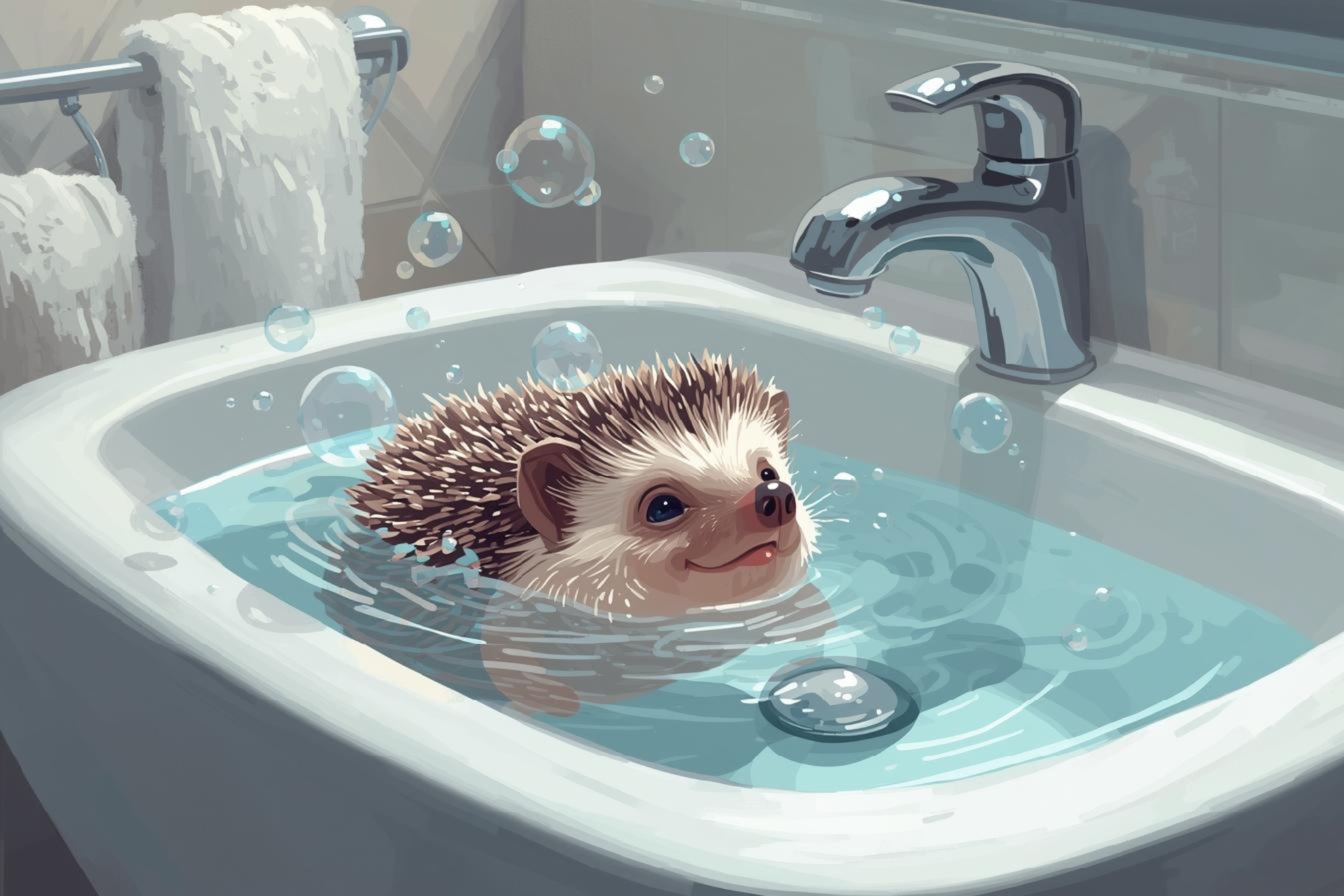
The key difference? During bath time, the water should be shallow enough that your Hedgehog can stand comfortably with all four feet on the bottom.
This isn’t swimming – it’s more like a nice relaxing spa day (well, as relaxing as it gets for a Hedgehog!).
How to Safely Bathe Your Hedgehog
Ready to give your prickly pal a proper bath? Here’s the best way to do it!
- Fill a sink, shallow basin, or small tub with 1 to 2 inches of lukewarm water (around 95°F to 100°F). Your Hedgehog should be able to stand easily without their head going underwater.
- Use a soft bristled toothbrush to gently clean between their quills, paying special attention to their belly and feet where dirt tends to accumulate. You can use a tiny amount of gentle unscented baby shampoo or oatmeal based pet shampoo if needed.
- Keep the whole process to just 5 to 10 minutes to minimize stress.
- Always stay right there with your Hedgehog during bath time. Never, ever leave them unattended, even for a quick second! Hedgehogs are small and vulnerable, and accidents can happen faster than you can imagine.
Signs Your Hedgehog Is Stressed in Water
Your Hedgehog will let you know if they’re not happy in the water. Watch for these telltale signs of stress:
- Frantic paddling or scrambling
- Desperate attempts to climb out
- Huffing, clicking, or hissing noises
- Curling into a defensive ball
- Shaking or trembling
- Excessively trying to escape
If you notice any of these behaviors, it’s time to wrap things up immediately. Gently lift your Hedgehog out, wrap them in a soft towel, and let them calm down in a safe warm spot.
Water Safety Tips for Hedgehog Owners
Keeping your Hedgehog safe around water is super important! Here are the golden rules:
- Always use shallow water (1 to 2 inches max)
- Maintain proper temperature (lukewarm, never hot or cold)
- Supervise constantly
- Provide an easy exit route
- Keep sessions brief (under 10 minutes)
- Have towels ready for immediate drying
- Check water temperature before placing your Hedgehog in
Remember, African Pygmy Hedgehogs are more sensitive to temperature changes than larger animals due to their small size. They can get chilled quickly, so having a warm towel and a cozy spot ready is essential.
Do Hedgehogs Like Water?
This totally depends on your individual Hedgehog’s personality!
Some Hedgehogs seem relatively okay with bath time and will calmly tolerate the experience. They might even enjoy the sensation of having their quills cleaned.
Others? Not so much. Some Hedgehogs absolutely despise water and will make their displeasure known through huffing, puffing, and generally being grumpy little spikeballs. Both reactions are completely normal!
The important thing is respecting your pet’s preferences. If your Hedgehog truly hates baths, keep them as quick and infrequent as possible, and only bathing when actually necessary.
How Often Should You Bathe a Hedgehog?
African Pygmy Hedgehogs don’t need frequent baths like some other pets. Most Hedgehog owners find that bathing once every 4 to 6 weeks is plenty, unless their hedgie gets particularly dirty.
Overbathing can actually dry out their sensitive skin and cause irritation.
You might need to do quick foot soaks more frequently if your Hedgehog is a wheel running enthusiast (which most are!). Their little feet can accumulate debris and poop from their running wheel, so a quick foot rinse between full baths can help keep them clean and healthy.
Fun Enrichment Activities for Hedgehogs (No Swimming Required!)
Looking for ways to keep your Hedgehog active and entertained without the water risks? There are tons of amazing alternatives!
- A solid surface exercise wheel is absolutely essential. African Pygmy Hedgehogs can run several miles per night, so this is their favorite activity.
- Create tunnel systems and hideaways using PVC pipes, fleece tunnels, and cardboard boxes. Hedgehogs are natural explorers and love having different spaces to investigate.
- Try scatter feeding or hiding mealworms and other treats around their enclosure for foraging fun.
- Supervised floor time in a hedgehog-proofed room gives them space to explore safely. Provide different textures like fleece liners, dig boxes with paper bedding, and various toys to keep things interesting.
Health Considerations for Hedgehogs and Water
African Pygmy Hedgehogs are prone to certain health issues that make water safety even more important.
They can develop respiratory infections easily, especially if they get chilled after being wet. Always dry your hedgehog thoroughly and keep them in a warm environment after bath time.
These little guys can also experience dry skin, which means you shouldn’t overdo it with baths. If you notice flaky skin or excessive quill loss, you might be bathing too frequently or using harsh products.
Hedgehog Swimming: The Veterinary Perspective
Most exotic animal veterinarians who specialize in Hedgehogs agree that swimming is an unnecessary risk. While these tiny critters have the physical capability to swim, the potential for stress, exhaustion, and accidents makes it inadvisable.
Stick to shallow baths for hygiene purposes only, and focus your energy on providing other forms of enrichment that are safer and more aligned with your Hedgehog’s natural behaviors.
What to Do If Your Hedgehog Falls Into Water
Accidents happen! If your Hedgehog accidentally falls into water (like a toilet or water bowl), you need to act fast.
- Immediately remove them from the water
- Wrap them gently but thoroughly in a dry towel
- Check for signs of distress or aspiration (water in lungs)
- Keep them warm
- Monitor closely for the next 24 to 48 hours
If your Hedgehog seems lethargic, is breathing abnormally, or shows any signs of illness after a water incident, contact an exotic animal veterinarian right away. Respiratory infections can develop quickly in Hedgehogs!
The Truth about Hedgehogs and Swimming
So, can Hedgehogs swim? Yes, they have the natural ability.
Should you encourage swimming as an activity? Definitely not!
These precious pocket pets are better served by occasional shallow baths for hygiene and plenty of land based enrichment activities.
Your Hedgehog’s safety, comfort, and health should always be your top priority. When you respect their limitations and provide appropriate care, you’ll have a happy and healthy hedgie companion for years to come!
Whether your Hedgehog tolerates bath time like a champ or acts like you’re committing a terrible crime, understanding their relationship with water helps you provide the best possible care. Here’s to many wonderful years with your adorable spiky friend!