How to Keep Pigs Warm in Winter Managing Pigs in Snow, Ice, and Cold Weather
Learn how to keep pigs warm in winter. Get expert tips on shelter, bedding, feed, unfrozen water, and frostbite prevention for snow and ice.
- Can Pigs Handle Cold Weather?
- Which Pig Breeds Do Best in Winter?
- Pig Shelter in Winter: What You Actually Need
- Best Bedding for Pigs in Cold Weather
- Feeding Pigs in Winter
- Water: The Biggest Winter Challenge
- Frostbite in Pigs: How to Spot and Prevent It
- Signs a Pig Is Too Cold
- Caring for Piglets in Cold Weather
- Fencing, Footing, and Snow: Practical Pig Management
- Winter Pig Care Checklist
- Preparing for Extreme Cold and Power Outages
- Frequently Asked Questions About Pigs in Cold Weather
- The Bottom Line
Have you ever watched a pig happily plow through a snowdrift and wondered if the cold even bothers them? Pigs can be surprisingly tough, but they’re not invincible. While some handle winter weather quite well, others can struggle when temperatures drop (especially without proper shelter and care).
So how do you keep your pigs comfortable in cold weather? The difference between a pig that stays comfortable all winter and one that struggles comes down to a few simple things.
In this article, we’ll walk through everything you need to know about keeping pigs safe and healthy in cold weather, from shelter and bedding to feeding, fresh water, frostbite prevention, and caring for vulnerable piglets. We’ll also cover winter fencing, slippery footing, and how to prepare when snowstorms or freezing temperatures really set in.
Whether you’re raising a few backyard pigs or managing a larger herd, you’ll find practical tips to help your pigs stay warm, comfortable, and healthy all winter long.
Can Pigs Handle Cold Weather?
Yes! With the right setup, pigs can live comfortably in cold climates, even in areas that experience heavy snow and stretches of below freezing temperatures. But while pigs are tougher than many people realize, they do have a few vulnerabilities that make winter care especially important.
Here’s what to keep in mind.
- Thin coats: Many common pig breeds have relatively sparse hair, which means they don’t have the same natural insulation as animals with thick winter coats.
- Less body fat in young or lean pigs: Body fat helps retain heat, but piglets, growing pigs, and lean animals have fewer reserves to draw on when temperatures drop.
- Trouble staying warm when wet: Wet skin and bedding make it much harder for pigs to maintain their body temperature. A healthy adult pig that’s dry and sheltered may cope well with cold temperatures, while a wet pig exposed to chilly wind can become dangerously cold.
- Vulnerable extremities: Ears, tails, teats, and genital areas can be particularly susceptible to frostbite during severe cold, especially when wind and moisture are involved.
The Biggest Secret to Keeping Pigs Warm
Thankfully you don’t need a heated barn to keep healthy adult pigs comfortable through winter.
The key is keeping them dry, sheltered from the wind, and well bedded. A dry pig tucked into deep straw inside a draft protected shelter will generally cope with cold much better than one exposed to damp conditions and chilly gusts.
Of course, every pig is different. Age, breed, body condition, health, and how quickly temperatures change all affect how well an animal handles the cold. Young piglets and sick or underweight pigs need extra protection.
If you get the basics right, you’ll give your pigs a much better chance of staying healthy and comfortable all winter long.
Which Pig Breeds Do Best in Winter?
If you’re planning to raise pigs in a snowy climate, breed choice is worth considering. Some breeds have thicker coats, heavier bodies, or a reputation for being hardy in outdoor conditions, making them better suited to colder environments.
Here are a few breeds worth knowing about.
- Mangalitsa: Often called the “woolly pig,” the Mangalitsa is famous for its thick curly coat. That extra hair provides useful insulation, making this breed a popular choice for people interested in raising pigs in colder climates (but they still need dry shelter and protection from harsh weather).
- Tamworth: This active heritage breed is known for its reddish coat, foraging ability, and hardiness. Tamworths can do well in outdoor systems when they have appropriate shelter, bedding, and nutrition.
- Berkshire: Berkshires are sturdy heritage pigs known for their dark coats and good meat quality. Their body condition and management play a major role in how comfortably they handle winter.
- Large Black: These heritage pigs are known for their large dark bodies and strong foraging instincts. They can adapt well to outdoor systems when their shelter and winter care needs are met.
- Gloucestershire Old Spots: This heritage breed is valued for its foraging ability and generally robust nature. Like other outdoor pigs, they need a dry resting area and enough feed to maintain body condition through cold weather.
- Duroc: Durocs are muscular pigs that are known for their reddish coats and adaptability. They can be raised in colder regions, provided they have adequate shelter and protection from wind and moisture.
- Kunekune: These pigs are smaller, are generally easygoing, and are known for their grazing habits and ability to thrive in well managed outdoor systems. However, their smaller size can mean faster heat loss, so good bedding and shelter are particularly important in severe cold.
What About Pot Bellied and Miniature Pigs?
Pot bellied and miniature pigs generally need extra attention during winter, especially if they’re small, lean, or kept as pets. These pigs may have less body mass to help retain heat, and some have relatively sparse coats.
If your miniature pig lives outdoors, make sure it has a dry insulated shelter, plenty of bedding, and a reliable way to stay warm. Pet pigs that are accustomed to living indoors may need a different approach from pigs raised outdoors year round.
Remember, Breed Isn’t Everything
Even within the same breed, individual pigs can vary considerably in how well they tolerate cold weather. Age, size, body condition, health, coat thickness, and access to shelter all make a difference. Piglets, sick pigs, and underweight animals are especially vulnerable (regardless of breed).
Pig Shelter in Winter What You Actually Need
You don’t need a fancy barn or an expensive heating system to keep your pigs comfortable through winter. What matters most is having a shelter that stays dry, blocks chilly drafts, provides plenty of bedding, and gives your pigs enough room to rest together.
Here’s how to create a cozy winter hideaway your pigs will actually want to use:
1. Keep the Shelter Dry
If there’s one thing to get right, it’s keeping moisture out. Wet bedding pulls heat away from your pigs’ bodies and makes it much harder for them to stay warm.
Check that the roof doesn’t leak, raise the shelter floor above the surrounding ground where possible, and make sure rainwater and melting snow drain away rather than running inside.
Don’t forget to check the bedding regularly too. Remove wet or soiled patches and replace them with fresh dry material. Even a well built shelter won’t do much good if the sleeping area stays damp.
2. Block the Wind Without Sealing Everything Up
Cold winds can make winter conditions much harder on pigs, so position the shelter’s entrance away from prevailing winter winds whenever possible. In many Northern Hemisphere locations, that may mean facing the opening south or southeast, but local wind patterns should guide your decision.
Solid windbreaks made from sturdy panels or other suitable materials can help protect the entrance and surrounding area.
However, you don’t want to make the shelter airtight! Pigs still need ventilation to remove moisture and ammonia that build up inside. Aim for a space that’s free from direct drafts where the pigs sleep, with adequate airflow higher up.
Good ventilation helps protect their respiratory health while keeping their resting area comfortable.
3. Choose the Right Shelter Size
Pigs naturally snuggle together to share body heat, so shelter size matters.
A shelter that’s too large can be harder to keep comfortable, while one that’s too small can become overcrowded and poorly ventilated. Give your pigs enough room to lie down comfortably together, turn around, and get away from one another when they want to.
The goal is a snug and sheltered sleeping area where your pigs can huddle without being cramped.
4. Add a Door Flap or Wind Barrier
A simple entrance barrier can make a noticeable difference on cold windy days.
Heavy duty rubber flaps or flexible strip curtains can help reduce drafts while still allowing pigs to move in and out. Whatever you choose, make sure it’s securely installed, safe for animals, and easy for every pig to pass through without getting trapped or frightened.
It’s best to watch your pigs when you first introduce a flap to make sure they’re comfortable using it.
5. Insulate the Sleeping Area
Cold ground can draw heat away from a resting pig, especially when the bedding is thin or damp.
A generous layer of clean dry straw is a practical way to insulate the sleeping area and lets pigs burrow in to get comfortable. In particularly cold conditions, a properly designed raised sleeping platform may also help, provided it’s sturdy, non-slip, and safe for pigs to use.
Avoid leaving bare concrete or exposed frozen ground as the main resting surface. Whatever flooring you choose, keep it dry and make sure your pigs can walk and lie down without slipping.
The Secret to a Good Winter Shelter
The best winter shelter isn’t necessarily the biggest or most expensive. It’s the one that stays dry, protects pigs from wind, allows fresh air to circulate, and provides a comfortable place to nest.
Check it regularly throughout winter, especially after heavy rain, snowfall, or strong winds. A few small adjustments can make a big difference in keeping your pigs warm, healthy, and comfortable all season long.
Best Bedding for Pigs in Cold Weather
If there’s one simple upgrade that can make a big difference to your pigs’ comfort in winter, it’s deep bedding. A generous layer of bedding helps trap warmth, keeps pigs off the cold ground, and gives them a cozy place to snuggle down when temperatures drop.
Here’s how to get it right:
- Choose straw: Straw is a winter favorite because its hollow stems trap insulating air, and pigs can burrow into it to stay warm. Hay can also be used, but pigs may eat more of it, making it a less economical choice for bedding.
- Pile it deep: In cold climates, around 8 to 12 inches of straw is a useful starting point. Add more as the bedding compresses or temperatures fall, making sure your pigs always have a comfortable layer to nest in.
- Keep it clean and dry: Wet bedding loses most of its insulating ability and can leave pigs feeling cold and uncomfortable. Remove damp or heavily soiled patches regularly and top up with fresh straw as needed.
- Let your pigs build their own nests: Pigs naturally like to root around, gather bedding, and create cozy resting spots. Give them enough material, and they’ll usually arrange it into warm little nests themselves.
- Avoid dusty or moldy bedding: Bedding that contains excessive dust or mold spores can irritate your pigs’ airways and contribute to respiratory problems. Store straw somewhere dry and well ventilated, and replace any bedding that smells musty or shows signs of mold.
A Simple Winter Tip
Check your pigs’ sleeping area every day, especially after wet weather or a sudden temperature drop. If the bedding feels damp, looks heavily compacted, or no longer provides a soft layer between your pigs and the ground, it’s time to refresh it.
A deep dry bed gives pigs a comfortable place to settle, conserve body heat, and get through chilly nights. It’s a small daily task that can make a surprisingly big difference all winter long!
Feeding Pigs in Winter
When temperatures drop, pigs burn extra calories just to keep their bodies warm. That means the feed that was enough during mild weather might not be enough during a cold snap. Without adequate energy, pigs can lose body condition, and growing pigs may gain weight more slowly.
A few adjustments to your winter feeding routine can help your herd stay healthy and maintain a comfortable body condition:
- Adjust feed during cold spells: Pigs may need more food when temperatures fall below their comfort zone, especially if they spend time outdoors. Some producers increase feed by 10% to 25% or more during cold weather, but the right amount depends on the severity of the cold, shelter quality, pig size, age, and diet. Treat this as a possible adjustment, not a fixed rule for every pig.
- Keep an eye on body condition: Check your pigs regularly for changes in weight and condition. You should be able to feel their ribs, hips, and spine without their bones becoming excessively prominent. If pigs start looking thinner, review their feed intake and living conditions.
- Choose an appropriate energy rich diet: A balanced ration with enough calories, protein, vitamins, and minerals helps pigs cope with cold weather. Energy dense ingredients (including grains or added fats) may be useful when appropriately formulated. Avoid simply adding extra grain or fat without considering the overall nutritional balance.
- Stick to a consistent feeding schedule: Feeding at regular times helps keep your pigs’ routine predictable and makes it easier to notice changes in appetite. If a pig suddenly eats less than usual, take it seriously (especially during cold weather).
- Give pregnant and nursing sows extra attention: These pigs already have high nutritional demands, and cold weather can increase the challenge. Make sure their diets meet their reproductive needs and monitor their condition closely.
How Much Extra Feed Do Pigs Need in Winter?
There’s no single amount that works for every herd. Outdoor pigs exposed to wind and cold may need considerably more energy than pigs housed in a dry well protected shelter. Piglets, growing pigs, breeding animals, and mature pigs also have different nutritional requirements.
For the best results, ask your veterinarian or a qualified livestock nutritionist to help adjust your ration based on your pigs’ age, breed, body condition, housing, and local climate.
Winter feeding is about meeting increased energy needs without overfeeding. Winter feeding is about providing enough balanced nutrition to meet your pigs’ increased energy needs without overfeeding them. Check body condition regularly, keep feed available according to your management plan, and make adjustments as the weather changes.
Water The Biggest Winter Challenge
When winter temperatures drop, keeping your pigs supplied with fresh unfrozen water becomes especially important. Pigs need access to drinking water every day, even when there’s snow on the ground. Eating snow is not a reliable substitute, and dehydration can lead to health problems, reduced feed intake, and serious complications in severe cases.
A few simple precautions can help keep your pigs hydrated throughout winter:
- Invest in heated waterers: Heated bowls, buckets, and nipple drinkers designed for livestock can make a big difference during freezing weather. Choose equipment suited to your setup and follow the manufacturer’s safety instructions.
- Consider rubber tubs: Heavy duty rubber tubs are flexible enough to make removing ice easier without the cracking that can affect rigid containers—but they’ll still need frequent checks and may freeze in very cold weather.
- Check water at least twice a day: During freezing conditions, inspect drinkers in the morning and evening, and check more often during severe cold snaps. Make sure the water is accessible, clean, and flowing properly.
- Protect pipes and water lines: Insulate exposed pipes and use suitable freeze protection where needed. In particularly cold conditions, you may need to carry fresh water to your pigs manually until the problem is resolved.
- Never use salt to melt ice in drinking water: Adding salt to thaw a waterer can expose pigs to dangerous levels of sodium. Remove the ice mechanically or use a safe heating method instead, and always provide fresh drinking water.
- Keep electrical equipment safe: Use only heating equipment rated for livestock or agricultural environments, protect cables from chewing and moisture, and install everything according to the manufacturer’s instructions. Keep electrical components safely out of reach of curious pigs.
A Simple Winter Water Routine
Make checking the water part of your daily chores:
- Break up ice
- Refill containers
- Check heated drinkers
- And make sure every pig can reach a working water source
Pay particular attention to younger pigs, nursing sows, and animals eating dry feed, since adequate water intake is essential for their health.
Remember, fresh water is just as important in winter as it is in summer—a reliable water supply helps your pigs stay hydrated, eat properly, and remain healthy throughout the coldest months.
Frostbite in Pigs How to Spot and Prevent It
Even though pigs can be surprisingly hardy in cold weather, they’re still vulnerable to frostbite. The risk is greatest during freezing temperatures, especially when strong winds and damp conditions make it harder for them to stay warm.
Certain areas of the body are particularly susceptible because they have less insulation or are more exposed to the elements:
- Ear tips: the ears are exposed to cold air and wind, making their tips especially vulnerable
- Tails: the tail can be affected during prolonged exposure to severe cold
- Teats on sows: these can be vulnerable, particularly when the skin is damp or exposed to freezing conditions
- Genitals: these areas can be at risk during prolonged cold exposure, especially in wet or windy conditions
How to Recognize Frostbite
Frostbite can be difficult to spot in its early stages, so check your pigs regularly during cold snaps.
Watch for skin that looks unusually pale, gray, or bluish. As the affected area warms, it may become red, swollen, or blistered. In more severe cases, the skin can turn dark, dry, or develop scabs as tissue damage progresses.
If you notice these changes, don’t assume they’re simply signs of being cold. Frostbite can cause lasting tissue damage and needs prompt attention.
How to Help Prevent Frostbite
A few practical steps can significantly reduce the risk.
- Keep pigs dry and sheltered from wind: a dry and draft protected resting area helps reduce heat loss
- Provide plenty of deep bedding: clean dry straw gives pigs a warm place to nest and helps keep them off cold surfaces
- Prevent prolonged exposure to wet muddy conditions: mud and moisture can make cold weather much harder on pigs, particularly when the ground freezes
- Provide a comfortable resting area: make sure pigs have somewhere dry and insulated to lie down rather than having to rest on frozen ground
What to Do If You Suspect Frostbite
If you think a pig has frostbite, move it to a warm, dry, sheltered area and contact your veterinarian promptly.
- Warm the affected area gradually under veterinary guidance. Never rub, massage, or vigorously handle frostbitten tissue, since this can cause further damage.
- Avoid direct heat, such as heating pads or hot water, which can burn already damaged skin.
- Your veterinarian can assess the severity of the injury, recommend appropriate treatment, and check for complications such as infection.
The key is to act early—keeping your pigs dry, well bedded, and protected from harsh winds is much easier than treating frostbite after it develops.
Signs a Pig Is Too Cold
One of the best ways to keep your pigs healthy through winter is to learn what’s normal for them and recognize when something seems off. Pigs can’t tell you they’re cold, but their behavior and appearance can give you some important clues.
Here are the signs to watch for when temperatures drop:
- Shivering: Just like people, pigs may shiver when they’re struggling to stay warm.
- Huddling tightly: Pigs often snuggle together to share body heat. Some huddling is normal, but unusually tight huddling or piling on top of one another can indicate that they’re too cold.
- A hunched posture or tucked tail: Pigs that are uncomfortable may stand hunched up with their tails tucked close to their bodies.
- Lethargy or reluctance to move: If a pig seems unusually sluggish, reluctant to get up, or less active than normal, cold stress or illness could be the cause.
- Changes in appetite: Pigs may eat more as they use extra energy to stay warm—and a reduced appetite can be a warning sign that something is wrong.
- Pale or bluish skin: Unusual skin discoloration (particularly around the ears and extremities) can indicate a circulation problem or possible frostbite and needs prompt attention.
What to Do If Your Pigs Seem Too Cold
If you notice signs of cold stress, don’t wait for conditions to get worse. Take a few minutes to assess their shelter and overall health.
- Add fresh dry bedding so your pigs have a warm place to nest.
- Block direct drafts and protect the sleeping area from wind and moisture, while maintaining adequate ventilation.
- Check that food and unfrozen drinking water are readily available. If necessary, adjust their feed to meet increased energy needs during cold weather.
- Pay special attention to piglets, underweight animals, and pigs that are sick or recovering from illness.
- Contact your veterinarian if a pig is unusually weak, struggles to stand, has abnormal skin color, stops eating, or continues showing signs of distress despite improved shelter.
A quick reminder: Don’t assume every change in behavior is caused by the cold. Lethargy, appetite changes, and unusual skin color can also signal illness or other health problems.
The more familiar you are with your pigs’ normal behavior, the easier it becomes to spot trouble early. A little extra attention during winter can make a real difference to their comfort and well being.
Caring for Piglets in Cold Weather
Adult pigs can be surprisingly tough in cold weather, but newborn piglets are a very different story. They’re born wet, have very little body fat, and can’t regulate their body temperature effectively during their first days of life. That makes them especially vulnerable to chilling, even when the adult pigs in the same barn seem perfectly comfortable.
Newborn piglets need a much warmer environment than their mothers—and their immediate resting area typically needs to be kept in the 85°F to 95°F range during the first few days, with the temperature adjusted as they grow and according to their behavior and condition.
Here’s how to give your piglets a safer and warmer start:
- Avoid winter farrowing when possible: If you have control over breeding schedules, planning litters for milder weather can make piglet care much easier. When winter farrowing can’t be avoided, prepare the farrowing area well ahead of time.
- Provide a warm creep area: A creep area is a separate space where piglets can retreat to get warm without being in the sow’s way. Keep it warm, dry, draft free, and easy for piglets to access. A well designed creep area also helps reduce the risk of piglets being accidentally crushed when the sow lies down.
- Choose safe heating equipment: Livestock rated heat mats and heated pads can provide a warm resting spot when properly installed and used according to the manufacturer’s instructions. Heat lamps require particular caution because they can ignite straw or other bedding. If a heat lamp is used, secure it firmly with appropriate safeguards, keep it well away from combustible materials, and follow all fire safety recommendations.
- Dry newborn piglets promptly: After birth, gently towel dry wet piglets to help reduce heat loss. Make sure they can nurse promptly so they receive colostrum (the first milk) which provides essential energy and antibodies.
- Watch closely for chilled piglets: A piglet that feels cold, becomes weak or limp, or refuses to nurse needs immediate attention. Move it to a warm dry area and warm it gradually. Contact your veterinarian promptly, especially if the piglet is unresponsive or unable to suckle.
A Little Extra Care Goes a Long Way
Newborn piglets need close monitoring, especially during freezing weather. Check that the creep area stays warm and dry, that all piglets are nursing, and that smaller piglets aren’t being pushed away from the sow or their littermates.
Remember that the piglets’ needs differ from those of the sow—the goal is to provide a warm microclimate for the babies while allowing the sow to remain comfortable in a cooler environment.
When it comes to newborn piglets, prevention is everything. Preparing a safe warm farrowing area before the litter arrives can make a huge difference to their health and survival.
Fencing, Footing, and Snow Practical Pig Management
Winter brings a few extra challenges beyond keeping your pigs warm. Snow can interfere with electric fencing, icy ground can cause injuries, and feeding areas can quickly turn into muddy frozen messes.
Electric Fencing in Snow
Electric fencing can become less reliable when snow builds up, so don’t assume your fence is working just because it looks fine.
- Adjust fence wires for snow depth: Snow can contact lower wires and create electrical leakage, depending on the fence design and grounding conditions. Position wires according to the expected snow depth and your fence manufacturer’s recommendations.
- Check voltage regularly: Use a suitable fence tester to confirm that the fence is delivering the voltage recommended for your setup. Check more frequently during snowstorms and freezing weather.
- Check your grounding system: Frozen or very dry soil can make grounding less effective. Follow the energizer manufacturer’s guidance for maintaining a reliable ground system in winter conditions.
- Have a backup plan: If your electric fence stops working properly, pigs may be able to push through or escape. Repair the problem promptly and use secure temporary containment if necessary (an electric fence that isn’t delivering an effective shock may not keep your pigs where they belong).
Prevent Slips on Ice and Frozen Mud
Slippery surfaces can cause falls, strains, and other injuries, particularly in heavier pigs and breeding sows.
To make your enclosure safer, try these simple steps:
- Spread sand or suitable fine gravel on icy paths where pigs regularly walk.
- Add clean straw to appropriate resting and walking areas when it provides safe footing.
- Fill or improve drainage around deep ruts and muddy patches before they freeze.
- Keep ramps, entrances, and routes to feeders and waterers as level and slip resistant as possible.
Be careful when using straw on ice, as it can become slippery itself if it gets wet and freezes. Choose footing materials that remain stable under your local conditions.
Keep Feeding and Watering Areas Manageable
Feeding and watering areas tend to take a beating in winter. Repeated traffic can churn the ground into mud, which then freezes into uneven, uncomfortable ruts.
Consider placing feeders and waterers on well drained gravel pads or other sturdy nonslip surfaces. Where practical, rotating their locations can help prevent one area from becoming excessively muddy.
Remember to check these high traffic spots daily and remove hazards before they turn into bigger problems.
Snow Itself Isn’t Necessarily the Problem
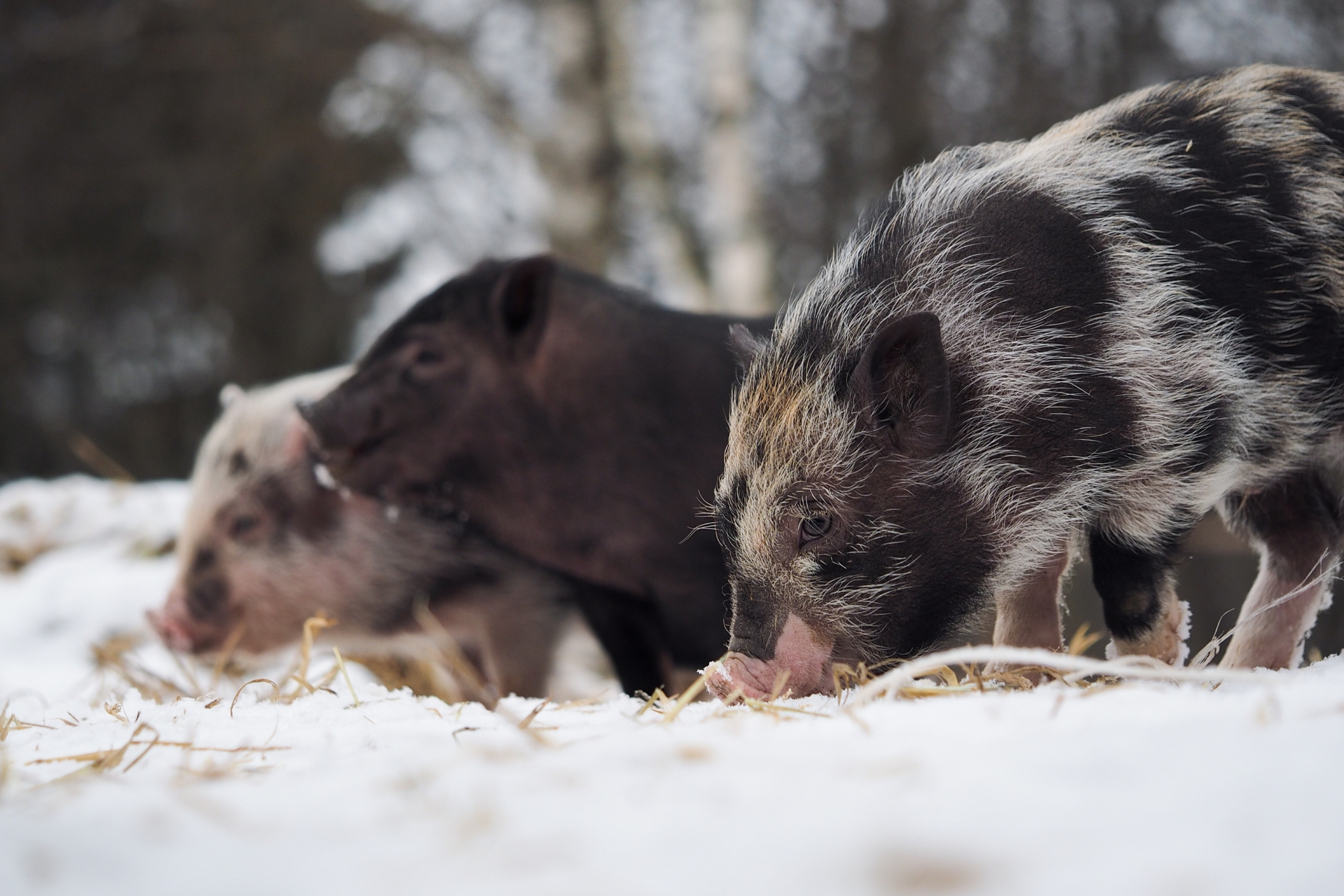
Cold weather doesn’t automatically mean pigs must be kept indoors—many pigs enjoy exploring fresh snow, rooting around, and investigating their surroundings.
The bigger concern is prolonged exposure to moisture, wind, and freezing conditions. Wet coats and damp bedding make it harder for pigs to stay warm, while melting snow can quickly soak their sleeping areas.
Make sure your pigs always have access to a dry sheltered place to retreat, along with deep bedding and unfrozen drinking water.
The bottom line is to focus on safe footing, reliable fencing, and a dry resting area. With those basics covered, you can make winter much more comfortable for your pigs while reducing the risk of escapes and injuries.
🐷 Winter Pig Care Checklist
Use this checklist so everyone can help keep the pigs warm, comfortable, and safe this winter!
Winter Pig Care Checklist
Preparing for Extreme Cold and Power Outages
When severe cold, blizzards, or heavy snow are in the forecast, plan ahead to keep your pigs safe and comfortable.
Extreme Cold & Power Outage Prep
Frequently Asked Questions About Pigs in Cold Weather
1. How cold is too cold for pigs?
There isn’t one temperature that’s too cold for every pig. Healthy adult pigs that are dry, well fed, and have access to good shelter can handle temperatures well below freezing. However it’s important to keep in mind that piglets, older pigs, thin animals, and pigs that are sick or wet can struggle in much milder conditions. And wind, dampness, and a lack of bedding can also make the cold much harder to tolerate.
2. Do pigs need heat in the winter?
Most healthy adult pigs can stay comfortable without extra heating if they have a dry draft free shelter and plenty of deep bedding. Piglets, newborns, sick pigs, and very thin animals may need additional warmth. Always consider the pig’s age, health, and living conditions when deciding whether supplemental heat is necessary.
3. Can pigs live outside in the snow?
Yes! Pigs can live outdoors through winter (even in snowy climates) provided they have reliable shelter, deep dry bedding, enough food, and constant access to unfrozen drinking water. The key is giving them a place to get out of the wind and stay dry.
4. Can pigs get frostbite?
Absolutely—and frostbite can affect a pig’s ears, tail, teats, and genital areas, especially when temperatures are very low or the skin is exposed to wind and moisture. Check your pigs regularly during cold snaps, and contact a veterinarian if you notice pale, discolored, swollen, or painful skin.
5. Should I feed pigs more during winter?
Most of the time, yes. Pigs use extra energy to maintain their body temperature in cold weather, so they may need additional feed to maintain a healthy body condition. How much extra they need depends on their age, size, diet, activity level, and exposure to the cold. Make adjustments gradually and monitor their weight rather than automatically increasing every pig’s ration by the same amount.
6. What’s the best bedding for pigs in winter?
Clean dry straw is a popular choice because it traps warm air and allows pigs to nest and burrow. You’ll want to provide a generous layer, and replace damp or soiled patches regularly. The goal is to keep the sleeping area dry, comfortable, and protected from drafts.
The Bottom Line
Keeping pigs happy and healthy through snow, ice, and freezing temperatures doesn’t have to be complicated. It just takes a little preparation and a consistent daily routine.
Remember the 5 Essentials
- Keep them dry
- Block the wind
- Provide plenty of deep bedding
- Feed them well
- And make sure their water never freezes
Don’t forget to check on your pigs regularly, adjust their care as the weather changes, and pay attention to changes in their behavior and body condition. Young, thin, or sick pigs may need extra protection from the cold.
If you get these basics right, your pigs will be much better equipped to handle winter. You might even find them happily rooting around in the snow while you’re the one wishing you could head back inside!