Pet Seahorse Myths Busted Why Keeping Seahorses Is Easier Than You Think
Think pet seahorses are fragile, expensive, and impossible for beginners? Learn the biggest seahorse care myths and why captive bred seahorses are hardier than their reputation.
- Myth #1: “Seahorses Are too Delicate to Survive in Home Aquariums”
- Myth #2: “Seahorses Only Eat Live Food”
- Myth #3: “You Need a Huge Expensive Tank”
- Myth #4: “Seahorses Can’t Live With Other Fish”
- Myth #5: “They’re Prohibitively Expensive”
- Myth #6: “Seahorses are Constantly Sick”
- Myth #7: “Wild Caught is Just as Good”
- So What Does a Seahorse Need?
- Are Seahorses Right for Beginners?
- Frequently Asked Questions
- The Bottom Line
Few aquarium animals have a reputation quite as intimidating as the seahorse. Ask around in aquarium circles, and you’ll hear that they’re fragile, fussy, difficult to feed, and best left to experienced keepers. It’s easy to see why so many people admire them from a distance.
But a lot of that reputation is outdated. It comes from a time when most seahorses in the hobby were wild caught, stressed from collection and transport, and often carrying parasites.
Today, captive bred seahorses have changed the game. They’re raised in aquarium conditions, accustomed to prepared foods, and generally much better suited to life in a home tank.
That doesn’t mean seahorses are as easy to keep as goldfish—and this article won’t pretend they are. They do have specific needs and require consistent care, but they’re also much more approachable than their reputation suggests.
Myth #1 “Seahorses are too delicate to survive in home aquariums”
The truth: Wild caught seahorses can be delicate, but captive bred seahorses are a very different story.
A lot of the “fragile seahorse” reputation comes from the wild caught era. Those animals often arrived stressed from capture and shipping, carried parasites, and refused anything except live food. Many of them didn’t survive long, and the seahorse itself ended up getting blamed for problems that were often rooted in the supply chain.
Today’s captive bred seahorses have spent their entire lives in aquariums. They’re accustomed to tank conditions, familiar with regular feeding routines, and much less likely to arrive with the health problems associated with wild caught animals.
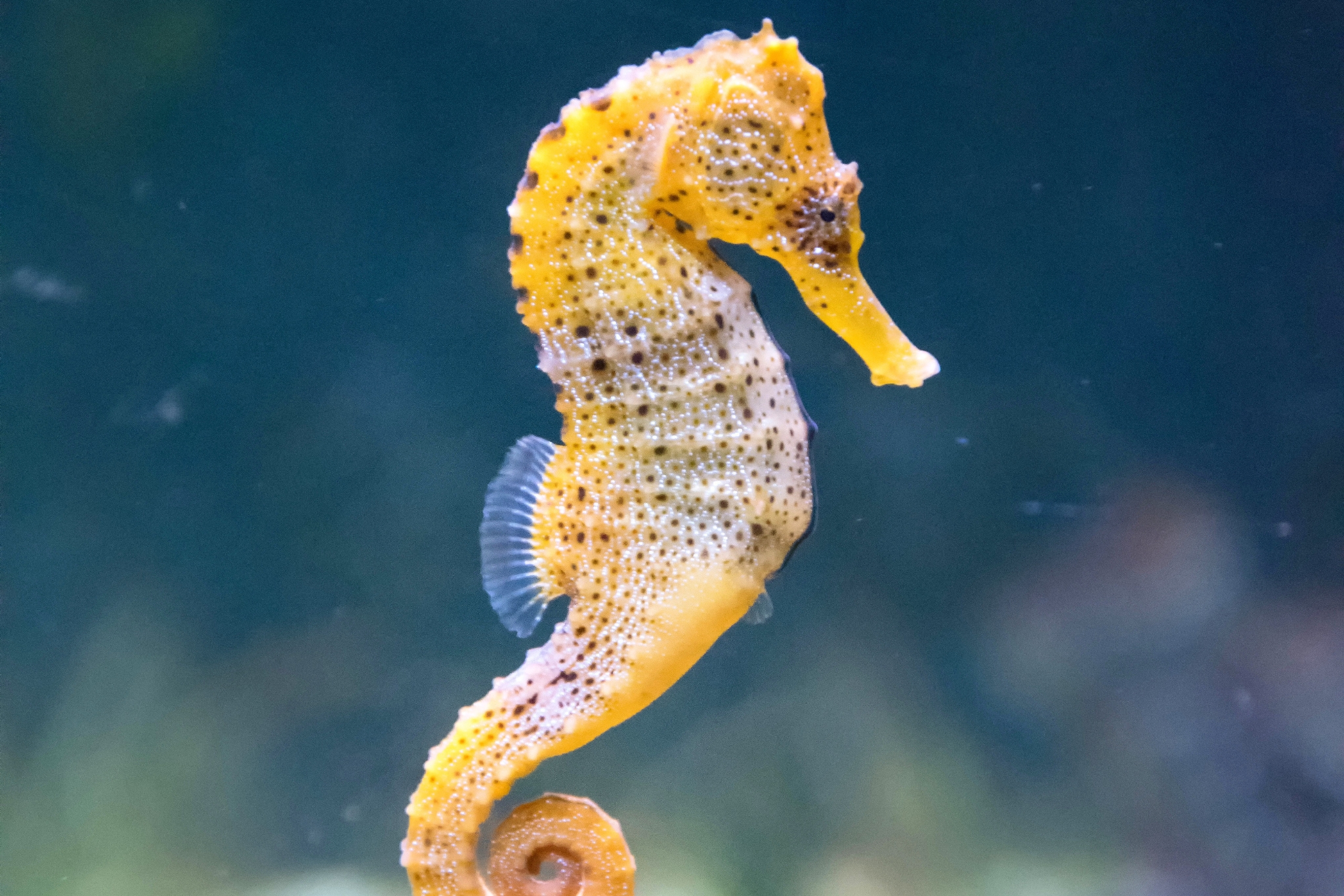
Some commonly available captive bred species include:
- Hippocampus erectus — lined seahorse
- Hippocampus reidi — Brazilian seahorse
- Hippocampus kuda — yellow seahorse
- Hippocampus zosterae — dwarf seahorse
The reality is that seahorses don’t need to be pampered—but they do need stability. They don’t handle sudden changes in temperature, salinity, or water quality particularly well, but maintaining steady conditions is very achievable with a reliable setup and a consistent routine.
Myth #2 “Seahorses only eat live food”
The truth: Captive bred seahorses readily eat frozen foods.
This is probably one of the biggest things that holds people back from keeping seahorses. Wild seahorses naturally hunt live prey, and wild caught seahorses are well known for refusing anything else.
But captive bred seahorses are a very different story, because they’re typically weaned onto frozen foods while they’re still juveniles.
For most captive bred seahorses, a typical diet includes:
- Frozen mysis shrimp: the staple food for most seahorse keepers
- Enriched frozen mysis: mysis that’s been soaked in a vitamin supplement for an extra nutritional boost
- Frozen Pacific plankton or other small frozen foods: great for adding some variety to their diet
Since seahorses don’t have a stomach, they need small meals throughout the day (usually 2 or 3 feedings daily). That might sound like a lot, but don’t let it scare you. Each feeding only takes a few minutes, and many keepers simply work it into their morning and evening routines.
There is one important exception: dwarf seahorses (H. zosterae)/ These tiny seahorses need live newly hatched baby brine shrimp. The routine is manageable, but it is a real commitment, so it’s worth doing some research before deciding that dwarfs are right for you.
Myth #3 “You need a huge expensive tank”
The truth: Seahorses need tall tanks (not necessarily huge ones).
One of the common misconceptions about keeping seahorses is that you need a massive aquarium. You really don’t… but what matters more is height.
Seahorses naturally swim vertically, and their courtship dances also make use of that vertical space. So when you’re choosing a tank, depth is more important than having a lot of horizontal swimming space (a shallow wide tank isn’t the best setup for them).
As a rough guide:
- Dwarf seahorses: 5 to 10 gallon tank can work well for a small group
- Larger species (such as H. erectus and H. reidi): a 30 gallon tank can comfortably house a pair, but if you want to keep more animals, going larger is better
For a saltwater aquarium, that’s actually a pretty modest footprint. Many reef hobbyists have systems that are several times larger.
Another nice thing about seahorses is that they’re relatively low energy animals. They don’t need intense lighting, powerful water movement, or a complicated collection of equipment.
So if the idea of needing a giant reef tank has been holding you back, you can cross that worry off the list. With seahorses, it’s less about going big and more about choosing the right shaped tank.
Myth #4 “Seahorses can’t live with other fish”
The truth: Seahorses can live with other animals… but only with the right kind of tank mates.
You don’t necessarily need a seahorse only aquarium. With that said, starting with just seahorses alone is often the easiest approach, especially if you’re new to keeping them.
The biggest issue isn’t that seahorses are antisocial—it’s that they’re slow and deliberate eaters. If you put them in a tank with fast aggressive fish, their tank mates may gobble up the food before the seahorses get a chance to eat.
The solution is to choose peaceful companions that won’t compete with them at mealtime. Depending on the setup, options can include:
- Certain gobies and small, calm bottom dwelling fish
- Cleaner shrimp, along with some snails and hermit crabs (with a little care when choosing species)
- Peaceful non-nippy fish that aren’t aggressive feeders
There are also some tank mates you’ll want to avoid: fin-nippers, aggressive eaters, and anything with stinging tentacles can create problems (that includes many anemones and some corals).
Myth #5 “They’re prohibitively expensive”
The truth: The upfront cost is moderate and ongoing costs are pretty manageable.
Seahorses can seem expensive at first glance, but they’re not necessarily a high cost animal to keep.
Captive bred seahorses typically cost anywhere from around $100 to a few hundred dollars each, depending on the species and breeder. That’s certainly more than your average freshwater fish, but it’s still within reach for many hobbyists (and a healthy seahorse can be a long term companion).
The good news is that the ongoing costs are lower than those of a typical reef tank. You don’t need high end lighting, a heavy duty skimmer system, or a collection of equipment for feeding and maintaining corals.
Your regular expenses are mostly the basics:
- Salt mix
- Frozen food
- Water testing supplies
And this is one area where spending a little more upfront can really pay off: choose a healthy captive bred seahorse from a reputable breeder.
It can be tempting to save money by buying a cheaper wild caught seahorse, but that often ends up being a false economy. Wild caught seahorses can be more difficult to acclimate to aquarium life and may arrive stressed, underweight, or carrying health problems.
Choosing captive bred animals is better for your aquarium, gives you a better chance of starting with a healthy animal, and is also the more responsible choice for wild seahorse populations.
Myth #6 “Seahorses are constantly sick”
The truth: Seahorses are prone to certain problems, but many of them are preventable.
Seahorses do have a few health issues that are well known in the hobby. Bacterial infections (especially Vibrio) and gas bubble problems are among the more common concerns.
In many of these cases, the underlying problem comes back to the same thing—poor or unstable water conditions. Stress from those conditions can weaken a seahorse’s natural defenses and leave it more vulnerable to illness.
The good news is that prevention is pretty straightforward:
- Fully cycle your tank before adding any animals.
- Keep the temperature stable and moderate. Many species do best in the low to mid 70s °F. Warmer water can encourage harmful bacteria and holds less oxygen, so a fan or chiller may be necessary in warmer climates.
- Test your water regularly. Ammonia and nitrite should always be at zero.
- Do small regular water changes. Consistent maintenance is much better than letting things slide and trying to fix everything with a huge water change later.
- Quarantine new arrivals whenever possible, and buy from breeders who can provide information about their animals’ health history.
- Remove uneaten food promptly. Leftover food can quickly break down and affect water quality.
With good husbandry and stable water conditions, seahorses can be surprisingly hardy. In fact, many experienced keepers find that once their system is established and properly maintained, seahorses can be some of the most trouble-free animals in their aquarium.
Myth #7 “Wild caught is just as good”
The truth: Wild caught seahorses are harder to keep, and buying them puts added pressure on wild populations.
Most seahorse species face conservation concerns, and international trade is regulated under CITES Appendix II. Wild collection also adds pressure to already vulnerable populations and their habitats.
Wild caught seahorses also tend to have a much harder time adjusting to life in an aquarium. They may arrive stressed, underweight, or unfamiliar with prepared foods. In many ways, this is where the old “seahorses are doomed in captivity” reputation came from.
That’s why captive bred is the way to go.
You’ll have a better chance of starting with a healthy animal that’s already accustomed to aquarium life and prepared foods. You’re also supporting responsible breeders rather than contributing to collection from the wild.
And before bringing any seahorse home, be sure to check your local and state regulations. Rules about keeping and selling certain species can vary depending on where you live.
So, what does a seahorse need?
When you boil it all down, the recipe is pretty simple:
- A fully cycled saltwater tank that’s taller rather than wide.
- Stable temperature and salinity kept within a moderate range.
- Moderate water flow, without powerful pumps or powerheads tossing the seahorses around.
- Plenty of hitching spots, such as soft artificial plants, gorgonian style decorations, or sturdy macroalgae, where seahorses can comfortably wrap their tails.
- Frequent feedings of frozen mysis shrimp—or live baby brine shrimp if you’re keeping dwarf seahorses.
- Peaceful tank mates, or none at all.
- Consistent water quality maintenance and good aquarium habits.
None of this is particularly exotic or complicated. It’s mostly the same basic recipe you’d follow for a healthy saltwater aquarium, with a few thoughtful adjustments for an animal that’s slow moving, gentle, and a little more specialized in its needs.
Once you understand those differences, keeping seahorses starts to feel a lot less intimidating.
Are seahorses right for beginners?
The honest answer: They can be… but a little saltwater experience helps.
If you’ve never kept a marine aquarium before, it’s worth learning the basics first. Get comfortable with cycling a tank, testing water, maintaining stable conditions, and keeping up with regular maintenance before bringing seahorses home.
Dwarf seahorses are undeniably charming, and their small size can make them seem like an easy choice. But their need for live food adds another level of commitment. For many first time keepers, a larger captive bred species like H. erectus can be a more forgiving place to start.
You don’t have to be an expert to keep seahorses successfully. You just need to be consistent, patient, and willing to stay on top of their routine.
Frequently asked questions
1. Can you keep a seahorse as a pet?
Yes! Captive bred seahorses are popular in home aquariums, but you’ll want to check your local regulations and buy from a reputable breeder. They’re fascinating pets, but they do have some specific care needs.
2. How long do pet seahorses live?
It depends on the species. Dwarf seahorses generally live for only a year or two, while larger species such as H. erectus and H. reidi can live for several years with proper care.
3. What do pet seahorses eat?
Most captive bred seahorses do well on frozen mysis shrimp (with added vitamins). Dwarf seahorses are a little more demanding and need a steady supply of live baby brine shrimp.
4. How big of a tank does a seahorse need?
For a pair of larger seahorses, a tall 30 gallon aquarium is a good starting point. And dwarf seahorses can be kept in smaller 5 to 10 gallon tanks.
5. Are seahorses hard to take care of?
They’re not necessarily difficult, but they are sensitive to changes in their environment. If you can keep the water clean and stable and stay on top of their feeding needs, seahorses can be surprisingly manageable.
6. Can seahorses live with other fish?
They can, but choosing tank mates carefully is important. Peaceful slow moving fish that won’t compete aggressively for food are the best choices. Many keepers prefer a seahorse only aquarium because it makes feeding and overall care much simpler.
7. Should I buy wild caught or captive bred seahorses?
Captive bred is the way to go. They’re healthier, hardier in aquarium conditions, are more likely to accept frozen foods, and choosing captive bred animals helps reduce pressure on wild populations.
The Bottom Line
The idea that seahorses are “impossible” to keep belongs to another era. With captive bred seahorses, a properly cycled aquarium, stable water conditions, and a consistent feeding routine, these amazing little animals can be surprisingly manageable and incredibly rewarding.
They’re gentle, fascinating, and endlessly fun to watch. Once you have the right setup in place, seahorses are much easier to care for than their reputation suggests.