Sugar Glider Facts Habitat, Behavior, Threats & Conservation
Sugar gliders can glide up to 150 feet through forest canopies! Learn about their habitat, diet, social behavior, threats from habitat loss, and conservation efforts.
- What Are Sugar Gliders?
- Natural Habitat and Distribution
- Behavior and Social Structure
- The Science of Gliding
- Diet and Feeding Habits
- Reproduction and Life Cycle
- Predators and Natural Threats
- Conservation Status and Threats
- Conservation Efforts and Management
- Sugar Gliders as Pets: Important Considerations
- The Ecological Importance of Sugar Gliders
- Fascinating Sugar Glider Facts
- Sugar Gliders Matter
Sugar gliders (Petaurus breviceps) are small, nocturnal marsupials that have captured the hearts of animal lovers around the world with their charming appearance and impressive gliding skills. Native to Australia, Indonesia, and Papua New Guinea, these pocket sized mammals use a special membrane to glide gracefully through forest canopies (much like tiny flying squirrels).
Whether you’re thinking about keeping a sugar glider as a pet or simply intrigued by these remarkable animals, understanding their natural history is key.

Glides Through the Night —
& Captivates the World
What Are Sugar Gliders?
Sugar gliders are small marsupials belonging to the family Petauridae. Despite their name and appearance, they are not related to flying squirrels – they’re actually more closely related to kangaroos and koalas.
These arboreal mammals earned their common name from two distinctive characteristics: their preference for sweet foods (like nectar and sap) and their ability to glide through the air using a specialized membrane called a patagium.
Physical Characteristics
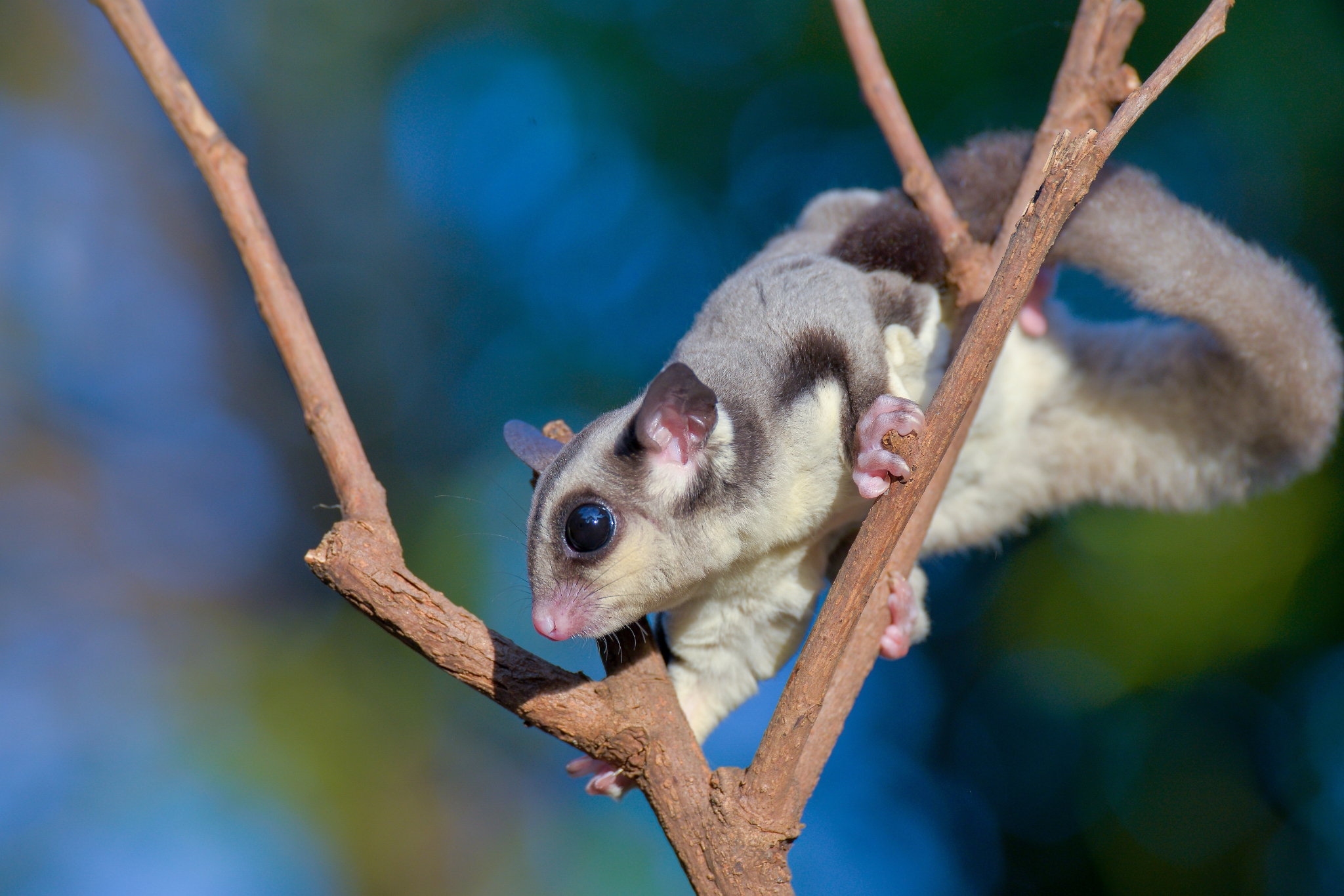
Adult sugar gliders typically measure between 12 to 13 inches in total length, with their bushy tail accounting for roughly half of that measurement. They weigh a mere 4 to 5 ounces, making them light enough for their gliding lifestyle.
Key physical features include:
- Fur coloring: Wild sugar gliders have blue gray fur on the back with a cream colored belly (but captive bred sugar gliders come in many other colors)
- Facial markings: Distinctive dark stripe running from the nose to the midback, with additional stripes on the face
- Patagium: A furry membrane stretching from the fifth finger to the first toe on each side of the body
- Eyes: Large forward facing eyes adapted for nocturnal vision
- Tail: Long prehensile tail used for steering during glides and carrying nesting materials
- Feet: Specialized with sharp claws and opposable digits on the hind feet for gripping branches
Natural Habitat and Distribution
Geographic Range
Sugar gliders inhabit a broad geographic range across the southern and eastern regions of Australia (including Tasmania). Their distribution extends northward through Papua New Guinea and into parts of Indonesia, including various islands in the archipelago. This wide distribution has resulted in several subspecies adapted to different environmental conditions.
Preferred Environments
These marsupials thrive in forested habitats where trees provide both food sources and protection. Their preferred environments include:
- Eucalyptus Forests: The most common habitat for Australian sugar gliders, eucalyptus woodlands offer abundant nectar, sap, and insects. The trees’ hollows provide ideal nesting sites for colonies.
- Rainforests: In northern Australia and Papua New Guinea, sugar gliders occupy tropical and subtropical rainforests with dense canopy coverage that facilitates gliding between trees.
- Acacia Woodlands: These dry forests provide alternative food sources, particularly during seasons when eucalyptus resources are scarce.
- Coastal Forests: Some populations inhabit coastal woodland areas where diverse plant species create rich feeding opportunities.
Sugar gliders demonstrate remarkable adaptability and can survive in habitats ranging from sea level to elevations of approximately 6,500 feet – but they require adequate tree density for gliding and hollow bearing trees for shelter, which limits their distribution in heavily cleared or developed areas.
Behavior and Social Structure
Social Dynamics
Sugar gliders are highly social animals that live in colonies ranging from seven to twelve individuals, but their groups can sometimes grow larger. These colonies typically consist of one or two dominant males, several females, and their offspring. The social structure is matriarchal in nature, with females often remaining in their birth colony while young males disperse to join or establish new groups.
Colony members share a common scent produced by glands on their forehead, chest, and genital area. Dominant males mark territory and colony members with these secretions, creating a unified group scent that helps identify intruders. This scent marking behavior is absolutely crucial for maintaining social bonds and defending resources.
Communication Methods
These marsupials possess a surprisingly complex communication system that includes:
- Vocalizations: Sugar gliders produce various sounds including barking warnings, chirping for social bonding, crabbing noises when frightened or aggressive, and purring when content. Their repertoire includes at least eight distinct vocal patterns.
- Scent marking: Chemical communication through scent gland secretions conveys information about identity, reproductive status, and territory ownership.
- Body language: Tail positioning, ear movements, and postures communicate mood and intentions to colony members.
Nocturnal Lifestyle
As strict nocturnal animals, sugar gliders remain nestled in tree hollows during daylight hours, emerging approximately 30 minutes after sunset to forage. Their large eyes contain a reflective layer that enhances their night vision, allowing them to navigate dark forest canopies with precision.
During cold weather or food scarcity, sugar gliders can enter a state of torpor, reducing their metabolic rate and body temperature to conserve energy. This adaptation is particularly important for survival during harsh environmental conditions.
The Science of Gliding
How Sugar Gliders Glide
The sugar glider’s most remarkable feature is its ability to glide distances of up to 150 feet in a single leap. This extraordinary capability comes from the patagium, a furred membrane that extends along each side of the body. When the glider extends its limbs, this membrane creates a wing-like surface that generates lift.
The gliding process involves several stages:
- Launch: The glider pushes off from an elevated position with powerful hind legs
- Flight: The patagium catches air while the tail acts as a rudder for steering
- Landing: The glider angles upward to slow descent and lands on all four feet (typically on a tree trunk)
Sugar gliders can adjust their glide path mid-flight by moving their limbs and tail, allowing them to navigate around obstacles and reach specific landing targets. Research has shown they can alter their trajectory by up to 90 degrees during a glide.
Purpose of Gliding
This unique form of locomotion serves several critical functions:
- Energy efficiency: Gliding requires less energy than climbing down one tree and up another
- Predator evasion: Rapid and unpredictable aerial movement helps escape tree-climbing predators
- Foraging efficiency: Allows quick access to dispersed food resources across large territories
- Territory maintenance: Enables efficient patrolling of the colony’s range
Diet and Feeding Habits
Natural Diet
Sugar gliders are omnivorous opportunists with a diet that varies seasonally based on resource availability. Their natural feeding strategy includes:
Sweet Foods (Primary Preference):
- Eucalyptus and acacia tree sap – accessed by making incisions in bark with their sharp teeth
- Nectar from native flowering plants
- Honeydew produced by sap-sucking insects
- Manna – a crystallized sap that forms on certain eucalyptus species
Protein Sources:
- Insects including beetles, moths, larvae, etc.
- Spiders and other small arthropods
- Occasional small vertebrates such as lizards or nestling birds
Supplementary Foods:
- Tree pollen
- Native fruits when available
- Native vegetation and leaves during food scarcity
Feeding Behavior
Sugar gliders are highly efficient foragers, often traveling 1 to 2 miles each night in search of food. Guided by their keen sense of smell, they locate food sources and use their sharp incisors to extract sap from trees. Their forward-extending lower incisors are specially adapted for scraping and gouging bark with precision.
Although their feeding ranges frequently overlap with those of neighboring colonies, valuable resources (such as high-yield sap sites) are actively defended. Sugar gliders also engage in resource mapping, which means they memorize the locations of productive feeding areas and revisit them regularly.
Reproduction and Life Cycle
Breeding Patterns
Sugar gliders reach sexual maturity between 8 to 15 months of age, with males maturing slightly later than females. In their natural habitat, breeding seasons typically coincide with periods of food abundance, usually occurring once or twice annually depending on geographic location. In northern regions with more stable climates, breeding may occur year-round.
The reproductive process follows a distinct pattern:
- Mating: After a brief courtship involving vocalizations and scent exchanges, mating occurs. Females undergo a gestation period of only 15 to 17 days (one of the shortest among mammals).
- Birth: Females typically give birth to one or two extremely underdeveloped young (called joeys) which are about the size of a grain of rice at birth.
- Pouch Development: The blind and hairless joeys crawl into the mother’s forward-facing pouch, where they attach to a teat. They remain in the pouch for approximately 60 to 70 days, continuing their development.
- Emergence: After leaving the pouch, joeys remain in the nest den for another four weeks, during which time the mother continues nursing them.
- Weaning: Young sugar gliders are fully weaned at approximately 4 months of age but may remain with the colony for several more months before dispersing.
Parental Care
Female sugar gliders provide all parental care in wild populations. Mothers are highly attentive, grooming their young regularly and protecting them fiercely.
Interestingly, in captive settings and sometimes in the wild, fathers and other colony members may help care for older joeys, though this behavior varies.
Sugar gliders can live 10 to 12 years in the wild, with some individuals in captivity reaching 15 years or more with proper care.
Predators and Natural Threats
Natural Predators
Despite their agility and nocturnal habits, sugar gliders still face predation from various native species:
Aerial Predators:
- Owls hunt sugar gliders during their nocturnal activities
- Kookaburras may catch gliders during dawn or dusk transitions
Arboreal Predators:
- Pythons and other tree-dwelling snakes
- Quolls (carnivorous marsupials that hunt in trees)
- Monitor lizards that climb trees to raid dens
Ground Predators:
- Dingoes and foxes catch gliders that venture to the ground or make unsuccessful landings
Introduced Predators
The introduction of non-native species has significantly increased predation pressure:
- Feral Cats: Perhaps the most significant introduced threat, feral cats are skilled climbers that actively hunt sugar gliders both in trees and on the ground.
- Red Foxes: While primarily ground hunters, foxes can catch gliders that land low or travel between isolated trees.
These introduced predators lack co-evolutionary history with sugar gliders, making their hunting strategies particularly effective and difficult for gliders to counter.
Conservation Status and Threats
The International Union for Conservation of Nature (IUCN) currently lists the sugar glider as “Least Concern” due to its relatively wide distribution and presumed stable population in most areas. However, this classification masks concerning regional declines and increasing pressure from multiple threats.
Major threats to sugar gliders include:
Habitat Loss and Fragmentation
One of the most significant threats to sugar glider populations is the ongoing destruction and fragmentation of their forest habitats. Agricultural expansion, urban development, and logging operations have eliminated vast areas of suitable habitat. Fragmentation is particularly problematic because sugar gliders require connected forest canopies for gliding between feeding sites. Isolated forest patches often cannot support viable populations.
Climate Change
Shifting weather patterns and increasing frequency of extreme events pose multiple challenges. Droughts reduce food availability, particularly sap and nectar production. Severe bushfires destroy both habitat and resident populations. Changing flowering and insect emergence times may disrupt synchronized food availability.
Invasive Species
Beyond predation, invasive species compete for resources. European honeybees compete for tree hollows sugar gliders need for dens, and introduced possums may outcompete sugar gliders for food and shelter in some areas.
Disease
Parasites and diseases can impact colony health, with stressed sugar glider populations from habitat loss being particularly vulnerable to disease outbreaks.
Vehicle Strikes
In fragmented landscapes, sugar gliders increasingly cross roads to access isolated habitat patches, resulting in vehicle mortality.
Pet Trade
While not currently a major threat to wild populations overall, illegal capture for the international pet trade affects some regions, and escaped or released pets can introduce diseases to wild populations.
Conservation Efforts and Management
Various conservation strategies are being implemented to protect sugar glider populations:
Legal Protection
Sugar gliders are protected by wildlife legislation in Australia, making it illegal to capture, harm, or keep them without proper permits. International trade is regulated under CITES (Convention on International Trade in Endangered Species) in some jurisdictions.
Habitat Conservation
Protected areas including national parks and nature reserves safeguard critical sugar glider habitat. Conservation covenants on private land help preserve habitat corridors between protected areas.
Restoration Programs
Reforestation and habitat restoration projects specifically incorporate hollow-bearing trees and native flowering plants that support sugar glider populations. Some programs install artificial nest boxes to supplement natural hollow availability while waiting for restored forests to mature.
Wildlife Corridors
Creating and maintaining vegetated corridors between habitat fragments allows sugar gliders to safely move between forest patches, maintaining genetic diversity and access to resources.
Sugar Gliders as Pets Important Considerations
While this article focuses on wild sugar gliders, it’s important to address the pet trade given the species’ popularity. Prospective owners should carefully consider whether they can meet these demanding animals’ needs:
Complex Requirements
Sugar gliders need specialized diets, large enclosures, veterinary care from exotic animal specialists, and substantial daily interaction.
Social Needs
These colony animals should never be kept alone. They require same species companionship and can develop severe behavioral and health problems when isolated.
Legal Considerations
Laws regarding sugar glider ownership vary significantly by location. Many USA states prohibit private ownership, require permits, or have specific housing and care regulations.
Long term Commitment
With lifespans exceeding a decade, sugar glider ownership is a long term responsibility requiring sustained financial investment and time commitment.
Ethical Sourcing
Anyone considering a sugar glider should only acquire captive bred animals from reputable breeders – never buy wild caught animals, which harms natural populations and subjects animals to extreme stress.
The Ecological Importance of Sugar Gliders
Sugar gliders play several important ecological roles in their native forests:
Pollination
While feeding on nectar, sugar gliders transfer pollen between flowers, contributing to the reproductive success of various native plant species. They are particularly important pollinators for plants that flower at night.
Seed Dispersal
By consuming fruits and traveling significant distances, sugar gliders disperse seeds throughout their territories, promoting forest regeneration and plant diversity.
Insect Population Control
Their consumption of insects helps regulate arthropod populations, contributing to ecosystem balance.
Prey Base
As prey for various predators, sugar gliders form an important link in the food web, transferring energy from plants and insects to higher-order consumers.
Ecosystem Health Indicators
As habitat specialists requiring mature forests with specific characteristics, sugar glider presence indicates healthy and functional forest ecosystems. Their decline can signal broader environmental problems.
Fascinating Sugar Glider Facts
- Sugar gliders can glide the length of a football field (up to 150 feet) in a single leap
- They can turn 90 degrees mid-glide by adjusting their limbs and tail
- A sugar glider’s tail is approximately the same length as its body and head combined
- They have four scent glands used for communication and territory marking
- Sugar gliders can enter torpor to conserve energy, reducing their body temperature and metabolism
- They are one of the few mammal species with a patagium (gliding membrane)
- Despite their name, they are marsupials (not rodents) and are more closely related to kangaroos than squirrels
- A colony of sugar gliders shares a communal nest and may have up to 12 members or more
- Their opposable toes help them grip branches and manipulate food
- Sugar gliders have been known to recognize individual humans in captive settings
Sugar Gliders Matter
Sugar gliders represent one of nature’s most remarkable adaptations, combining the unique characteristics of marsupials with the extraordinary ability to glide through forest canopies. These social and intelligent creatures have evolved specialized anatomical features, complex behaviors, and flexible ecological strategies that allow them to thrive in diverse forest environments across their range.
However, sugar gliders still face increasing challenges from habitat loss, climate change, and introduced predators. Their conservation depends on protecting and connecting forest habitats, managing threats, and fostering public awareness of their ecological importance. By understanding these fascinating marsupials and the pressures they face, we can better appreciate the urgent need to preserve the forests they call home.
Whether observed in their natural habitat gliding between moonlit eucalyptus trees or studied in a zoo to understand their unique biology, sugar gliders continue to captivate and inspire. Their survival ultimately depends on our commitment to conserving the wild spaces where they evolved and ensuring that future generations can marvel at these extraordinary aerial marsupials.