What do Sugar Gliders Eat? A Complete Guide to a Healthy Diet
Wondering what sugar gliders eat? Discover feeding tips, safe foods, what to avoid, and more in this complete sugar glider diet guide.
Sugar gliders are small cute nocturnal marsupials native to Australia, Indonesia, and Papua New Guinea. They’re known for their gliding ability, social nature, and sweet personalities – but their care (especially their diet) is often misunderstood.
Feeding a sugar glider properly is one of the most important (and most challenging) parts of responsible exotic pet ownership.
In this guide we’ll cover everything you need to know about what sugar gliders eat, what to avoid, and how to make sure your little friend stays healthy and thriving.
Why Pet Glider Nutrition Matters
Sugar gliders are omnivores that consume a diverse range of foods to meet their nutritional needs. In the wild, these small cuties eat a wide variety of foods including insects, tree sap, nectar, fruits, and small vertebrates.
Replicating this complex diet in captivity isn’t easy but it’s essential for:
- Healthy body weight
- Proper calcium-to-phosphorus balance
- Organ function
- Disease prevention like metabolic bone disease
- Long-term wellbeing
Unfortunately many pet sugar gliders are fed inadequate diets which can lead to serious health issues.
The Basics of a Balanced Sugar Glider Diet
Feeding sugar gliders a healthy balanced diet is essential to their health and well-being. It does take a bit of time each day to prepare and source the right foods, but the long-term benefits for their health and happiness are well worth the effort.
A proper sugar glider diet should include:
1. Protein – 40% to 50% of Diet
Protein is a vital part of a sugar glider’s diet – especially for growth, muscle maintenance, and energy.
Feed Protein Sources Like:
- Cooked lean meats like chicken or turkey
- Boiled or scrambled eggs (no seasoning or salt)
- Insects like crickets, mealworms, black soldier fly larvae, etc.
- High-protein commercial sugar glider diet; research based formulas only – you don’t want to feed “junk” pellets
PRO TIP: To boost their nutritional value, you can gut-load insects before offering them to your sugar glider. Remember to feed insects in moderation and rotate types to add variety – and never feed wild caught bugs as they can carry parasites or pesticides.
2. Fruits and Vegetables – 10% to 15% of Diet
Fruits and vegetables offer important vitamins, minerals, and fiber but they should only be a small part of a sugar glider’s overall diet (not the main portion).
Good Fruit Options:
- Berries like blueberries, raspberries, etc.
- Mango
- Papaya
- Apple (no seeds)
- Melon
Some Safe Vegetables:
- Sweet potato (cooked)
- Carrots
- Kale
- Green beans
- Bell peppers
3. Nectar or Sap Replacement – 40% to 50% of diet
Wild sugar gliders love to feed on eucalyptus sap, acacia gum, and nectar. To support their natural feeding instincts in captivity, it’s important to offer safe and appropriate substitutes that mimic these food sources and encourage natural foraging behavior.
You Can Try Feeding:
- Small amounts of honey or pure maple syrup (as an occasional treat)
- Acacia gum powder (available online and at exotic pet supply stores)
- Commercial nectar blends made specifically for sugar gliders
PRO TIP: Use nectar and sap in puzzle toys or other creative setups to encourage natural foraging behavior.
4. Calcium and Vitamin Supplements
Calcium is critical for sugar gliders to prevent metabolic bone disease – an unfortunately common and painful condition in captive sugar gliders.
A high quality commercial sugar glider diet should provide most of the essential calcium and vitamins your glider needs – but it’s still wise to consult with an exotic animal veterinarian experienced with sugar gliders to evaluate their individual diet and determine whether additional supplementation is necessary.
Foods to Avoid
Not all foods are safe for sugar gliders and some can be harmful (or deadly) if eaten by these adorable marsupials. It’s important that caregivers take the time to learn which foods to are safe and which ones to avoid.
Following a species specific diet with natural, digestible, and nutritionally appropriate foods is essential to keeping your sugar glider healthy.
🚫 AVOID Feeding Sugar Gliders:
- Onions, garlic, and leeks
- Rhubarb
- Spices
- Fruit pits and seeds – contain cyanide
- Artificial sweeteners like xylitol (extremely toxic to sugar gliders)
- Unripe fruits
- Chocolate and caffeine
- Dairy like milk, cheese, ice cream, etc. – sugar gliders are lactose intolerant
- Processed foods and snacks that are high in fat or have added sugar, salt, or preservatives
- Citrus – may cause digestive discomfort
- Alcohol
- Raw meat or fish – these pose the risk of parasites or bacteria
Sample Sugar Glider Meal Plan
Sugar gliders are naturally nocturnal, so you’ll want to feed them in the evening when they’re most active.
- Main Meal: 1 to 2 tablespoons of commercial sugar glider diet
- Side of Fruits & Veggies: 1 to 2 tablespoons total
- Use insects and treats during playtime or bonding
PRO TIP: Avoid overfeeding your sugar glider and be sure to remove any uneaten foods each morning to prevent spoilage and pests.
Tips for Feeding Success
- Rotate fruits & veggies to provide variety and help prevent boredom
- Use feeding stations or puzzle feeders to encourage natural foraging behavior
- Avoid overfeeding sugary fruits – too much sugar can lead to obesity and dental issues
- Weigh your glider regularly to monitor their health
- Always provide fresh clean water in a clean bottle or dish
The Challenges (And Rewards) of Feeding Sugar Gliders
The Challenges:
- Their diet is not “grab and go” – it takes time, planning, and preparation
- Improper nutrition can lead to serious health issues
- Not all vets are familiar with sugar gliders – but finding the right one is important
- Some sugar gliders can be picky eaters or take time to adjust to a new diet
The Rewards:
- Watching a sugar glider eagerly forage for food or nibble on a favorite treat is adorable and deeply rewarding
- Proper feeding leads to a longer healthier life for your glider
- Mealtime can become a bonding activity that builds trust, routine, and a shared language
- Knowing you’re meeting their complex needs is part of responsible exotic pet ownership – good job!
Enjoy Your Glider
Feeding a sugar glider isn’t as simple as tossing a few fruits in a bowl – but with the right knowledge and commitment it’s totally manageable and incredibly rewarding.
These tiny marsupials rely on us to recreate a diet that mimics the variety of what they’d find in the wild. When done right, proper nutrition helps sugar gliders stay happy, curious, and healthy for years to come.
If you’re thinking about bringing a sugar glider into your home or already have one, it’s important to take the time to research, prepare, and plan.
And when in doubt? Always consult with an experienced exotic animal veterinarian.
Want to Be 100% Confident You’re Feeding Your Sugar Glider Right?
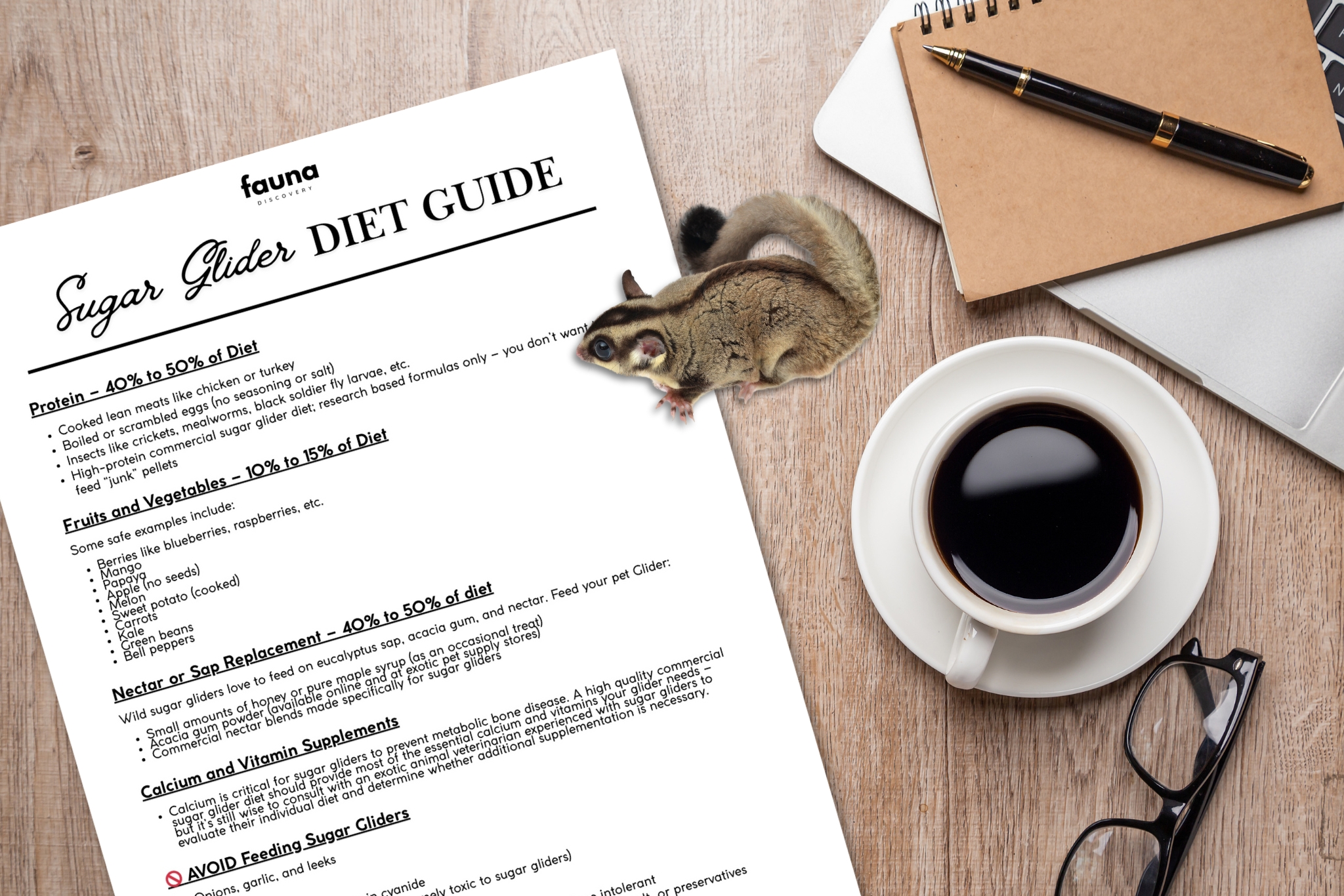
✅ Exactly what sugar gliders should eat daily
🚫 Common foods that are unsafe (and why)
🥗 Approved fruits, vegetables, and protein sources
👇 Download your FREE printable Sugar Glider Diet Guide now and give your glider the healthy, happy life they deserve!
Whether you’re a brand new sugar glider parent or want to double check you’re doing everything right, this printable guide will help you feel confident and prepared.