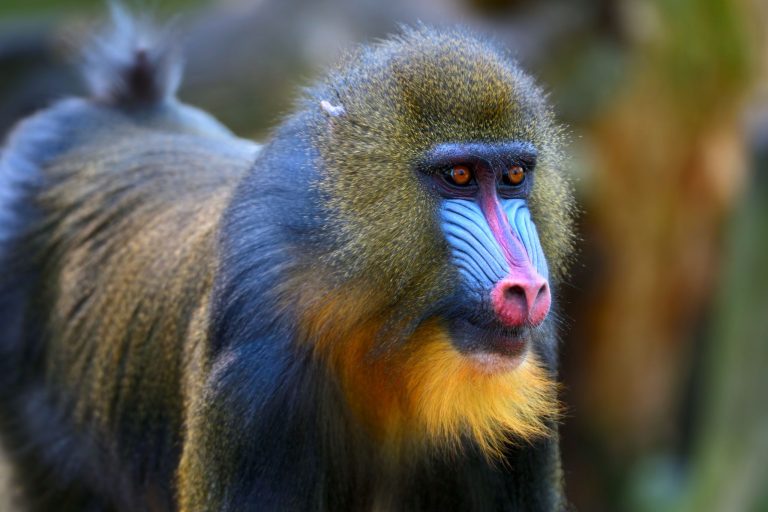
Traveling With a Pet Monkey What US Owners Need to Know
Can your pet monkey cross state lines? Learn everything that USA owners need to know before traveling, driving, or boarding a flight.

- The Quick Answer: Can You Travel With a Pet Monkey?
- Step 1: Confirm Legality in Both States
- Step 2: Get the Right Paperwork for Interstate Travel
- Step 3: Understand Why You Probably Can’t Fly
- Step 4: Don’t Even Consider Leaving the Country With Your Monkey
- Ground Travel Logistics That Actually Matter
- Health and Safety Considerations Every Owner Should Know
- Quick Reference Checklist Before Any Trip
- Frequently Asked Questions
- The Bottom Line
If you share your home with a capuchin, marmoset, or spider monkey, you already know that “just pack a bag and go” isn’t really an option.
Traveling with a pet monkey means navigating a mix of state laws, federal regulations, and transportation policies, and getting any one of those wrong can turn a simple trip into a major headache.
A missed requirement could mean anything from a fine to having your animal turned away or even seized. That’s why it’s so important to do your homework before you leave.
Whether you’re heading a couple of states away for the weekend or planning a longer trip across the country, we’ll walk you through what you need to check before traveling with your pet monkey.
The Quick Answer Can You Travel With a Pet Monkey?
Within the USA, traveling with a pet monkey is possible, but there are some serious limitations.
You can generally drive a monkey across state lines if primate ownership is legal in both your home state and your destination, and you have any required health certificates or other paperwork.
Commercial air travel is much more complicated. Major U.S. airlines don’t accept pet monkeys as ordinary cabin or cargo pets, so driving yourself or hiring an animal transportation company is usually the more realistic option.
And if you’re thinking about traveling internationally, there’s an important catch—the CDC prohibits importing nonhuman primates into the USA as pets, which means taking your monkey out of the country could leave you unable to legally bring it back home as a pet.
Thankfully, traveling with your pet monkey doesn’t have to be stressful or end with your baby being confiscated. The sections below break down the USA laws and everything you need to know before you travel.
Step 1 Confirm Legality in Both States
In the USA, monkey ownership laws are far from straightforward.
There currently isn’t a federal law that outright bans private primate ownership, so the rules are largely determined by individual states. And while congress has repeatedly considered the Captive Primate Safety Act, it has not become federal law yet.
That leaves a pretty confusing patchwork of regulations across the country:
- Some states allow pet monkeys with a permit, which typically involves an application, inspection, and fees.
- Very few states allow private monkey ownership with no permit or license.
- Most states prohibit private primate ownership altogether.
The species of monkey you have matters, too. Some states prohibit larger primates while making exceptions for smaller New World species, such as marmosets and squirrel monkeys.
Other states specifically name the primate species they allow or prohibit, so you can’t assume that a rule covering one type of monkey applies to another.
Before you book your trip, check every part of your route, not just where you’re starting and ending:
- Your home state’s rules: Make sure your current permit (if you need one) allows you to travel with the animal. Some permits are tied to a specific address or facility.
- Your destination state’s rules: Just because your monkey is legal where you live doesn’t mean it’s legal where you’re going. Entering a state that prohibits private primate ownership could put you at risk of enforcement or confiscation.
- Local rules: Check county and city ordinances. Local governments can have stricter exotic pet regulations than the state.
- States along your route: If you’re driving, don’t forget about the states that you’re only passing through. Their laws can still apply even if you don’t plan to stop there long term.
Pro Tip
Before you hit the road, give the relevant state wildlife or agriculture agency a call. It’s also worth checking with local animal control at your destination to make sure you have the most up to date information and aren’t missing any local requirements.
Step 2 Get the Right Paperwork for Interstate Travel
When it comes to moving a pet monkey between states, the rules can get complicated because the destination state ultimately determines what paperwork and health requirements apply.
USDA APHIS generally isn’t the agency that sets the entry requirements for someone traveling with their own pet between states. Make sure you’re checking the laws and requirements of the states you’re traveling to, not just the USDA’s rules.
In practice, that can mean you’ll need:
- A veterinary health certificate: Your destination state may require one, sometimes using the USDA-APHIS Form 7001, and it may need to be issued within a specific window before your trip.
- Vaccination or health records: Some states require proof of current vaccinations or a recent health exam from a licensed (and sometimes USDA accredited) veterinarian.
- USDA licensing paperwork: If you have a USDA exhibitor license because you publicly display your monkey or use the animal for paid appearances, additional Animal Welfare Act requirements may apply. Always keep your license and relevant inspection records with you.
- Proof of legal ownership: It’s smart to carry copies of your state permit, purchase or breeder records, previous registration or import paperwork, and your monkey’s microchip or identification information.
Step 3 Understand Why You Probably Can’t Fly
This is the part that catches a lot of owners off guard… but major U.S. airlines don’t accept pet monkeys as ordinary cabin or cargo pets.
Their pet policies are typically limited to dogs, cats, and in some cases, a few other small domesticated species.
A few things are worth knowing are:
- There’s no easy airline loophole. Airline pet policies have generally become more restrictive over the years, so finding a carrier that will simply let you book a monkey as a regular pet isn’t realistic.
- Private charters may be an option. Some charter companies will consider exotic animals on a case by case basis, but you’ll likely need veterinary records, proof of legal ownership, and other documentation before they’ll agree to transport your monkey.
- Driving is usually the most practical option. For many owners, that means using their own vehicle or hiring a professional exotic animal transport service that’s experienced with primates.
Step 4 Don’t Even Consider Leaving the Country With Your Monkey
This is probably the most important rule to know if you’re traveling with a pet monkey!
The CDC prohibits importing nonhuman primates into the United States as pets. That applies even if the monkey was originally born and legally kept in the USA and you’re simply trying to bring it home after an international trip.
Nonhuman primates can only be imported under limited circumstances, such as for scientific, educational, or exhibition purposes, and through an appropriately registered importer.
In plain English, don’t take your pet monkey out of the country expecting to bring it back home afterward.
This isn’t something you can solve with extra paperwork or a longer waiting period. If you’re planning an international trip, the safest assumption is that your monkey needs to stay in the USA.
Ground Travel Logistics That Actually Matter
Once you’ve sorted out the legal side, the practical part of traveling with your pet monkey is a lot more like traveling with a toddler than traveling with a dog. You also have to think ahead about safety, temperature, stress, and where you’ll stay along the way.
- Use a secure carrier. Your monkey should be in a sturdy escape proof carrier whenever you’re in the car. A loose monkey isn’t just a distraction, it can be a serious safety hazard.
- Keep an eye on the temperature. Monkeys can be sensitive to extreme heat and cold. Never leave your monkey unattended in a parked vehicle (even for a few minutes). And plan your stops so you can keep the animal in a comfortable temperature controlled environment.
- Don’t assume a hotel will allow you to stay there. Most pet friendly hotels mean dogs and cats when they say “pets,” and exotic animals are often excluded. If you need to stop overnight, look for an exotic animal friendly hotel or a private rental where you’ve received permission from the owner ahead of time.
- Plan for travel stress. A long car ride can be stressful for a monkey, and different species and individual animals can react very differently. Talk with your exotic animal veterinarian ahead of time about getting your monkey comfortable with its carrier and whether any additional calming measures are appropriate. But don’t try something new for the first time on travel day.
- Have a backup plan. Before you leave, find an exotic animal veterinarian along your route and at your destination, and know where you could safely board your monkey in an emergency. It’s way easier to deal with a problem when you already know where to go.
Health and Safety Considerations Every Owner Should Know
Traveling with a monkey also comes with health and safety considerations that are different from traveling with a dog or cat. New environments, unfamiliar people, and contact with other animals can all add stress and increase the chances of something going wrong.
A few things to keep in mind:
- Herpes B virus: Commonly found in research macaques but rare in pet monkeys, Herpes B is a serious concern because an infection in humans can be life threatening. It’s one of the reasons why macaques and other Old World monkeys in certain states face stricter regulations than smaller New World species (such as marmosets or squirrel monkeys).
- Rabies requirements aren’t straightforward: Rabies vaccines aren’t licensed for nonhuman primates in the same way they are for dogs and cats. Don’t assume that a standard rabies certificate will satisfy a state’s requirements. Ask your exotic animal veterinarian what documentation your destination actually requires.
- Bites and scratches: Even a well socialized monkey can react unpredictably when it’s stressed, feels threatened, or is in an unfamiliar environment. Keep interactions with strangers to a minimum during travel, and don’t let people approach or handle your monkey just because they’re curious.
- Bring your medical records: Keep your veterinarian’s contact information, current health certificate, relevant medical records, and a basic first-aid kit with you. Having everything together can make a stressful situation much easier to manage.
Quick Reference Checklist Before Any Trip
Before You Go
Pet Monkey
Travel Checklist
-
Confirmed legality of your monkey’s species in your home state, destination state, and any states you’ll pass through
-
Confirmed county/city rules at your destination
-
Called the destination state’s wildlife or agriculture agency directly
-
Obtained a current veterinary health certificate (check your destination’s required window)
-
Gathered ownership permit, acquisition records, and exhibitor license (if applicable)
-
Arranged ground transport if you are not driving yourself
-
Ruled out international travel entirely
-
Secured an escape proof, crash rated carrier
-
Mapped rest stops and confirmed there’s no reliance on hotels that don’t accept pet monkeys
-
Identified an exotic animal vet and emergency boarding option along your route
-
Packed health records, first-aid supplies, and vet contact information
Frequently Asked Questions
Can I fly with my pet monkey in the cabin if I book a private jet?
Possibly, but don’t assume a private jet automatically makes it legal or acceptable. Charter operators set their own policies, and some may consider a monkey on a case by case basis while others may refuse.
You’ll also need to make sure you meet any applicable animal health and destination requirements.
The best thing to do is ask the operator directly before booking and have your veterinarian and the relevant state authorities confirm the documentation you’ll need.
Is there a national permit that lets me travel with my monkey anywhere in the USA?
No—there isn’t a single federal permit that gives a private owner permission to take a pet monkey anywhere in the country.
Interstate animal movement requirements are largely determined by the destination state or territory, and those requirements can include health certificates, testing, or other documentation.
What happens if I’m stopped in a state where monkeys are illegal?
That depends on the state’s laws and the circumstances, but you could face enforcement action, including fines, jail time, or having the animal confiscated.
In some cases, authorities may place a confiscated animal with a qualified rescue or sanctuary, and depending on the circumstances and available options, some animals may end up being euthanized.
That’s why it’s so important to check the laws of every state you’re traveling through, as well as your final destination, before you leave.
Can I bring my pet monkey back into the USA if I take it abroad?
For a privately owned pet monkey, the answer is a hard no—the CDC strictly prohibits importing nonhuman primates as pets.
The law is very clear on this one, primates can only be imported only under limited circumstances, such as for scientific, educational, or exhibition purposes, and only by appropriately registered importers.
That means if you have a pet monkey in the USA, taking it abroad can create a situation where you can’t legally bring it home again as a pet.
The Bottom Line
Traveling with a pet monkey is possible, but it takes a lot more planning than traveling with a typical pet.
You’ll need to confirm that your monkey is legal in every state you’re passing through, make sure you have the right paperwork, arrange ground transportation, and rule out international travel altogether.
Remember, the safest approach is to call ahead rather than make assumptions. Laws and regulations around privately owned primates can change, so even if you’ve made the same trip before, it’s worth treating each trip as a fresh research project.
Always check with state agencies, your veterinarian, transportation providers, hotels, and anyone else involved in your trip to make sure you’ve covered all the necessary requirements before you leave.