This post contains affiliate links. If you make a purchase through one of these links, we may earn a small commission at no extra cost to you.
7 Wild Bird Foods Backyard Birders Swear By (And Which Birds They Attract)
Looking for quality wild bird food? Explore top rated seed blends, suet, and specialty foods for cardinals, finches, woodpeckers, and songbirds.
- Why Seed Quality Actually Matters
- Best All Purpose Blend: Wagner’s – Greatest Variety Blend
- Best No Mess Option: Kaytee – Ultra No Mess Blend
- Best for Cardinals and Songbirds: Audubon Park – Songbird Seed Blend
- Best for Finches: Kaytee – Nyjer Seed
- Best High Energy/Winter Blend: C&S – Peanut Delight, No Melt Suet
- Best for Woodpeckers and Jays: Pennington – In Shell Peanuts for Birds
- Best High Protein Option: Kaytee – Mealworms
- How to Choose the Right Bag for Your Yard
- Frequently Asked Questions
- The Bottom Line
If you’ve ever walked into a store to buy bird food and found yourself staring at a wall of bags labeled “wild bird food,” “songbird blend,” “no mess mix,” and “premium seed,” you’re not alone. It can be surprisingly hard to tell what actually makes one bag better than another.
The truth is, not all bird food is created equal. The difference between a bag packed with filler grains and a genuinely good quality blend becomes pretty obvious once you put it in your backyard. One can bring in cardinals, chickadees, and woodpeckers, while the other leaves you with a pile of uneaten seed, mold, and a lot of disappointed birdwatching.
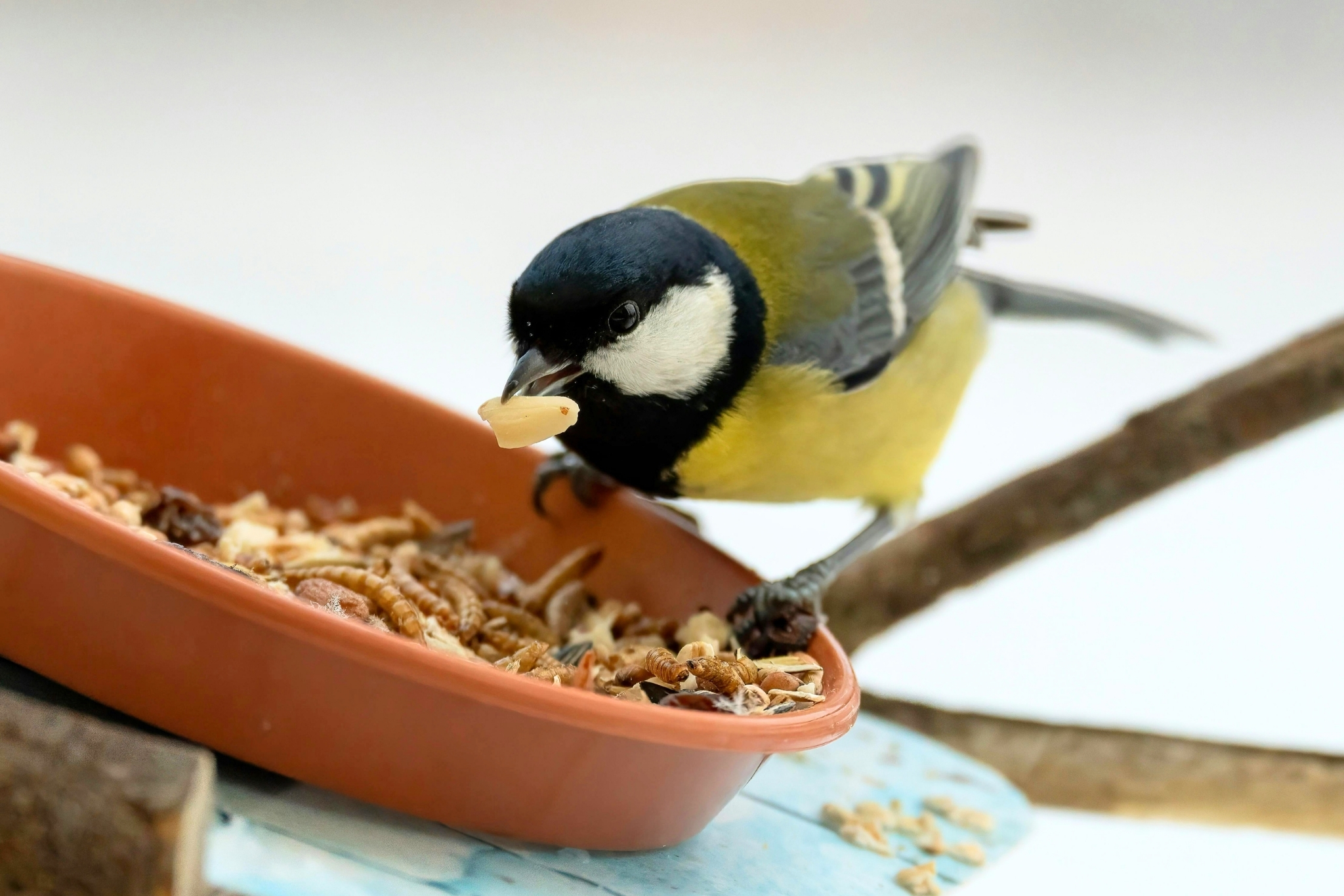
Why Seed Quality Actually Matters
Cheap “economy” bird seed is usually packed with fillers like milo, cracked corn, and red millet—ingredients that many backyard songbirds simply pick around or kick right out of the feeder. That leftover seed ends up being scattered across the ground, where it can sprout, attract rodents, or develop harmful mold when the weather is wet.
A higher quality blend might cost a little more, but you’ll usually get more for your money because the birds actually eat most of what you’re putting out.
Best All Purpose Blend Wagner’s – Greatest Variety Blend
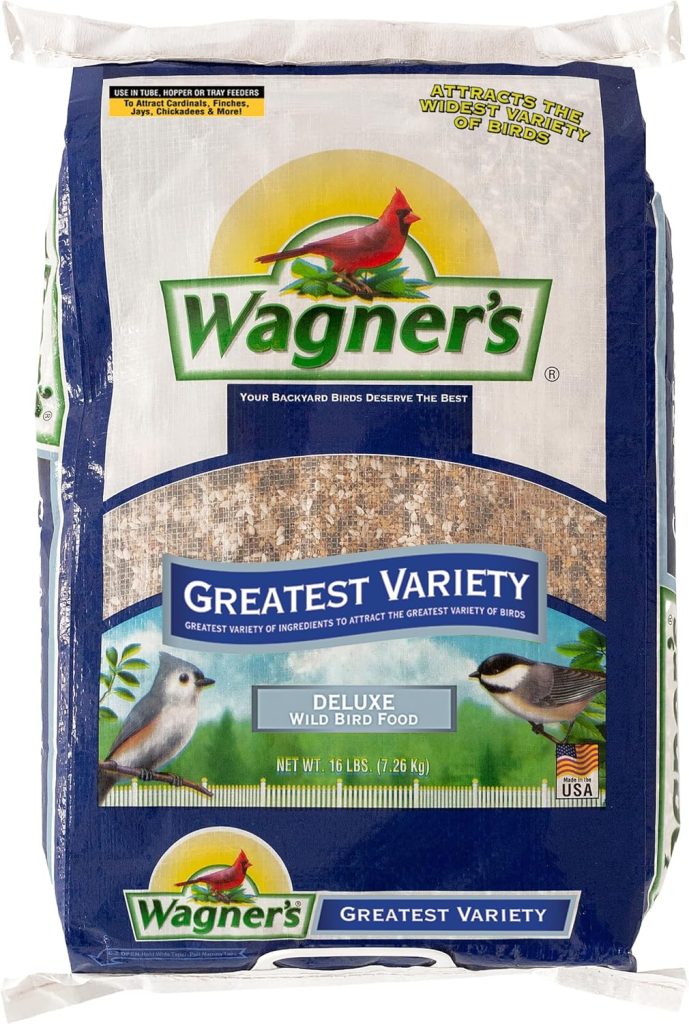
This is one of the most consistently well reviewed all purpose mixes. It’s made with black oil sunflower seed, sunflower chips, and white millet instead of being loaded with corn and milo. It attracts a wide variety of birds, including cardinals, chickadees, sparrows, and finches.
If you have a mix of birds visiting your yard and don’t want to buy several different types of seed, this one is a great place to start.
Attracts: Wild Birds, Cardinal, Chickadee, Finch, Jay, Songbirds
Best No Mess Option Kaytee – Ultra No Mess Blend
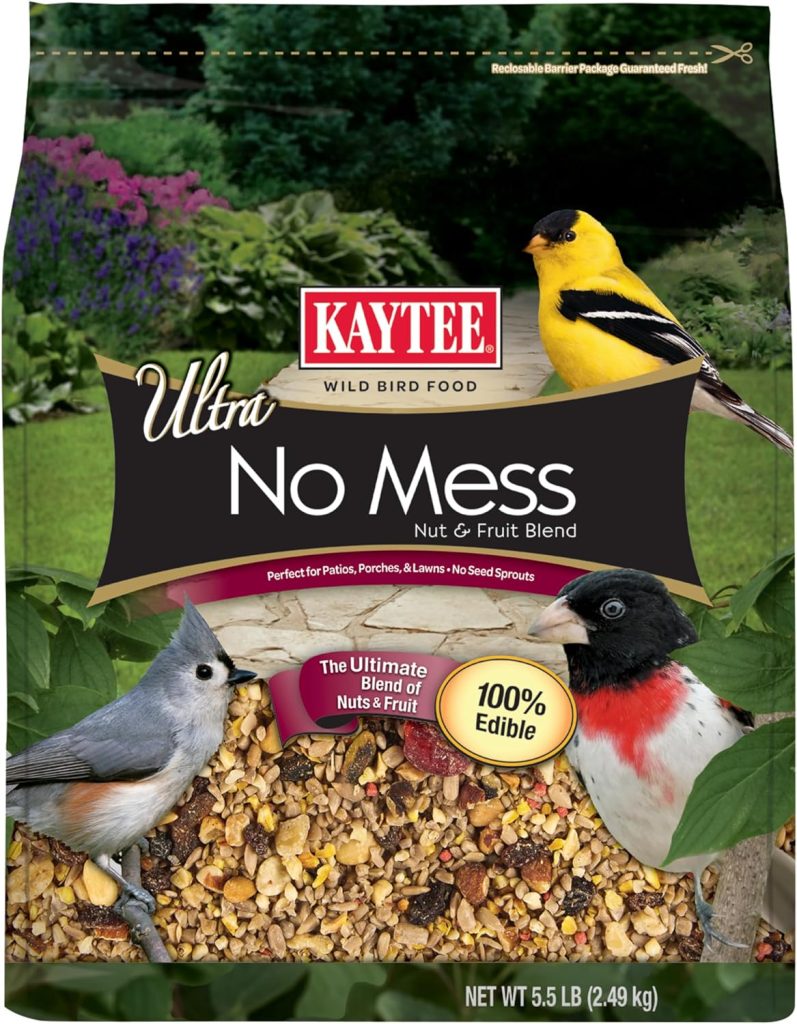
No mess blends use hulled sunflower chips and hulled millet instead of whole seeds, so you won’t have a layer of seed husks piling up underneath your feeder.
If your feeder is near a patio, deck, or walkway, the easier cleanup and fewer unwanted sprouts make these blends worth considering.
Attracts: Wild Birds, Cardinal, Grosbeak, Nuthatch, Woodpecker
Best for Cardinals and Songbirds Audubon Park – Songbird Seed Blend
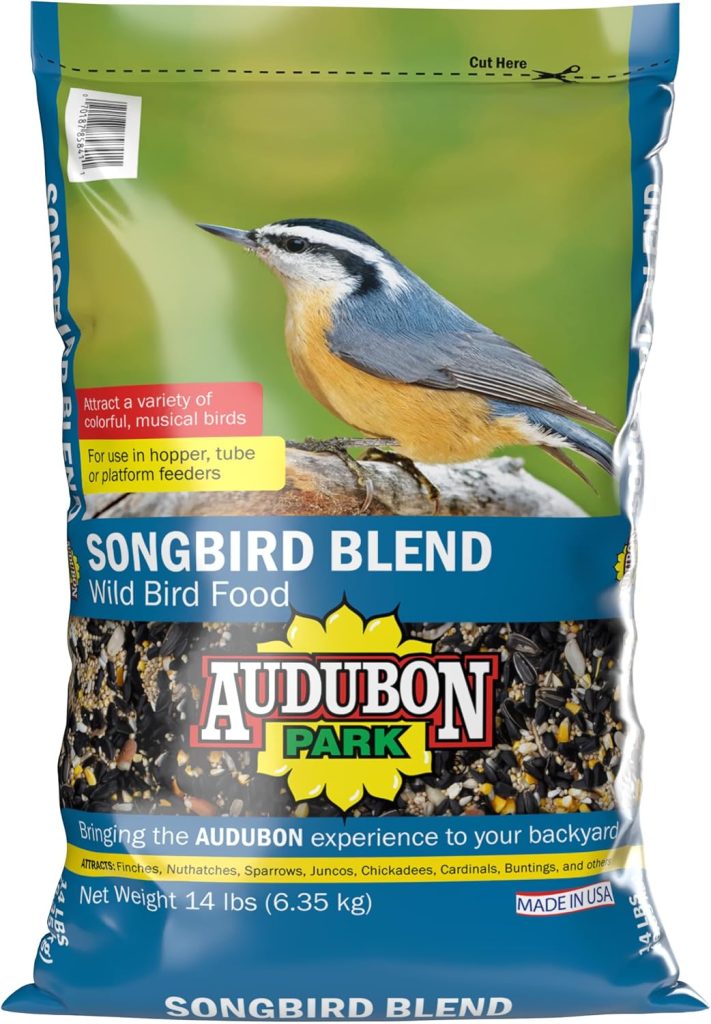
Cardinals, grosbeaks, and other larger songbirds favor blends heavy in sunflower seed and safflower, and this bag delivers exactly that mix. Safflower in particular is a favorite trick among experienced birders—cardinals love it, while squirrels and grackles tend to avoid its bitter taste.
Attracts: Songbirds, Finch, Nuthatch, Sparrow, Junco, Chickadee, Cardinal, Bunting, Wild Birds
Best for Finches Kaytee – Nyjer Seed
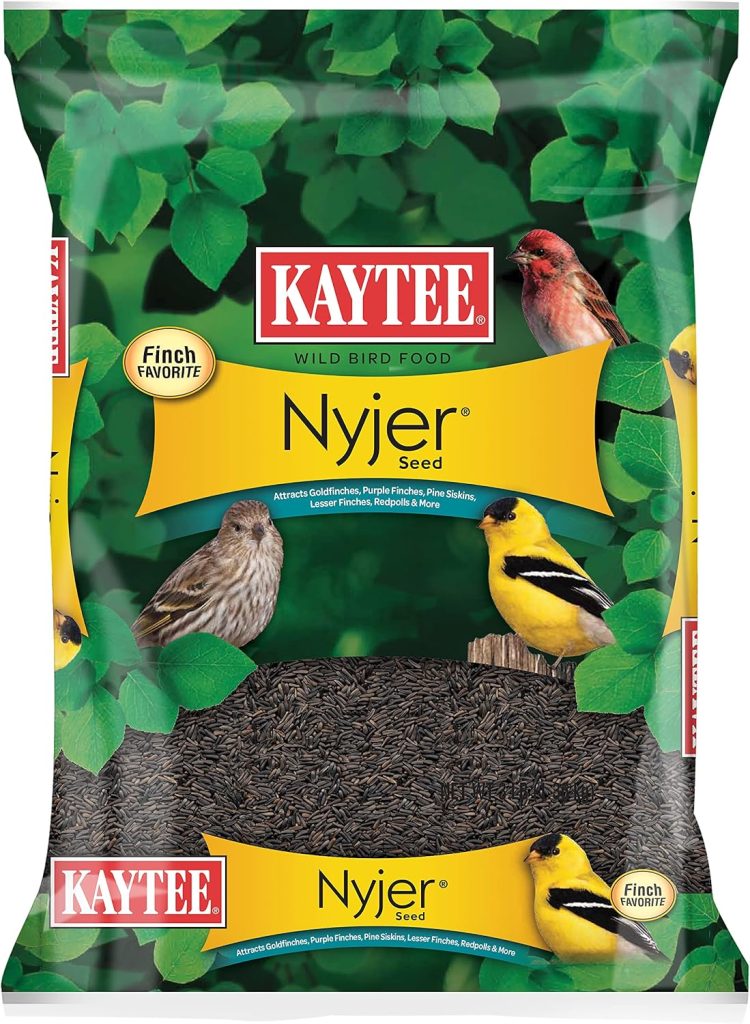
If you want to attract goldfinches, purple finches, or pine siskins, nyjer seed is a great choice. Use it in a tube feeder with small feeding ports, which work especially well for these smaller birds.
Keep in mind that it’s usually better to offer nyjer on its own rather than mix it with regular bird seed, since larger birds tend to leave it alone.
Attracts: Finch, Bunting, Chickadee, Junco, Redpoll, Siskin, Songbirds, Wild Birds
Best High Energy/Winter Blend C&S – Peanut Delight, No Melt Suet
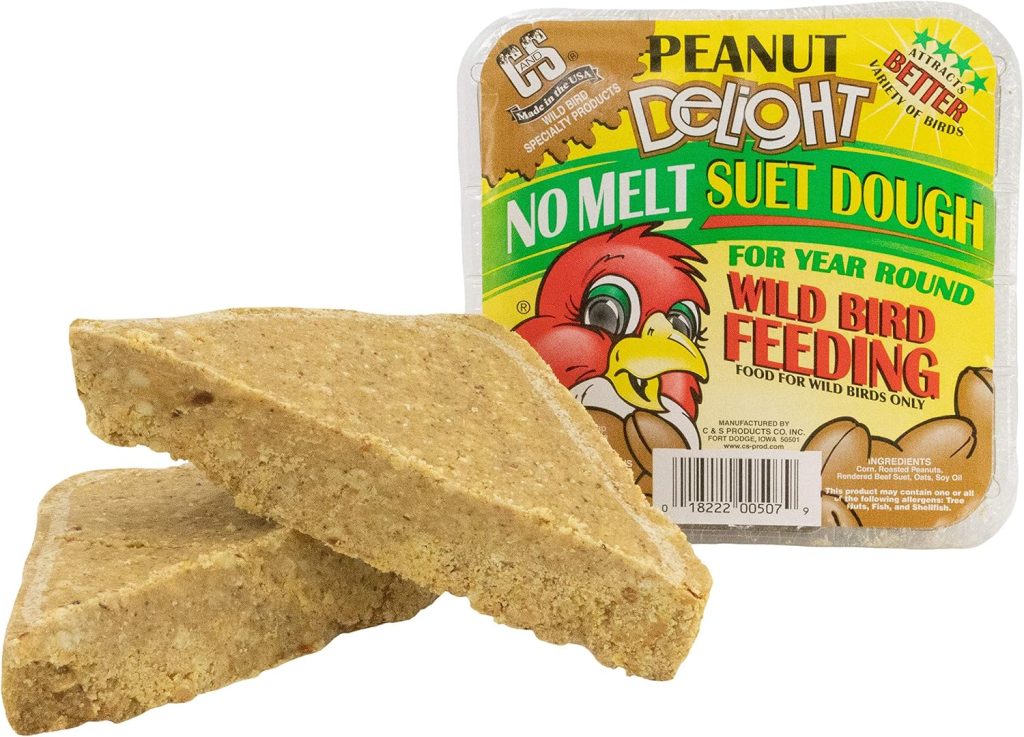
These highly rated suet dough bars are great for attracting woodpeckers, nuthatches, and wrens, especially in colder months when birds need concentrated fat and protein. The no melt formula holds up well even in warmer weather, and the peanut forward recipe tends to draw more species than a plain fat block.
Attracts: Woodpeckers, Nuthatches, Wrens, Wild Birds
Best for Woodpeckers and Jays Pennington – In Shell Peanuts for Birds
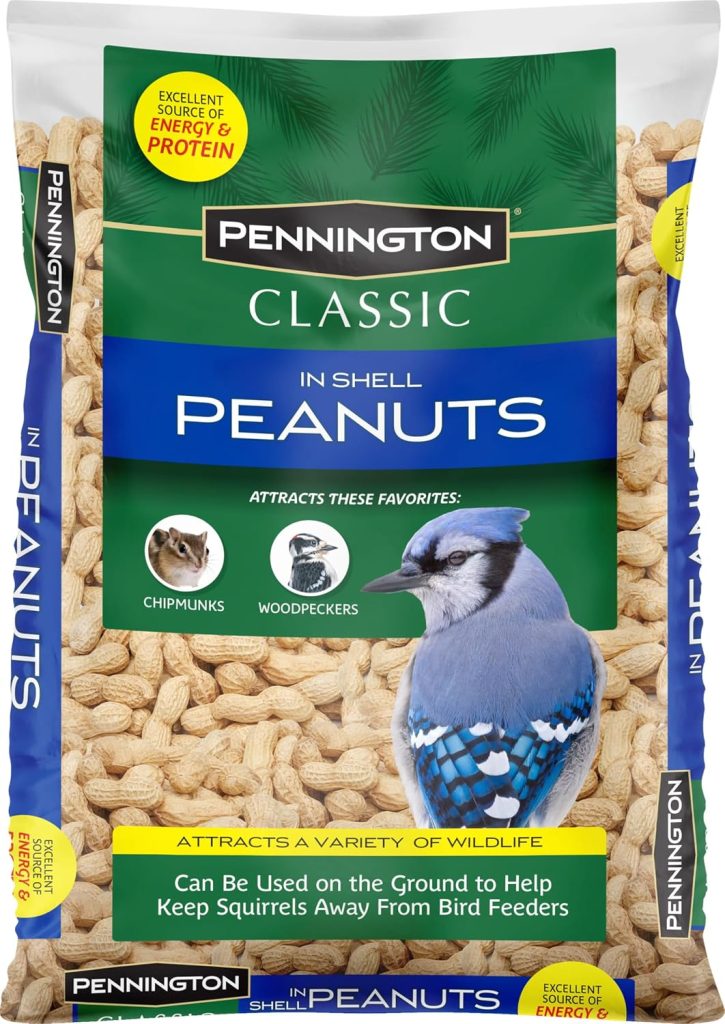
Whole shell peanuts are one of the best ways to attract woodpeckers, jays, titmice, and nuthatches. Birds have to work to crack the shells themselves, which honestly makes for some pretty entertaining feeder watching if you like seeing jays and woodpeckers in action.
Attracts: Woodpeckers, Jays, Titmice, and Nuthatches, Cardinal, Wild Birds
Best High Protein Option Kaytee – Mealworms
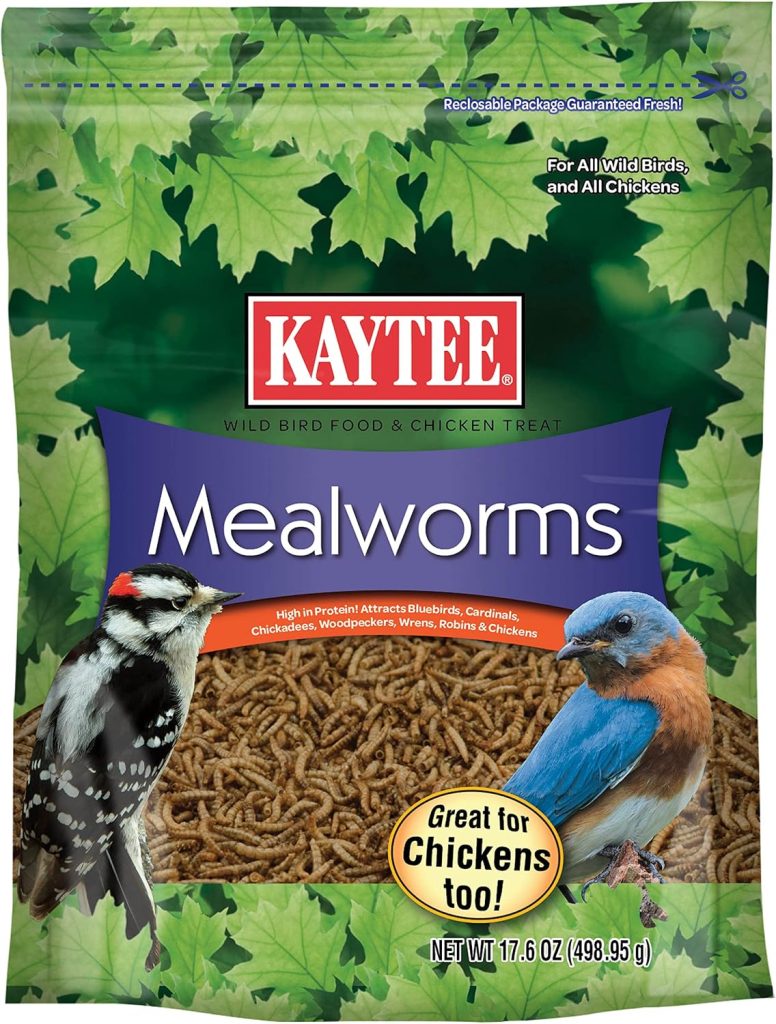
If you’re hoping to attract bluebirds, wrens, or robins, dried mealworms are a great option since these birds often aren’t interested in standard seed mixes. This one contains pure dried mealworms with no seed filler, so you’re getting exactly what you’re looking for.
You can scatter them on their own, offer them in a mealworm feeder, or mix a small amount into your existing bird food.
A little goes a long way, making dried mealworms one of the easiest ways to encourage bluebirds to visit a yard where they don’t already show up.
Attracts: Bluebird, Chickadee, Robin, Woodpecker, Wren, Cardinal, Wild Birds
How to Choose the Right Bag for Your Yard
Instead of just grabbing the biggest bag on the shelf, choose your bird food based on the type of feeder you have and the birds you want to attract.
- Hopper or platform feeders can handle just about any type of mix, including blends with larger seeds and peanuts.
- Tube feeders with small ports are best suited for nyjer seed. Using one with a mix full of large seeds means you’ll likely end up with a lot of food that doesn’t fit or get eaten.
- Ground feeding or scattering works well with blends that include some cracked corn and millet, which are popular with ground feeding birds like doves and juncos.
- Yards with lots of squirrels may benefit from safflower seed or capsaicin treated bird food. Birds can eat these without a problem, while squirrels tend to avoid them.
Frequently Asked Questions
1. What’s the best all around wild bird food?
For most backyard feeders, you can’t go wrong with a blend that’s mainly black oil sunflower seed, along with sunflower chips and white millet. These tend to attract a wide variety of birds while creating less waste than mixes heavy on corn or milo.
2. Is more expensive bird food actually worth it?
Usually, yes—premium blends might cost more upfront, but they typically contain less filler. That means less seed gets tossed aside, fewer unwanted sprouts end up under the feeder, and more of what you’re buying actually gets eaten by the birds you want to attract.
3. How often should I refill my feeder?
That depends on how many birds you have visiting and the time of year. As a general rule, check your feeders every few days and toss out any seed that has gotten wet or moldy (spoiled seed can make birds sick).
4. Does bird food expire?
Yes—seeds gradually lose their oils and nutritional value, and nyjer seed tends to go bad faster than sunflower based mixes. It’s best to buy only what you expect to use within a few months and store it in a cool, dry, sealed container.
The Bottom Line
There isn’t one single “best” wild bird food—it really depends on which birds are already visiting your yard and the species you’d like to attract.
A good place to start is with a high quality sunflower based all purpose blend. Once you see which species you’re attracting, you can add specialty foods like nyjer, suet, or mealworms to bring in even more variety.
Happy birding!