What Do Otters Eat in Captivity? The Case for Feeding Live Prey
Learn how feeding live whole prey improves otter welfare. Explore the cognitive, physical, and nutritional benefits of providing live fish and natural prey to otters in captivity.
- Understanding Otter Biology and Natural Feeding Behaviors
- The Behavioral Benefits of Live Feeding
- Nutritional Advantages of Live Prey
- Implementation of Best Practices for Captive Facilities
- Addressing Common Concerns and Misconceptions
- The Role of Live Feeding in Conservation and Reintroduction
- Integrating Live Feeding with Comprehensive Welfare Programs
- The Future of Otter Care in Captivity
- A Natural Solution for Captive Welfare
Otters are some of the most charismatic and intelligent aquatic mammals found in zoos, aquariums, and wildlife rehabilitation centers around the world.
Their playful nature and engaging behaviors delight millions of visitors each year, but maintaining their physical health and mental well-being in captivity goes far beyond entertainment – it also demands close attention to their nutritional needs.
One of the most critical (yet frequently overlooked) components of proper otter care is the inclusion of live fish and other live invertebrate prey in their diet.
Understanding Otter Biology and Natural Feeding Behaviors
Otters are obligate carnivores with extraordinarily high metabolic rates. Wild otters spend a substantial portion of their day hunting, consuming between 15 to 25% of their body weight daily (depending on the species).
This isn’t simply about caloric intake – the act of hunting itself is fundamental to their cognitive health, physical fitness, and emotional wellbeing.
Each otter species has evolved unique hunting strategies shaped by its environment:
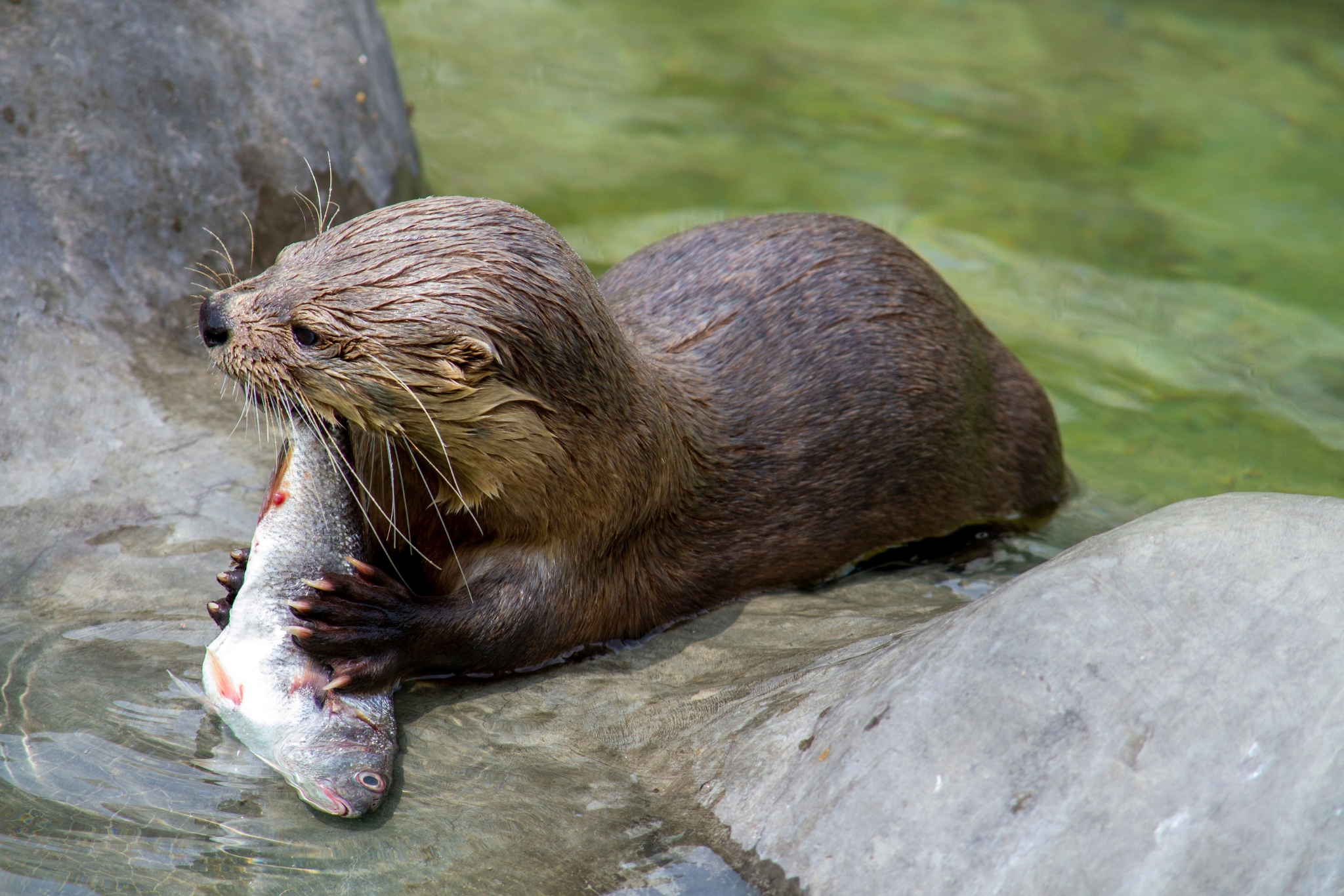
- River otters glide through swift underwater chases and use their sensitive whiskers to detect prey in murky waters.
- Sea otters dive to impressive depths to collect shellfish, often using rocks as tools to break them open.
- Asian small clawed otters use their nimble fingers to search crevices for crustaceans with remarkable precision.
These behaviors reflect millions of years of evolutionary adaptation – instincts that cannot simply be switched off in captivity.
The Behavioral Benefits of Live Feeding
Cognitive Stimulation and Problem Solving
Live prey presents complex and unpredictable challenges that engage an otter’s considerable intelligence.
Unlike dead fish that remain motionless or float passively, live prey dart, hide, and actively evade capture – prompting otters to strategize, anticipate movements, and adapt their hunting techniques in real time.
This kind of cognitive engagement is incredibly valuable for maintaining mental health and helps prevent the development of stereotypical behaviors often seen in captive animals lacking proper stimulation.
Research in animal welfare demonstrates that animals who are provided with opportunities to engage in natural foraging behaviors display significantly fewer stereotypical behaviors that indicate psychological distress.
Otters that are fed exclusively dead fish may begin to develop signs of boredom and frustration, such as pacing, over-grooming, and other stress related behaviors.
Physical Exercise and Conditioning
The rapid bursts of speed, sudden directional changes, and sustained swimming required to catch live prey provide exercise and offer a level of physical exercise that environmental enrichment alone cannot fully replicate. This important physical activity:
- Maintains healthy muscle tone and cardiovascular fitness
- Prevents obesity – a common health problem in captive otters
- Keeps joints flexible and promotes bone density
- Stimulates natural diving reflexes and breath holding capabilities
Sensory Enrichment
Live prey engages all of an otter’s sensory systems simultaneously. The visual tracking of moving fish, the tactile sensation of capturing prey with their paws or mouth, the olfactory cues of living animals in the water, and even the sounds of splashing all contribute to a rich sensory environment that mirrors wild conditions.
This multi-sensory stimulation is particularly important for species like the Asian small clawed otter, whose sensitive paws are designed to feel for prey items hidden in sediment and crevices.
Nutritional Advantages of Live Prey
Optimal Nutrient Composition
Live fish and other live invertebrate prey provide a complete nutritional profile that frozen and prepared foods cannot match. When otters consume whole prey, they receive:
- Complete protein complexes with optimal amino acid ratios
- Natural fats and oils including essential omega-3 fatty acids that support coat health and cognitive function
- Vitamins in bioavailable forms, particularly fat soluble vitamins A, D, E, and K
- Minerals and trace elements from bones, scales, and internal organs
Live prey offers superior nutritional value, as heat sensitive vitamins and delicate fatty acids remain intact – unlike in many prepared diets, where freezing, thawing, and storage lead to nutrient degradation.
Whole Prey Feeding Benefits
Wild otters consume their prey entirely (or nearly so) – ingesting bones, scales, organs, connective tissues, and all.
Whole prey provides natural dietary fiber, essential calcium for bone health, and trace nutrients that are often missing from filleted fish. Additionally, the physical act of tearing and chewing whole prey supports dental health, helping to reduce the risk of periodontal disease observed in some captive otters.
Prevention of Dietary Deficiencies
Captive otters fed exclusively dead fish (particularly frozen fish) are at risk for several nutritional deficiencies:
- Thiamine (Vitamin B1) deficiency: Freezing fish activates thiaminase enzymes that destroy this critical vitamin, potentially leading to neurological problems
- Vitamin E deficiency: Frozen fish fats can oxidize, creating free radicals that deplete vitamin E stores
- Taurine deficiency: This amino acid, essential for heart and eye health, degrades over time in stored fish
While these deficiencies can be addressed through supplementation, live prey provides these nutrients in their most natural bioavailable forms.
Implementation of Best Practices for Captive Facilities
Species Appropriate Prey Selection
Different otter species require different prey items that match their natural diets:
- River otters: Freshwater fish species like trout, bluegill, catfish, minnows, crayfish
- Sea otters: Marine fish, crabs, sea urchins, mussels, clams (with opportunities for tool use)
- Asian small clawed otters: Small fish, freshwater shrimp, crabs, invertebrates
- Giant otters: Larger fish species, supplemented with crustaceans
Prey items should be sourced from reputable suppliers and screened for parasites and diseases to ensure food safety.
Frequency and Scheduling
Live feeding doesn’t need to occur at every meal to be beneficial. Many successful programs incorporate live prey 2 to 4 times a week, and feed other diet items on the other days. This schedule:
- Provides regular behavioral enrichment without creating feeding expectation stress
- Allows time for prey species to be properly quarantined and health checked
- Balances the potentially higher cost of live prey with budget constraints
- Ensures dietary variety
Varying feeding times and locations prevents anticipatory behaviors and maintains the unpredictability that makes hunting mentally stimulating.
Creating Appropriate Feeding Environments
To maximize the benefits of live feeding:
- Use adequately sized pools that allow extended chase sequences
- Provide hiding spots and complexity like rocks, vegetation, and varied depths
- Match water temperature to what both predator and prey species tolerate
- Ensure proper group dynamics so all individuals can hunt successfully
Some facilities create dedicated “hunting pools” that are separate from the main exhibits, allowing controlled live feeding sessions.
Ethical Considerations and Animal Welfare
The welfare of prey species must also be considered. Responsible live feeding programs ensure:
- Prey animals are housed humanely before use with appropriate water quality, space, and care
- Prey species are appropriate to the predator’s size (to ensure quick humane kills)
- Prey numbers match the predators’ appetites (minimal wasting)
- Staff monitor feeding sessions to prevent prolonged pursuit or suffering
Many facilities work with ethical supply chains and may even breed certain prey species on-site to ensure the highest welfare standards.
Addressing Common Concerns and Misconceptions
Public Perception and Educational Opportunities
Some facilities hesitate to use live feeding out of concern for visitor reactions – but when properly explained, live feeding can serve as a powerful educational tool. Informative signage and keeper talks can cover:
- The natural predator-prey relationships in ecosystems
- The importance of behavioral welfare in captive animals
- How this practice supports conservation and potential reintroduction programs
Most visitors appreciate seeing natural behaviors and understand the importance of comprehensive animal care when properly educated.
Safety and Disease Management
Concerns about parasites and pathogens in live prey are legitimate but manageable through:
- Quarantine protocols: All prey species should be quarantined and monitored before feeding
- Veterinary screening: Regular parasite checks and health assessments
- Closed supply chains: Using captive bred prey or certified suppliers
- Species selection: Choosing prey species with lower disease transmission risks
Cost Considerations
While live prey is typically more expensive than frozen alternatives, the costs must be weighed against:
- Reduced veterinary expenses from improved physical health
- Decreased need for other enrichment programs and devices
- Lower medication costs for behavioral issues
- Potentially achieving better breeding success in healthy stimulated animals
- Enhanced visitor experiences and educational programming
Many facilities find that strategic implementation of live feeding programs provides excellent return on investment for animal welfare.
The Role of Live Feeding in Conservation and Reintroduction
For otters destined for release into the wild – whether orphaned pups, rescued animals, or conservation breeding program participants – experience with live prey is absolutely essential.
Animals that have never hunted live prey face dramatically reduced survival chances upon release.
Rehabilitation centers have recognized that captive raised otters must develop:
- Prey recognition and pursuit skills
- Handling techniques for different prey types
- Energy efficient hunting strategies
- The physical stamina required for wild survival
Live feeding isn’t just enrichment for these animals – it’s survival training.
Integrating Live Feeding with Comprehensive Welfare Programs
Live prey should be one component of a holistic approach to otter welfare that includes:
- Complex habitat design with varied aquatic and terrestrial spaces depending on species
- Social groupings appropriate to the species’ natural social structure
- Rotating enrichment programs including novel objects, scents, and activities
- Positive reinforcement training for husbandry and medical procedures
- Environmental variability including temperature, water flow, and seasonal changes
When combined, these elements create an environment where otters can fully express their full behavioral repertoire.
The Future of Otter Care in Captivity
As our understanding of animal welfare continues to evolve, the zoo and aquarium community increasingly recognizes that captive animals deserve not just to survive, but to truly thrive.
This means going beyond basic physical needs to address psychological wellbeing and behavioral health.
Some facilities are expanding their live feeding programs and documenting the results. Preliminary data shows improvements in:
- Activity levels and time spent engaged in species typical behaviors
- Reproductive success and maternal care quality
- Coat condition and overall physical health
- Reduced veterinary interventions for stress related conditions
These outcomes help to validate what behavioral ecologists have long understood: animals evolved to hunt need opportunities to hunt.
A Natural Solution for Captive Welfare
Feeding live fish and other live invertebrate prey to captive otters isn’t simply about nostalgia for wild conditions – it’s about recognizing and honoring the fundamental nature of these remarkable animals.
The cognitive challenges, physical demands, and nutritional completeness of live prey create welfare benefits that cannot be fully replicated through any other means.
As facilities dedicated to conservation, education, and animal welfare, zoos and aquariums have a responsibility to provide the most comprehensive care possible. For otters (intelligent, energetic predators with complex behavioral needs) this means incorporating live prey into their regular feeding regimens.
Otters that are given the chance to hunt and eat live prey are often healthier, more active, and display more natural behaviors compared to those fed only prepared diets.
As our knowledge of captive animal welfare advances, live feeding programs for otters should become more than just occasional events – they are an ethical responsibility for facilities caring for these charismatic carnivores.
For any institution housing otters, the question shouldn’t be whether to implement live feeding, but how to do so most effectively and responsibly.
The otters in our care (and their wild counterparts who benefit from conservation programs) deserve nothing less than our commitment to their complete physical and psychological wellbeing.