Do Ball Pythons Need Calcium Supplements? Here’s What Every Owner Should Know
Wondering if your ball python needs calcium supplements? Get the facts on snake nutrition, whole prey diets, and when to worry.
- The Short Answer: It’s Complicated (But Not Really!)
- Why Whole Prey Is the Real MVP
- When Calcium Concerns Actually Come Up
- The UVB Question: Does It Affect Calcium in Ball Pythons?
- What About Calcium Supplements Sold for Reptiles?
- How to Keep Your Ball Python’s Nutrition on Point
- The Bottom Line on Calcium Supplements
If you’ve ever stood in the reptile aisle staring at calcium supplements and wondering if your ball python actually needs one, trust us—you’re definitely not the only one.
Snake care advice online can get confusing fast—especially when supplements, feeding routines, and reptile nutrition all start getting thrown into the mix. So let’s break it all down and figure out what your ball python really needs to stay healthy and thriving.
The Short Answer It’s Complicated (But Not Really!)
So, do ball pythons actually need calcium supplements? The short answer is: not usually—at least not in the same way many other reptiles do. And understanding the difference is actually super important for keeping your scaly bestie healthy and thriving.
Unlike reptiles like bearded dragons or leopard geckos that eat insects or plants and rely heavily on UVB lighting, ball pythons are obligate carnivores that eat whole prey animals.
That means they get most of the nutrients they need—including calcium—directly from their food. Bones, organs, and tissues from whole prey create a much more balanced diet naturally, which changes the supplement conversation completely.
Why Whole Prey Is the Real MVP
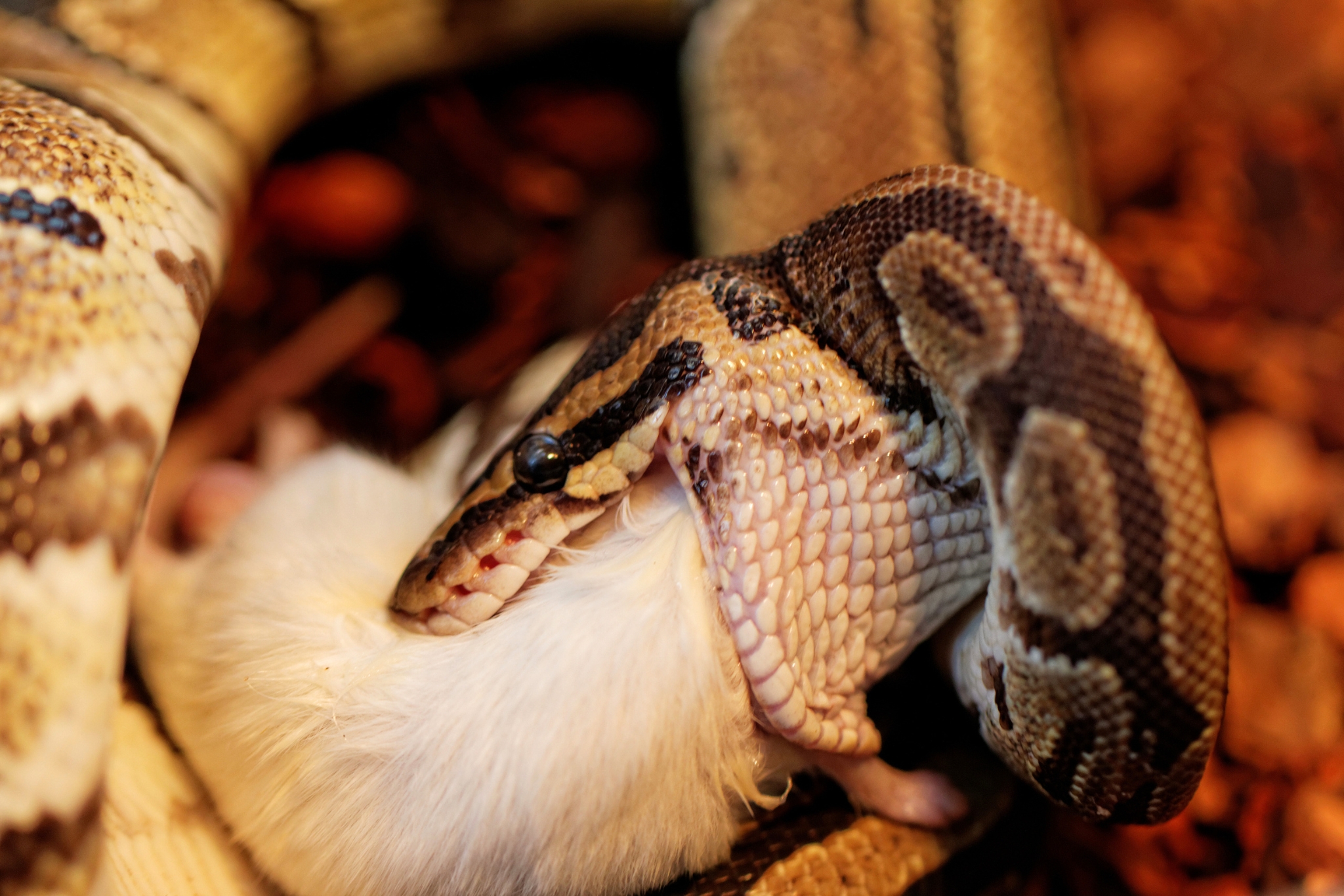
When your ball python eats a whole mouse or rat, they’re getting the complete nutritional package all at once—muscle, organs, skin, fur, and calcium rich bones included.
That means your snake is naturally consuming calcium with every meal. Even better, the calcium and phosphorus are balanced the way nature intended, which helps their body absorb and use those nutrients properly.
It’s honestly a pretty brilliant system—because when ball pythons eat whole prey, they typically get all the calcium they need directly from their diet without requiring extra supplementation.
That’s why healthy ball pythons eating appropriately sized whole prey usually do not need additional calcium powder or supplements added to their meals.
When Calcium Concerns Actually Come Up
While calcium supplements aren’t usually part of routine ball python care, there are a few situations where calcium intake may become something to discuss with your reptile veterinarian.
1. Feeding Boneless or Partial Prey
If a ball python is being fed boneless meat, organ only meals, or other non-whole prey foods—something that occasionally happens in rescue or rehabilitation situations—the calcium to phosphorus balance can become seriously uneven. Over time, this may contribute to metabolic bone disease (MBD), a condition caused by improper calcium balance.
2. Breeding Females
Female ball pythons producing eggs use a significant amount of energy and nutrients during the breeding process, including calcium reserves. Some experienced breeders choose to offer calcium rich prey or discuss supplementation with their vet during this time, especially for heavily breeding females.
3. Suspected Deficiency or Illness
Symptoms like muscle tremors, weakness, lethargy, or unusual movement can sometimes point to a nutritional imbalance or underlying health issue. If you notice any concerning symptoms, it’s best to consult a reptile savvy veterinarian rather than trying to treat the issue yourself.
More calcium isn’t always better. Over-supplementing can actually cause health problems like hypercalcemia (too much calcium in the body), so it’s always best to talk with a reptile savvy veterinarian before adding supplements to your ball python’s routine.
The UVB Question Does It Affect Calcium in Ball Pythons?
This is where ball pythons are a little different from many other reptiles. Lizards and turtles often rely on UVB lighting to help their bodies produce Vitamin D3, which is essential for absorbing and using calcium properly. Without enough Vitamin D3, even a calcium rich diet can lead to problems.
Ball pythons, however, are naturally crepuscular and fossorial—meaning they’re most active around dawn and dusk and spend a lot of time hidden or burrowed. Because of that, they aren’t considered heavily UVB dependent like many daytime basking reptiles.
Instead, ball pythons get their Vitamin D3 primarily through the whole prey they consume rather than direct sun exposure or intense UVB lighting.
That said, low level UVB lighting has become increasingly popular among ball python keepers, and it supports more natural behaviors, activity levels, and overall wellbeing. While it’s not usually required specifically for calcium metabolism, it can still be a beneficial addition to a well-designed enclosure.
What About Calcium Supplements Sold for Reptiles?
If you’ve browsed the reptile section at a pet store, you’ve probably seen shelves full of calcium powders, liquid supplements, and gut-loading products. Those supplements are great for reptiles like bearded dragons that eat insects—but they aren’t really intended for ball pythons.
Since ball pythons eat whole prey, they’re already getting calcium naturally from the bones and tissues of their food. Dusting a frozen-thawed mouse with calcium powder usually isn’t necessary, and it’s not especially effective anyway since the powder doesn’t stick particularly well to the prey item.
So for most healthy ball pythons on a proper whole prey diet, calcium supplements are more of an unnecessary extra than a must have purchase.
How to Keep Your Ball Python’s Nutrition on Point?
The best thing you he absolute best thing you can do for your ball python’s calcium levels—and their overall health—is focus on the basics of good husbandry:
- Feed appropriately sized whole prey, like frozen/thawed mice or rats
- Follow a consistent feeding schedule based on your snake’s age and size
- Buy feeders from reputable, high-quality suppliers
- Schedule regular wellness visits with a reptile veterinarian
- Keep an eye on body condition—healthy ball pythons should have good muscle tone and a gently rounded body shape
And if you’re ever unsure about your snake’s nutrition or health, a herp vet is always the best source of guidance. They can assess body condition, run bloodwork if needed, and help you make informed decisions based on your individual snake’s needs!
The Bottom Line on Calcium Supplements
Ball pythons are actually pretty low maintenance when it comes to calcium, as long as they’re eating a proper whole prey diet. Whole mice and rats naturally provide the nutrients they need, which means extra calcium powders and supplements usually aren’t necessary.
Instead of stressing over supplements, focus on the fundamentals: a well-maintained enclosure, appropriate temperatures and humidity, high quality whole prey, and regular wellness checkups with a reptile veterinarian. Those basics go a long way toward keeping your snake healthy and thriving for years to come.